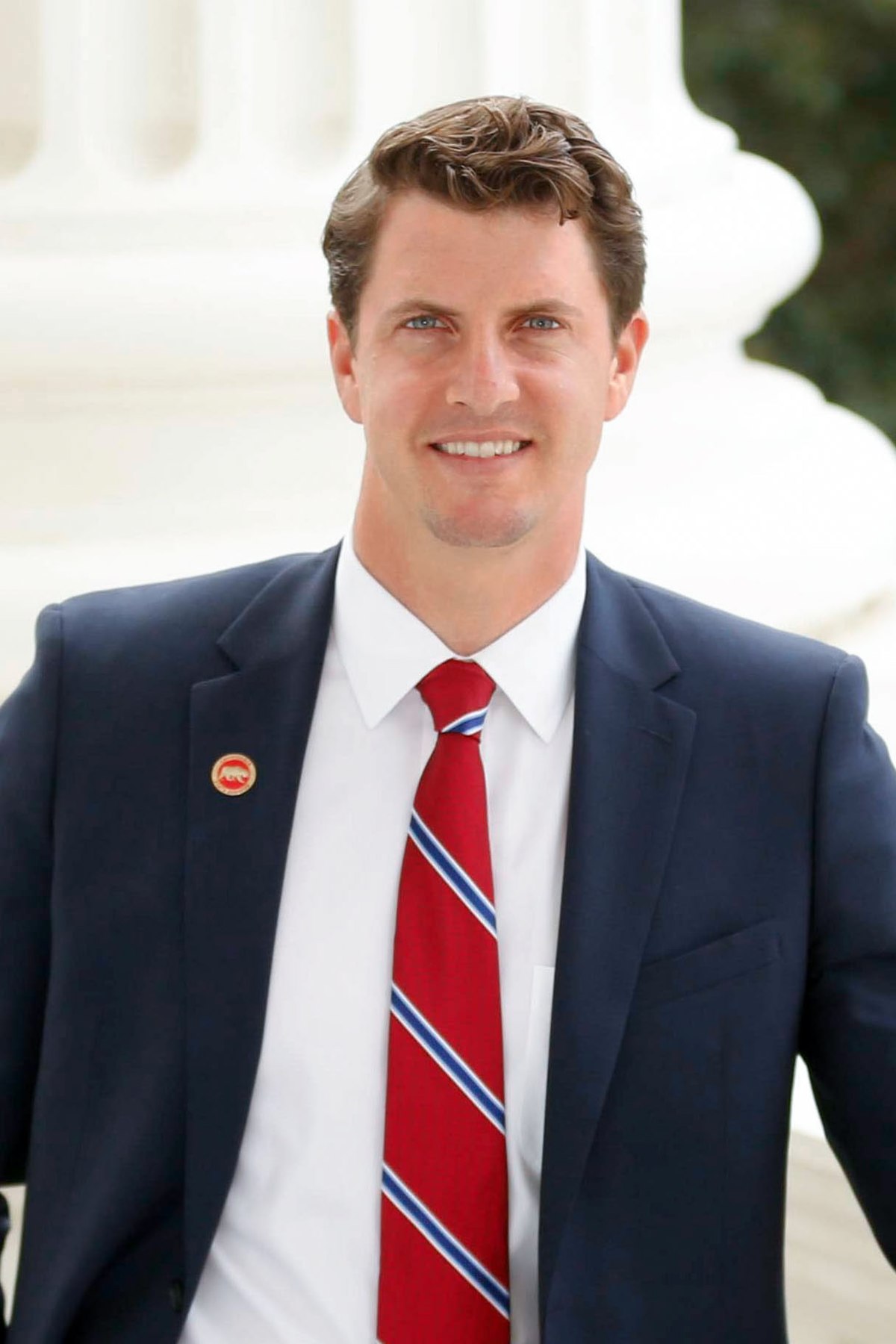
Photo of Henry Stern
D California Senate · District 27

Sen. Henry Stern

Compare
Total votes
21,214
all sessions
Attendance
88%
1,993 missed
Lower than 88% of chamber peers
With party
99%
of cast votes
Near the chamber average
Bipartisan score
0%
crosses aisle rarely
Near the chamber average
Sponsored
795
bills & resolutions
Near the chamber average
Committees
6
assignments
795 bills and resolutions

Sponsored bills

Total
795
Primary
204
Co-sponsor
591
This page
795
matching current filters
Co-sponsor SB 964
Vetoed · California Senate · Co-sponsor
Behavioral health.

Existing law establishes various health professions development programs, within the Department of Health Care Access and Information, for the promotion of education and training of health professionals to address workforce shortage and distribution needs. The bill would require the department to commission consultants to prepare a report for the Legislature, on or before January 1, 2024, that provides a landscape analysis of the current behavioral health workforce and the state's behavioral health workforce needs, and to make recommendations on how to address the state's behavioral health workforce shortage.

Vetoed Sep 27, 2022 1 co-sponsor
Co-sponsor AB 1502
Signed into law · California Assembly · Co-sponsor
Freestanding skilled nursing facilities.

Existing law requires the State Department of Public Health to license, inspect, and regulate skilled nursing facilities, as defined, and prohibits a person, firm, partnership, association, corporation, or political subdivision of the state, or other governmental agency within the state from operating, establishing, managing, conducting, or maintaining a skilled nursing facility in this state, without first obtaining a license from the department. Existing law prohibits a person from acquiring a beneficial interest of 5% or more in any corporation or partnership licensed to operate a skilled nursing facility, or in any management company under contract with a licensee of a skilled nursing facility, or from becoming an officer or director of, or general partner in, a corporation, partnership, or management company without the prior written approval of the department. Existing law requires a licensee for a skilled nursing facility to provide written notice of a proposed change in licensee or management company to all residents of the facility and their representatives at least 90 days prior to a finalization of the sale, transfer of operation, or other change or transfer of ownership interests, except as specified. Existing law requires an applicant for a skilled nursing facility or intermediate care facility to submit certain information to the department, such as the name and address of a parent organization if the applicant is a subsidiary of another organization, and report any changes to that information within 30 days. Existing law imposes criminal penalties on a person who violates the licensing and regulatory requirements imposed on skilled nursing facilities. This bill would prohibit a person or an applicant for licensure from acquiring, operating, establishing, managing, conducting, or maintaining a freestanding skilled nursing facility without first obtaining a license from the department for that purpose. The bill would also apply the licensure requirement to a change of ownership or a change in management of such a facility. The bill would specify the requirements to apply for a license, after July 1, 2023, including evidence that the applicant is reputable and responsible to assume the license or management and evidence of specified financial capacity, and, if the applicant is part of a chain, providing a diagram indicating the relationship between the applicant and the persons or entities, as defined, that are part of the chain. The bill would require an applicant for a skilled nursing facility or intermediate care facility to report any changes in information in an application 30 days prior to that change, except as specified. The bill would make all applications prepared in relation to these provisions public records, except as specified under any applicable federal or state privacy laws. The bill would authorize or require the department to deny an application for licensure, or to revoke a license, under certain circumstances. By expanding the duties on licensees, this bill would expand an existing crime, thereby imposing a state-mandated local program. The bill would authorize the department to take specified actions, including imposing civil penalties, if an applicant acquires, operates, establishes, manages, conducts, or maintains a skilled nursing facility before the department acts on its application or following the denial of its application, or if the person does not first apply to the department for a license. The bill would specify that its provisions do not preclude the department from taking additional state or federal enforcement actions, as specified, including misdemeanor penalties for willful or repeated violations. The bill would require the department to ensure a facility's operation is transitioned to a qualified operator, following the denial of an application. The bill would authorize the department, subsequent to licensure, to assess a civil penalty of $10,000 for a material violation of these provisions. The bill would specify that its provisions do not apply to a skilled nursing facility operated as a distinct part of an acute care hospital or to a receiver or temporary manager appointed in accordance with other laws. The bill would require the department to convene a stakeholder group on or before April 1, 2023, to determine the feasibility of establishing a new methodology to calculate application fees. The California Constitution requires the state to reimburse local agencies and school districts for certain costs mandated by the state. Statutory provisions establish procedures for making that reimbursement. This bill would provide that no reimbursement is required by this act for a specified reason.


Signed into law Sep 27, 2022 1 co-sponsor
Co-sponsor SB 1245
Signed into law · California Senate · Co-sponsor
Los Angeles County Abortion Access Safe Haven Pilot Program.

Existing law, the Reproductive Privacy Act, provides that every individual possesses a fundamental right of privacy with respect to their personal reproductive decisions, including the fundamental right to choose to bear a child or to choose and to obtain an abortion. This bill would establish, using a $20,000,000 appropriation made in the Budget Act of 2022 for this purpose, the Los Angeles County Abortion Access Safe Haven Pilot Program for the purpose of expanding and improving access to reproductive and sexual health care, including abortion, in the County of Los Angeles. The bill would require any funds allocated for the Los Angeles County Abortion Access Safe Haven Pilot Program to be used by the County of Los Angeles or its program administrator to administer a pilot project to support innovative approaches and patient-centered collaborations to expand and improve access to sexual and reproductive health care and to maintain a financial reporting system. The bill would authorize the funds to be used for implementing recommendations from the County of Los Angeles, including building secure infrastructure, among other things. The bill would require the program administrator to determine a funding framework to prioritize funding for pilot programs and projects and to provide an annual report to the Legislature on the projects and collaborations funded by the program. The bill would exempt specified program information from public disclosure. Existing constitutional provisions require that a statute that limits the right of access to the meetings of public bodies or the writings of public officials and agencies be adopted with findings demonstrating the interest protected by the limitation and the need for protecting that interest. This bill would make legislative findings to that effect.

Signed into law Sep 27, 2022 1 co-sponsor
Primary SB 1472
Signed into law · California Senate · Lead sponsor
Vehicular manslaughter: speeding and reckless driving.

Existing law prohibits a person from driving a vehicle upon a highway at a speed greater than 100 miles per hour, and provides that upon a subsequent conviction of that offense within a certain number of years, the person shall be punished by a fine and the Department of Motor Vehicles shall suspend their privilege to operate a vehicle, as specified. Under existing law, a person who drives a vehicle upon a highway or in an offstreet parking facility in willful or wanton disregard for the safety of persons or property is guilty of reckless driving, which is punishable by imprisonment in the county jail or by the payment of a fine, or both imprisonment and a fine, as specified. Existing law defines the crime of vehicular manslaughter as the unlawful killing of a human being without malice while driving a vehicle under specified circumstances, including in the commission of an unlawful act, not amounting to felony, with or without gross negligence, and provides that vehicular manslaughter is punishable as a misdemeanor or a felony. This bill would specify a list of circumstances that may, based on the totality of the circumstances, constitute gross negligence for manslaughter, including, among other circumstances, when a person has participated in a sideshow or has sped over 100 miles per hour. By expanding the definition of a crime, the bill would impose a state-mandated local program. The California Constitution requires the state to reimburse local agencies and school districts for certain costs mandated by the state. Statutory provisions establish procedures for making that reimbursement. This bill would provide that no reimbursement is required by this act for a specified reason.
Signed into law Sep 27, 2022 0 co-sponsors
Co-sponsor SB 929
Signed into law · California Senate · Co-sponsor
Community mental health services: data collection.

Existing law requires the State Department of Health Care Services to collect and publish annually quantitative information concerning the operation of various provisions relating to community mental health services, including the number of persons admitted for evaluation and treatment for certain periods, transferred to mental health facilities, or for whom certain conservatorships are established, as specified. Existing law requires each local mental health director, and each facility providing services to persons under those provisions, to provide the department, upon its request, with any information, records, and reports that the department deems necessary for purposes of the data collection and publication. This bill would additionally require the department to collect data quarterly and publish, on or before May 1 of each year, a report including quantitative, deidentified information relating to, among other things, the number of persons in designated and approved facilities admitted or detained for 72-hour evaluation and treatment, clinical outcomes and services for certain individuals, waiting periods prior to receiving an evaluation or treatment services in a designated and approved facility, demographic data of those receiving care, the number of all county-contracted beds, and an assessment of the disproportionate use of detentions and conservatorships on various groups. The bill would specify that the information be from each county for some of those data. The bill would require the Judicial Council to provide the department, by October 1 of each year, with data from each superior court to complete the report, including, among other things, the number and outcomes of certification review hearings, petitions for writs of habeas corpus, and judicial review hearings. The bill would, beginning with the report due May 1, 2025, require the report to also include the progress that has been made on implementing recommendations from prior reports. The bill would require the department to make the report publicly available on the department's internet website. The bill would require each county behavioral health director or other entity involved in implementing the provisions relating to detention, assessment, evaluation, or treatment for up to 72 hours to provide data as prescribed by the department. The bill would authorize the department to impose a plan of correction against a facility or county that fails to submit data timely or as required. The bill would authorize the department to implement these provisions through information notices or other similar written instructions. The bill would exempt contracts entered into by the department for purposes of these provisions from certain contract-related requirements. To the extent that the bill would increase the duties of county behavioral health directors, facilities of local entities, or any other local entities with regard to providing the department with new types of data, the bill would impose a state-mandated local program. The California Constitution requires the state to reimburse local agencies and school districts for certain costs mandated by the state. Statutory provisions establish procedures for making that reimbursement. This bill would provide that, if the Commission on State Mandates determines that the bill contains costs mandated by the state, reimbursement for those costs shall be made pursuant to the statutory provisions noted above.

Signed into law Sep 25, 2022 1 co-sponsor
Co-sponsor AB 2550
Vetoed · California Assembly · Co-sponsor
State Air Resources Board: San Joaquin Valley Air Pollution Control District: nonattainment.

Existing law generally designates local air districts with primary responsibility for the control of air pollution from all sources other than vehicular sources. Existing law requires the State Air Resources Board to coordinate air pollution control activities throughout the state and to ensure that the entire state is, or will be, in compliance with state standards, to review a district's attainment plan, and any revised plan, to determine whether the plan will achieve and maintain the state's ambient air quality standards by the earliest practicable date, to review the rules, regulations, and programs submitted by an air district to determine whether they are sufficiently effective to achieve and maintain the state ambient air quality standards, and to review the enforcement practices of a district to determine whether reasonable action is being taken to enforce the district's programs, rules, and regulations. Existing law authorizes the state board, if, after a public hearing, it finds that a program or the rules and regulations of an air district will not likely achieve and maintain the state's ambient air quality standards, to establish a program, or portion thereof, or rules and regulations it deems necessary to enable the air district to achieve and maintain ambient air quality standards. This bill would require the state board, if the San Joaquin Valley Air Pollution Control District does not receive a determination of attainment from the United States Environmental Protection Agency for a national ambient air quality standard established by the agency pursuant to the federal Clean Air Act by the applicable attainment date for that standard, to undertake certain activities, including coordinating with the district and community-based organizations in the district and conducting outreach to under-resourced communities in the district to identify gaps in the state implementation plan and the district's attainment plan, rules, regulations, programs, and enforcement practices that impact the district's ability to attain and maintain that ambient air quality standard. This bill would require the state board to conduct at least one public hearing in the district regarding the district's attainment plan, and would require the state board to solicit public comment on specified topics, including the state board's review of the district's attainment plan, rules, regulations, programs, and enforcement practices, data regarding stationary sources in the district, including monitoring and enforcement of those sources, and the state board's plan to coordinate with the district to provide additional monitoring and enforcement capacity for stationary sources in the district. The bill would require the state board, after the final public hearing, to draft, and post on its internet website, a report that includes an outline of the program, or portion thereof, or rules or regulations that the state board deems necessary for the district to attain and maintain that national ambient air quality standard and a summary of, and response to, all public comments received by the state board. The bill would require the state board, after finalizing the report and based on the findings in the report, to develop the program, or portion thereof, or rules or regulations that the state board deems necessary for the district to attain and maintain that national ambient air quality standard. This bill would make legislative findings and declarations as to the necessity of a special statute for the San Joaquin Valley Air Pollution Control District.

Vetoed Sep 22, 2022 1 co-sponsor
Co-sponsor SB 834
Vetoed · California Senate · Co-sponsor
Tax-exempt status: insurrection.

The Corporation Tax Law, in modified conformity with federal law, provides an exemption from the taxes imposed by those laws for specified organizations. Existing law provides that tax-exempt status, under certain circumstances, may be suspended or revoked. Existing federal law defines various crimes against the established republican form of government, including treason, insurrection, and seditious conspiracy, as provided. This bill would authorize the Attorney General to make a finding that a tax-exempt organization has actively engaged in, or incited the active engagement in, acts or conspiracies defined as criminal under specified federal law, and likely to produce imminent violation of that federal law. The bill would require the Attorney General to notify the Franchise Tax Board of such a finding, and would state the existing authority of the Franchise Tax Board to revoke the tax-exempt status of the organization found to be in violation.

Vetoed Sep 22, 2022 1 co-sponsor
Co-sponsor AB 1664
Signed into law · California Assembly · Co-sponsor
California State Nonprofit Security Grant Program.

Existing law, until January 1, 2025, establishes the California State Nonprofit Security Grant Program under the administration of the Director of the Office of Emergency Services to improve the physical security of nonprofit organizations that are at high risk of violent attacks or hate crimes due to ideology, beliefs, or mission, and repeals these provisions on that date. Existing law authorizes award recipients to use grant funds for various security enhancements, as specified. Under existing law, the California State Nonprofit Security Grant Program limits the amount of any award to $200,000. This bill would additionally include as eligible security training. The bill would increase the amount an award recipient may be awarded from $200,000 to $500,000 and would authorize an award recipient to use up to 5% of grant funds towards management and administration, as described. The bill would limit the amount an award recipient may use on construction and renovation to $100,000 of the funds awarded. The bill would require the Office of Emergency Services to provide ongoing assistance to applicants that require a vulnerability or threat assessment, as specified. This bill would delete the above-described January 1, 2025, repeal date, thereby extending the operation of the California State Nonprofit Security Grant Program indefinitely.

Signed into law Sep 18, 2022 1 co-sponsor
Co-sponsor SB 1020
Signed into law · California Senate · Co-sponsor
Clean Energy, Jobs, and Affordability Act of 2022.

The California Global Warming Solutions Act of 2006 designates the State Air Resources Board as the state agency responsible for monitoring and regulating sources emitting greenhouse gases. The act requires the state board to prepare and approve a scoping plan for achieving the maximum technologically feasible and cost-effective reductions in greenhouse gas emissions and to update the scoping plan at least once every 5 years. The act requires the state board to conduct a series of public workshops to give interested parties an opportunity to comment on the plan and requires a portion of those workshops to be conducted in regions of the state that have the most significant exposure to pollutants. The act specifically includes as regions for these workshops communities with minority populations, communities with low-income populations, or both. This bill would instead include as regions for these workshops federal extreme nonattainment areas that have communities with minority populations, communities with low-income populations, or both. Under existing law, it is the policy of the state that eligible renewable energy resources and zero-carbon resources supply 100% of all retail sales of electricity to California end-use customers and 100% of electricity procured to serve all state agencies by December 31, 2045. This bill would revise that state policy to instead provide that eligible renewable energy resources and zero-carbon resources supply 90% of all retail sales of electricity to California end-use customers by December 31, 2035, 95% of all retail sales of electricity to California end-use customers by December 31, 2040, 100% of all retail sales of electricity to California end-use customers by December 31, 2045, and 100% of electricity procured to serve all state agencies by December 31, 2035, as specified. Existing law vests the Public Utilities Commission (PUC) with regulatory authority over public utilities, including electrical corporations, while local publicly owned electric utilities are under the direction of their governing boards. Existing law requires the PUC to ensure that facilities needed to maintain the reliability of the electrical supply remain available and operational. Existing law establishes an Independent System Operator (ISO) as a nonprofit public benefit corporation and requires the ISO to ensure efficient use and reliable operation of the electrical transmission grid consistent with achieving planning and operating reserve criteria no less stringent than those established by the Western Electricity Coordinating Council and the North American Electric Reliability Council. Existing law requires the State Energy Resources Conservation and Development Commission (Energy Commission) , in consultation with the PUC, ISO, transmission owners, users, and consumers, to adopt a strategic plan for the state's electrical transmission grid using existing resources in order to identify and recommend actions required to implement investments needed to ensure reliability, relieve congestion, and meet future growth in load and generation. This bill would authorize the PUC and Energy Commission, upon request of the ISO, to disclose to the ISO confidential information relating to power purchase agreements with electric generation and energy storage projects for purposes of transmission planning. This bill would require the PUC, Energy Commission, and state board, on or before December 1, 2023, and annually thereafter, to issue a joint reliability progress report that reviews system and local reliability within the context of that state policy described above, with a particular focus on summer reliability, identifies challenges and gaps, if any, to achieving system and local reliability, and identifies the amount and cause of any delays to achieving compliance with all energy and capacity procurement requirements set by the PUC. This bill would require the PUC to develop a definition of energy affordability, as specified, and to use energy affordability metrics to guide the development of any protections, incentives, discounts, or new programs to assist residential customers facing hardships or disconnections due to electricity or gas bills and to assess the impact of proposed rate increases on different types of residential customers. The California Public Records Act requires a public agency, defined to mean a state or local agency, to make its public records available for public inspection and to make copies available upon request and payment of a fee, unless the public records are exempt from disclosure. The act makes specified records exempt from disclosure and provides that disclosure by a state or local agency of a public record that is otherwise exempt constitutes a waiver of the exemptions. This bill would specify that a disclosure made through the sharing of information between the ISO and a state agency does not constitute a waiver of the exemptions. Existing law prohibits information furnished to the PUC by a public utility, a business that is a subsidiary or affiliate of a public utility, or a corporation that holds a controlling interest in a public utility from being open to public inspection or made public, except as specified. This bill would authorize a present officer or employee of the PUC to share information with the ISO pursuant to an agreement to treat the shared information as confidential. Existing constitutional provisions require that a statute that limits the right of access to the meetings of public bodies or the writings of public officials and agencies be adopted with findings demonstrating the interest protected by the limitation and the need for protecting that interest. This bill would make legislative findings to that effect. Under existing law, a violation of the Public Utilities Act or any order, decision, rule, direction, demand, or requirement of the PUC is a crime. Because certain of the above provisions would be part of the act and a violation of a PUC action implementing this bill's requirements would be a crime, the bill would impose a state-mandated local program. The California Constitution requires the state to reimburse local agencies and school districts for certain costs mandated by the state. Statutory provisions establish procedures for making that reimbursement. This bill would provide that no reimbursement is required by this act for a specified reason.

Signed into law Sep 16, 2022 1 co-sponsor
Co-sponsor SB 1251
Signed into law · California Senate · Co-sponsor
Governor's Office of Business and Economic Development: Zero-Emission Vehicle Market Development Office: Zero-Emission Vehicle Equity Advocate.

The California Global Warming Solutions Act of 2006 designates the State Air Resources Board as the state agency charged with monitoring and regulating sources of emissions of greenhouse gases. Existing law establishes various programs to promote the development and adoption of zero-emission vehicles and alternative fuels. Existing law creates the Governor's Office of Business and Economic Development, known as "GO-Biz," and requires GO-Biz to serve the Governor as the lead entity for economic strategy and the marketing of California on issues relating to business development, private sector investment, and economic growth. Under existing law, GO-Biz is under the direct control of the Director of the Governor's Office of Business and Economic Development, who is responsible to the Governor. This bill would continue the zero-emission vehicle division of GO-Biz in existence within GO-Biz as the Zero-Emission Vehicle Market Development Office (office) . The bill would require the office to continue to be administered by a deputy director appointed by, and serving at the pleasure of, the Governor. The bill would also establish, until January 1, 2028, the Zero-Emission Vehicle Equity Advocate in the office who would also be appointed by, and serve at the pleasure of, the Governor. The bill would require the office to steer the development of a shared, cross-agency definition of equity, and to set an equity agenda for the deployment of light-, medium-, and heavy-duty zero-emission vehicles, the supporting infrastructure, and workforce development. The bill would require the office to develop and adopt an equity action plan as part of a periodic update to a specified zero-emission vehicle strategy developed by the office and to notify the relevant policy committees of the Legislature of the information provided in that update.

Signed into law Sep 16, 2022 1 co-sponsor
Showing 371 to 380 of 795 bills
Previous 1 … 37 38 39 … 80 Next