

Freestanding skilled nursing facilities.
Summary
Existing law requires the State Department of Public Health to license, inspect, and regulate skilled nursing facilities, as defined, and prohibits a person, firm, partnership, association, corporation, or political subdivision of the state, or other governmental agency within the state from operating, establishing, managing, conducting, or maintaining a skilled nursing facility in this state, without first obtaining a license from the department. Existing law prohibits a person from acquiring a beneficial interest of 5% or more in any corporation or partnership licensed to operate a skilled nursing facility, or in any management company under contract with a licensee of a skilled nursing facility, or from becoming an officer or director of, or general partner in, a corporation, partnership, or management company without the prior written approval of the department. Existing law requires a licensee for a skilled nursing facility to provide written notice of a proposed change in licensee or management company to all residents of the facility and their representatives at least 90 days prior to a finalization of the sale, transfer of operation, or other change or transfer of ownership interests, except as specified. Existing law requires an applicant for a skilled nursing facility or intermediate care facility to submit certain information to the department, such as the name and address of a parent organization if the applicant is a subsidiary of another organization, and report any changes to that information within 30 days. Existing law imposes criminal penalties on a person who violates the licensing and regulatory requirements imposed on skilled nursing facilities. This bill would prohibit a person or an applicant for licensure from acquiring, operating, establishing, managing, conducting, or maintaining a freestanding skilled nursing facility without first obtaining a license from the department for that purpose. The bill would also apply the licensure requirement to a change of ownership or a change in management of such a facility. The bill would specify the requirements to apply for a license, after July 1, 2023, including evidence that the applicant is reputable and responsible to assume the license or management and evidence of specified financial capacity, and, if the applicant is part of a chain, providing a diagram indicating the relationship between the applicant and the persons or entities, as defined, that are part of the chain. The bill would require an applicant for a skilled nursing facility or intermediate care facility to report any changes in information in an application 30 days prior to that change, except as specified. The bill would make all applications prepared in relation to these provisions public records, except as specified under any applicable federal or state privacy laws. The bill would authorize or require the department to deny an application for licensure, or to revoke a license, under certain circumstances. By expanding the duties on licensees, this bill would expand an existing crime, thereby imposing a state-mandated local program. The bill would authorize the department to take specified actions, including imposing civil penalties, if an applicant acquires, operates, establishes, manages, conducts, or maintains a skilled nursing facility before the department acts on its application or following the denial of its application, or if the person does not first apply to the department for a license. The bill would specify that its provisions do not preclude the department from taking additional state or federal enforcement actions, as specified, including misdemeanor penalties for willful or repeated violations. The bill would require the department to ensure a facility's operation is transitioned to a qualified operator, following the denial of an application. The bill would authorize the department, subsequent to licensure, to assess a civil penalty of $10,000 for a material violation of these provisions. The bill would specify that its provisions do not apply to a skilled nursing facility operated as a distinct part of an acute care hospital or to a receiver or temporary manager appointed in accordance with other laws. The bill would require the department to convene a stakeholder group on or before April 1, 2023, to determine the feasibility of establishing a new methodology to calculate application fees. The California Constitution requires the state to reimburse local agencies and school districts for certain costs mandated by the state. Statutory provisions establish procedures for making that reimbursement. This bill would provide that no reimbursement is required by this act for a specified reason.
Bill status
signed
all 5 stages cleared
Introduction
Feb 2021
Committee Review
Aug 2022
Assembly Passage
Jan 2022
Senate Passage
Aug 2022
Signed into Law
Sep 2022
Introduced Feb 19, 2021
Signed Sep 27, 2022
Floor votes · Senate Aug 25, 2022 · Assembly Jan 31, 2022
How they voted
25–8
Passed · 7 other
Total votes 40
Aug 25, 2022
D
Democratic31
80% Yea
R
Republican9
66% Nay
Vote distribution
All Yea
All Nay
Mixed
No data
Full legislative history
Actions timeline
Total actions
31
Key actions
9
Committee
10
Amendments
9
Sep 27, 2022
Signed into law
Approved by the Governor.
legislature
Aug 25, 2022
Lower · Passed
Senate amendments concurred in. To Engrossing and Enrolling. (Ayes 56. Noes 17.).
lower
Aug 25, 2022
Introduced
In Assembly. Concurrence in Senate amendments pending. May be considered on or after August 27 pursuant to Assembly Rule 77.
lower
Aug 25, 2022
Upper · Passed
Read third time. Passed. Ordered to the Assembly. (Ayes 25. Noes 8. Page 5138.).
upper
Aug 11, 2022
Upper · Passed
From committee: Do pass. (Ayes 5. Noes 1.) (August 11).
upper
Aug 2, 2022
Committee
In committee: Referred to suspense file.
upper
Jun 28, 2022
Committee
Re-referred to Com. on APPR.
upper
Jun 27, 2022
Upper · Passed
Read second time and amended. Re-referred to Com. on JUD.
upper
Jun 23, 2022
Introduced
From committee: Amend, and do pass as amended and re-refer to Com. on JUD. (Ayes 8. Noes 0.) (June 22).
upper
Jun 15, 2022
Introduced
From committee chair, with author's amendments: Amend, and re-refer to committee. Read second time, amended, and re-referred to Com. on HEALTH.
upper
May 4, 2022
Committee
Referred to Coms. on HEALTH and JUD.
upper
Jan 31, 2022
Lower · Passed
Read third time. Passed. Ordered to the Senate. (Ayes 55. Noes 15. Page 3430.)
lower
Jan 20, 2022
Lower · Passed
From committee: Do pass. (Ayes 12. Noes 3.) (January 20).
lower
Jan 14, 2022
Committee
Re-referred to Com. on APPR.
lower
Jan 13, 2022
Lower · Passed
Read second time and amended.
lower
Jan 12, 2022
Introduced
From committee: Amend, and do pass as amended and re-refer to Com. on APPR. (Ayes 12. Noes 2.) (January 11).
lower
Jan 4, 2022
Committee
Re-referred to Com. on HEALTH.
lower
Jan 3, 2022
Introduced
From committee chair, with author's amendments: Amend, and re-refer to Com. on HEALTH. Read second time and amended.
lower
Mar 23, 2021
Committee
Re-referred to Com. on HEALTH.
lower
Mar 22, 2021
Introduced
From committee chair, with author's amendments: Amend, and re-refer to Com. on HEALTH. Read second time and amended.
lower
Mar 11, 2021
Committee
Referred to Com. on HEALTH.
lower
Feb 20, 2021
Lower · Passed
From printer. May be heard in committee March 22.
lower
Feb 19, 2021
Introduced
Introduced. To print.
lower
1 primary · 4 co-sponsors
Sponsors
Role
Legislator
Party
State
District
P
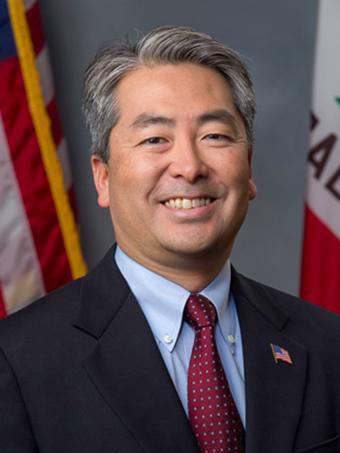
Al Muratsuchi
DDemocratic
Co

Henry Stern
DDemocratic
Co
JW
Jim Wood
DDemocratic
Co
Kevin McCarty
DDemocratic
Co

Wendy Carrillo
DDemocratic
Ask Maddy
·
AI policy assistant
Ask Maddy about AB 1502
Scope: CA
Hi! I can help you understand AB 1502. What would you like to know?
Try one of these
i
Maddy answers using official bill text and legislative records. Always verify before sharing.
Sources cited inline