

Clean Energy, Jobs, and Affordability Act of 2022.
Summary
The California Global Warming Solutions Act of 2006 designates the State Air Resources Board as the state agency responsible for monitoring and regulating sources emitting greenhouse gases. The act requires the state board to prepare and approve a scoping plan for achieving the maximum technologically feasible and cost-effective reductions in greenhouse gas emissions and to update the scoping plan at least once every 5 years. The act requires the state board to conduct a series of public workshops to give interested parties an opportunity to comment on the plan and requires a portion of those workshops to be conducted in regions of the state that have the most significant exposure to pollutants. The act specifically includes as regions for these workshops communities with minority populations, communities with low-income populations, or both. This bill would instead include as regions for these workshops federal extreme nonattainment areas that have communities with minority populations, communities with low-income populations, or both. Under existing law, it is the policy of the state that eligible renewable energy resources and zero-carbon resources supply 100% of all retail sales of electricity to California end-use customers and 100% of electricity procured to serve all state agencies by December 31, 2045. This bill would revise that state policy to instead provide that eligible renewable energy resources and zero-carbon resources supply 90% of all retail sales of electricity to California end-use customers by December 31, 2035, 95% of all retail sales of electricity to California end-use customers by December 31, 2040, 100% of all retail sales of electricity to California end-use customers by December 31, 2045, and 100% of electricity procured to serve all state agencies by December 31, 2035, as specified. Existing law vests the Public Utilities Commission (PUC) with regulatory authority over public utilities, including electrical corporations, while local publicly owned electric utilities are under the direction of their governing boards. Existing law requires the PUC to ensure that facilities needed to maintain the reliability of the electrical supply remain available and operational. Existing law establishes an Independent System Operator (ISO) as a nonprofit public benefit corporation and requires the ISO to ensure efficient use and reliable operation of the electrical transmission grid consistent with achieving planning and operating reserve criteria no less stringent than those established by the Western Electricity Coordinating Council and the North American Electric Reliability Council. Existing law requires the State Energy Resources Conservation and Development Commission (Energy Commission) , in consultation with the PUC, ISO, transmission owners, users, and consumers, to adopt a strategic plan for the state's electrical transmission grid using existing resources in order to identify and recommend actions required to implement investments needed to ensure reliability, relieve congestion, and meet future growth in load and generation. This bill would authorize the PUC and Energy Commission, upon request of the ISO, to disclose to the ISO confidential information relating to power purchase agreements with electric generation and energy storage projects for purposes of transmission planning. This bill would require the PUC, Energy Commission, and state board, on or before December 1, 2023, and annually thereafter, to issue a joint reliability progress report that reviews system and local reliability within the context of that state policy described above, with a particular focus on summer reliability, identifies challenges and gaps, if any, to achieving system and local reliability, and identifies the amount and cause of any delays to achieving compliance with all energy and capacity procurement requirements set by the PUC. This bill would require the PUC to develop a definition of energy affordability, as specified, and to use energy affordability metrics to guide the development of any protections, incentives, discounts, or new programs to assist residential customers facing hardships or disconnections due to electricity or gas bills and to assess the impact of proposed rate increases on different types of residential customers. The California Public Records Act requires a public agency, defined to mean a state or local agency, to make its public records available for public inspection and to make copies available upon request and payment of a fee, unless the public records are exempt from disclosure. The act makes specified records exempt from disclosure and provides that disclosure by a state or local agency of a public record that is otherwise exempt constitutes a waiver of the exemptions. This bill would specify that a disclosure made through the sharing of information between the ISO and a state agency does not constitute a waiver of the exemptions. Existing law prohibits information furnished to the PUC by a public utility, a business that is a subsidiary or affiliate of a public utility, or a corporation that holds a controlling interest in a public utility from being open to public inspection or made public, except as specified. This bill would authorize a present officer or employee of the PUC to share information with the ISO pursuant to an agreement to treat the shared information as confidential. Existing constitutional provisions require that a statute that limits the right of access to the meetings of public bodies or the writings of public officials and agencies be adopted with findings demonstrating the interest protected by the limitation and the need for protecting that interest. This bill would make legislative findings to that effect. Under existing law, a violation of the Public Utilities Act or any order, decision, rule, direction, demand, or requirement of the PUC is a crime. Because certain of the above provisions would be part of the act and a violation of a PUC action implementing this bill's requirements would be a crime, the bill would impose a state-mandated local program. The California Constitution requires the state to reimburse local agencies and school districts for certain costs mandated by the state. Statutory provisions establish procedures for making that reimbursement. This bill would provide that no reimbursement is required by this act for a specified reason.
Bill status
signed
all 5 stages cleared
Introduction
Feb 2022
Committee Review
Jun 2022
Senate Passage
May 2022
Assembly Passage
Aug 2022
Signed into Law
Sep 2022
Introduced Feb 14, 2022
Signed Sep 16, 2022
Floor votes · Senate May 26, 2022 · Assembly Aug 30, 2022
How they voted
28–7
Passed · 2 other
Total votes 37
May 26, 2022
D
Democratic29
96% Yea
R
Republican8
87% Nay
Vote distribution
All Yea
All Nay
Mixed
No data
Full legislative history
Actions timeline
Total actions
42
Key actions
16
Committee
9
Amendments
8
Sep 16, 2022
Signed into law
Approved by the Governor.
legislature
Aug 30, 2022
Assembly · Passed
Assembly Vote: pass (51-17-9)
assembly
Aug 30, 2022
Upper · Passed
Assembly amendments concurred in. (Ayes 31. Noes 9. Page 5316.) Ordered to engrossing and enrolling.
upper
Aug 29, 2022
Introduced
In Senate. Concurrence in Assembly amendments pending.
upper
Aug 29, 2022
Lower · Passed
Read third time. Passed. Ordered to the Senate.
lower
Aug 29, 2022
Lower · Passed
Read third time and amended.
lower
Aug 15, 2022
Lower · Passed
Read second time and amended. Ordered to second reading.
lower
Aug 11, 2022
Lower · Passed
From committee: Do pass as amended. (Ayes 12. Noes 4.) (August 11).
lower
Jun 28, 2022
Lower · Passed
From committee: Do pass and re-refer to Com. on APPR. (Ayes 8. Noes 3.) (June 27). Re-referred to Com. on APPR.
lower
Jun 23, 2022
Lower · Passed
From committee: Do pass and re-refer to Com. on NAT. RES. (Ayes 12. Noes 0.) (June 22). Re-referred to Com. on NAT. RES.
lower
Jun 2, 2022
Committee
Referred to Coms. on U. & E. and NAT. RES.
lower
May 26, 2022
Upper · Passed
Read third time. Passed. (Ayes 30. Noes 8. Page 3981.) Ordered to the Assembly.
upper
May 23, 2022
Upper · Passed
Read third time and amended.
upper
May 19, 2022
Upper · Passed
From committee: Do pass. (Ayes 5. Noes 2. Page 3780.) (May 19).
upper
May 4, 2022
Upper · Passed
From committee with author's amendments. Read second time and amended. Re-referred to Com. on APPR.
upper
Apr 27, 2022
Upper · Passed
From committee: Do pass and re-refer to Com. on APPR. (Ayes 10. Noes 2. Page 3508.) (April 26). Re-referred to Com. on APPR.
upper
Apr 20, 2022
Committee
Re-referred to Com. on E., U. & C.
upper
Apr 19, 2022
Committee
Re-referred to Com. on RLS.
upper
Apr 19, 2022
Upper · Passed
April 20 hearing postponed by committee.
upper
Apr 18, 2022
Upper · Passed
From committee with author's amendments. Read second time and amended. Re-referred to Com. on E.Q.
upper
Feb 23, 2022
Committee
Referred to Com. on E.Q.
upper
Feb 14, 2022
Introduced
Introduced. Read first time. To Com. on RLS. for assignment. To print.
upper
1 primary · 13 co-sponsors
Sponsors
Role
Legislator
Party
State
District
P

John Laird
DDemocratic
Co
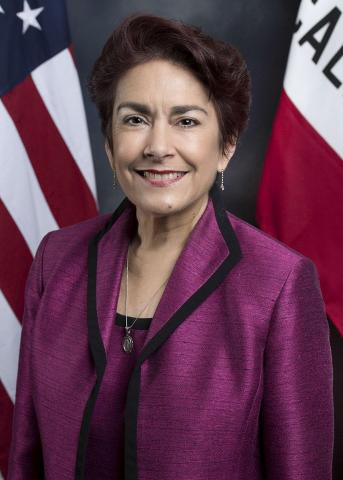
Anna Caballero
DDemocratic
Co
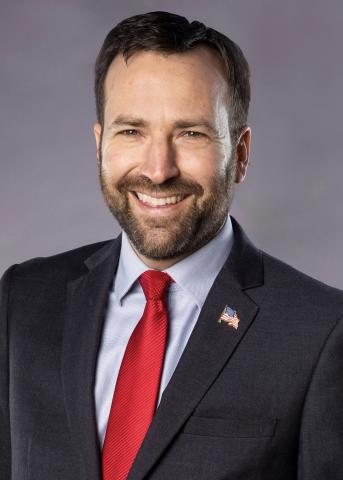
Ben Allen
DDemocratic
Co
Ben Hueso
DDemocratic
Co
Bob Wieckowski
DDemocratic
Co

Henry Stern
DDemocratic
Co
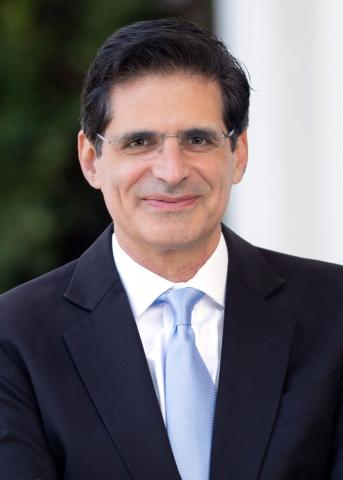
Josh Becker
DDemocratic
Co
ME
María Elena Durazo
DDemocratic
Co

Mike McGuire
DDemocratic
Co
ML
Monique Limón
DDemocratic
Co

Nancy Skinner
DDemocratic

Ask Maddy
·
AI policy assistant
Ask Maddy about SB 1020
Scope: CA
Hi! I can help you understand SB 1020. What would you like to know?
Try one of these
i
Maddy answers using official bill text and legislative records. Always verify before sharing.
Sources cited inline