

Passed Apr 25, 2024
1 co-sponsor
Total votes
25,548
all sessions
Attendance
94%
1,112 missed
Lower than 88% of chamber peers
With party
99%
of cast votes
Near the chamber average
Bipartisan score
0%
crosses aisle rarely
Near the chamber average
Sponsored
478
bills & resolutions
Near the chamber average
Committees
13
assignments
478 bills and resolutions
Sponsored bills
Total
478
Primary
137
Co-sponsor
341
This page
478
matching current filters
Low Carbon Fuel Standard regulations: carbon intensity calculation: avoided methane emissions from livestock manure: prohibition.
The California Global Warming Solutions Act of 2006 establishes the State Air Resources Board as the state agency responsible for monitoring and regulating sources emitting greenhouse gases. The act requires the state board to adopt rules and regulations to achieve the maximum technologically feasible and cost-effective greenhouse gas emissions reductions to ensure that the statewide greenhouse gas emissions are reduced to at least 40% below the statewide greenhouse gas emissions limit, as defined, no later than December 31, 2030. Pursuant to the act, the state board has adopted the Low Carbon Fuel Standard regulations. Existing law requires the state board to provide guidance on credits generated pursuant to the Low Carbon Fuel Standard regulations adopted pursuant to the act from the methane reduction protocols described in the comprehensive strategy for short-lived climate pollutants. This bill would prohibit the state board from including avoided methane emissions in the calculation of carbon intensity for purposes of the state board's evaluation or reevaluation of a fuel pathway, as provided. The bill would define "avoided methane emissions" to mean any captured methane from livestock manure management. The Low Carbon Fuel Standard regulations authorize a fuel pathway that uses biomethane from dairy cattle or swine manure digestion to be certified with a carbon intensity that reflects the reduction of greenhouse gas emissions achieved by the voluntary capture of methane, subject to meeting specified requirements. The regulations also require the carbon intensities that reflect avoided methane emissions from dairy and swine manure projects to meet certain requirements in order to be eligible for credit generation. This bill would provide that the Low Carbon Fuel Standard regulations described above are null and void as applied to fuels derived from livestock manure.
In committee Apr 24, 2024
1 co-sponsor
Construction defect cases.
(1) Existing law sets forth standards for determining liability in an action seeking the recovery of damages arising out of, or related to, deficiencies in residential construction, design, and related issues, and specifies the characteristics of those deficiencies. This bill would require a deficiency in the specific standards described above to materially affect the habitability or usefulness of the residential dwelling unit and to be a result of a failure to meet the standard of care in order for the builder to be liable, as specified. The bill would define "standard of care" as the level of care standard in an industry for similar work performed in the state. (2) Existing law provides for prelitigation procedures for construction defect claims, pursuant to which a claimant and a builder engage in a nonadversarial procedure to resolve deficiencies in construction prior to an adversarial enforcement action. That procedure includes, among other things, an inspection and repair of the alleged defective construction by the builder. Existing law prohibits a builder from obtaining a release or waiver in exchange for such repair work. Existing law authorizes evidence of a repair effort to be admitted as evidence in the event of an enforcement action, and provides that if the claimant contends that repair work was inadequate that the claimant need not shown that the repair work resulted in further damage. This bill would provide for the participation of a special inspector, as defined, in the inspection and approval of repair work performed pursuant to these procedures, and require the builder to obtain and pay for a building permit to perform such work. The bill would instead authorize a builder to obtain a release or waiver upon completion of repair work. This bill would require a local permitting authority to issue a building permit for these purposes within 30 days of receipt of an application for a permit, thereby creating a state-mandated local program. The bill would provide that a claimant's rejection of an offer to repair is not inadmissible in an enforcement action. The bill would delete the evidentiary provisions described above and instead authorize the introduction of a building permit and reports from a special inspector as evidence in an enforcement action. (3) Existing law provides for various affirmative defenses for a builder, general contractor, subcontractor, material supplier, individual product manufacturer, or design professional who is defending an enforcement action for construction deficiencies described above. This will would add a builder's compliance with a building permit and approval of repairs from the permitting body, and the builder's receipt of approval from a special inspector to these affirmative defenses. The California Constitution requires the state to reimburse local agencies and school districts for certain costs mandated by the state. Statutory provisions establish procedures for making that reimbursement. This bill would provide that, if the Commission on State Mandates determines that the bill contains costs mandated by the state, reimbursement for those costs shall be made pursuant to the statutory provisions noted above.
In committee Apr 19, 2024
1 co-sponsor
Relative to Arts Education Month.
This measure would proclaim March 2024 as Arts Education Month and urge all residents to become interested in and give full support to quality arts education programs for children and youth.
Signed into law Apr 19, 2024
0 co-sponsors
Passed Apr 18, 2024
1 co-sponsor
Relative to Wear Red Day and American Heart Month.
This measure would recognize February 2, 2024, as Wear Red Day and the month of February 2024 as American Heart Month.
Signed into law Apr 11, 2024
1 co-sponsor
Relative to Colorectal Cancer Awareness Month.
This measure would designate March 2024 as Colorectal Cancer Awareness Month in California.
Signed into law Apr 11, 2024
1 co-sponsor
Relative to GM1 Gangliosidosis Awareness Day.
This measure would declare May 23, 2024, as GM1 Gangliosidosis Awareness Day in California.
Signed into law Apr 11, 2024
1 co-sponsor
Passed Apr 8, 2024
1 co-sponsor
Relative to Eating Disorders Awareness Week.
This resolution would designate the week beginning on February 26, 2024, and the last week of February hereafter, as Eating Disorders Awareness Week.
Signed into law Mar 15, 2024
1 co-sponsor
Ask Maddy
·
AI policy assistant
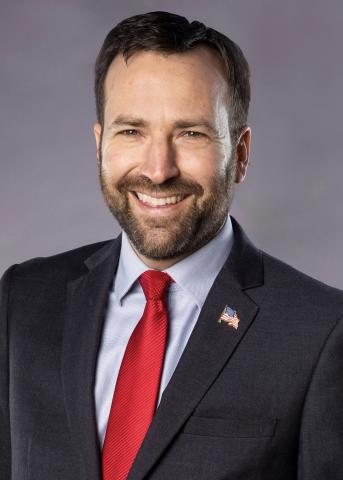
Ask Maddy about Ben Allen
Scope: california
Hi! I can help you understand Ben Allen's legislative record. What would you like to know?
Try one of these
i
Maddy answers using official bill text and legislative records. Always verify before sharing.
Sources cited inline