

Passed Mar 14, 2024
1 co-sponsor
Total votes
14,273
all sessions
Attendance
92%
893 missed
Lower than 88% of chamber peers
With party
99%
of cast votes
Near the chamber average
Bipartisan score
0%
crosses aisle rarely
Near the chamber average
Sponsored
478
bills & resolutions
Near the chamber average
Committees
13
assignments
478 bills and resolutions
Sponsored bills
Total
478
Primary
137
Co-sponsor
341
This page
478
matching current filters
Relative to Childhood Cancer Awareness Month.
This measure would declare the month of September 2023 as Childhood Cancer Awareness Month.
Signed into law Feb 28, 2024
1 co-sponsor
Relative to California Emergency Preparedness Month.
This measure would declare the month of September 2023 as California Emergency Preparedness Month.
Signed into law Feb 28, 2024
1 co-sponsor
Passed Feb 16, 2024
1 co-sponsor
Low-Carbon Fuel Standard regulations: biogas derived from livestock manure.
The California Global Warming Solutions Act of 2006 establishes the State Air Resources Board as the state agency responsible for monitoring and regulating sources emitting greenhouse gases. The act requires the state board to adopt rules and regulations to achieve the maximum technologically feasible and cost-effective greenhouse gas emissions reductions to ensure that the statewide greenhouse gas emissions are reduced to at least 40% below the statewide greenhouse gas emissions limit, as defined, no later than December 31, 2030. Pursuant to the act, the state board has adopted the Low-Carbon Fuel Standard regulations. Existing law requires the state board to approve and begin implementing a comprehensive strategy to reduce emissions of short-lived climate pollutants in the state to achieve, among other things, a reduction in methane emissions to 40% below 2013 levels by 2030. Existing law requires the state board, in consultation with the Department of Food and Agriculture, to adopt regulations to reduce methane emissions from livestock manure management operations and dairy manure management operations consistent with the strategy, as specified. Existing law requires those regulations to be implemented on or after January 1, 2024, if the state board, in consultation with the department, makes certain determinations. Existing law requires the state board to provide guidance on credits generated pursuant to the Low-Carbon Fuel Standard regulations, and the market-based compliance mechanism, adopted pursuant to the act from the methane reduction protocols described in the comprehensive strategy for short-lived climate pollutants. Existing law requires the state board to ensure that projects developed before the implementation of the regulations to reduce methane emissions from livestock manure management operations and dairy manure management operations receive credit under the Low-Carbon Fuel Standard regulations and the market-based compliance mechanism for at least 10 years. Existing law also makes projects eligible for an extension of credits after the first 10 years, as specified. This bill would eliminate the requirement that the state board ensure those projects receive credit for at least 10 years and would eliminate the requirement for those projects to be eligible for an extension of credits after the first 10 years. This bill would require the state board, in implementing the Low-Carbon Fuel Standard regulations, to update the carbon intensity of each pathway for fuel derived from livestock manure to include all emissions of greenhouse gases generated from the production of the fuel and all emissions of greenhouse gases generated from the production of the feedstock. The bill would require the state board to limit the generation of credits for fuel pathway holders for biogas derived from livestock manure to the volume of feedstock at each associated dairy or livestock operation on January 1, 2017, or on the date the pathway was certified, whichever is less. The bill would require a new fuel pathway application that includes the use of biogas derived from livestock manure to include all information and calculations used to determine carbon intensity and would require the state board to make that information publicly available on its internet website. The bill would also require an existing fuel pathway holder whose pathway includes the use of biogas derived from livestock manure to file a document that includes all information and calculations used to determine carbon intensity with the state board on or before January 31, 2024, and would require the state board to make that information publicly available on its internet website on or before March 31, 2024.
In committee Feb 1, 2024
0 co-sponsors
Driver's licenses: instruction permits and provisional licenses.
(1) Existing law, the Brady-Jared Teen Driver Safety Act of 1997, establishes a provisional licensing program and generally requires that a driver's license issued to a person at least 16 years of age, but under 18 years of age be issued pursuant to that provisional licensing program. Existing law requires a person to hold an instruction permit for not less than 6 months prior to applying for a provisional license. During the first 12 months after issuance of a provisional license, existing law prohibits the licensee from driving between the hours of 11 p.m. and 5 a.m. and transporting passengers who are under 20 years of age, as specified. Existing law provides limited exceptions to these restrictions under which a licensee is authorized to drive under specified circumstances. A violation of these provisions is punishable as an infraction. This bill would, commencing January 1, 2027, expand the scope of the provisional licensing program by expanding the applicable age range for the program to persons at least 16 years of age, but under 21 years of age. The restrictions on provisional licensees described above would apply during the first 6 months after issuance of a provisional license to a licensee who is 18, 19, or 20 years of age, subject to specified exemptions. The bill would, commencing July 1, 2027, require a person at least 18 years of age, but under 21 years of age, to hold an instruction permit for at least 60 days before applying for a provisional license. The bill would make other technical and conforming changes and related findings and declarations. By expanding the scope of the provisional licensing program, the violation of which constitutes an infraction, the bill would impose a state-mandated local program. (2) Existing law generally authorizes the Department of Motor Vehicles, for good cause, to issue an instruction permit to any physically and mentally qualified person who applies to the department for an instruction permit and who meets any one of 5 specified requirements, including that the person is 17 years and 6 months of age or older. The bill would, commencing January 1, 2027, raise the age for the above requirement to 20 years and 6 months. Existing law provides that a person, while having in the person's immediate possession a valid permit issued pursuant to the above provisions, may operate a motor vehicle, other than a motorcycle or a motorized bicycle, when accompanied by, and under the immediate supervision of, a California-licensed driver with a valid license of the appropriate class, 18 years of age or over, whose driving privilege is not on probation, as specified. A violation of this provision is punishable as an infraction. The bill would, commencing January 1, 2027, for purposes of supervising a person issued a valid permit as described above, raise the required age of the California-licensed driver to 21 years of age. By changing the definition of an existing infraction, the bill would impose a state-mandated local program. (3) Existing law prohibits a person from owning or operating a driving school or giving driving instruction for compensation without a license issued by the department. The bill would require, on and after January 1, 2025, an owner or operator of a driving school or an independent driving instructor, as a condition of obtaining a new license or renewed license from the department to offer and accept installment payments, as specified, for the compensation to provide the instruction required by the Brady-Jared Teen Driver Safety Act of 1997. The bill would, commencing January 1, 2026, also authorize the department to charge a driving school, as specified, a fee not to exceed $1 for each driver education or driver training certificate of completion furnished by the department and issued to a person who has demonstrated satisfactory completion of a certified driver education and driver training course, in order to recover the department's reasonable costs in administering the provisional licensing program. The bill would prohibit a driving school from charging an applicant a fee for a certificate of completion that exceeds the fee the department charges the school. (4) The California Constitution requires the state to reimburse local agencies and school districts for certain costs mandated by the state. Statutory provisions establish procedures for making that reimbursement. This bill would provide that no reimbursement is required by this act for a specified reason.
In committee Feb 1, 2024
0 co-sponsors
California Historically Significant Commercial District Act.
Existing law establishes the California Business Investment Service Program within the Governor's Office of Business and Economic Development (GO-Biz) for the purpose of serving employers, corporate executives, business owners, investors, and site location consultants who are considering California for business investment and expansion. Existing law provides that the program is under the authority of the director, who is required, among other things, to work cooperatively with local, regional, federal, and other state public and private marketing institutions, economic developers, workforce training partners, and trade organizations in attracting, retaining, and helping businesses and investments grow and be successful in California. This bill, upon appropriation by the Legislature, would establish the California Historically Significant District Program for the purpose of revitalizing and maintaining historically and culturally significant commercial corridors throughout the state by funding technical assistance, training, and other activities that increase the capacity of revitalization entities to provide business assistance programs and services that meet the unique needs of small businesses that operate within historic commercial districts. The bill would provide that the program be administered by the California Business Investment Service Unit within GO-Biz, in consultation with the Community and Placed-Based Solutions Unit. The bill would require the program to award grants to eligible grantees, as defined, who submit an application meeting certain requirements, including, among other things, documentation that the applicant has the experience and capacity to provide technical assistance, training, and other services that increase the capacity of revitalization entities to use place-based tools to improve the entrepreneurial ecosystem to meet the needs of small businesses that operate within historic districts. The bill would require training and education topics and uses of the grant by the grantee to include, but not be limited to, among other things, onsite assessment and training of revitalization entities to develop capacity for implementation of commercial district revitalization plans. The bill would require that grant funds be used by the grantee consistent with certain requirements, including that at least 40% of the total amount of the grant be used by the grantee to provide capacity-building programs and services to eligible historic commercial corridor revitalization entities throughout the state, as specified. The bill would require a grantee, as a condition of receiving the grant, to report on the performance annually. The bill would require that this reporting include, among other things, outcomes from the training and technical assistance provided, including, among other things, the number of training events. The bill would also require a subgrantee to report on program performance quarterly and annually. The bill would require this reporting to include, but not be limited to, quarterly outcomes from the subgrants provided, including, among other things, the number of businesses reached in person. This bill would require a grantee, 6 months following the completion of the grant, to submit a final outcomes report which includes, among other things, a detailed narrative description of how the funds awarded were used to expand the capacity of the statewide network of historic commercial corridor revitalization entities and to help underserved business owners and entrepreneurs within those districts to adapt new, place-based business strategies. This bill would require a grantee and any subgrantee to provide matching funds of at least one dollar for each dollar of state funds received. The bill would authorize up to 50% of the match to be in the form of in-kind services or resources. The bill would require that grant funding be available to the grantee for a 3-year period. The bill would authorize up to 5% of any program appropriation to be used by the Governor's Office of Business and Economic Development for administrative costs, including reporting. The bill would authorize up to 5% of a grant to be used by the grantee for administrative costs related to the organization of the training, technical assistance, and program delivery, including travel and technology. The bill would authorize the Director of GO-Biz to assign one or more of the duties or authorities provided by this bill to another unit within the office or another state agency. This bill would also make related findings and declarations.
Failed Feb 1, 2024
1 co-sponsor
Low Barrier Navigation Center: opportunity housing: use by right: building standards.
Existing law, the Planning and Zoning Law, requires that a Low Barrier Navigation Center development be a use by right in areas zoned for mixed uses and nonresidential zones permitting multifamily uses if it meets prescribed requirements. Existing law defines the terms "Low Barrier Navigation Center" and "use by right" for these purposes. Existing law provides that the California Environmental Quality Act (CEQA) does not apply to an action taken by a public agency to lease, convey, or encumber land owned by a public entity or to facilitate the lease, conveyance, or encumbrance of land owned by a public agency, or to provide financial assistance to, or otherwise approve, a Low Barrier Navigation Center constructed or allowed by existing law. CEQA does not apply to the ministerial approval of projects. Existing law prescribes requirements for notifying a developer that its application for a Low Barrier Navigation Center development is complete and for the local jurisdiction to complete its review of the application. Existing law declares that Low Barrier Navigation Center developments are essential tools for alleviating the homelessness crisis in this state and are a matter of statewide concern and thus applicable to charter cities. Existing law repeals these provisions as of January 1, 2027. This bill would additionally require an opportunity housing project, as defined, to be a use by right if the project has a housing transition plan for a situation when the parcel on which the project is located is no longer suitable for opportunity housing projects, as specified. The bill would also expand use by right to include sites used pursuant to Executive Order No. N-23-20 and areas zoned for medical use or faith-based use. The bill would provide that these provisions do not apply to an opportunity housing project located on a site in a nonresidential zone unless the site is located near amenities and services that serve people experiencing homelessness, as specified. The bill, by authorizing additional developments to be a use by right under certain circumstances, would expand the exemption for the ministerial approval of projects under CEQA. The bill would further expand the above-described application requirements to include opportunity housing projects and additionally declare that the projects are a matter of statewide concern. The bill would also authorize an opportunity housing project proponent to submit a request to any local agency regarding any parcel owned by the local agency to inquire whether the parcel is suitable for an opportunity housing project. The bill would require a local agency to respond to the request within 60 days, as specified. By increasing the duties of local planning officials, this bill would impose a state-mandated local program. Existing law, the California Building Standards Law, establishes the California Building Standards Commission within the Department of General Services. Existing law requires the commission to approve and adopt building standards and to codify those standards in the California Building Standards Code. Existing law, the State Housing Law, requires the Department of Housing and Community Development to propose the adoption, amendment, or repeal of building standards to the California Building Standards Commission. The bill would require the Department of Housing and Community Development, at an expedited meeting on or after January 1, 2024, to investigate possible changes to the California Building Code for health, safety, and fire standards that could unnecessarily increase project construction costs for opportunity housing projects, while ensuring housing quality. The bill would authorize the department to propose changes to those building standards for consideration by the California Building Standards Commission if the department determines that changes can be incorporated to reduce the unnecessary construction costs for opportunity housing projects. The California Constitution requires the state to reimburse local agencies and school districts for certain costs mandated by the state. Statutory provisions establish procedures for making that reimbursement. This bill would provide that no reimbursement is required by this act for a specified reason.
In committee Feb 1, 2024
1 co-sponsor
Firearms: California Do Not Sell List.
Existing law makes possession of a firearm by certain classes of persons, including a convicted felon, a person convicted of specified misdemeanors, a person has been found mentally incompetent to stand trial, a person has been found not guilty of specified crimes by reason of insanity, or a person has been placed under conservatorship, a crime. Existing law additionally makes it a crime to sell or give possession of a firearm to these classes of persons prohibited from owning a firearm. Existing law requires the Department of Justice, upon submission of firearm purchaser information by a licensed firearm dealer, to examine its records to determine whether a potential firearm purchaser is prohibited by state of federal law from possessing, receiving, owning, or purchasing a firearm. Existing law requires the department to participate in the National Instant Criminal Background Check System. This bill would require the Department of Justice to develop and launch a secure Internet-based platform to allow a person who resides in California to voluntarily add their own name to the California Do Not Sell List. The bill would require the department to ensure that information on the list is uploaded and reflected in the National Instant Criminal Background Check System. The bill would make it a crime, punishable as a misdemeanor, to transfer a firearm to a person who is validly registered on the California Do Not Sell List. By creating a new crime, this bill would impose a state-mandated local program. This bill would allow a person, after a specified period of time, to request removal from the list. The bill would require the State Department of Public Health to create and distribute informational materials about the California Do Not Sell List to general acute care hospitals and acute psychiatric hospitals. The bill would specify that a person presenting in a general acute care hospital or acute psychiatric hospital who is at a substantially elevated risk of suicide should be presented with these informational materials. The bill would specify that any suicide hotline maintained or operated by an entity funded in whole or in part by the state should generally inform callers on how to access the California Do Not Sell List Internet-based platform. The bill would provide that its provisions are severable. The California Constitution requires the state to reimburse local agencies and school districts for certain costs mandated by the state. Statutory provisions establish procedures for making that reimbursement. This bill would provide that no reimbursement is required by this act for a specified reason.
Failed Feb 1, 2024
1 co-sponsor
State Air Resources Board: vehicle miles traveled: maps.
Existing law designates the State Air Resources Board as the state agency with the primary responsibility for the control of vehicular air pollution and the state agency charged with monitoring and regulating sources of emissions of greenhouse gases. Existing law imposes various requirements related to transportation planning, including a requirement that certain transportation planning agencies prepare and adopt regional transportation plans directed at achieving a coordinated and balanced regional transportation system. Existing law requires each regional transportation plan to include, among other things, a sustainable communities strategy prepared by each metropolitan planning organization, as specified, which is designed to achieve certain targets for 2020 and 2035 established by the state board for the reduction of greenhouse gas emissions from automobiles and light trucks in the region. This bill would require the state board, in consultation with the Office of Planning and Research and the Department of Transportation, to develop a methodology for assessing and spatially representing light-duty vehicle miles traveled and to develop maps accordingly to display average light-duty vehicle miles traveled per capita in the state at the local, regional, and statewide level, as provided. The bill would require the state board to adopt the methodology no later than January 1, 2025, and to publish the maps no later than 6 months after the methodology is adopted. The bill would require the state board to update the methodology and maps at least once every 4 years. The bill would require the state board to make the methodology and the maps publicly available on its internet website. Under certain circumstances, the bill would require the state board, in consultation with the Office of Planning and Research, to provide technical assistance with regard to the usage and interpretation of the statewide map to a local agency requesting assistance.
died Feb 1, 2024
0 co-sponsors
Ask Maddy
·
AI policy assistant
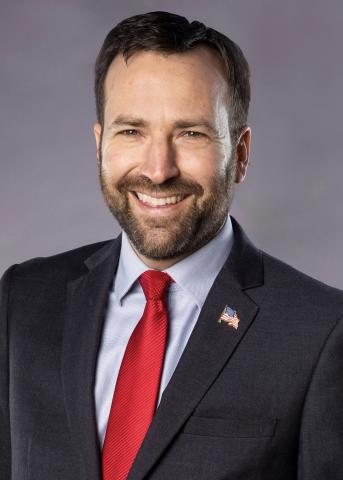
Ask Maddy about Ben Allen
Scope: california
Hi! I can help you understand Ben Allen's legislative record. What would you like to know?
Try one of these
i
Maddy answers using official bill text and legislative records. Always verify before sharing.
Sources cited inline