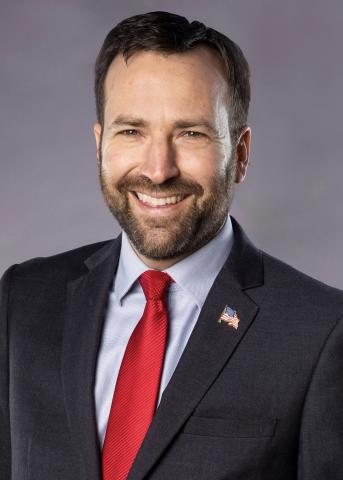
Photo of Ben Allen
D California Senate · District 24

Sen. Ben Allen

Compare
Total votes
14,273
all sessions
Attendance
92%
893 missed
Lower than 86% of chamber peers
With party
99%
of cast votes
Near the chamber average
Bipartisan score
0%
crosses aisle rarely
Near the chamber average
Sponsored
478
bills & resolutions
Near the chamber average
Committees
13
assignments
478 bills and resolutions

Sponsored bills

Total
478
Primary
137
Co-sponsor
341
This page
478
matching current filters
Co-sponsor SB 458
Failed · California Senate · Co-sponsor
Initiative and referendum measures: title and summary.

Existing law requires the Attorney General, upon receipt of the text of a proposed initiative or referendum measure, to prepare a circulating title and summary of the chief purposes and points of the proposed measure that includes an estimate of the financial impact of the proposed measure. Existing law requires the Attorney General to prepare a ballot title and summary for each measure that the Secretary of State determines will appear on the ballot at a statewide election. This bill would instead require the Legislative Analyst to carry out these responsibilities. The bill would make the operation of this requirement contingent upon approval by the voters of SCA 3 of the 2025–26 Regular Session.

Failed Feb 2, 2026 1 co-sponsor
Co-sponsor AB 1106
Failed · California House · Co-sponsor
State Air Resources Board: regional air quality incident response program.

Existing law generally designates the State Air Resources Board as the state agency with the primary responsibility for the control of vehicular air pollution, and air pollution control districts and air quality management districts with the primary responsibility for the control of air pollution from all sources other than vehicular sources. Existing law requires the state board to inventory sources of air pollution within the air basins of the state, determine the kinds and quantity of air pollutants, and monitor air pollutants in cooperation with districts and other agencies. This bill would require the state board to expand its incident air monitoring program, subject to an appropriation by the Legislature for those purposes, to provide support for a regional network of air quality incident response centers operated by air districts, including at least one located in the South Coast Air Quality Management District, in order to facilitate emergency air monitoring response at the local and regional level. Prior to the state board establishing an air quality incident response center within an air district, the bill would require the state board to coordinate and develop operational plans for the air quality incident response centers with the relevant air districts. The bill would provide that funding made available to the state board for purposes of these provisions may be used for various purposes, including program funding to plan, create, equip, and maintain air quality incident response centers. To the extent that the bill would expand the duties of an air district, the bill would impose a state-mandated local program. The California Constitution requires the state to reimburse local agencies and school districts for certain costs mandated by the state. Statutory provisions establish procedures for making that reimbursement. This bill would provide that, if the Commission on State Mandates determines that the bill contains costs mandated by the state, reimbursement for those costs shall be made pursuant to the statutory provisions noted above.


Failed Feb 2, 2026 1 co-sponsor
Co-sponsor AB 804
Failed · California House · Co-sponsor
Medi-Cal: housing support services.

Existing law establishes the Medi-Cal program, which is administered by the State Department of Health Care Services and under which qualified low-income individuals receive health care services. The Medi-Cal program is, in part, governed and funded by federal Medicaid program provisions. Existing law, subject to implementation of the California Advancing and Innovating Medi-Cal (CalAIM) initiative, authorizes a Medi-Cal managed care plan to elect to cover community supports approved by the department as cost effective and medically appropriate in a comprehensive risk contract that are in lieu of applicable Medi-Cal state plan services. Under existing law, community supports that the department is authorized to approve include, among other things, housing transition navigation services, housing deposits, and housing tenancy sustaining services. Existing law, subject to an appropriation, requires the department to complete an independent analysis to determine whether network adequacy exists to obtain federal approval for a covered Medi-Cal benefit that provides housing support services. Existing law requires that the analysis take into consideration specified information, including the number of providers in relation to each region's or county's number of people experiencing homelessness. Existing law requires the department to report the outcomes of the analysis to the Legislature by January 1, 2024. This bill would delete the requirement for the department to complete that analysis, and instead would make housing support services for specified populations a covered Medi-Cal benefit when the Legislature has made an appropriation for purposes of the housing support services. The bill would require the department to seek federal approval for the housing support services benefit, as specified. Under the bill, subject to an appropriation by the Legislature, a Medi-Cal beneficiary would be eligible for those services if they either experience homelessness or are at risk of homelessness. Under the bill, the services would include housing transition navigation services, housing deposits, and housing tenancy sustaining services, as defined. The bill would authorize the department to implement, interpret, or make specific this section, in whole or in part, by means of all-county letters, plan letters, provider bulletins, information notices, or similar instruction, and to enter into exclusive or nonexclusive contracts, or amend existing contracts for its purposes, as specified. The bill would authorize these provisions to be modified by the department to the extent necessary to meet the requirements of federal law or regulations, to obtain federal approval, or to enhance the probability that federal approval can be obtained, as specified.

Failed Feb 2, 2026 1 co-sponsor
Co-sponsor SB 282
Failed · California Senate · Co-sponsor
Residential heat pump systems: water heaters and HVAC: installations.

(1) Existing law establishes the State Energy Resources Conservation and Development Commission and prescribes the authorities, duties, and responsibilities of the commission pertaining to energy matters. Existing law requires the commission, on or before January 1, 2019, in consultation with the Contractors State License Board, local building officials, and other stakeholders, to approve a plan that promotes compliance with specified regulations relating to building energy efficiency standards in the installation of central air-conditioning and heat pumps, as specified. Existing law authorizes the commission to adopt regulations to increase compliance with permitting and inspection requirements for central air-conditioning and heat pumps, and associated sales and installations, consistent with the above-described plan. The bill would require a city, county, or city and county to adopt and offer asynchronous inspections for installations of residential heat pump water heater or heat pump HVAC systems, as defined, that do not require a licensed contractor and building inspector to be simultaneously present during the inspection. The bill would authorize a building inspector to contact the licensed contractor who performed the installation by telephone call or real-time video conferencing during their inspection, and, if the building inspector determines during an asynchronous inspection that there is an issue with an installation of the heat pump water heater or heat pump HVAC system and that the licensed contractor who performed the installation must be present to perform tests or cure the installation, to require the licensed contractor who performed the installation to schedule an additional inspection in which the building inspector and the licensed contractor who performed the installation are required to be simultaneously present during the additional inspection. The bill would specify that these provisions do not require a local entity described above to discontinue offering inspections for the installation of a residential heat pump water heater or heat pump HVAC system that require a building inspector and licensed contractor to be simultaneously present. The bill would authorize a city, county, or city and county, except as specified, to issue up to one nondiscretionary permit per installation of a residential heat pump water heater or heat pump HVAC system in which the local entity administratively approves an application to install the residential heat pump water heater or heat pump HVAC system. The bill would authorize a city, county, or city and county to apply only certain additional building, planning or zoning, or workforce labor standards on the installation of a residential heat pump water heater or residential heat pump HVAC system, including additional standards that conform to local laws, including reach codes, designed to encourage the adoption of zero-emission equipment or improvement of building efficiency. The bill would prohibit a local entity described above from requiring a permit or inspection for plug-in ready window air-conditioner or window heat pump HVAC systems, provided that certain requirements are met, including that the appliance has a voltage rating of 120 volts or less and the appliance is a self-contained unit. The bill would require the commission, on or before July 1, 2026, to develop standardized permitting checklists, as prescribed, for local governments to use in the permitting process for installations of residential heat pump water heater or heat pump HVAC systems, as specified, subject to certain requirements, including that the standardized permitting checklists do not exceed 2 pages in length. The bill would require a city, county, or city and county, on or before July 1, 2027, to implement an online automated permitting process that verifies code compliance and issues permits in real time within the same day of the application being submitted to a licensed contractor for the installation of a residential heat pump water heater or residential heat pump HVAC system. The bill would require a permit to be issued pursuant to the automated permitting process, upon discretion of the administering jurisdiction, if the installation complies with the checklist requirements. The bill would require the local entity to publish and make publicly available, among other things, checklists on their internet website. The bill would require the local entity to allow an applicant to, among other things, submit an automated permit application and associated documentation electronically. The bill would, upon confirmation by the local entity that the application and supporting documents are complete and meet the checklist requirements, require the local entity to approve the application and issue all required permits or authorizations. The bill would, upon receipt of an incomplete application, require the local entity to issue a written correction notice, as specified. The bill would exempt from these requirements a city with a population of fewer than 5,000 persons or a county with a population of fewer than 150,000 persons, as specified. The bill would, except as provided, prohibit a city, county, or city and county from charging a permit fee for a residential heat pump water heater and heat pump HVAC system that exceeds the estimated reasonable cost of providing the service for which the fee is charged, subject to specified requirements, including that the permit fee for a residential heat pump water heater system does not exceed $50. The bill would, notwithstanding that provision, authorize a local entity described above to charge a permit fee for the installation of a residential heat pump water heater or heat pump HVAC system that exceeds the above-described fee limit, as specified, if the local entity, as part of a written finding and an adopted resolution or ordinance, provides substantial evidence of the reasonable cost to issue the permit, and would prohibit a local entity described above from applying additional charges above the advertised fee schedule. The bill would include findings and declarations related to these provisions. (2) Existing law, the Davis-Stirling Common Interest Development Act, defines and regulates common interest developments. Among other things, the act makes a provision of the governing documents, as defined, or architectural or landscaping guidelines or policies void and unenforceable if, among other things, the provision prohibits, or includes conditions that have the effect of prohibiting, the use of low water-using plants as a group or as a replacement of existing turf. This bill would additionally make any provision of the governing documents, architectural guidelines, or policies void and unenforceable if the provision prevents the replacement of a fuel-gas-burning appliance with an electric appliance. The bill would also make any covenant, restriction, or condition contained in any, among other specified agreements, deed, and any provision of a governing document, that effectively prohibits or restricts the installation or use of a residential heat pump water heater or heat pump HVAC system, void and unenforceable. (3) The bill would include findings that changes proposed by this bill address a matter of statewide concern rather than a municipal affair and, therefore, apply to all cities, including charter cities. (4) The California Constitution requires the state to reimburse local agencies and school districts for certain costs mandated by the state. Statutory provisions establish procedures for making that reimbursement. This bill would provide that, if the Commission on State Mandates determines that the bill contains costs mandated by the state, reimbursement for those costs shall be made pursuant to the statutory provisions noted above.
Failed Feb 2, 2026 1 co-sponsor
Primary SB 367
Failed · California Senate · Lead sponsor
Mental health.

(1) Existing law, the Lanterman-Petris-Short (LPS) Act, authorizes the involuntary commitment and treatment of persons with specified mental disorders. Under the act, when a person, as a result of a mental health disorder, is a danger to themselves or others, or is gravely disabled, the person may, upon probable cause, be taken into custody by specified individuals, including, among others, a peace officer and a designated member of a mobile crisis team, and placed in a facility designated by the county and approved by the State Department of Health Care Services for up to 72 hours for evaluation and treatment. Existing law defines "assessment" for those purposes to mean the determination of whether a person shall be evaluated and treated. This bill would require an assessment to consider reasonably available, relevant information as specified. The bill would also authorize an assessment to be used to assist specified individuals in developing an aftercare plan for an individual, if that individual has agreed to an aftercare plan and can be properly served without being detained. (2) Existing law provides a procedure for the appointment of a conservator for a person who is determined to be gravely disabled as a result of a mental disorder or an impairment by chronic alcoholism (hereafter LPS conservatorship) . Under existing law, a professional person in charge of an agency providing comprehensive evaluation or a facility providing intensive treatment may recommend a LPS conservatorship for a gravely disabled person in their care if the professional person determines that the person is unwilling to accept, or is incapable of accepting, treatment voluntarily. Under existing law, a professional person in charge of an agency providing comprehensive evaluation or a facility providing intensive treatment or a professional person in charge of providing mental health treatment at a county jail, or their designee, may recommend a conservatorship for a gravely disabled person without that person being an inpatient in a facility providing comprehensive evaluation or intensive treatment if specified conditions are met. This bill would additionally authorize recommendations for an LPS conservatorship if a determination is made that the gravely disabled person has demonstrated an inability to accept voluntary treatment due to apparent incapacity. The bill would expand the list of individuals or entities that may recommend a conservatorship for a gravely disabled person without that person being an inpatient in a facility providing comprehensive evaluation or intensive treatment to include, among others, the county agency providing investigations for conservatorships of the person. (3) Existing law separately provides for the establishment of a conservatorship for a person who is unable to properly provide for their personal needs or is substantially unable to manage their finances (hereafter probate conservatorship) . Existing law requires the officer providing conservatorship investigation, if they concur with the recommendation of the professional person or facility, to petition the superior court in the patient's county of residence to establish a conservatorship. Existing law requires the officer providing conservator investigation to investigate all available alternatives to conservatorship, including, among other things, assisted outpatient treatment, as specified, and the Community Assistance, Recovery, and Empowerment Act program. Existing law requires the officer to recommended conservatorship to the court only if no suitable alternatives are available. Existing law requires the officer to render to the court a comprehensive written report of investigation prior to the hearing and to set forth all alternatives available if the officer recommends either for or against conservatorship. This bill would specify probate conservatorships with or without major neurocognitive disorder powers in the list of available alternatives that the officer providing conservatorship investigation is required to investigate. In a county where probate conservatorship and LPS conservatorship duties are split between separate agencies, the bill would require LPS conservatorship referrals that include the presence of a major neurocognitive disorder to be reviewed by both agencies to ensure the continuity of evaluations. The bill would additionally require an officer providing conservatorship investigation to include a recommended individualized plan for treatment and care drawn from the documented list of less-restrictive alternatives in the written report described above if the officer recommends against an LPS conservatorship. The bill would also make various clarifying changes. By expanding the duties of county agencies that provide services related to probate conservatorships and LPS conservatorships, and by expanding the duties of the county officer providing conservatorship investigation, this bill would impose a state-mandated local program. (4) Existing law authorizes a conservator of the person, the estate, or the person and the estate to be appointed for a person who is gravely disabled as a result of a mental health disorder or impairment by chronic alcoholism for the purpose of providing individualized treatment, supervision, and placement. Existing law requires the creation of an individualized treatment plan within 10 days of the establishment of a conservatorship, as specified. Existing law requires the treatment plan to specify goals for the conservatee's treatment, the criteria by which the accomplishment of those goals can be adjudged, and a plan for reviewing the progress of the treatment. If a treatment plan is not developed or if the conservator fails to report to the court that the conservatee is no longer gravely disabled, existing law requires specified individuals, including a person designated by the county, to refer the matter to the court. Existing law requires the court, upon report by a person designated by the county that the goals have been reached and the person is no longer gravely disabled, to terminate the conservatorship. This bill would require an individualized treatment plan to specify goals for stabilization, the individual's evidenced-based treatment, and movement to a less-restrictive setting. The bill would require those goals to include the criteria by which accomplishment can be judged. The bill would require the treatment plan to be filed with the court, as specified, after it is developed. The bill would require the court to order the treating agency to remedy any perceived defects in a treatment plan if the plan does not meet the specified goals and criteria and would create procedures for remedying those defects and terminating the conservatorship. The bill would authorize the court, upon termination of the conservatorship, to refer the individual to assisted outpatient treatment or CARE court, as specified. This bill would prohibit the court from terminating the conservatorship prior to the end of the conservator's one-year mark if the conservatee cannot be located at any point during that one-year period, except as specified. The bill would require, when a county is filing a petition and the county is aware that the subject of the petition was, within the prior 6 months, a conservatee whose conservatorship was terminated before the one-year termination date, to include in its petition the circumstances that gave rise to the termination. Because this bill would increase the duties on county personnel, this bill would impose a state-mandated local program. (5) Existing law, the Community Assistance, Recovery, and Empowerment (CARE) Act, authorizes specified people to petition a civil court to create a CARE plan to provide an individualized, appropriate range of community-based services and supports to an eligible individual. Under the CARE Act, all reports, evaluations, diagnoses, and other information filed with the court that are related to the respondent are confidential, except as specified. This bill would authorize that information to be shared only by a court order or as approved by the respondent. If the information is used outside of the above-described proceedings, the bill requires a court order for that information to be shared. This bill would authorize a court, at any point after entry of a CARE agreement or adoption of a CARE plan, to order the respondent to an evaluation under the LPS without a petition from the county if the court believes the respondent has become gravely disabled. The bill would establish the procedures required before a court could issue an order pursuant to these provisions. (6) The California Constitution requires the state to reimburse local agencies and school districts for certain costs mandated by the state. Statutory provisions establish procedures for making that reimbursement. This bill would provide that, if the Commission on State Mandates determines that the bill contains costs mandated by the state, reimbursement for those costs shall be made pursuant to the statutory provisions noted above.

Failed Feb 2, 2026 0 co-sponsors
Primary SB 815
Failed · California Senate · Lead sponsor
Planning and zoning: very high fire hazard areas.

(1) The Planning and Zoning Law requires the legislative body of a city or county to adopt a comprehensive, long-term general plan that includes various elements, including, among others, a housing element and a safety element for the protection of the community from unreasonable risks associated with the effects of various geologic and seismic hazards, flooding, and wildland and urban fires. Existing law requires the housing element to be revised according to a specific schedule. Existing law requires the planning agency to review and, if necessary, revise the safety element upon each revision of the housing element or local hazard mitigation plan, but not less than once every 8 years, to identify new information relating to flood and fire hazards and climate adaptation and resiliency strategies applicable to the city or county that was not available during the previous revision of the safety element. Existing law requires that the Office of Land Use and Climate Innovation, among other things, coordinate with appropriate entities, including state, regional, or local agencies, to establish a clearinghouse for climate adaptation information for use by state, regional, and local entities, as provided. This bill would require the safety element, upon the next revision of the housing element or the hazard mitigation plan, on or after January 1, 2026, whichever occurs first, to be reviewed and updated as necessary to include a comprehensive retrofit strategy to improve safety and reduce the risk of property loss and damage during wildfires, as specified, and would require the planning agency to submit the adopted strategy to the Office of Planning and Research for inclusion into the above-described clearinghouse. The bill would also require the planning agency to review and, if necessary, revise the safety element upon each revision of the housing element or local hazard mitigation plan, but not less than once every 8 years, to identify new information relating to retrofit updates applicable to the city or county that was not available during the previous revision of the safety element. By increasing the duties of local officials, this bill would create a state-mandated local program. (2) Existing law requires the general plan to include a land use element that designates the proposed general distribution and general location and extent of the uses of the land for, among other purposes, housing, business, and industry. Existing law additionally requires the general plan to include a housing element and requires each local government to review and revise its housing element, as specified. This bill would require a city or county that contains residential structures in a very high fire hazard area, as defined, upon each revision of the housing element on or after January 1, 2026, to amend the land use element of its general plan to consider, among other things, the goals contained in the most recent Strategic Fire Plan for California prepared by the Department of Forestry and Fire Protection. The bill would also require the revised land use elements to contain, among other things, the locations of all very high fire hazard areas within the city or county and feasible implementation measures designed to carry out specified goals, objectives, and policies relating to the protection of lives and property from unreasonable risk of wildfire. The bill would also require the city or county to complete a review of, and make findings related to, the designation of lands within the jurisdiction as very high fire hazard severity zones, upon each subsequent revision of the housing element, as provided. By increasing the duties of local officials, this bill would impose a state-mandated local program. (3) Existing law requires the Office of Land Use and Climate Innovation to implement various long-range planning and research policies and goals that are intended to, among other things, encourage the formation and proper functioning of local entities and, in connection with those responsibilities, to adopt guidelines for the preparation and content of the mandatory elements required in city and county general plans. This bill would require the Office of Land Use and Climate Innovation, on or before January 1, 2027, in collaboration with cities and counties, to identify local ordinances, policies, and best practices relating to land use planning in very high fire hazard areas, as defined, wildfire risk reduction, and wildfire preparedness and publish these resources on the above-described clearinghouse, as specified. (4) The California Constitution requires the state to reimburse local agencies and school districts for certain costs mandated by the state. Statutory provisions establish procedures for making that reimbursement. This bill would provide that no reimbursement is required by this act for a specified reason.

Failed Feb 2, 2026 0 co-sponsors
Co-sponsor AB 1468
Failed · California House · Co-sponsor
Ethnic studies: content standards, curriculum frameworks, instructional materials, and compliance monitoring.

Existing law requires the State Board of Education to adopt statewide academically rigorous content standards in the core curriculum areas of reading, writing, mathematics, history/social science, and science, as specified. Existing law requires the Instructional Quality Commission to, among other things, recommend curriculum frameworks to the state board and develop criteria for evaluating instructional materials. This bill would require the state board to, on or before January 1, 2028, develop and adopt academically rigorous content standards for ethnic studies instruction in high school. The bill would require the commission, on or before January 1, 2028, to review and recommend to the state board curriculum frameworks and instructional materials for ethnic studies instruction in high school, as specified. The bill would require the state board to provide the commission with evaluation criteria to use in providing its review and recommendations. The bill would state the intent of the Legislature to enact subsequent legislation to establish an advisory committee with a majority of the advisory committee's members being experts in African American studies, Asian American and Pacific Islander studies, Native American studies, and Latino and Chicanx studies, to provide input to the state board on proposed content standards and to the commission on proposed curriculum frameworks and instructional materials for ethnic studies instruction in high school. Existing law requires a pupil to complete designated coursework while in grades 9 to 12, inclusive, in order to receive a diploma of graduation from high school. These graduation requirements include, commencing for pupils graduating in the 2029–30 school year, the completion of a one-semester course in ethnic studies meeting specified requirements. Under existing law, the requirement to complete an ethnic studies course may be fulfilled by the completion of, among others, a course based on the model curriculum developed by the Instructional Quality Commission, an ethnic studies course taught as part of a course that has been approved as meeting the A–G requirements of the University of California and the California State University, or a locally developed ethnic studies course approved by the governing board of a school district or the governing body of a charter school. Existing law requires the curriculum, instruction, and instructional materials for these ethnic studies courses to meet specified requirements, including that they not reflect or promote any bias, bigotry, or discrimination against any person or group of persons on the basis of certain characteristics. Existing law makes these provisions relating to ethnic studies courses operative only upon an appropriation of funds by the Legislature for purposes of these provisions. This bill would require the curriculum, instruction, and instructional materials for any high school ethnic studies course, including ethnic studies courses meeting high school graduation requirements, to meet the above-described requirements, and would require the curriculum, instruction, and instructional materials for all high school ethnic studies courses to additionally, among other things, foster multicultural respect and understanding and focus on the domestic experience and stories of historically marginalized peoples in American society. To the extent that the bill would impose new duties on local educational agencies, the bill would impose a state-mandated local program. The bill would require a school district, county office of education, or charter school to provide, on or before June 30, 2026, the State Department of Education with a copy of all curricula, instruction, and instructional materials in ethnic studies that schools offer or plan to offer to pupils in any of grades 9 to 12, inclusive, and the adoption calendar for curricula, instruction, and instructional materials in ethnic studies proposed for adoption by the governing board or body of the local educational agency for instruction to these pupils. The bill would require a local educational agency that does not have an ethnic studies course in place for its pupils in any of grades 9 to 12, inclusive, on or before June 30, 2026, to provide the department with a copy of all curricula, instruction, and instructional materials in ethnic studies that its schools seek to adopt at least 60 days before being first presented at a public meeting of the governing board or body of the local educational agency for instruction to these pupils. The bill would require the department to post the information received pursuant to these requirements on its internet website. To the extent that the bill would impose new duties on local educational agencies, it would impose a state-mandated local program. The bill would require the department to monitor compliance with the requirements of this bill as part of its annual compliance monitoring of state and federal programs and to provide a report to the relevant policy and fiscal committees of the Legislature summarizing the data collected through compliance monitoring, as specified. The California Constitution requires the state to reimburse local agencies and school districts for certain costs mandated by the state. Statutory provisions establish procedures for making that reimbursement. This bill would provide that, if the Commission on State Mandates determines that the bill contains costs mandated by the state, reimbursement for those costs shall be made pursuant to the statutory provisions noted above.

Failed Feb 2, 2026 1 co-sponsor
Co-sponsor AB 1083
Failed · California House · Co-sponsor
California Environmental Quality Act: exemptions: housing development projects: natural and protected lands: record of proceedings.

The California Environmental Quality Act (CEQA) requires a lead agency, as defined, to prepare, or cause to be prepared, and certify the completion of an environmental impact report (EIR) on a project that it proposes to carry out or approve that may have a significant effect on the environment or to adopt a negative declaration if it finds that the project will not have that effect. CEQA also requires a lead agency to prepare a mitigated negative declaration for a project that may have a significant effect on the environment if revisions in the project would avoid or mitigate that effect and there is no substantial evidence that the project, as revised, would have a significant effect on the environment. Existing law exempts from CEQA a rezoning that implements the schedule of actions contained in an approved housing element, as specified, except, among other things, a rezoning that would allow for the construction of a distribution center or for oil and gas infrastructure. This bill would instead exempt a rezoning to the extent that it is necessary to implement a schedule of actions contained in an approved housing element, except, among other things, a rezoning that would allow for the construction of a distribution center, for a tourism facility, as defined, or for oil and gas infrastructure. Existing law, for a proposed housing development project, as defined, that would otherwise be exempt from CEQA pursuant to a statutory exemption or specified categorical exemptions, but for a single condition, limits the application of CEQA to the effects upon the environment that are caused by that single condition, except as provided. This bill, for purposes of those provisions, would modify the definition of housing development project to exclude a project that has any portion of the project designated for use as a tourism facility, as defined. To the extent that this would create new duties for a lead agency, this bill would impose a state-mandated local program. Existing law exempts specified projects from CEQA, including a project that consists exclusively of a facility for advanced manufacturing, as defined, if the project is located on a site zoned exclusively for industrial uses. Existing law excludes projects located on natural and protected lands, as defined, from these exemptions, as provided. Existing law includes in the definition of natural and protected lands, lands protected as preserve areas or reserve lands pursuant to an adopted natural community conservation plan or habitat conservation plan, as specified. This bill would instead include, for that portion of the definition of natural and protected lands, lands identified for conservation in an adopted natural community conservation plan, habitat conservation plan, or other adopted natural resource protection plan, as specified. The bill would also expand the definition of natural and protected lands to include habitat for protected species, as specified, fully protected species, or species protected by the federal Endangered Species Act of 1973, the California Endangered Species Act, or the Native Plant Protection Act. The bill would eliminate the exemption from CEQA for advanced manufacturing projects. The bill would instead exempt from CEQA, until January 1, 2030, a project that consists exclusively of a facility for semiconductor manufacturing if the project is located on a site that was zoned exclusively for heavy industrial use on or before August 1, 2025, and meets specified criteria, including, among other things, that the project does not involve the storage, use, or discharge of extremely hazardous gases or chemicals above California's accidental release program reporting thresholds, the project applicant demonstrates high road employment standards and certifies to the lead agency that it will maintain those standards in the development, construction, and operation of the facility, and the project applicant has provided a legally binding commitment to comply with specified labor-related requirements with respect to the initial construction of the facility and subsequent maintenance that is contracted out to a contractor in the construction industry, as specified. Because a lead agency would be required to determine the applicability of this exemption, the bill would impose a state-mandated local program. The bill would require the State Energy Resources Conservation and Development Commission to develop and make available to lead agencies guidelines for evaluating whether a project applicant demonstrates high road employment standards. The bill would require the Office of Land Use and Climate Innovation, on or before January 1, 2029, to report to the Legislature on projects that were exempted from CEQA pursuant to the above exemption, as provided, and require the report to include a list of the projects for semiconductor manufacturing facilities that have been approved for development in the state, as specified. CEQA requires in an action or proceeding to attack, review, set aside, void, or annul certain acts or decisions of a public agency to be commenced according to a specified process and requires the record of proceedings to contain specified information, including all internal agency communications, except as specified. Existing law provides that for those projects that do not include a distribution center or oil and gas infrastructure, internal agency communication does not include staff notes and electronic internal agency communications, including emails, that were not presented to the final decisionmaking body, other than those communications and documents consulted, or reviewed by the lead agency executive or a local agency executive, as provided, thereby limiting what the record of proceeding is required to contain for these projects. This bill would eliminate the above-described limitation on internal agency communication required to be included in the record of proceedings for those projects that do not include a distribution center or oil and gas infrastructure, thereby requiring additional information to be included in the record of proceeding. By imposing new duties on a lead agency in order to comply with this provision, the bill would create a state-mandated local program. The California Constitution requires the state to reimburse local agencies and school districts for certain costs mandated by the state. Statutory provisions establish procedures for making that reimbursement. This bill would provide that no reimbursement is required by this act for a specified reason.

Failed Feb 2, 2026 1 co-sponsor
Co-sponsor AB 255
Vetoed · California House · Co-sponsor
The Supportive-Recovery Residence Program.

Existing law establishes the California Interagency Council on Homelessness to oversee the implementation of Housing First guidelines and regulations, and, among other things, identify resources, benefits, and services that can be accessed to prevent and end homelessness in California. Existing law requires a state agency or department that funds, implements, or administers a state program that provides housing or housing-related services to people experiencing homelessness or who are at risk of homelessness to revise or adopt guidelines and regulations to include enumerated Housing First policies. Existing law specifies the core components of Housing First, including services that are informed by a harm-reduction philosophy that recognizes drug and alcohol use and addiction as a part of tenants' lives and where tenants are engaged in nonjudgmental communication regarding drug and alcohol use. This bill would authorize state programs to fund supportive-recovery residences, as defined, that emphasize abstinence under these provisions as long as the state program meets specified criteria, including that at least 90% of program funds awarded to each jurisdiction is used for housing or housing-based services using a harm-reduction model. This bill would specify requirements for applicants seeking funds under these programs and would require the state to perform periodic monitoring of select supportive-recovery residence programs to ensure that the supportive-recovery residences meet certain requirements, including that core outcomes of the supportive-recovery housing emphasize long-term housing stability and minimize returns to homelessness. The bill would also prohibit eviction on the basis of relapse, as specified. The bill would require, if a tenant is no longer interested in living in a supportive-recovery residence with an abstinence focus, is at risk of eviction, or is discharged from the program, the tenant to reside in the supportive recovery residence until the operator secures the tenant a new permanent housing placement option operated with harm-reduction principles that is also permanent housing. The bill would require supportive housing and services to support residents' access to and use of medications to treat behavioral and physical health conditions, as specified, and to provide overdose prevention training and overdose reversal medication to staff and residents, as specified. Existing law establishes the Department of Housing and Community Development and requires it to administer various programs that provide services to homeless individuals. This bill would require the department to adopt the most recent standards approved by the National Alliance for Recovery Residences or other national standards as the minimum standard for supportive-recovery residences that receive public funds under these provisions. The bill would require the department to establish a separate process for determining if the supportive-recovery residence complies with the core components of Housing First. The bill would require the department to verify compliance with the core components of Housing First for residences seeking Housing First certification, as specified. The bill would authorize the department to charge an annual fee to verify that supportive-recovery residences comply with the core components of Housing First in an amount not to exceed the reasonable cost of administering the program, not to exceed $100, and would establish the Supportive-Recovery Residence Program Fund for collection of the fee, to be available upon appropriation by the Legislature.

Vetoed Jan 22, 2026 1 co-sponsor
Co-sponsor AB 986
Vetoed · California House · Co-sponsor
State of emergency and local emergency: landslides and climate change.

Existing law, the California Emergency Services Act, authorizes the Governor to declare a state of emergency, and local officials and local governments to declare a local emergency, when specified conditions of disaster or extreme peril to the safety of persons and property exist, and authorizes the Governor or the appropriate local government to exercise certain powers in response to that emergency. Existing law defines 3 conditions or degrees of emergency for purposes of these provisions. This bill would additionally include a landslide among those conditions constituting a state of emergency or local emergency.

Vetoed Jan 22, 2026 1 co-sponsor
Showing 111 to 120 of 478 bills
Previous 1 11 12 13 48 Next