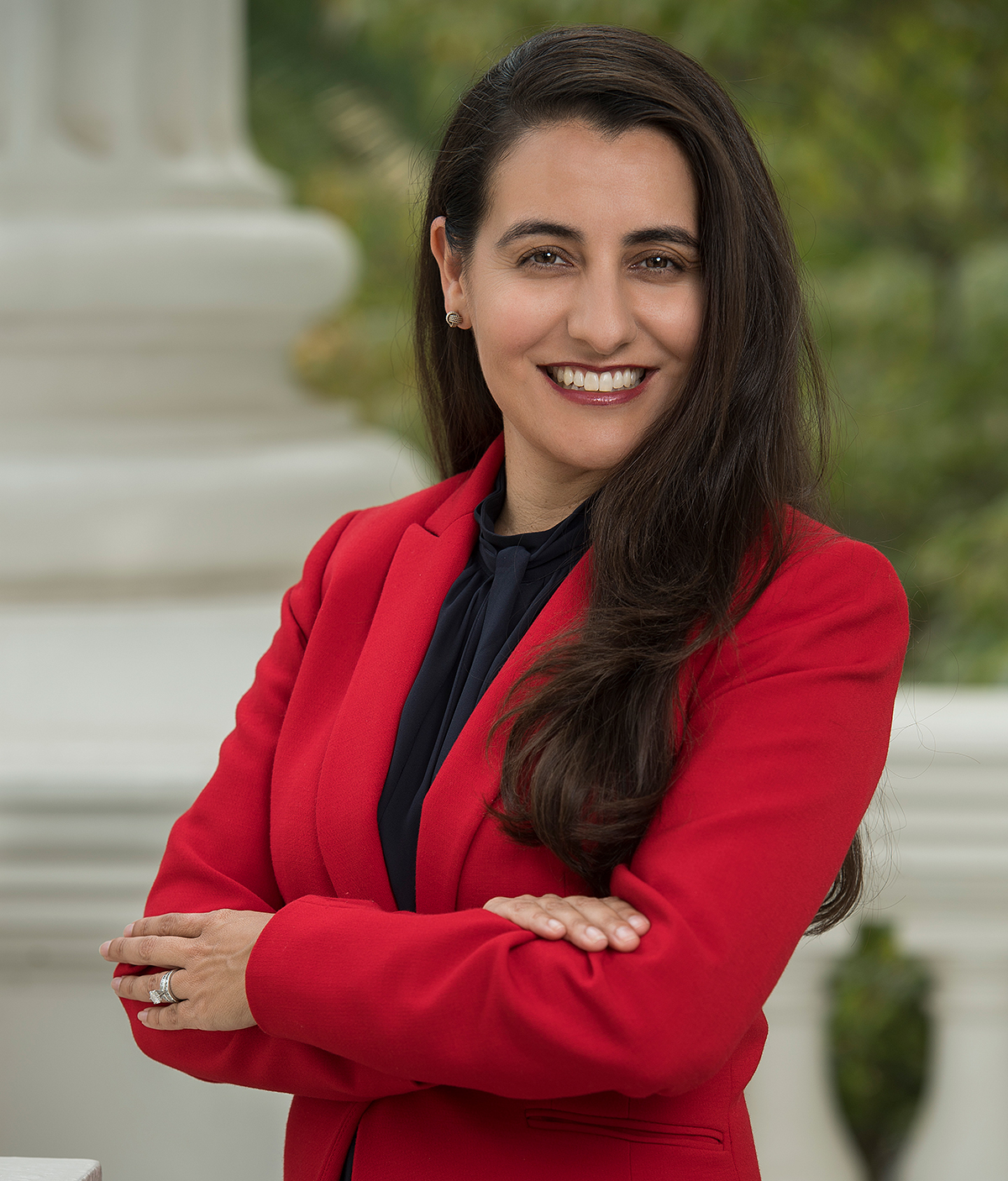
Photo of Monique Limón
D California Senate · District 21

Sen. Monique Limón

Compare
Total votes
20,781
all sessions
Attendance
92%
1,339 missed
Near the chamber average
With party
99%
of cast votes
Near the chamber average
Bipartisan score
0%
crosses aisle rarely
Near the chamber average
Sponsored
1,106
bills & resolutions
Near the chamber average
Committees
4
assignments
1,106 bills and resolutions

Sponsored bills

Total
1,106
Primary
238
Co-sponsor
868
This page
1,106
matching current filters
Co-sponsor SCR 168
Signed into law · California Senate · Co-sponsor
Relative to Women's Equality Day.

This measure would recognize August 26, 2024, as Women's Equality Day and its historic importance to women's rights, including the battle to attain those rights in the past, present, and future.

Signed into law Aug 28, 2024 1 co-sponsor
Co-sponsor ACR 203
Signed into law · California Assembly · Co-sponsor
Relative to the Bob Raleigh Memorial Bike Path.

This measure would designate the bike path located along a specified portion of State Route 246 in the County of Santa Barbara as the Bob Raleigh Memorial Bike Path. The measure would also request that the Department of Transportation determine the cost of appropriate signs showing this special designation and, upon receiving donations from nonstate sources sufficient to cover the cost, to erect those signs.

Signed into law Aug 28, 2024 1 co-sponsor
Co-sponsor ACR 225
Signed into law · California Assembly · Co-sponsor
Relative to Coastal Stewardship Day.

Maddy summaryThis bill designates August 8, 2024, as Coastal Stewardship Day in California. It directly affects the state by officially recognizing the importance of its coastline to the economy, environment, and community identity. The measure includes a formal proclamation and directs the Chief Clerk of the Assembly to send copies of the resolution to the author for distribution. It does not create new laws or funding but serves as a commemorative acknowledgment of coastal resources and the need for their conservation.

Signed into law Aug 28, 2024 1 co-sponsor
Co-sponsor SB 1482
Passed · California Senate · Co-sponsor
Commercial financing.

Existing law, the California Consumer Financial Protection Law (CCFPL) , establishes certain consumer protections relating to consumer financial products, practices, and services, including, among others, making it unlawful for covered persons or service providers, as defined, to, among other acts, engage in unlawful, unfair, deceptive, or abusive acts or practices with respect to consumer financial products or services. Existing law establishes that the purpose of the CCFPL is to promote consumer welfare, fair competition, and wealth creation in this state by promoting, among other things, nondiscriminatory access to consumer financial products and services that are understandable and not unfair, deceptive, or abusive. Existing law authorizes the Department of Financial Protection and Innovation, under the direction of the Commissioner of Financial Protection and Innovation, to prescribe rules regarding registration requirements applicable to a covered person in the business of offering or providing a consumer financial product or service, as defined, and rules requiring the payment of registration fees. This bill would expand the purposes of the CCFPL to include the protection of small businesses from abusive financial practices, as specified. The bill would impose various duties on commercial financing providers and brokers, including, among other things, prohibiting the taking of a confession of judgment or power of attorney at any time before a default, as specified.

Passed Aug 26, 2024 1 co-sponsor
Co-sponsor SJR 6
Signed into law · California Senate · Co-sponsor
Don't Ask, Don't Tell: discharge characterizations.

This measure would urge the President and the Congress of the United States to address, with effective policies, the issue of servicemembers who were unjustly discharged under "Don't Ask, Don't Tell" or predecessor provisions, in order to unify efforts to upgrade discharges issued under the DADT policy, and to restore benefits.

Signed into law Aug 21, 2024 1 co-sponsor
Co-sponsor AB 596
Passed · California Assembly · Co-sponsor
Early learning and care: rate reform.

(1) Existing law, the Early Education Act, among other things, requires the Superintendent of Public Instruction to administer all California state preschool programs, including, but not limited to, part-day and full-day age and developmentally appropriate programs for 3- and 4-year-old children. Existing law, the Child Care and Development Services Act, administered by the State Department of Social Services, establishes a system of child care and development services for children up to 13 years of age. Existing law requires the department, in collaboration with the State Department of Education, to implement a reimbursement system plan that establishes reasonable standards and assigned reimbursement rates, as specified. Existing law requires the state and Child Care Providers United - California to establish a Joint Labor Management Committee to develop recommendations for a single reimbursement rate structure that has specified characteristics, and requires the Joint Labor Management Committee to present those recommendations to the Department of Finance no later than November 15, 2022. Existing law also requires the department, in consultation with the State Department of Education, to convene a working group to assess the existing quality standards for childcare and development and preschool programs and the methodology for establishing reimbursement rates for those programs, and requires the working group to provide recommendations relating to specified topics to a specified Joint Labor Management Committee, the Department of Finance, and the Joint Legislative Budget Committee no later than August 15, 2022. This bill would require the State Department of Social Services, in collaboration with the State Department of Education, to develop an alternative methodology for calculating subsidy payment rates for child care and development services and California state preschool program services that build upon and align with the recommendations of the working group and Joint Labor Management Committee, and that uses a cost estimation model, as specified. The bill would require the department to develop an interim transition plan, if necessary, to implement the alternative methodology, as specified, and to seek preapproval from the United States Department of Health and Human Services to amend the state's current Child Care and Development Fund State Plan to change its current methodology for determining childcare and development and preschool subsidy payment rates to the alternative methodology. The bill would require the State Department of Social Services and the State Department of Education to implement the alternative methodology upon notice, in writing, to the Legislature that the alternative methodology has been adopted, as specified. (2) Existing law requires the State Department of Social Services, in consultation with the State Department of Education, to establish a fee schedule for families using preschool and child care and development services and requires families who utilize those services to be assessed a family fee that is based on income, certified family need for full-time or part-time care services, and enrollment. Existing law prohibits those family fees from exceeding 10% of the family's monthly income and prohibits family fees from being collected for the 2022–23 fiscal year. The bill would require the State Department of Social Services, in consultation with the State Department of Education, to develop an equitable sliding scale for the payment of family fees, and would suspend the collection of family fees until the new equitable sliding scale is implemented. (3) The Early Education Act requires the Superintendent of Public Instruction to adopt rules, regulations, and guidelines to facilitate the funding and reimbursement required by the act. Existing law requires, for the 2022–23 fiscal year only, contracting agencies operating a California state preschool to be reimbursed 100% of the contract maximum reimbursable amount or net reimbursable program costs, whichever is less, if they meet specified criteria. This bill would delete the requirement that the above-described reimbursement rate apply only during the 2022–23 fiscal year, thereby extending that reimbursement rate for contracting agencies operating a California state preschool indefinitely. The bill would also delete the requirement of meeting specified criteria in order to obtain that reimbursement rate. Existing law requires reimbursement for full-day and part-day California state preschool family childcare home education network providers for the 2022–23 fiscal year to be based on the maximum certified hours of care for all families, including families certified for a variable schedule, regardless of attendance. This bill would delete the requirement that the above-described reimbursement provision apply during the 2022–23 fiscal year, thereby extending that reimbursement provision for full-day and part-day California state preschool family childcare home education network providers indefinitely. (4) Existing law requires the State Department of Social Services to contract with local contracting agencies for alternative payment programs for childcare services to be provided throughout the state. Existing law requires the alternative payment program to reimburse childcare providers based upon specified criteria, including the actual days and hours of attendance for those families with variable schedules. Existing law also requires the department to administer general childcare and development programs, as specified. This bill would instead require the alternative payment program to reimburse childcare providers based on the maximum certified hours of care, as specified. The bill would require contracting agencies operating those general childcare and development programs to be reimbursed the lesser of 100% of the contract maximum reimbursable amount or net reimbursable program costs.


Passed Aug 15, 2024 1 co-sponsor
Co-sponsor SR 113
Passed · California Senate · Co-sponsor
Relative to Latina Equal Pay Day.

Maddy summaryThis Senate Resolution officially designates October 3, 2024, as Latina Equal Pay Day in California to highlight the persistent wage gap affecting Latinas. The measure acknowledges that Latinas in the state earn significantly less than their White male counterparts, a disparity that impacts their economic security and retirement savings. By recognizing this date, the resolution aims to raise awareness about the need for policies that ensure equal pay for all workers regardless of gender or ethnicity.

Passed Aug 15, 2024 1 co-sponsor
Co-sponsor SR 124
Passed · California Senate · Co-sponsor
Relative to recognizing the United Mexican States' First Woman President, Dr. Claudia Sheinbaum.

Maddy summaryThis Senate Resolution recognizes Dr. Claudia Sheinbaum as the first female president of Mexico, highlighting her historic election and background in science and public service. The measure celebrates her achievements, including her work on climate change and transportation, and notes her status as the first female president elected in North America. It expresses the California Senate's support for her leadership and looks forward to strengthening ties between California and Mexico. The resolution is a formal acknowledgment rather than a law that changes policy or imposes new requirements.

Passed Aug 15, 2024 1 co-sponsor
Primary SB 1094
Passed · California Senate · Lead sponsor
Pupil instruction: course of study: social sciences: civic engagement.

Existing law requires the adopted course of study for grades 1 to 6, inclusive, and the adopted course of study for grades 7 to 12, inclusive, to include certain areas of study, including, among others, social sciences. Existing law requires instruction in social sciences to provide a foundation for understanding, among other things, the history, resources, development, and government of California and the United States of America. This bill, with respect to both of the above-referenced adopted courses of study, would explicitly require instruction in social sciences to also include civic engagement experiences with governmental institutions and instruction in principles of democracy and the State and Federal Constitutions. To the extent that this bill would create new duties for local educational agencies or local officials, it would constitute a state-mandated local program. The California Constitution requires the state to reimburse local agencies and school districts for certain costs mandated by the state. Statutory provisions establish procedures for making that reimbursement. This bill would provide that, if the Commission on State Mandates determines that the bill contains costs mandated by the state, reimbursement for those costs shall be made pursuant to the statutory provisions noted above.

Passed Aug 15, 2024 0 co-sponsors
Co-sponsor SR 122
Passed · California Senate · Co-sponsor
Relative to Childhood Cancer Awareness Month.

Maddy summarySenate Resolution 122 officially designates September 2024 as Childhood Cancer Awareness Month in California. This measure encourages individuals, businesses, and organizations across the state to participate in awareness activities and support families affected by the disease. The resolution also expresses gratitude to medical professionals and acknowledges the progress made by organizations fighting childhood cancer.

Passed Aug 15, 2024 1 co-sponsor
Showing 131 to 140 of 1,106 bills
Previous 1 … 13 14 15 … 111 Next