

The California Credit Union Law generally provides for the organization and regulation of credit unions by the Commissioner of Financial Protection and Innovation. Existing law requires a credit union subject to the examination authority of the commissioner to report annually to the commissioner on the amount of revenue earned from overdraft fees and nonsufficient funds fees, as defined and specified. This bill would require a credit union to provide a member a notice each time the credit union assesses an overdraft fee or nonsufficient funds fee, as specified. Beginning January 1, 2026, the bill would prohibit a credit union from charging an overdraft fee or a nonsufficient funds fee exceeding $14 or the amount set by the federal Consumer Financial Protection Bureau for the fee, whichever is lower.
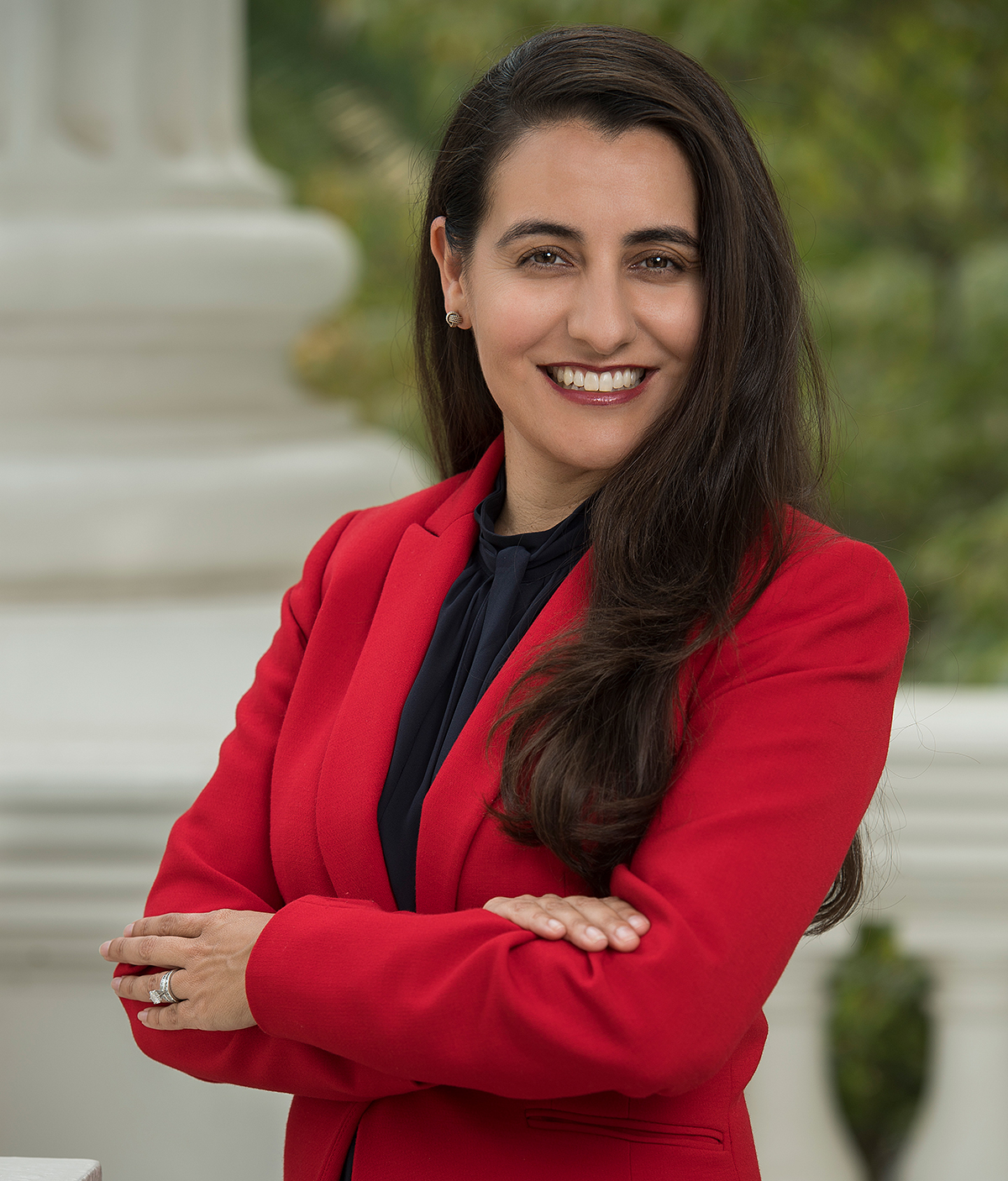
Sponsored bills
Existing law authorizes the Secretary of the Natural Resources Agency to enter into an agreement with an existing nonprofit corporation, as provided, to establish a nongovernmental trust to be known as the California Ocean Science Trust. Existing law specifies as one of the trust's purposes funding California ocean resource science projects that help fulfill the missions of the state's ocean resource management agencies. Existing law authorizes the trust to engage with scientific experts to develop and provide peer reviews, technical guidance, or scientific reports and analyses, as specified. This bill would authorize the Natural Resources Agency, the California Environmental Protection Agency, or an entity, as defined, within the Natural Resources Agency or the California Environmental Protection Agency to enter into a direct agreement with the trust for the delivery of peer reviews, technical guidance, or scientific reports and analyses pursuant to this provision. The bill would also make related findings and declarations.
Existing law prohibits a store, as defined, from providing a single-use carryout bag to a customer at the point of sale, with specified exceptions, including an exemption for bags used to contain unwrapped food. Existing law defines a "single-use carryout bag" as a bag made of plastic, paper, or other material that is provided by a store to a customer at the point of sale and that is not a recycled paper bag or a reusable grocery bag that meets specified requirements, including that the bag be made by a certified reusable grocery bag producer and meets specified requirements with regard to the bag's durability, material, labeling, heavy metal content, and, with regard to reusable grocery bags made from plastic film, recycled material content. Existing law prohibits a producer of reusable grocery bags made from plastic film from selling or distributing those bags unless the producer is certified by a third-party certification entity, and provides proof of that certification and a certification fee to the Department of Resources Recycling and Recovery, as specified. Existing law also prohibits a store from selling or distributing a recycled paper bag at the point of sale unless the store makes that bag available for purchase for not less than $0.10. Existing law defines "recycled paper bag," in part, as a paper carryout bag that contains a minimum of 40% postconsumer recycled materials, except as provided, and meets other requirements. Existing law allows a retail establishment to voluntarily comply with these requirements, if the retail establishment provides the department with irrevocable notice. This bill would, commencing January 1, 2026, revise and recast those provisions to, among other things, recast the definition of a "single-use carryout bag" to a "carryout bag," and would revise the definition to mean a bag made of plastic, paper, or other material that is provided by a store to a customer at the point of sale for the purpose of carrying purchased goods and that is not a recycled paper bag. The bill would create a carryout bag exception to include a bag provided to a customer before the customer reaches the point of sale, that is designed to protect a purchased item from damaging or contaminating other purchased items in a checkout bag, or to contain an unwrapped food item, as specified. The bill would revise the definition of "recycled paper bag" to require it be made from a minimum of 50% postconsumer recycled materials on and after January 1, 2028, without exception. The bill would also prohibit a store from providing, distributing, or selling a carryout bag to a customer at the point of sale, except as provided. The bill would also repeal the provisions relating to standards for and the certification of reusable grocery bags, and would repeal a provision relating to certain obsolete at-store recycling program requirements. The bill would make related legislative findings and declarations and would make related conforming changes.
The federal Safe Drinking Water Act regulates certain wells as Class II wells, as defined. Under existing federal law, the authority to regulate Class II wells in California is delegated to the Geologic Energy Management Division in the Department of Conservation. Under existing law, the division implements the Underground Injection Control Program pursuant to this federal delegation. The federal act prohibits certain well activities that affect underground sources of drinking water, unless those sources are located in an exempted aquifer. Existing federal law authorizes a state delegated with the responsibility of regulating Class II wells to propose that an aquifer or a portion of an aquifer be an exempted aquifer and authorizes the United States Environmental Protection Agency (USEPA) to approve the proposal if the aquifer or a portion of the aquifer meets certain criteria. Existing law requires the division, before proposing an aquifer or a portion of an aquifer for exemption, to consult with the State Water Resources Control Board and the appropriate regional water quality control board concerning conformity of the proposal with certain requirements. If the division and the state board concur that the exemption proposal may merit consideration by the USEPA, existing law requires those agencies to provide a public comment period on the proposal and to jointly conduct a public hearing. If, after the review of public comments, those agencies concur that the exemption proposal merits consideration by the USEPA, existing law requires the division to submit the exemption proposal to the USEPA. This bill would instead require, based on the consultation between the division and the appropriate regional water quality control board and the state board, if the division and the staff of the state board preliminarily concur that the exemption proposal may merit consideration by the USEPA, the division and the staff of the state board to provide a public comment period on the proposal and to jointly conduct the public hearing. The bill would require, following the review of the public comments and only if the division and the staff of the state board concur that the exemption proposal merits consideration for exemption, the staff of the state board to submit a report to the state board evaluating the exemption proposal's consistency with the criteria specified in existing law, including an analysis of all potential conduits. The bill would require the report to be made available to the public no fewer than 60 days prior to a meeting before the state board and would provide for a 45-day public comment period. The bill would require the state board to consider, in a public meeting, the report and to determine whether it concurs that the exemption proposal, with any appropriate modifications, complies with legal requirements and merits consideration for exemption. If the state board concurs, the bill would require the division to submit the exemption proposal to the USEPA.
Existing law, the Knox-Keene Health Care Service Plan Act of 1975, provides for the licensure and regulation of health care service plans by the Department of Managed Health Care and makes a willful violation of the act's requirements a crime. Existing law provides for the regulation of health insurers by the Department of Insurance. Existing law imposes specified coverage and disclosure requirements on health care service plans and health insurers, including specialized plans and insurers, that cover dental services. This bill would require a health care service plan contract or health insurance policy, as defined, issued, amended, or renewed on and after April 1, 2025, that provides payment directly or through a contracted vendor to a dental provider to have a non-fee-based default method of payment, as specified. The bill would require a health care service plan, health insurer, or contracted vendor to obtain written authorization from a dental provider opting in to a fee-based payment method before the plan or vendor provides a fee-based payment method to the provider and would authorize the dental provider to opt out of the fee-based payment method at any time by providing written authorization to the health care service plan, health insurer, or contracted vendor. The bill would require a health care service plan, health insurer, or contracted vendor that obtains written authorization to opt in or opt out of fee-based payment to apply the decision to include both the dental provider's entire practice and all products or services covered pursuant to a contract with the dental provider, as specified. Because a violation of the bill's requirements by a health care service plan would be a crime, the bill would impose a state-mandated local program. The California Constitution requires the state to reimburse local agencies and school districts for certain costs mandated by the state. Statutory provisions establish procedures for making that reimbursement. This bill would provide that no reimbursement is required by this act for a specified reason.
Existing law declares the intent of the Legislature to set broad minimum standards and guidelines for educational programs, and to encourage local districts to develop programs that will best fit the needs and interests of the pupils, pursuant to stated philosophy, goals, and objectives. Existing law requires, in each public school, that daily appropriate patriotic exercises be conducted, as specified. This bill would authorize an employee at a public school to conduct a brief period of quiet reflection, with the participation of pupils in attendance. The bill would prohibit an individual from requiring a pupil to participate in a period of quiet reflection. The bill would prohibit the governing board of a school district, a county board of education, or the governing body of a charter school from requiring a certificated or classified employee at a public school to conduct a brief period of quiet reflection. The bill would make legislative findings and declarations relating to these provisions.
(1) Existing law prohibits, with specified exceptions, a state agency authorized to enter into contracts relating to public benefit programs from contracting for services provided by a call center that directly serves applicants for, recipients of, or enrollees in, those public benefit programs with a contractor or subcontractor unless that contractor or subcontractor certifies in its bid for the contract that the contract, and any subcontract performed under that contract, will be performed solely with workers employed in California. Existing law provides an exception for contracts between a state agency and a health care service plan or a specialized health care service plan regulated by the Department of Managed Health Care and for contracts between a state agency and a disability insurer or specialized health insurer regulated by the Department of Insurance. Existing law also authorizes the state to terminate a contract relating to services provided by a call center if the contractor or subcontractor performs services with workers not employed in California. This bill would, until July 1, 2030, instead require any state agency authorized to provide or enter into contracts relating to public benefit programs, or any local government agency authorized to provide or enter into contracts relating to public benefit programs funded by state funds, as specified, to provide services through, or contract for services provided by, a call center that directly serves callers with services performed solely with and by workers employed in California. The bill would also prohibit a state agency or specified local agency from using, or contracting with a call center that uses, artificial intelligence (AI) or automated decision systems (ADS) that would eliminate or automate core job functions of a worker, as specified. The bill would require an agency that utilizes AI or ADS that impact core job functions of workers to notify the workers, their collective bargaining representatives, and the public within a specified timeframe about prescribed information, including a general description of the AI or ADS system. The bill would require a contractor to certify in its bid that any services provided by the contractor or its subcontractors are to be performed with and by workers employed in California. The bill would also extend these contracting requirements to local government agencies. By imposing new requirements on local government agencies, this bill would impose a state-mandated local program. This bill would, until July 1, 2030, delete the above-described exception for contracts between a state agency and a health care service plan or a specialized health care service plan regulated by the Department of Managed Health Care and for contracts between a state agency and a disability insurer or specialized health insurer regulated by the Department of Insurance. This bill would, until July 1, 2030, make the above-described provisions inapplicable to a designated public hospital system, a health care district, or a health care service plan that contracts with the State Department of Health Care Services, as specified. This bill would, until July 1, 2030, extend the right to terminate a contract to local government agencies. The bill would also extend the right to terminate a contract in the case that the contractor or subcontractor does not employ workers. This bill would provide that the bill's provisions would not apply to specified contracts or subcontracts, including, among others, extensions of contracts or subcontracts, that result from a request for proposal or bid that occurred before January 1, 2025, and contracts by a county human services agency for translation or interpretation services. (2) The bill would include findings that changes proposed by this bill address a matter of statewide concern rather than a municipal affair and, therefore, apply to all cities, including charter cities. (3) The California Constitution requires the state to reimburse local agencies and school districts for certain costs mandated by the state. Statutory provisions establish procedures for making that reimbursement. This bill would provide that, if the Commission on State Mandates determines that the bill contains costs mandated by the state, reimbursement for those costs shall be made pursuant to the statutory provisions noted above.
(1) Existing law, the Medical Practice Act, provides for the licensure and regulation of physicians and surgeons by the Medical Board of California and requires the board to adopt and administer standards for the continuing education of those licensees. Existing law requires general internists and family physicians who have a patient population of which over 25% are 65 years of age or older to complete at least 20% of all mandatory continuing education hours in a course related to geriatric medicine or the care of older patients. This bill would revise the above-described course requirements to include the special care needs of patients with dementia. (2) Existing law, the Nursing Practice Act, establishes the Board of Registered Nursing to license and regulate the practice of nursing. Existing law requires the board to establish standards for continuing education consisting of specified approved coursework. Existing law requires a licensee under the act to submit a statement to the board, under penalty of perjury, indicating compliance with those continuing education requirements. This bill would require a nurse practitioner who provides primary care to a patient population of which over 25% are 65 years of age or older to certify that they have completed at least 20% of all existing mandatory continuing education hours in a course in the field of gerontology, the special care needs of patients with dementia, or the care of older patients at the time of renewal. By expanding the scope of a crime, the bill would impose a state-mandated local program. (3) Existing law, the Physician Assistant Practice Act, establishes the Physician Assistant Board for the licensure and regulation of physician assistants. Existing law authorizes the board to require a licensee to complete specified continuing education coursework as a condition of license renewal. This bill would require a physician assistant who provides primary care to a patient population of which over 25% are 65 years of age or older to complete at least 20% of all mandatory continuing education hours in a course in the field of geriatric medicine, the special care needs of patients with dementia, or the care of older patients. (4) This bill would incorporate additional changes to Section 2811.5 of the Business and Professions Code proposed by AB 2270 and AB 2581 to be operative only if this bill and either or both of those bills are enacted and this bill is enacted last. The California Constitution requires the state to reimburse local agencies and school districts for certain costs mandated by the state. Statutory provisions establish procedures for making that reimbursement. This bill would provide that no reimbursement is required by this act for a specified reason.
This measure would declare the month of September 2024 as Childhood Cancer Awareness Month and state the commitment of the Legislature to support efforts to find cures, and less toxic treatments, for childhood cancer.
Existing law prohibits a store, as defined, from providing a single-use carryout bag to a customer at the point of sale, with specified exceptions, including an exemption for bags used to contain unwrapped food. Existing law defines a "single-use carryout bag" as a bag made of plastic, paper, or other material that is provided by a store to a customer at the point of sale and that is not a recycled paper bag or a reusable grocery bag that meets specified requirements, including that the bag be made by a certified reusable grocery bag producer and meets specified requirements with regard to the bag's durability, material, labeling, heavy metal content, and, with regard to reusable grocery bags made from plastic film, recycled material content. Existing law prohibits a producer of reusable grocery bags made from plastic film from selling or distributing those bags unless the producer is certified by a third-party certification entity, and provides proof of that certification and a certification fee to the Department of Resources Recycling and Recovery, as specified. Existing law also prohibits a store from selling or distributing a recycled paper bag at the point of sale unless the store makes that bag available for purchase for not less than $0.10. Existing law defines "recycled paper bag," in part, as a paper carryout bag that contains a minimum of 40% postconsumer recycled materials, except as provided, and meets other requirements. Existing law allows a retail establishment to voluntarily comply with these requirements, if the retail establishment provides the department with irrevocable notice. This bill would, commencing January 1, 2026, revise and recast those provisions to, among other things, recast the definition of a "single-use carryout bag" to a "carryout bag," and would revise the definition to mean a bag made of plastic, paper, or other material that is provided by a store to a customer at the point of sale for the purpose of carrying purchased goods and that is not a recycled paper bag. The bill would create a carryout bag exception to include a bag provided to a customer before the customer reaches the point of sale, that is designed to protect a purchased item from damaging or contaminating other purchased items in a checkout bag, or to contain an unwrapped food item, as specified. The bill would revise the definition of "recycled paper bag" to require it be made from a minimum of 50% postconsumer recycled materials on and after January 1, 2028, without exception. The bill would also prohibit a store from providing, distributing, or selling a carryout bag to a customer at the point of sale, except as provided. The bill would also repeal the provisions relating to standards for and the certification of reusable grocery bags, and would repeal a provision relating to certain obsolete at-store recycling program requirements. The bill would make related legislative findings and declarations and would make related conforming changes.