

(1) Existing law regulates the hiring of real property and imposes various requirements on landlords relating to the application for, and leasing of, residential rental property. Existing law establishes provisions for the renewal or termination of a hiring of residential real property for an unspecified term. Existing law specifies the notice required for the termination of a hiring of residential property for an unspecified term. Existing law makes a tenant of real property guilty of unlawful detainer if, among other things, the tenant continues in possession of the real property after giving notice of termination of a hiring of residential property for an unspecified term. This bill would prohibit a landlord or its agent from charging a tenant a fee for serving, posting, or otherwise delivering any notice, as specified in the above-described provisions. (2) Existing law requires a landlord or landlord's agent to allow a tenant to pay rent and deposit of security by at least one form of payment that is neither cash nor electronic funds transfer, except as prescribed. This bill would prohibit a landlord or its agent from charging a tenant any fee for payment by check for rent or security deposit as described above. (3) Existing law prohibits a landlord from demanding or receiving security, however denominated, in an amount or value in excess of an amount equal to one month's rent, in addition to any rent for the first month paid on or before initial occupancy, except as provided. On or after April 1, 2025, if a landlord or agent charges a service member a higher than standard or advertised security as described above, this bill would require the landlord to provide the tenant with a written statement, on or before the date the lease is signed, of the amount of the higher security and an explanation why the higher security amount is being charged. The bill would require the additional amount of security to be returned to the tenant after no more than 6 months of residency if the tenant is not in arrears for any rent due during that period. (4) This bill would incorporate additional changes to Section 1946.1 of the Civil Code proposed by SB 1103 to be operative only if this bill and SB 1103 are enacted and this bill is enacted last. (5) This bill would incorporate additional changes to Section 1950.5 of the Civil Code proposed by AB 2801 to be operative only if this bill and AB 2801 are enacted and this bill is enacted last.
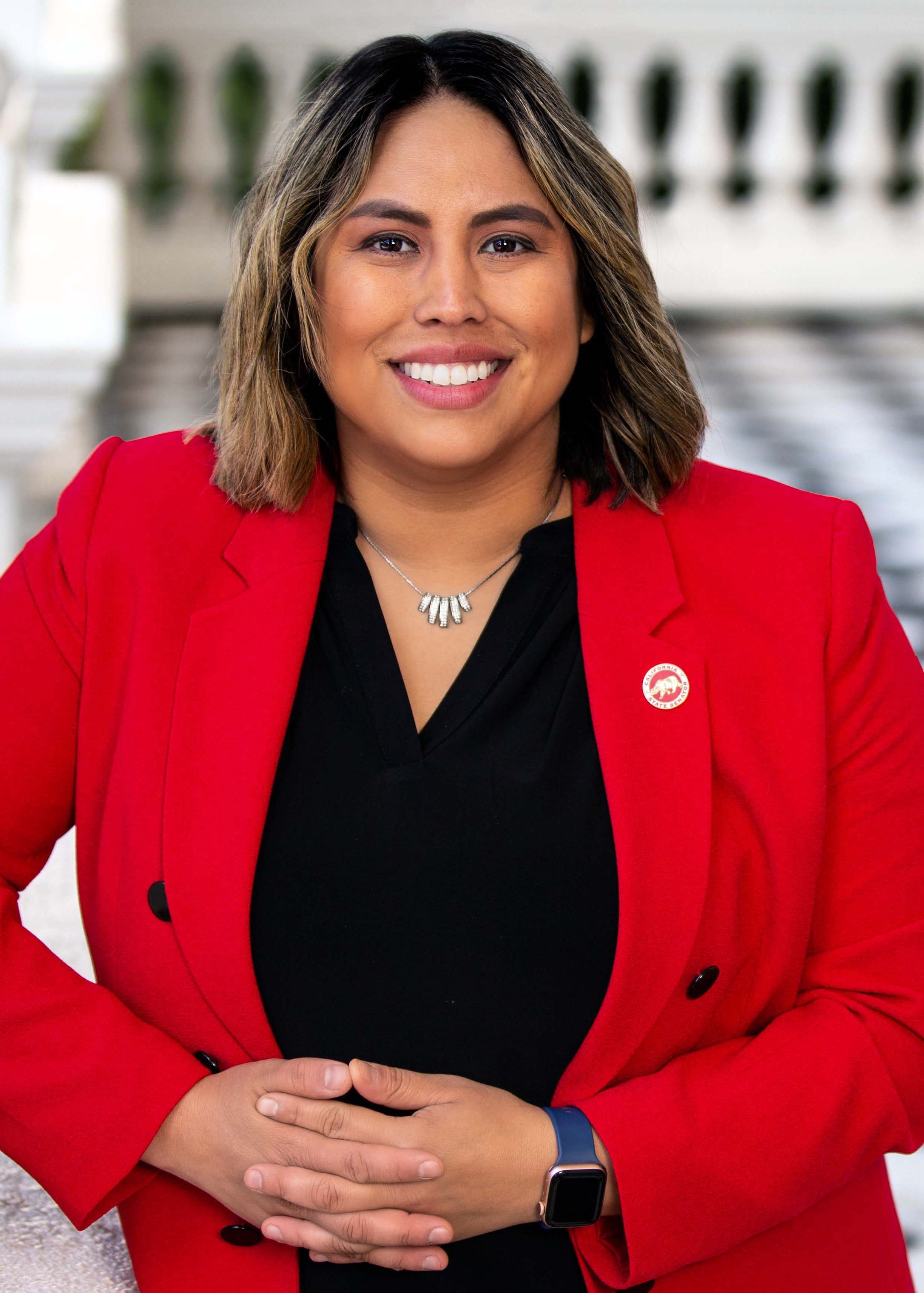
Sen. Caroline Menjivar
Sponsored bills
Existing law, the Licensed Physicians and Dentists from Mexico Pilot Program, allows up to 30 licensed physicians and up to 30 licensed dentists from Mexico to practice medicine or dentistry in California for a period not to exceed 3 years, in accordance with certain requirements. Existing law requires the Medical Board of California and the Dental Board of California to provide oversight pursuant to these provisions. Existing law requires appropriate funding to be secured from nonprofit philanthropic entities before implementation of the pilot program may proceed. Existing law requires physicians participating in the Licensed Physicians and Dentists from Mexico Pilot Program to be enrolled in English as a second language classes, to have satisfactorily completed a 6-month orientation program, and to have satisfactorily completed a 6-month externship at the applicant's place of employment, among various other requirements. This bill would repeal the provisions regarding the Licensed Physicians and Dentists from Mexico Pilot Program, and would instead establish two bifurcated programs, the Licensed Physicians from Mexico Program and the Licensed Dentists from Mexico Pilot Program. Within these 2 programs, the bill would generally revise and recast certain requirements pertaining to the Licensed Physicians and Dentists from Mexico Pilot Program, including deleting the above-described requirement that Mexican physicians participating in the program enroll in adult English as a second language classes. The bill would instead require those physicians to have satisfactorily completed the Test of English as a Foreign Language or the Occupational English Test, as specified. The bill would remove the requirement that the orientation program be 6 months, and would further require the orientation program to include electronic medical records systems utilized by federally qualified health centers and standards for medical chart notations. The bill would also delete the requirement that the physicians participate in a 6-month externship. The bill would further delete provisions requiring an evaluation of the pilot program to be undertaken with funds provided from philanthropic foundations, and would make various other related changes to the program. The bill would require the Dental Board of California to, notwithstanding existing requirements to provide specified federal taxpayer information, issue a 3-year nonrenewable permit to an applicant who has not provided an individual taxpayer identification number or social security number if the applicant meets specified conditions. Commencing January 1, 2025, the bill would authorize the Medical Board of California to issue a limited number of active licenses to eligible applicants to participate in the Licensed Physicians from Mexico Program, as specified. Under the bill, each additional physician selected for the program would not be eligible to renew their 3-year license. The bill would require the federally qualified health centers employing physicians pursuant to the program to continue specified peer review protocols and procedures and to work with an approved medical school or an approved residency program, as provided. The bill would also require specified entities to be the points of contact involved in securing required documents, recruiting and vetting candidates, assisting candidates to meet all program requirements, selecting appropriate federally qualified health centers throughout California, ensuring compliance with program provisions, developing policy and clinical workshops, monitoring productivity and increased access to medical care, and assessing the necessity of policy and programmatic improvements. The bill would impose fees in connection with both programs, as specified. This bill would make legislative findings and declarations as to the necessity of a special statute.
The California Constitution provides that voters may recall a state officer by majority vote and, in the same election, elect a successor with a plurality of the vote. The Constitution prohibits an officer who is the subject of a recall election from being a candidate for successor. The Constitution provides that the Lieutenant Governor becomes Governor when a vacancy occurs in the office of Governor, and requires the Lieutenant Governor to act as Governor during the impeachment, absence from the state, or other temporary disability of the Governor or of a Governor-elect who fails to take office. When a recall of the Governor is initiated, the Constitution requires the Lieutenant Governor to perform the recall duties of the Governor. The Constitution requires the Governor to fill vacancies in certain judicial and executive offices by appointment, as specified. This measure would eliminate the successor election for a recalled state officer and instead provide, in the event an officer is removed in a recall election, that the office will remain vacant until it is filled in accordance with the Constitution and statute. The measure would repeal the prohibition against the officer subject to the recall being a candidate to fill the office in a special election, but would prohibit the appointment of the officer subject to the recall election to fill the vacancy. If the Governor is removed from office in a recall election, this measure would provide that the Lieutenant Governor will become Governor for the remainder of the unexpired term. If the Governor is removed from office by recall before the close of the nomination period for the next statewide election during the first two years of the Governor's term, the measure would provide for a special election to be held to replace the Governor for the remainder of the unexpired term, to be consolidated with the next statewide primary election and, if necessary, the subsequent statewide general election. The measure would require the Secretary of State to perform the recall duties of the Governor when a recall of the Governor is initiated. The measure would require the Controller to perform the recall duties of the Governor and Secretary of State if recalls of those two officers are initiated at the same time. If adopted by the Legislature, the measure would appear on the ballot at the November 3, 2026, statewide general election.
The California Constitution allows a United States citizen who is at least 18 years of age and a resident of California to vote. This measure would reduce the minimum voting age to 17.
(1) Existing law provides that a person who willfully disturbs a public school or a public school meeting is guilty of a misdemeanor and subject to a fine of not more than $500. This bill would exempt from those misdemeanor and fine provisions a person who, at the time of the disturbance, is a pupil of the school district. (2) Existing state law requires the principal of a school or the principal's designee to notify the appropriate law enforcement authorities of the county or city in which the school is situated of certain acts committed by a pupil that may be unlawful, including, among others, the selling or possession of narcotics or other designated controlled or regulated substances, and acts of assault, as specified. This bill instead would eliminate the requirement that the principal or principal's designee notify the appropriate law enforcement authorities of possession of designated controlled or regulated substances by a pupil. The bill would require that the principal or principal's designee notify the appropriate law enforcement authorities if a pupil's act requires notification pursuant to the federal Gun-Free Schools Act of 1994, which conditions certain federal funding on a criminal or juvenile delinquency referral policy for a student who brings a firearm or weapon to a school.
This measure would recognize August 26, 2024, as Women's Equality Day and its historic importance to women's rights, including the battle to attain those rights in the past, present, and future.
Existing law establishes the California Health and Human Services Agency, which includes the State Department of Public Health, among other state departments charged with the administration of health, social, and other human services. Existing law requires the agency to convene a working group of representatives to develop a quality standard for patient experience related to the transgender, gender diverse, or intersex (TGI) community and to recommend training curriculum to provide trans-inclusive health care. This bill would require the agency, or an entity designated by the agency, on or before January 1, 2026, to create an internet website, or update its existing internet website, where the public can access information and resources to support TGI individuals and their families in accessing trans-inclusive health care and other support services in the state, including, but not limited to, a general description of trans-inclusive health care, information on how to access directories of providers providing gender-affirming services, and resources for victims of hate incidents and hate crimes. The bill would require the agency to consult with specified subject matter experts, the Civil Rights Department, and the Department of Justice in creating the internet website. The bill would also require the agency, in consultation with subject matter experts, to maintain the website and review the available information and resources to ensure the website is current and updated at reasonable intervals, but no less than once every year. The bill would authorize the agency to accept donations for the purpose of supporting and maintaining the internet website, and would make those donations available upon appropriation by the Legislature for that purpose.
Existing law requires the Department of Corrections and Rehabilitation to ensure that specified procedures are performed in the investigation and prosecution of sexual abuse incidents, including, among others, that an employee must be terminated if an investigation confirms that the employee sexually abused an inmate. Existing law requires administrators to report criminal sexual abuse by staff to law enforcement authorities. This bill would require the department to monitor for 90 days an incarcerated person who reports sexual abuse, and the incarcerated person reported to have suffered the abuse, by a staff person at a department facility for possible retaliation. Existing law authorizes a defendant to submit to a sentencing court a petition for recall and resentencing when a defendant, who was under 18 years of age at the time of the commission of a specified offense for which the defendant was sentenced to imprisonment for life without the possibility of parole, has been incarcerated for at least 15 years. Existing law authorizes a court to consider specified factors when determining whether to resentence the defendant to a term of imprisonment with the possibility of parole including, among others, that the defendant has had no disciplinary actions for violent activities in the last five years in which the defendant was determined to be the aggressor. This bill would authorize a court to also consider if the defendant has been a victim of sexual abuse or sexual violence at any time during their incarceration when determining whether to resentence the defendant to a term of imprisonment with the possibility of parole. Existing law authorizes, when a defendant has been committed to the state prison or to a county jail for the commission of a felony, the court to recall the sentence and either reduce a defendant's term by modifying the sentence, or vacate the conviction and impose judgment on any necessarily included lesser offense or lesser related offense and, resentence the defendant to a reduced term. Existing law requires the court to consider, in recalling and resentencing pursuant to these provisions, postconviction factors, including, among others, evidence that circumstances have changed since the original sentencing so that continued incarceration is no longer in the interest of justice. Existing law states that a defendant is not entitled to relief from these provisions, and that a court is not required to respond to a defendant's requests for relief pursuant to these provisions. This bill would authorize, beginning on July 1, 2025, a defendant to file a petition for relief pursuant to these provisions, and would make that defendant entitled to a response from the court, if, among other things, the defendant is currently committed to the custody of the Secretary of the Department of Corrections and Rehabilitation, the defendant currently has a minimum sentence of at least 15 years, and the application of the current sentencing rules of the Judicial Council and any changes in sentencing laws enacted since the defendant was last sentenced would make the defendant eligible for a reduced sentence if applied to the defendant. Existing law requires various civil actions to be brought within specified periods of time, but these periods of limitation are tolled for 2 years during the time that the person entitled to bring the action is imprisoned on a criminal charge for a term less than life. However, under existing law these provisions do not apply to an action brought against a public entity or public employee, as specified. This bill would require an action for sexual assault brought against a public entity or public employee by a person who is imprisoned on a criminal charge, or in execution under the sentence of a criminal court, to be tolled during the period of imprisonment and until one year after the release from actual custody.
This measure would urge the President and the Congress of the United States to address, with effective policies, the issue of servicemembers who were unjustly discharged under "Don't Ask, Don't Tell" or predecessor provisions, in order to unify efforts to upgrade discharges issued under the DADT policy, and to restore benefits.
The Political Reform Act of 1974 provides for the comprehensive regulation of campaign financing, including requiring the reporting of campaign contributions and expenditures and imposing other reporting and recordkeeping requirements on campaign committees. The act requires a committee that receive contributions totaling $2,000 or more in a calendar year to file a statement of organization with the Secretary of State and, if applicable, a local filing officer. This bill would authorize a campaign committee to redact the bank account number on a copy of a statement of organization filed with a local filing officer, and it would require the Secretary of State to redact the bank account number on a statement of organization filed with the Secretary of State before making the statement available to the public in any form. Existing constitutional provisions require that a statute that limits the right of access to the meetings of public bodies or the writings of public officials and agencies be adopted with findings demonstrating the interest protected by the limitation and the need for protecting that interest. This bill would make legislative findings to that effect. The Political Reform Act of 1974, an initiative measure, provides that the Legislature may amend the act to further the act's purposes upon a 23 vote of each house of the Legislature and compliance with specified procedural requirements. This bill would declare that it furthers the purposes of the act.