

(1) Existing law requires the Department of Transportation to improve and maintain the state's highways, and establishes various programs to fund the development, construction, and repair of local roads, bridges, and other critical transportation infrastructure in the state, including the state highway operation and protection program (SHOPP) . Existing law requires the department, in consultation with the California Transportation Commission, to prepare a robust asset management plan to guide selection of projects for the SHOPP. Existing law requires the commission, in connection with the plan, to adopt targets and performance measures reflecting state transportation goals and objectives. Existing law requires the department to develop, in consultation with the commission, a plain language performance report to increase transparency and accountability of the SHOPP. This bill would require the targets and performance measures adopted by the commission to include targets and performance measures reflecting state transportation goals and objectives for complete streets assets that reflect the existence and conditions of bicycle, pedestrian, and transit priority facilities on the state highway system. The bill would require the department's plain language performance report to include a description of complete streets facilities, including pedestrian, bicycle, and transit priority facilities on each project, as specified. The bill would require the department to commit to specific 4-year targets to incorporate complete streets facilities, including pedestrian and bicycle facilities, into projects funded by the SHOPP, as specified. (2) Existing law creates transit districts in designated areas throughout the state and authorizes the use of various vehicles for the purpose of public and private transit. Existing law authorizes transit buses and other transit vehicles to operate on state highways. This bill would require the Director of Transportation to adopt a transit policy to guide the implementation of transit priority facilities and transit stops on the state highway system, as specified. The bill would require the department to adopt, on or before July 1, 2027, guidance that defines transit performance measures and identifies the department's responsibilities in supporting transit vehicles on the state highway system, as specified. (3) Existing law requires the department to prepare a State Highway System Management Plan (SHSMP) , which includes a 10-year state highway system rehabilitation plan for the rehabilitation or reconstruction by the SHOPP of all state highways and bridges, as provided. Existing law requires the SHSMP to include specific quantifiable accomplishments, goals, objectives, costs, and performance measures consistent with the asset management plan described above. Existing law requires the SHSMP to be updated every 2 years. This bill would expressly require the SHSMP to also include specific quantifiable accomplishments, goals, objectives, costs, and performance measures for complete streets facilities and transit priority facilities, as specified. (4) Existing law authorizes the department to issue encroachment permits and requires the department to either approve or deny an application from an applicant for an encroachment permit within 60 days of receiving a completed application, as provided. This bill would require the department, on or before January 1, 2027, to develop and adopt a project intake, evaluation, and encroachment permit review process for complete streets facilities that are sponsored by a local jurisdiction or a transit agency. The bill would require the department to produce a report regarding project applications submitted through this process, as specified. The bill would require the department to designate an encroachment permit manager in each district to ensure that applications for complete streets facilities are reviewed in accordance with the process, as specified.
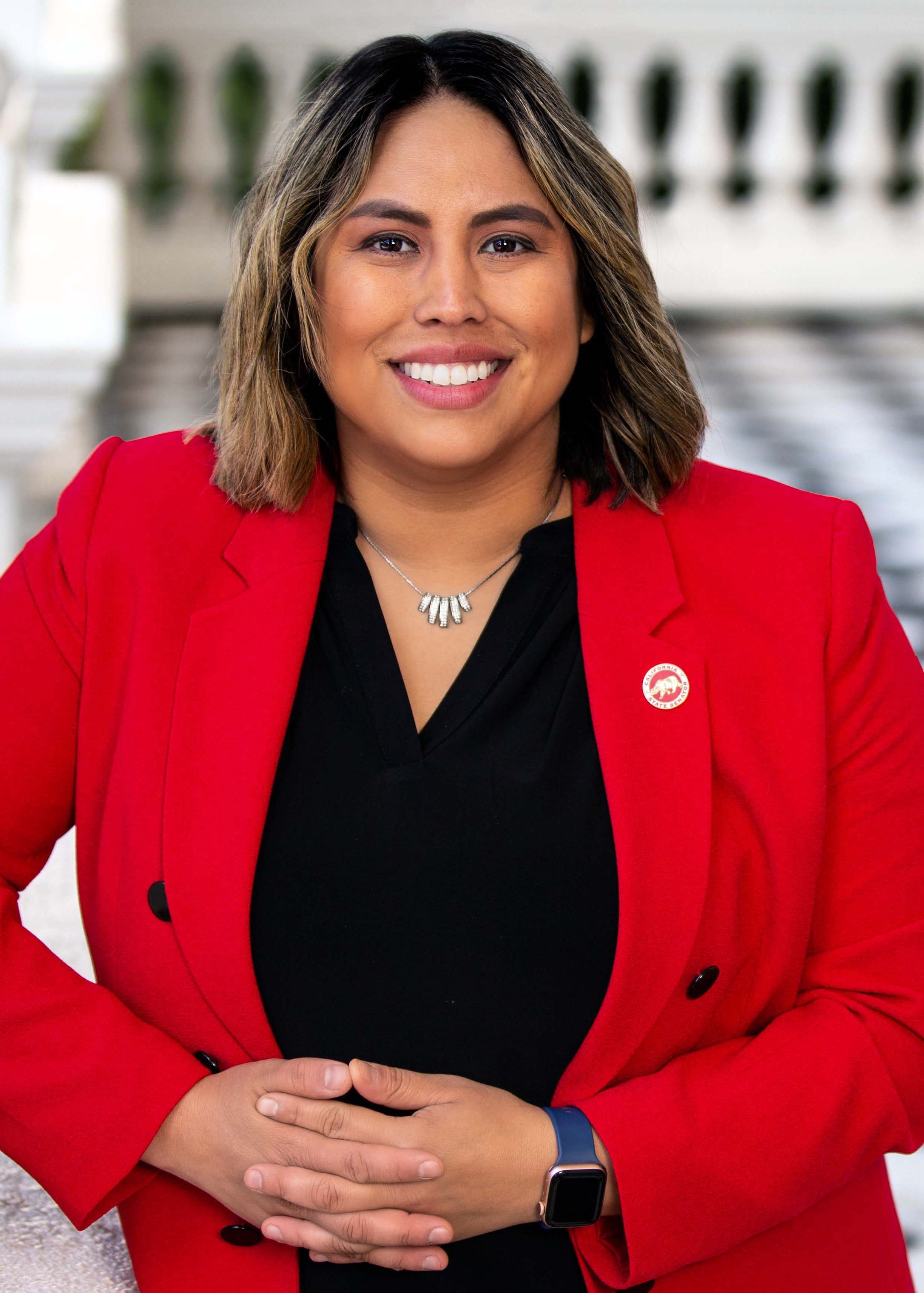
Sen. Caroline Menjivar
Sponsored bills
(1) Existing law prohibits a person from being tried or adjudged to punishment while that person is mentally incompetent. Existing law establishes a process by which a defendant's mental competency is evaluated and if the defendant is found incompetent to stand trial, the proceedings are suspended while the defendant receives treatment, with the goal of restoring the defendant to competency. Existing law, if a doubt is raised as to the mental competence of a defendant, requires the court, either on the request of counsel or on its own motion, to hold a hearing, as specified, to determine the mental competence of the defendant. This bill would instead, in lieu of a hearing, allow an evaluation of the defendant by one or 2 licensed psychologists or psychiatrists and would require them to submit a report, as specified, to the court. The bill would allow the court, if neither party objects to the reports of these experts, to make a determination based upon these reports. The bill would also require the court to make a determination regarding the defendant's capacity to make decisions regarding the administration of antipsychotic medication. This bill would, if either party objects to the court making a determination based on the reports, require a hearing to be held to determine the competence of the defendant. The bill would apply a presumption of competence to the defendant and would place the burden of proof upon the party seeking a finding of incompetence. The bill would, as specified, require the hearing to be held by jury trial or bench trial. (2) Existing law, in the case of a defendant charged with a felony, requires that, upon a finding of mental incompetence, the proceedings be suspended until the defendant regains competence. Existing law prescribes a program of pretrial diversion for defendants with a diagnosed mental disorder whose disorder was a significant factor in the commission of their offense. Under existing law, persons charged with certain offenses, including murder, rape, sexual abuse of a child, and possession of a weapon of mass destruction, are ineligible for diversion. This bill would require the court, upon a finding of mental incompetence of a defendant charged with a felony that is not ineligible for diversion, to determine if it is in the interests of justice to restore the defendant to competence. The bill would require the court, if the restoration of the defendant's mental competence is not in the interests of justice, to hold a hearing to consider granting mental health diversion or other programs to the defendant, as specified. If a defendant is returned to court having not been restored to mental competence, this bill would require the defendant to be presumed incompetent and be returned to treatment, as specified. (3) The bill would make other conforming changes. (4) This bill would incorporate additional changes to Section 1001.36 of the Penal Code proposed by SB 1400 and additional changes to Section 4361 of the Welfare and Institutions Code proposed by AB 3077, to be operative only if this bill and either one or both of those bills are enacted and this bill is enacted last.
Existing law prohibits an electrical or gas corporation from terminating residential service for nonpayment of a delinquent account unless the corporation first gives notice of the delinquency and impending termination, as provided. Existing law requires the notice to include information on procedures by which the affected residential customer may initiate a complaint, request an investigation concerning the service or charges, and request amortization of the unpaid charges. Existing law requires that a residential customer who initiated a complaint, requested an investigation, or requested an extension of the payment period be given an opportunity for review of the complaint, investigation, or request by a review manager of the corporation. Existing law requires the review to include a consideration of whether the customer is to be permitted to amortize the unpaid balance of the delinquent account over a reasonable time period, not to exceed 12 months. This bill would require an electrical or gas corporation to restore service to a residential customer whose service was previously terminated for nonpayment of delinquent amounts upon the customer entering into an amortization agreement or any other arrearage payment plan determined by the Public Utilities Commission. The bill would require the restoration of service to occur by specified deadlines, to the extent authorized by commission rules. This bill would require the commission, on or before July 1, 2025, to determine whether to direct electrical and gas corporations to take into account a customer's ability to pay before terminating or reconnecting services, as provided. Under existing law, a violation of the Public Utilities Act or an order, decision, rule, direction, demand, or requirement of the commission is a crime. Because a violation of the provisions of this bill or a commission action implementing the requirements of the bill would be a crime, the bill would impose a state-mandated local program. The California Constitution requires the state to reimburse local agencies and school districts for certain costs mandated by the state. Statutory provisions establish procedures for making that reimbursement. This bill would provide that no reimbursement is required by this act for a specified reason.
(1) Existing law, the California Healthy Youth Act, requires school districts, defined to include county boards of education, county superintendents of schools, the California School for the Deaf, the California School for the Blind, and charter schools, to ensure that all pupils in grades 7 to 12, inclusive, receive comprehensive sexual health education and human immunodeficiency virus (HIV) prevention education, as specified. The bill would require the State Department of Education to monitor compliance with the requirements of the California Healthy Youth Act as part of its annual compliance monitoring of state and federal programs. This bill would, on or before the start of the 2025–26 school year, require each public school, including schools operated by a school district or county office of education, charter schools, and state special schools, to make internal and external condoms available to all pupils in grades 9 to 12, inclusive, free of charge, as provided. The bill would require these public schools to, at the beginning of each school year, inform pupils through existing school communication channels that free condoms are available and where the condoms can be obtained on school grounds. The bill would require a public school to post at least one notice regarding these requirements, as specified. The bill would require this notice to include certain information, including, among other information, information about how to use condoms properly. The bill would require each public school serving any of grades 7 to 12, inclusive, to allow condoms to be made available during the course of, or in connection with, educational or public health programs and initiatives, as provided. The bill would authorize a state agency, the State Department of Education, or a public school to accept gifts, grants, and donations from any source for the support of a public school carrying out these provisions, including, but not limited to, the acceptance of condoms from a manufacturer or wholesaler. The bill would, in order to comply with these provisions, encourage public schools to explore partnerships, including, but not limited to, partnerships with local health departments, as defined, community health centers, nonprofit organizations, and the State Department of Public Health. The bill would require the governing board or body of a public school to designate one employee at each schoolsite to implement these provisions. By imposing additional duties on public schools, the bill would impose a state-mandated local program. The bill would make the implementation of these provisions contingent upon an appropriation. The bill would additionally prohibit a public school, as defined, maintaining any combination of classrooms from grades 7 to 12, inclusive, a school district, the State Department of Education, or a county office of education from prohibiting certain school-based health centers, as defined, from making internal and external condoms available and easily accessible to pupils at the school-based health center site. (2) Existing law authorizes, to the extent that the activities are an allowable use of funds from the AIDS Drug Assistance Program Rebate Fund, the State Department of Public Health to spend up to $23,000,000 to implement specified programs and grants related to the treatment and prevention of HIV and AIDS, including by allocating $5,000,000 in the 2024–25 fiscal year to distribute funding to a community-based organization to make internal and external condoms available pursuant to the above-described provisions in paragraph (1) if this bill is enacted. This bill would require, if the State Department of Public Health or any other state agency distributes funding, including the above-described $5,000,000 allocation, to a community-based organization to make internal and external condoms available pursuant to the above-described provisions in paragraph (1) , the selected community-based organization to, among other things, act as a fiscal agent of the state agency, or partner with relevant state agencies, to procure condoms at a discount, as provided. (3) Under existing law, the Sherman Food, Drug, and Cosmetic Law, the State Department of Public Health generally regulates the packaging, labeling, advertising, and sale of food, drugs, devices, and cosmetics, in accordance with the Federal Food, Drug, and Cosmetic Act. A violation of those provisions is generally a crime. Existing law sets forth various other provisions relating to the furnishing and health care coverage of certain types of contraception. This bill would, with certain exceptions, prohibit a retail establishment, as defined, from refusing to furnish nonprescription contraception to a person solely on the basis of age by means of any conduct, including, but not limited to, requiring the customer to present identification for purposes of demonstrating their age. Under the bill, a violation of that prohibition would be exempt from the above-described criminal penalty. (4) The California Constitution requires the state to reimburse local agencies and school districts for certain costs mandated by the state. Statutory provisions establish procedures for making that reimbursement. This bill would provide that, if the Commission on State Mandates determines that the bill contains costs mandated by the state, reimbursement for those costs shall be made pursuant to the statutory provisions noted above.
(1) The Equity in Higher Education Act, among other things, prohibits a person from being subjected to discrimination on the basis of specified attributes, including sex, in any program or activity conducted by a postsecondary educational institution that receives, or benefits from, state financial assistance or enrolls students who receive state student financial aid. Existing law defines "sexual orientation" for purposes of the Equity in Higher Education Act. Existing federal law, known as Title IX of the Education Amendments of 1972, prohibits a person, on the basis of sex, from being excluded from participation in, being denied the benefits of, or being subject to discrimination under, any education program or activity receiving federal financial assistance. Both the federal and state laws do not apply to an educational institution that is controlled by a religious organization if the application would not be consistent with the religious tenets of that organization. The Equity in Higher Education Act requests the Trustees of the California State University, the Regents of the University of California, and the governing board of each community college district to designate an employee at each campus as a point of contact for the needs of lesbian, gay, bisexual, and transgender faculty, staff, and students. This bill instead would require the Trustees of the California State University and the governing board of each community college district to designate an employee at each campus as a point of contact for the needs of lesbian, gay, bisexual, asexual, pansexual, transgender, gender-nonconforming, intersex, and two-spirit faculty, staff, and students. The bill, among other things, would prohibit a designated employee from being considered a responsible employee, as that term is used for purposes of certain existing requirements regarding the reporting of, and campus response to, allegations of "sexual harassment," as defined for purposes of the Equity in Higher Education Act. The bill would request the University of California to comply with the provisions described in this paragraph. By imposing new duties on community college districts, the bill would impose a state-mandated local program. This bill would revise the definition of "sexual orientation" for purposes of the Equity in Higher Education Act, as specified. (2) Existing law requires an institution that has an exemption from either the Equity in Higher Education Act or Title IX to make specified disclosures to the institution's current and prospective students, faculty members, and employees, and to the Student Aid Commission, concerning the institution's basis for having the exemption, and requires the commission to collect the information it receives and to post and maintain a list on the commission's internet website of all institutions with the exemption and their respective bases for having the exemption. This bill would, beginning with the 2026–27 school year, require the commission to provide a written notice to students who receive state financial aid regarding, among other things, whether their postsecondary educational institution has an exemption from either the Equity in Higher Education Act or Title IX on file with the commission. (3) Existing law requests the Trustees of the California State University, the Regents of the University of California, and the governing board of each community college district to adopt and publish policies on harassment, intimidation, and bullying to be included within the rules and regulations governing student behavior within these segments. This bill instead would require the Trustees of the California State University and the governing board of each community college district, and would request the University of California, to adopt and publish policies on harassment, intimidation, and bullying, and to include these policies within the rules and regulations governing student behavior within these segments. By imposing new duties on community college districts, the bill would impose a state-mandated local program. (4) The California Constitution requires the state to reimburse local agencies and school districts for certain costs mandated by the state. Statutory provisions establish procedures for making that reimbursement. This bill would provide that, if the Commission on State Mandates determines that the bill contains costs mandated by the state, reimbursement for those costs shall be made pursuant to the statutory provisions noted above.
Existing federal law provides for the federal Supplemental Nutrition Assistance Program (SNAP) , known in California as CalFresh, under which supplemental nutrition assistance benefits allocated to the state by the federal government are distributed to eligible individuals by each county. Existing federal law generally prohibits a resident of an institution from receiving supplemental nutrition assistance benefits. Existing law requires the State Department of Social Services, if the department deems it necessary to maximize CalFresh enrollment outcomes or employment placement success rates for individuals reentering the community from the state prison or a county jail, to submit to the United States Department of Agriculture's Food and Nutrition Service a request to waive that prohibition to allow for preenrollment of applicants prior to their release. Existing law establishes the Medi-Cal program, which is administered by the State Department of Health Care Services and under which qualified low-income individuals receive health care services. The Medi-Cal program is, in part, governed and funded by federal Medicaid program provisions. Under existing law, subject to implementation of the California Advancing and Innovating Medi-Cal (CalAIM) initiative, a qualifying inmate of a public institution is eligible to receive targeted Medi-Cal services for 90 days, or the number of days approved in the CalAIM Terms and Conditions, before the date they are released from the institution, if otherwise eligible for Medi-Cal services. This bill would require the State Department of Social Services to establish a CalFresh workgroup by February 1, 2026, composed of members with specified backgrounds, to meet no less than quarterly. The bill would require the workgroup to create and submit a report to the department and to the Legislature by August 31, 2027, and by August 31 annually thereafter, through 2030, with its recommendations for a state reentry process incorporating the necessary resources for transition from state prison or county jail to obtaining CalFresh benefits upon reentry into the community. The bill would require the department, by January 1, 2026, to seek a certain federal waiver to allow for preenrollment of applicants prior to their release from the state prison or county jail. The bill would require the department to partner with the Department of Corrections and Rehabilitation and county jails to allow for preenrollment of otherwise eligible applicants for the CalFresh program to ensure that an applicant's benefits may begin as soon as possible upon reentry of the applicant into the community from the state prison or county jail. The bill would condition implementation of that partnership in a given county on notification to the State Department of Health Care Services that the corresponding county has implemented the Justice-Involved Initiative that is developed pursuant to the above-described CalAIM provisions. By creating new duties for county eligibility workers and county jail officials, the bill would impose a state-mandated local program. The bill would make the provisions above operative on the date that the department notifies the Legislature that the Statewide Automated Welfare System can perform the necessary automation to implement those provisions. The California Constitution requires the state to reimburse local agencies and school districts for certain costs mandated by the state. Statutory provisions establish procedures for making that reimbursement. This bill would provide that, if the Commission on State Mandates determines that the bill contains costs mandated by the state, reimbursement for those costs shall be made pursuant to the statutory provisions noted above.
Existing law, the State Aeronautics Act, governs various matters relative to aviation in the state, and authorizes the Department of Transportation to adopt, administer, and enforce rules and regulations for the administration of the act. Under existing law, a violation of the State Aeronautics Act is a crime. This bill would prohibit an airport operator or aviation retail establishment, as defined, from selling, distributing, or otherwise making available leaded aviation gasoline to consumers on or after January 1, 2031, as provided. Because these provisions would be part of the State Aeronautics Act, the bill would impose a state-mandated local program. The California Constitution requires the state to reimburse local agencies and school districts for certain costs mandated by the state. Statutory provisions establish procedures for making that reimbursement. This bill would provide that no reimbursement is required by this act for a specified reason.
Under existing law, campaign funds may not be used to pay health-related expenses for a candidate, elected officer, or any individual or individuals with authority to approve the expenditure of campaign funds held by a committee, or members of their households. This bill would create an exception to that general rule and expressly permit campaign funds to be used to pay a candidate for reasonable and necessary mental health care expenses if the candidate does not have health insurance or their insurance does not cover the full cost of these mental health care expenses, as specified. This bill would limit use of campaign funds for these purposes to circumstances in which the candidate has experienced prejudice, harassment, or a threat or other criminal act, as defined, which resulted in the need for mental health care services. This bill would also require the candidate to disclose general information about this use of campaign funds on their campaign statements. Existing law makes a knowing or willful violation of the Political Reform Act of 1974 a misdemeanor and subjects offenders to criminal penalties. By expanding the scope of an existing crime, this bill would impose a state-mandated local program. This bill would incorporate additional changes to Section 89513 of the Government Code proposed by AB 2803 to be operative only if this bill and AB 2803 are enacted and this bill is enacted last. The California Constitution requires the state to reimburse local agencies and school districts for certain costs mandated by the state. Statutory provisions establish procedures for making that reimbursement. This bill would provide that no reimbursement is required by this act for a specified reason. The Political Reform Act of 1974, an initiative measure, provides that the Legislature may amend the act to further the act's purposes upon a 23 vote of each house of the Legislature and compliance with specified procedural requirements. This bill would declare that it furthers the purposes of the act.
Existing law, the Knox-Keene Health Care Service Plan Act of 1975, provides for the licensure and regulation of health care service plans by the Department of Managed Health Care, and makes a willful violation of the act a crime. Existing law provides for the regulation of health insurers by the Department of Insurance. Existing law requires a health care service plan contract or health insurance policy to provide coverage for behavioral health treatment for pervasive developmental disorder or autism. This bill would prohibit a health care service plan contract or health insurance policy issued, amended, or renewed on or after January 1, 2025, from requiring an enrollee or insured previously diagnosed with pervasive developmental disorder or autism to be reevaluated or receive a new behavioral diagnosis to maintain coverage for behavioral health treatment for their condition. The bill would require a treatment plan to be made available to the plan or insurer upon request. Because a willful violation of this provision by a health care service plan would be a crime, the bill would impose a state-mandated local program. The California Constitution requires the state to reimburse local agencies and school districts for certain costs mandated by the state. Statutory provisions establish procedures for making that reimbursement. This bill would provide that no reimbursement is required by this act for a specified reason.
The Donahoe Higher Education Act sets forth the missions and functions of the public institutions of higher education, including the University of California, administered by the Regents of the University of California, the California State University, administered by the Trustees of the California State University, and the California Community Colleges, administered by the Board of Governors of the California Community Colleges. The provisions of the Donahoe Higher Education Act apply to the University of California only to the extent that the Regents of the University of California, by appropriate resolution, make them applicable. This bill would prohibit the University of California, California State University, or California Community Colleges from disqualifying a student from being hired for an employment position due to the student's failure to provide proof of federal work authorization, except where that proof is required by federal law or where that proof is required as a condition of a grant that funds the particular employment position for which the student has applied. This bill would require the University of California, the California State University, and the California Community Colleges to treat a specified prohibition in federal law on hiring undocumented noncitizens as inapplicable because that provision does not apply to any branch of state government. The bill would further provide that, to the extent student employment is considered a "benefit" for purposes of federal law, the bill constitutes authorization to provide that benefit for purposes of specified federal law. This bill would require the University of California, the California State University, and the California Community Colleges to implement the bill by January 6, 2025. The bill's provisions would apply to the University of California, unless it is found inapplicable to the University of California and then only to the extent that the Regents of the University of California, by appropriate resolution, make them applicable. By imposing new duties on community college districts, the bill would impose a state-mandated local program. The California Constitution requires the state to reimburse local agencies and school districts for certain costs mandated by the state. Statutory provisions establish procedures for making that reimbursement. This bill would provide that, if the Commission on State Mandates determines that the bill contains costs mandated by the state, reimbursement for those costs shall be made pursuant to the statutory provisions noted above.