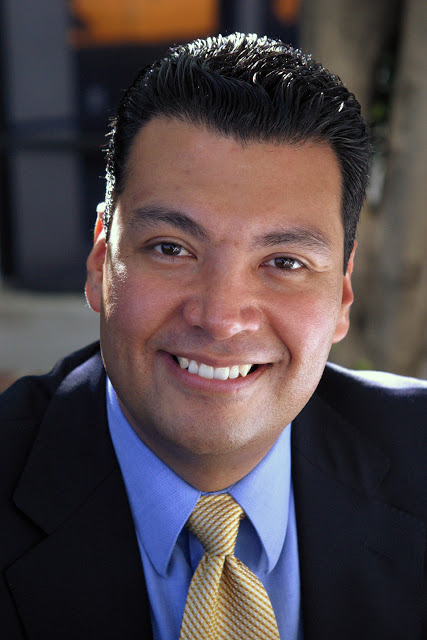
Photo of Alex Padilla
D California Senate · District 20

Sen. Alex Padilla

Compare
Total votes
18,975
all sessions
Attendance
92%
1,084 missed
Near the chamber average
With party
99%
of cast votes
Near the chamber average
Bipartisan score
0%
crosses aisle rarely
Near the chamber average
Sponsored
424
bills & resolutions
Near the chamber average
Committees
0
assignments
424 bills and resolutions

Sponsored bills

Total
424
Primary
190
Co-sponsor
234
This page
424
matching current filters
Co-sponsor ACR 104
Signed into law · California House · Co-sponsor
Relative to Cinco de Mayo Week.

This measure would proclaim May 1 through May 7, 2014, as Cinco de Mayo Week, and would urge all Californians to join in celebrating Cinco de Mayo.

Signed into law May 30, 2014 1 co-sponsor
Co-sponsor SCR 94
Signed into law · California Senate · Co-sponsor
"California Wines: Down to Earth" month.

This measure would proclaim April 2014 as the "California Wines: Down to Earth" month, to celebrate the sustainable leadership of California wineries and winegrape growers.

Signed into law May 5, 2014 1 co-sponsor
Co-sponsor SJR 18
Signed into law · California Senate · Co-sponsor
Emergency Unemployment Compensation: extension.

This measure would proclaim the Legislature's support for the extension of the Emergency Unemployment Compensation program and would memorialize the United States Congress to promptly renew the extension of unemployment benefits.

Signed into law Apr 15, 2014 1 co-sponsor
Co-sponsor SCR 99
Signed into law · California Senate · Co-sponsor
Relative to Autism Awareness Month.

This measure would designate April 2014 as Autism Awareness Month and would encourage residents to show support for autism awareness by lighting their homes, businesses, schools, and places of worship with blue light bulbs.

Signed into law Apr 15, 2014 1 co-sponsor
Co-sponsor AB 375
Vetoed · California House · Co-sponsor
School employees: dismissal or suspension: hearing.

(1) Existing law prohibits a permanent employee from being dismissed except for one or more of specified causes, including, among other causes, immoral or unprofessional conduct. Existing law requires the governing board of a school district to give notice to a permanent employee of its intention to dismiss or suspend the employee, together with a written statement of charges, for unprofessional conduct or unsatisfactory performance, at the expiration of 30 days from the date of service of the notice, unless the employee demands a hearing. This bill would require that a notice of the governing board of the school district to an employee of its intention to dismiss or suspend the employee, together with written charges filed or formulated pursuant to those procedures, be sufficient to initiate a hearing, as prescribed, and would prohibit the governing board of the school district from being required to file or serve a separate accusation. The bill would revise various procedures for providing notice of dismissal or suspension and would authorize a notice of dismissal or suspension to be given at any time of year, except a notice for a proceeding involving only charges of unsatisfactory performance, which would only be given during the instructional year of the schoolsite where the employee is physically employed. The bill would impose various requirements for the filing of a demand for a hearing and the conduct of hearings by the Office of Administrative Hearings. The bill would prohibit a motion for immediate reversal of suspension from having a bearing on the authority of a governing board of a school district to determine the physical placement and assignment of an employee who is suspended or placed on administrative leave during the review of the motion or while dismissal charges are pending. The bill would delete obsolete provisions relating to the suspension of a permanent employee based on knowing membership by the employee in the Communist Party. (2) Existing law provides that upon being charged, as specified, with certain sex or controlled substance offenses, a certificated employee be placed on either a compulsory leave of absence or an optional leave of absence for certain enumerated violations. This bill would revise the definitions of "charged with a mandatory leave of absence offense" and "charged with an optional leave of absence offense" for purposes of those provisions governing when a certificated employee is required to be placed on either a compulsory leave of absence or an optional leave of absence. Because these revisions would increase the number of employees subject to immediate placement on compulsory leave of absence, thereby increasing the duties of school districts, the bill would impose a state-mandated local program. (3) Existing law requires in a dismissal or suspension proceeding against a permanent employee for unprofessional conduct or unsatisfactory performance, if a hearing is requested by the employee, that the hearing be commenced within 60 days from the date of the employee's demand for a hearing. This bill would require that the hearing be commenced within 6 months from the date of the employee's demand for a hearing, and be completed by a closing of the record within 7 months from the date of the employee's demand for a hearing. The bill would revise various procedures for the conduct of those hearings, as prescribed. The bill would require that, in a dismissal or suspension proceeding carried out under the above provisions, the parties make specified disclosures in lieu of certain written discovery, as prescribed, and would authorize the parties to obtain discovery by oral deposition. The bill would require the governing board of the school district and the state to share equally the expenses of the hearing if the Commission on Professional Competence determines that the employee should be dismissed or suspended. (4) The California Constitution requires the state to reimburse local agencies and school districts for certain costs mandated by the state. Statutory provisions establish procedures for making that reimbursement. This bill would provide that, if the Commission on State Mandates determines that the bill contains costs mandated by the state, reimbursement for those costs shall be made pursuant to these statutory provisions.


Vetoed Mar 6, 2014 1 co-sponsor
Primary SB 344
Vetoed · California Senate · Lead sponsor
Schools.

(1) Existing law establishes the public school system in this state and, among other things, provides for the establishment of county superintendents of schools, school districts, and charter schools throughout the state. Existing law provides for the provision of instruction at the public elementary and secondary schools maintained by these local educational agencies. Existing law establishes a public school financing system. This bill would require an audit of a school district to include whether expenditures were in compliance with the regulations related to the expenditure of moneys apportioned on the basis of the number and concentration of unduplicated pupils, as defined. (2) Existing law requires the Superintendent of Public Instruction, with approval of the State Board of Education, to develop an Academic Performance Index to measure the performance of schools and school districts, especially the academic performance of pupils. Existing law requires a school or school district to demonstrate comparable improvement in academic achievement as measured by the Academic Performance Index by all numerically significant pupil subgroups at the school or school district, as specified. This bill would add reclassified English learners, as provided, to the list of pupil subgroups concerning which a school or school district is required to demonstrate this improvement, if the subgroup is numerically significant. By adding to the duties of local educational agencies, this bill would impose a state-mandated local program. (3) Existing law requires a county board of education and a governing board of a school district to annually adopt or revise a local control and accountability plan that aligns with its annual budget and contains certain elements and that, among other things, was developed in consultation with teachers, principals, administrators, other school personnel, parents, and pupils. Existing law requires a charter for a charter school to include many of the local control and accountability plan elements and requires the charter school to annually update its plan related to those elements. Existing law, an initiative measure, requires that all children in public schools, with certain exceptions, be taught English by being taught in English, requires that all children be placed in English language classrooms, and requires that children who are English learners be educated through sheltered English immersion during a temporary transition period not normally intended to exceed one year. This bill would revise provisions regarding local control and accountability plans, primarily in regard to English learners, including requiring the governing board of a school district to include a listing and description of certain expenditures in its local control and accountability plan, as specified. The bill would require that specified templates developed by the State Board of Education ensure that each school district, county superintendent of schools, or charter school that receives supplemental and concentration funds for unduplicated pupils include specified information in its local control and accountability plan. By adding to the duties of local educational agencies, this bill would impose a state-mandated local program. (4) Existing law requires the governing board of a school district to establish a parent advisory committee to provide advice to the governing board of the school district and the superintendent of the school district, as specified. Existing law additionally requires the governing board of a school district to establish an English learner parent advisory committee if the enrollment of the school district includes at least 15% English learners and the school district enrolls at least 50 pupils who are English learners. This bill would instead require the governing board of a school district to establish a districtwide parent advisory committee and, as a condition of supplemental state grant funds, if either the enrollment of the school district includes at least 15% English learners or the school district enrolls at least 50 pupils who are English learners, to establish a districtwide English learner parent advisory committee. The bill would require the districtwide English learner parent advisory committee to advise the governing board on specified tasks, including, among others, the establishment of school district goals and objectives for programs and services for English learners and school district reclassification procedures. (5) Existing law requires a county superintendent of schools to establish an English learner parent advisory committee if the enrollment of the pupils in the schools and programs operated by the county superintendent of schools includes at least 15% English learners and the schools and programs operated by the county superintendent of schools enroll at least 50 pupils who are English learners. This bill would instead require a county superintendent of schools to establish an English learner parent advisory committee if either the enrollment of the pupils in the schools and programs operated by the county superintendent of schools includes at least 15% English learners or the schools and programs operated by the county superintendent of schools enroll at least 50 pupils who are English learners. (6) This bill would incorporate additional changes in Sections 42127, 52060, 52064, and 52066 of the Education Code proposed by both AB 103 and SB 97, to be operative only if this bill and one or both of the other bills are enacted and become effective on or before January 1, 2014, to the extent each bill amends Sections 42127, 52060, 52064, and 52066 of the Education Code, and this bill is enacted last. The bill would also incorporate additional changes in Section 52052 of the Education Code proposed by AB 484, to be operative only if AB 484 and this bill are both enacted and become effective on or before January 1, 2014, both bills amend Section 52052 of the Education Code, and this bill is enacted after AB 484. (7) The California Constitution requires the state to reimburse local agencies and school districts for certain costs mandated by the state. Statutory provisions establish procedures for making that reimbursement. This bill would provide that, if the Commission on State Mandates determines that the bill contains costs mandated by the state, reimbursement for those costs shall be made pursuant to these statutory provisions.
Vetoed Feb 27, 2014 0 co-sponsors
Co-sponsor SB 654
Vetoed · California Senate · Co-sponsor
Ballot measure petitions: recall petitions: translations.

(1) Existing law, the federal Voting Rights Act of 1965, requires the state and certain counties to provide voting materials in languages other than English, as specified. Existing law requires the Attorney General, upon receipt of the text of a proposed initiative measure, to prepare a circulating title and summary of the chief purpose and points of the proposed measure. Existing law requires the Attorney General to provide a copy of the circulating title and summary of a proposed initiative measure to the proponents of the measure and the Secretary of State within 15 days, as specified. Existing law specifies that the official summary date of a proposed measure is the date a circulating title and summary is delivered or mailed by the Attorney General to the proponents of the proposed measure. This bill would require the Attorney General to provide a notice to the proponents stating that, if the proponents intend to circulate the petition for the proposed initiative measure, the proponents shall notify the Attorney General, in the manner prescribed by the Attorney General, of their intention to circulate. Upon receipt of the proponents' notice of intention to circulate, this bill would require the Attorney General to prepare a translation of the circulating title and summary of the proposed initiative measure in each language in which the state or a county is required to provide voting materials pursuant to the federal Voting Rights Act of 1965. This bill would require the Attorney General to provide a copy of each translation to the proponents and the Secretary of State, as specified. This bill would provide that if the proponents of a proposed initiative measure do not submit a notice of intention to circulate, the proponents' request for a circulating title and summary shall be deemed withdrawn and the petition shall not be circulated for signature. This bill would specify that the official summary date of a proposed initiative measure is the date a copy of each translation of the circulating title and summary is delivered or mailed to the proponents. (2) Existing law permits any person who is a voter or who is qualified to register to vote in the state to circulate an initiative petition for signature and imposes certain requirements on these circulators. This bill would require a copy of the applicable translated circulating title and summary prepared by the Attorney General to be attached to the petition and made available to each person whom the circulator solicits in that language to sign the petition and to any other person upon request. (3) Existing provisions of the California Constitution and statute authorize the recall of state officers. Existing law requires the proponents of the recall to file 2 blank copies of the petition to recall the officer with the Secretary of State, who is required to ascertain if the proposed form and wording of the petition meet specified requirements. This bill would require the Secretary of State to prepare a translation of the petition for the recall of a state officer in each language in which the state or a county, as specified, is required to provide voting materials pursuant to the federal Voting Rights Act of 1965. This bill would require the Secretary of State, within 10 days after ascertaining that the proposed form and wording of the recall petition meet specified requirements, to provide a copy of each translation to the proponents. (4) Existing law requires a recall petition to use a specified format and contain certain information. Under existing law, any person who is a registered voter of the electoral jurisdiction of the officer sought to be recalled may circulate the recall petition for signatures. If a recall petition is circulated in a specified county, this bill would require a copy of the applicable translation of the petition prepared by the Secretary of State to be attached to the petition and made available to each person whom the circulator solicits in that language to sign the petition and to any person upon request.

Vetoed Feb 27, 2014 1 co-sponsor
Primary SB 405
died · California Senate · Lead sponsor
Solid waste: single-use carryout bags.

Existing law, until January 1, 2020, requires an operator of a store, as defined, to establish an at-store recycling program that provides to customers the opportunity to return clean plastic carryout bags to that store. With specified exceptions, this bill, as of January 1, 2015, would prohibit stores that have a specified amount of dollar sales or retail floor space from providing a single-use carryout bag to a customer. The bill, on and after July 1, 2016, would additionally impose this prohibition on convenience food stores, foodmarts, and certain other specified stores. The bill would require all of these stores to meet other specified requirements regarding providing recycled paper bags, compostable bags, or reusable grocery bags to customers. The bill would require a reusable grocery bag that a store is required to sell on and after July 1, 2016, to meet specified requirements. A violation of that requirement and the requirements that would be imposed upon grocery bag producers to submit certain laboratory test results would be subject to an administrative civil penalty assessed by the Department of Resources Recycling and Recovery. The department would be required to deposit these penalties into the Reusable Bag Account, which would be created in the Integrated Waste Management Fund, for expenditure by the department, upon appropriation by the Legislature, to implement those requirements. The bill would allow a city, county, or city and county, or the state to impose civil penalties for a violation of the bill's requirements. The bill would require these civil penalties to be paid to the office of the city attorney, city prosecutor, district attorney, or Attorney General, whichever office brought the action, and would allow the penalties collected by the Attorney General to be expended by the Attorney General, upon appropriation by the Legislature, to enforce the bill's provisions. The bill would provide that these remedies are not exclusive, as specified. The bill would declare that it occupies the whole field of the regulation of reusable grocery bags, single-use carryout bags, and recycled paper bags and would prohibit a local public agency, on and after January 1, 2014, from enforcing or implementing an ordinance, resolution, regulation, or rule adopted on or after September 1, 2013, relating to those bags, unless expressly authorized. The bill would allow a local public agency that has adopted such an ordinance, resolution, regulation, or rule prior to September 1, 2013, to continue to enforce and implement that ordinance, resolution, regulation, or rule, but would require any amendments to that ordinance, resolution, regulation, or rule to be subject to state preemption.

died Feb 6, 2014 0 co-sponsors
Co-sponsor AB 156
Failed · California House · Co-sponsor
Human trafficking: interception of electronic communications.

(1) Existing law authorizes, until January 1, 2015, the Attorney General, or other specified prosecuting officers at the Department of Justice, or a district attorney, to apply for, and a judge to enter, an ex parte order authorizing interception of wire or electronic communications under certain circumstances. Existing law authorizes a judge to enter an order authorizing the interception of communications initially intercepted within the territorial jurisdiction of the court in which the judge is sitting, if the judge determines that, among other things, there is probable cause to believe that an individual is committing, has committed, or is about to commit one of specified felony offenses, including murder and the illegal possession or sale of controlled substances. Existing law proscribes the crime of human trafficking, as defined to include, among other prohibited acts, depriving or violating the personal liberty of another with the intent to obtain forced labor or services or to effect or maintain a specified criminal offense, or inducing or persuading a minor to engage in a commercial sex act. This bill would expand the provisions described above authorizing interception of wire or electronic communications to apply if a judge determines that, among other things, there is probable cause to believe that an individual is committing, has committed, or is about to commit a violation of the provision described above proscribing human trafficking. (2) Existing law specifies obligations for parties applying for and carrying out orders to intercept communications pursuant to the provision described above, and makes a violation of these provisions a misdemeanor or felony. This bill would broaden the types of communications to which these crimes would apply. By creating new crimes, this bill would impose a state-mandated local program. The California Constitution requires the state to reimburse local agencies and school districts for certain costs mandated by the state. Statutory provisions establish procedures for making that reimbursement. This bill would provide that no reimbursement is required by this act for a specified reason.

Failed Feb 3, 2014 1 co-sponsor
Showing 61 to 70 of 424 bills
Previous 1 6 7 8 43 Next