

Passed Aug 14, 2014
1 co-sponsor
Total votes
18,975
all sessions
Attendance
92%
1,084 missed
Near the chamber average
With party
99%
of cast votes
Near the chamber average
Bipartisan score
0%
crosses aisle rarely
Near the chamber average
Sponsored
424
bills & resolutions
Near the chamber average
Committees
0
assignments
424 bills and resolutions
Sponsored bills
Total
424
Primary
190
Co-sponsor
234
This page
424
matching current filters
Water Quality, Supply, and Infrastructure Improvement Act of 2014.
(1) Existing law, the Safe, Clean, and Reliable Drinking Water Supply Act of 2012, if approved by the voters, would authorize the issuance of bonds in the amount of $11,140,000,000 pursuant to the State General Obligation Bond Law to finance a safe drinking water and water supply reliability program. Existing law provides for the submission of the bond act to the voters at the November 4, 2014, statewide general election. This bill would repeal these provisions. (2) Under existing law, various measures have been approved by the voters to provide funds for water supply and protection facilities and programs. Existing law, the Safe Drinking Water, Water Quality and Supply, Flood Control, River and Coastal Protection Bond Act of 2006, an initiative measure approved by the voters as Proposition 84 at the November 7, 2006, statewide general election, authorizes the issuance of bonds in the amount of $5,388,000,000 for the purposes of financing safe drinking water, water quality and supply, flood control, natural resource protection, and park improvements. Existing law, the Disaster Preparedness and Flood Prevention Bond Act of 2006, approved by the voters as Proposition 1E at the November 7, 2006, general statewide election, authorizes the issuance of bonds in the amount of $4,090,000,000 for the purposes of financing disaster preparedness and flood prevention projects. Existing law, the Water Security, Clean Drinking Water, Coastal and Beach Protection Act of 2002, an initiative measure approved by the voters as Proposition 50 at the November 5, 2002, statewide general election, authorizes, for the purposes of financing a safe drinking water, water quality, and water reliability program, the issuance of bonds in the amount of $3,440,000,000. Existing law, the Costa-Machado Water Act of 2000, approved by the voters as Proposition 13 at the March 7, 2000, statewide primary election, authorizes the issuance of general obligation bonds in the amount of $1,970,000,000 for the purposes of financing a safe drinking water, clean water, watershed protection, and flood protection program. Existing law, the Safe, Clean, Reliable Water Supply Act, approved by the voters as Proposition 204 at the November 5, 1996, statewide general election, authorizes the issuance of general obligation bonds in the amount of $995,000,000 for the purposes of financing a safe, clean, reliable water supply program. Existing law, the Water Conservation and Water Quality Bond Law of 1986, approved by the voters as Proposition 44 at the June 3, 1986, statewide primary election, authorizes the issuance of general obligation bonds in the amount of $150,000,000 for the purposes of financing a water conservation and water quality program. This bill would enact the Water Quality, Supply, and Infrastructure Improvement Act of 2014, which, if approved by the voters, would authorize the issuance of bonds in the amount of $7,120,000,000 pursuant to the State General Obligation Bond Law to finance a water quality, supply, and infrastructure improvement program. This bill, upon voter approval, would reallocate $425,000,000 of the unissued bonds authorized for the purposes of Propositions 1E, 13, 44, 50, 84, and 204 to finance the purposes of a water quality, supply, and infrastructure improvement program. This bill would provide for the submission of these provisions to the voters at the November 4, 2014, statewide general election. (3) This bill would declare that it is to take effect immediately as an urgency statute.
Signed into law Aug 13, 2014
1 co-sponsor
Railroad safety: transportation of crude oil.
This measure would urge the United States Department of Transportation and other relevant federal entities to (1) safeguard communities and environmentally sensitive areas from rail accidents involving transportation of crude oil by expediting rail safety reforms, (2) prioritize safety considerations over cost-effectiveness in deliberations about improving the transport of crude oil by rail, (3) mandate, at a minimum, the best practices explained in a 2014 safety initiative, as specified and (4) partner with the Canadian Transportation Agency to improve safety of the North American railroad tank car fleet by swiftly adopting a stricter design standard, and by retrofitting or phasing out tank cars that do not meet that standard.
Signed into law Aug 13, 2014
0 co-sponsors
Campaign finance: advisory election.
This bill would call a special election to be consolidated with the November 4, 2014, statewide general election. The bill would require the Secretary of State to submit to the voters at the November 4, 2014, consolidated election an advisory question asking whether the Congress of the United States should propose, and the California Legislature should ratify, an amendment or amendments to the United States Constitution to overturn Citizens United v. Federal Election Commission (2010) 558 U.S. 310, and other applicable judicial precedents, as specified. The bill would require the Secretary of State to communicate the results of this election to the Congress of the United States. This bill would declare that it is to take effect immediately as an act calling an election.
Signed into law Jul 22, 2014
1 co-sponsor
Local government: capital investment incentive programs: corporation tax credits: qualified wages: new advanced strategic aircraft program.
Existing law authorizes a county, city and county, or city to establish a capital investment incentive program, pursuant to which the county, city and county, or city is authorized to pay a capital investment incentive amount, as defined, that does not exceed the amount of property tax derived from that portion of the assessed value of a qualified manufacturing facility that exceeds $150,000,000, to a proponent of a qualified manufacturing facility. A "qualified manufacturing facility" is defined to include a facility operated by a business described in specified provisions of the Standard Industrial Classification Manual. Existing law requires the Business, Transportation and Housing Agency, or its successor, to certify qualified manufacturing facilities for purposes of these provisions and to carry out various oversight duties. Existing law repeals these provisions on January 1, 2017. This bill would, until July 1, 2015, reduce the assessed value threshold for calculating the capital investment incentive amount from $150,000,000 to $25,000,000 and would define "qualified manufacturing facility" to include, among others, facilities operated by certain businesses described in specified provisions of the North American Industry Classification System Manual. The bill would transfer the duties of the Business, Transportation and Housing Agency to the Governor's Office of Business and Economic Development (GO-Biz) . The bill would, on July 1, 2015, restore the existing provisions relating to the capital investment threshold amount and the definition of "qualified manufacturing facility," but would maintain the transfer of duties to Go-Biz. The bill would instead repeal these provisions on January 1, 2018. The bill would also replace obsolete references in those restored provisions to the Standard Industrial Classification Manual with corresponding references to the North American Industry Classification System Manual. The Corporation Tax Law allows various credits against the taxes imposed by that law. This bill would, for taxable years beginning on or after January 1, 2015, and before January 1, 2030, allow, with regard to the manufacture of a new advanced strategic aircraft for the United States Air Force, a credit against the taxes imposed under that law for 1712% of qualified wages, as defined, paid or incurred by the qualified taxpayer, as defined, to qualified full-time employees, award the credit on a first-come-first-served basis, and provide that the credit have a phased aggregate cap ranging from $25,000,000 to $31,000,000 per calendar year, as specified. Existing law also allows a credit against the taxes imposed under both laws for each taxable year beginning on or after January 1, 2014, and before January 1, 2025, in an amount as provided in a written agreement between the Governor's Office of Business and Economic Development and the taxpayer, agreed upon by the California Competes Tax Credit Committee, and based on specified factors, including the number of jobs the taxpayer will create or retain in the state and the amount of investment in the state by the taxpayer. Existing law limits the aggregate amount of credits allocated to taxpayers to a specified sum per fiscal year. This bill would reduce this aggregate amount of credits that may be allocated to taxpayers per fiscal year by the phased aggregate amount allowed to taxpayers pursuant to the credit proposed by this bill with regard to the manufacture of a new advanced strategic aircraft, as described above. This bill would declare that it is to take effect immediately as an urgency statute.
Signed into law Jul 10, 2014
1 co-sponsor
Compensation: rest or recovery periods.
Existing law prohibits an employer from requiring an employee to work during a meal or rest or recovery period mandated by an applicable statute, or applicable regulation, standard, or order of the Industrial Welfare Commission (IWC) , the Occupational Safety and Health Standards Board, or the Division of Occupational Safety and Health and establishes penalties for an employer's failure to provide a mandated meal or rest or recovery period. Existing wage orders of the IWC require that a rest period be counted as hours worked, for which there shall be no deduction from wages. This bill would provide that a rest or recovery period mandated pursuant to a state law, including, but not limited to, an applicable statute, or applicable regulation, standard, or order of the IWC, the board, or the division, shall be counted as hours worked, for which there shall be no deduction from wages. The bill would declare that provision to be declaratory of existing law.
Signed into law Jun 28, 2014
0 co-sponsors
School employees: dismissal or suspension: hearings.
Existing law prohibits a permanent school employee from being dismissed, except for one or more of certain enumerated causes, including immoral or unprofessional conduct. This bill would also include egregious misconduct, as defined, as a basis for dismissal. Existing law requires the governing board of a school district to give notice to a permanent employee of its intention to dismiss or suspend the employee, together with a written statement of charges, at the expiration of 30 days from the date of service of the notice, unless the employee demands a hearing. This bill would additionally apply the above to egregious misconduct. The bill would authorize the governing board of a school district, if the governing board has given the above notice, based on written charges, to amend charges less than 90 days before the hearing on the charges only upon a showing of good cause. The bill would require that the employee be given a meaningful opportunity to respond to the amended charges. The bill would authorize proceedings, based solely on charges of egregious misconduct, to be initiated via an alternative process, which this bill would establish, as provided. Existing law prohibits the governing board of a school district from giving notice of dismissal or suspension of a permanent employee between May 15 and September 15 of any year. This bill would authorize any notice of dismissal or suspension to be given at any time of year, as provided. The bill would require a notice of dismissal or suspension given outside of the instructional year of the schoolsite where the employee is physically employed to be in writing and served personally upon the employee. The bill would also revise various procedures for providing a notice of dismissal or suspension, and would impose various requirements for the filing of a demand for a hearing and the conduct of hearings by the Office of Administrative Hearings. Existing law authorizes the governing board of a school district to immediately suspend an employee and give him or her notice of dismissal upon the filing of written charges relating to immoral conduct, conviction of a felony or any crime involving moral turpitude, with incompetency due to mental disability, or with willful refusal to perform regular assignments without reasonable cause, as provided. This bill would authorize an employee who has been placed on suspension pursuant to the above provisions to serve and file with the Office of Administrative Hearings a motion for immediate reversal of suspension, as provided. Existing law provides that upon being charged, as specified, with certain sex or controlled substance offenses, a certificated employee be placed on either a compulsory leave of absence or an optional leave of absence for certain enumerated violations. This bill would revise the definitions of "charged with a mandatory leave of absence offense" and "charged with an optional leave of absence offense" for purposes of those provisions governing when a certificated employee is required to be placed on either a compulsory leave of absence or an optional leave of absence. Because these revisions would increase the number of employees subject to immediate placement on compulsory leave of absence, thereby increasing the duties of school districts, the bill would impose a state-mandated local program. Existing law requires in a dismissal or suspension proceeding against a permanent employee, if a hearing is requested by the employee, that the hearing be commenced within 60 days from the date of the employee's demand for a hearing. This bill would, for dismissal or suspension proceedings that are not based solely on charges of egregious misconduct, require that the hearing be commenced within 6 months from the date of the employee's demand for a hearing, and be completed by a closing of the record within 7 months of the date of the employee's demand for a hearing. The bill would revise various procedures for the conduct of those hearings, as prescribed, including the authority to waive the conductibility of the hearing by a Commission on Professional Competence and instead have the hearing conducted by a single administrative law judge. The bill would require, in a dismissal or suspension proceeding carried out under the above provisions, that the parties make specified disclosures in lieu of certain written discovery, as prescribed, and would authorize the parties to obtain discovery by oral deposition. The bill would require the governing board of the school district and the state to share equally the expenses of the hearing if the Commission on Professional Competence determines that the employee should be dismissed or suspended. This bill would provide separate hearing procedures for dismissal or suspension proceedings that are based solely on charges of egregious misconduct, as provided. The bill would also make conforming changes to these provisions. The California Constitution requires the state to reimburse local agencies and school districts for certain costs mandated by the state. Statutory provisions establish procedures for making that reimbursement. This bill would provide that, if the Commission on State Mandates determines that the bill contains costs mandated by the state, reimbursement for those costs shall be made pursuant to these statutory provisions.
Signed into law Jun 25, 2014
1 co-sponsor
Horse racing.
(1) Existing law, the Horse Racing Law, generally regulates horse racing and vests the administration and enforcement of the Horse Racing Law in the California Horse Racing Board. A violation of the Horse Racing Law, where no other penalty is expressed, is a misdemeanor. Existing law defines "proposition parimutuel pool" for purposes of those provisions as the total wagers under the parimutuel system on propositions approved by the board that are based on the results of a live quarter horse or harness horse race or races. This bill would specify that a proposition parimutuel pool also includes the results of a live thoroughbred horse race or races. (2) Existing law authorizes the board to allocate racing weeks to licensed racing associations or fairs, and to specify the racing days, dates, and hours for horse racing meetings. Existing law divides the state into 3 geographical zones for purposes of horse racing, and prohibits the board from allocating racing dates to a private thoroughbred racing association in the central or southern zone if a fair racing association is conducting racing in the central zone on the same dates and if the fair is obligated to make payments on a capital expense loan incurred to improve its horse racing facilities. This bill would instead prohibit the board from allocating racing dates to a thoroughbred racing association in the central or southern zones if a fair racing association is conducting racing in either zone on the same dates. (3) Existing law authorizes any county or district agricultural association fair conducting racing meetings for the first time on or after January 1, 1979, to retain the applicable state license fee for payment of a capital expense loan incurred for the purpose of preparing its facilities for horse racing. This bill would repeal that authorization. Because this bill would expand the scope of a crime by removing an exception, it would create a state-mandated local program. (4) Existing law designates a list of fairs and their locations that are part of the network of California fairs, which includes the Los Angeles County Fair, held in the City of Pomona. This bill would authorize the Los Angeles County Fair, subject to approval by the board, to conduct live racing meetings at another site within or outside of the County of Los Angeles in accordance with specified provisions. (5) This bill would also make conforming and nonsubstantive changes. (6) The California Constitution requires the state to reimburse local agencies and school districts for certain costs mandated by the state. Statutory provisions establish procedures for making that reimbursement. This bill would provide that no reimbursement is required by this act for a specified reason. (7) This bill would declare that it is to take effect immediately as an urgency statute.
Signed into law Jun 25, 2014
0 co-sponsors
Relative to emergency medical services.
This measure would proclaim the week of May 18, 2014, through May 24, 2014, as Emergency Medical Services Week.
Signed into law Jun 10, 2014
1 co-sponsor
Relative to Mathematics Awareness Month.
This measure would proclaim April 2014 as Mathematics Awareness Month and would, among other things, encourage colleges, universities, and other organizations to hold events to celebrate Mathematics Awareness Month.
Signed into law May 30, 2014
1 co-sponsor
Ask Maddy
·
AI policy assistant
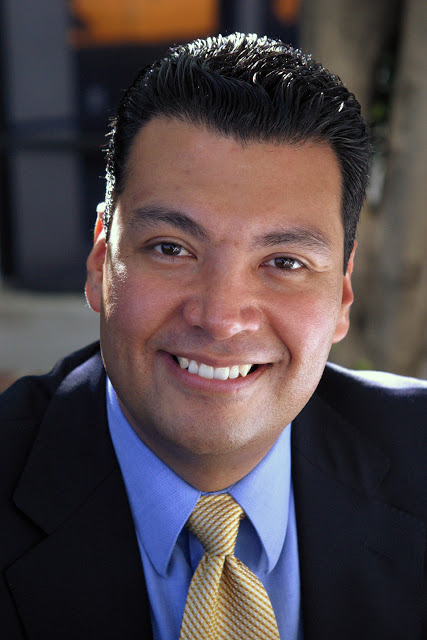
Ask Maddy about Alex Padilla
Scope: california
Hi! I can help you understand Alex Padilla's legislative record. What would you like to know?
Try one of these
i
Maddy answers using official bill text and legislative records. Always verify before sharing.
Sources cited inline