

Existing law, the California Cigarette and Tobacco Licensing Act of 2003, requires a retailer to obtain a license from the State Board of Equalization to engage in the sale of cigarette and tobacco products in California. Existing law, the Stop Tobacco Access to Kids Enforcement Act, or STAKE Act, establishes various requirements for retailers relating to tobacco sales to minors. Existing law also makes it a misdemeanor for a retailer to knowingly or under circumstances in which it has knowledge, or should otherwise have grounds for knowledge, sell, give, or in any way furnish a minor with tobacco products or paraphernalia. Under existing law, violations of the STAKE Act or the above-described misdemeanor provision result in board action, on a set schedule, relating to the licensure of the retailer when the youth purchase survey finds that 13% or more of youth are able to purchase cigarettes. Existing law makes the board's authority inoperative when a youth purchase survey shows less than 13% of youth were able to purchase cigarettes. Under existing law, enforcing agencies assess civil penalties in prescribed amounts against a person, firm, or corporation that sells, gives, or in any way furnishes to a person under 18 years of age specified tobacco products. Moneys from these penalties are deposited in the Sale of Tobacco to Minors Control Account in the State Treasury. This bill would remove the schedule for board action in response to the occurrence of a violation, as defined, of the STAKE Act or the misdemeanor provision. The bill would declare that these changes would not result in the limitation or termination of specified board investigations and actions. The bill would require the board to assess a civil penalty and to suspend or revoke a retailer's license, as specified, for the 3rd, 4th, or 5th violation. The bill would require the assessment of an additional civil penalty, as specified, to be deposited in the existing Cigarette and Tobacco Products Compliance Fund, which would be made available, upon appropriation by the Legislature, to fund these suspension and revocation activities.
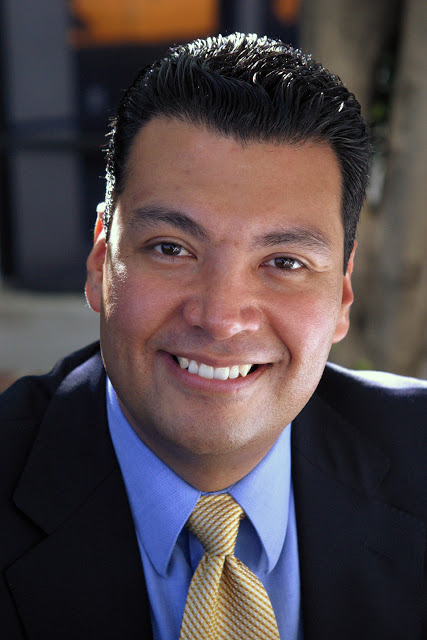
Sponsored bills
This measure would designate the interchange at Hazel Avenue and State Highway Route 50 in the County of Sacramento as the Senator Dave Cox Memorial Interchange. This measure would also request the Department of Transportation to determine the cost of appropriate signs showing this special designation and, upon receiving donations from nonstate sources covering those costs, to erect those signs.
Existing law creates within state government the Department of Justice. Existing law provides that the department is under the direction and control of the Attorney General. Existing law requires the Franchise Tax Board to, among other things, administer personal and corporation income tax laws and certain other nontax programs, including the collection of specified delinquent debt. This bill would, until January 1, 2020, establish a program that would require the Department of Justice, until January 1, 2018, to report to the Franchise Tax Board information on a qualified person, defined as, among others, a person who is not eligible to receive a social security number, but who has filed a state income tax return with a valid individual taxpayer identification number. The bill would require the Franchise Tax Board to submit an annual report to the Legislature, until January 1, 2019, that details the tax receipts collected from qualified persons who participate in the program. The bill would provide that information collected under the program is confidential and not subject to public disclosure under the California Public Records Act, except for purposes authorized under the act. The bill would require the destruction of all records collected under the act, as specified. The California Constitution provides that the powers of state government are legislative, executive, and judicial. Existing law requires that the Governor see that the law is faithfully executed. Existing law provides that the Governor is the sole official organ of communication between the state and the government of any other state or of the United States. Existing federal law regulates immigration. This bill would require the Governor to request that the President of the United States direct the Department of Homeland Security, the United States Immigration and Customs Enforcement (ICE) , and other relevant federal agencies to not expend resources during the term of the program to apprehend, detain, or remove any qualified person participating in the program, or to prosecute any individual employing a qualified person.
Existing law, until January 1, 2013, requires the Attorney General to represent the Department of Finance and to succeed to all rights, claims, powers, and entitlements of the Electricity Oversight Board in any litigation or settlement to obtain ratepayer recovery for the effects of the 2000–02 energy crisis. Existing law additionally prohibits the Attorney General from expending the proceeds of any settlements of those claims, except as specified. This bill would instead repeal the above-described requirements on January 1, 2016.
This measure would designate a specified portion of State Highway Route 1 in the County of Los Angeles as the Honorable Jenny Oropeza Memorial Overcrossing. This measure would also request the Department of Transportation to determine the cost of appropriate signs showing this special designation and, upon receiving donations from nonstate sources covering those costs, to erect those signs.
(1) Under the Public Utilities Act, the Public Utilities Commission (PUC) has regulatory authority over public utilities, including electrical corporations. The act requires the PUC to require, until January 1, 2012, an electrical corporation to identify a separate electrical rate component to fund energy efficiency, renewable energy, and research, development, and demonstration programs that enhance system reliability and provide in-state benefits. Existing law requires the rate component collected for the purposes of funding the research, development, and demonstration programs be transferred to the Public Interest Research, Development, and Demonstration Fund. Existing law requires that the moneys collected between January 1, 2007, and January 1, 2012, from the electrical corporations for public interest research, development, and demonstration projects be transferred to the Public Interest Research, Development, and Demonstration Fund and be used for the purposes of the Public Interest Research, Demonstration, and Development Program. This bill would expressly provide that expenditure of moneys collected for public interest research, development, and demonstration before January 1, 2012, would be expended for the Public Interest Research, Demonstration, and Development Program. The bill would require the Energy Commission to establish and administer the California Energy Innovation Program (CEIP) to fund research, development, and demonstration projects that may lead to technological advancement and breakthroughs to overcome those barriers that prevent the achievement of the state's energy policy goals. The bill would require the Energy Commission to convene, no less than twice a year, meetings of the CEIP Coordinating Council consisting of members representing specified entities and would require the council to identify the technological challenges that most warrant funding under the CEIP and opportunities to leverage funding of projects and to make recommendations to avoid funding duplicative projects. The bill would require the Energy Commission to adopt regulations or modify existing regulations to implement the CEIP. The bill would require the Energy Commission to consult with the CEIP Coordinating Council to establish a process for tracking the progress and outcome of funded projects. The bill would require the Energy Commission to consult with the CEIP Coordinating Council and the Treasurer to establish terms that may be imposed as conditions for the receipt of CEIP funding. The bill would require the Energy Commission, no later than March 31 of each year, to prepare and submit to the Legislature an annual report regarding projects funded by the CEIP. The bill would require the PUC to fund mechanisms to finance comprehensive energy efficiency retrofits of specified building sectors. This bill would declare the intent of the Legislature in enacting this act that the public goods charge collected on or before December 31, 2011, to fund research, development, and demonstration shall be expended pursuant to the law in effect January 1, 2012 and the public goods charge collected for this purpose on and after January 1, 2012, shall be expended pursuant to the law in effect on and after the effective date of this act. (2) Existing law requires the Public Utilities Commission to require, until January 1, 2012, an electrical corporation to identify a separate electrical rate component (public goods charge) to fund energy efficiency, renewable energy, and research, development, and demonstration programs that enhance system reliability and provide in-state benefits. Existing law requires that the moneys collected between January 1, 2007, and January 1, 2012, from the electrical corporations for public interest research, development, and demonstration projects be deposited in the Public Interest Research, Development, and Demonstration Fund and be used for the purposes of the Public Interest Research, Development, and Demonstration Program. This bill would expressly provide that public goods charge for public interest research, development, and demonstration projects collected before January 1, 2012, be deposited into the Public Interest Research, Development, and Demonstration Fund and expended for the purposes of the Public Interest Research, Development, and Demonstration Program. The bill would establish the Clean Energy Innovation Program Fund (CEIP Fund) in the State Treasury and would require public goods charge collected on and after January 1, 2012, be deposited into the CEIP Fund and expended by the State Energy Resources Conservation and Development Commission (Energy Commission) , upon appropriation, for specified purposes. The bill would require the Energy Commission, in making awards from the CEIP Fund to minimize overhead expenditures on the award recipients' contracts. The bill would prohibit the Energy Commission from using sole source method or interagency agreement in making awards unless specified conditions are met. (3) Existing law requires the Public Utilities Commission to establish a surcharge on all natural gas consumed in the state to fund certain low-income assistance programs, cost-effective energy efficiency and conservation activities, and public interest research and development. Existing law requires a public utility gas corporation, as defined, to collect the surcharge from natural gas consumers, as specified, and to remit the moneys collected to the State Board of Equalization (state board) on a quarterly basis. Existing law requires persons consuming natural gas delivered by an interstate pipeline to pay the surcharge to the state board. Existing law requires every public utility gas corporation and every person consuming natural gas transported by a provider other than the public utility gas corporation to file a quarterly return with the state board in the form prescribed by the state board. The money from the surcharge is transmitted by the state board to the Treasurer for deposit in the Gas Consumption Surcharge Fund and is continuously appropriated to specified entities, including to the commission, or to an entity designated by the commission, to fund low-income assistance programs, cost-effective energy efficiency and conservation activities, and public interest research and development not adequately provided by the competitive and regulated markets. This bill would require the commission to establish rates that are sufficient to fund the specified low-income assistance programs, cost-effective energy efficiency and conservation activities, and public interest research and development, and would require the surcharges imposed on natural gas customers of an interstate gas pipeline to be equal to the rate component imposed upon the customers of a public utility gas corporation to fund those programs. The bill would require only persons consuming natural gas delivered by an interstate pipeline to pay the surcharge quarterly to the state board and require only those persons consuming natural gas transported by a provider other than the public utility gas corporation to file a quarterly return with the state board. A public utility gas corporation would continue to collect the surcharge to fund the specified programs, but would not remit the moneys collected to the state board. The bill would repeal existing provisions relieving public utility gas corporations from liability to collect the surcharges for specified uncollected and worthless accounts. The bill would make other conforming changes. (4) This bill would not become operative unless AB 724 of the 2011–12 Regular Session of the Legislature is enacted on or before January 1, 2012.
This measure would recognize June 15th as Justice for Janitors Day, a day to commemorate the struggle of janitors for affordable family health care and dignified wages.
(1) Existing law generally requires secondhand dealers and coin dealers, as defined, to report specified transactions involving tangible personal property, on forms provided or approved by the Department of Justice, to the local law enforcement agency where their businesses are located. Existing law defines "tangible personal property" for these purposes, and excludes from that definition, among other items, commercial grade ingots defined to include, among other items, 0.99 fine ingots of gold, silver, or platinum. This bill would revise the definition of commercial grade ingots to include 0.99 fine or finer ingots of gold, silver, palladium, or platinum. Under existing law, secondhand dealers and coin dealers are required to report the information described above using an electronic reporting system 12 months after the Department of Justice develops that system. This bill would eliminate the electronic filing requirements for coin dealers, and would instead require that secondhand dealers report this information using the single, statewide, uniform electronic reporting system on and after the date that the system is implemented, as specified. (2) Existing law requires a local law enforcement agency to issue a license to engage in the business of a secondhand dealer or pawnbroker to an applicant who meets designated criteria. Existing law authorizes the local licensing authority and the Department of Justice to charge an initial licensure fee and a renewal fee, as specified. This bill would require the Department of Justice to charge a licensure fee and a renewal fee of no more than $300, as specified. The bill would also require licensees issued a license before the effective date of this bill to pay an additional fee of no more than $288 for the purpose of funding the single, statewide, uniform electronic reporting system, with payment due within 120 days of the enactment of this bill. The bill would require that the fees assessed by the department be deposited in the Secondhand Dealer and Pawnbroker Fund, which the bill would create in the State Treasury. The bill would require that the money in the fund be used by the department, upon appropriation by the Legislature, for the purpose of paying for specified regulatory costs, including the cost of implementing, operating, and maintaining the single, statewide, uniform electronic reporting system. The bill would also require applicants for a license to submit fingerprint images relative to a required criminal background check, with associated fee revenue to be deposited in the Fingerprint Fee Account, and would make those revenues available to the Department of Justice, upon appropriation by the Legislature, for these purposes. This bill would make findings and declarations of the Legislature, and state the intent of the Legislature, with regard to these matters. The bill would make other related conforming changes. The bill would declare that it is to take effect immediately as an urgency statute.
Existing law requires the owners of lots or portions of lots fronting on any portion of a public street or place to maintain any sidewalk in such condition that the sidewalk will not endanger persons or property and maintain it in a condition that will not interfere with the public convenience in the use of those works or areas, except as to those conditions created or maintained by persons other than the owner. Existing law requires the superintendent of streets, as defined, to provide specified notice to the owner or person in possession of the property fronting on that portion of the sidewalk so out of repair or pending reconstruction, to repair the sidewalk. Under existing law, if the repair is not commenced within 2 weeks after the notice has been provided, the superintendent of streets shall make the repair and the cost of the repair shall be imposed as a lien on the property. This bill would provide that if a city, county, or city and county has an ordinance in place that requires that local entity to repair sidewalks, a repeal of that ordinance shall become effective only if the repealing ordinance is approved by the majority of voters voting on that measure in a consolidated or general election. The bill would prohibit a city, county, or city and county that has an ordinance in place that requires that local entity to repair sidewalks, from imposing a fee, charge, or assessment, except a voluntary contractual assessment, for sidewalk repairs against an owner of private property fronting on any portion of a sidewalk, unless a repeal of that local entity's sidewalk repair ordinance is approved by the voters, as specified. The bill would make these provisions applicable to charter cities and counties. By imposing new duties on cities, counties, and cities and counties, the bill would impose a state-mandated local program. The California Constitution requires the state to reimburse local agencies and school districts for certain costs mandated by the state. Statutory provisions establish procedures for making that reimbursement. This bill would provide that, if the Commission on State Mandates determines that the bill contains costs mandated by the state, reimbursement for those costs shall be made pursuant to these statutory provisions.
This measure would urge the President and the Congress of the United States to pursue a comprehensive approach to stem the trafficking of illicit United States firearms and ammunition into Mexico, that includes, among other things, enhanced collaboration among local, state, and federal agencies, the allocation of a permanent source of federal funding to sustain local and state law enforcement operations to combat firearms and ammunition trafficking and other border-related crimes, the redirection of federal Bureau of Alcohol, Tobacco, Firearms and Explosives (ATF) , United States Immigration and Customs Enforcement, and United States Customs and Border Protection resources towards this effort, reenactment of a strong federal assault weapons ban, and stronger federal authority to crack down on corrupt gun dealers.