

Existing law requires the board of supervisors of each county, following each decennial federal census, and using that census as a basis, to adjust the boundaries of any or all of the supervisorial districts of the county so that the districts are as nearly equal in population as possible and comply with applicable federal law, and specifies the procedures the board of supervisors must follow in adjusting those boundaries. Existing law establishes independent redistricting commissions in the Counties of Los Angeles, San Diego, Orange, Riverside, San Luis Obispo, Kern, Fresno, and Sacramento, which are charged with adjusting the supervisorial district boundaries for their respective counties. This bill, upon appropriation by the Legislature, would establish the Citizens Redistricting Commission in the County of San Bernardino, which would be charged with adjusting the boundary lines of the districts of the Board of Supervisors of the County of San Bernardino. The commission would consist of 14 commissioners who meet specified qualifications. This bill would require the commission to adjust the boundaries of the supervisorial districts in accordance with specified criteria and adopt a redistricting plan in accordance with existing deadlines for the adoption of county supervisorial district boundaries. The bill would create specified procedures by which the commission may remove a commissioner. By increasing the duties on local officials, the bill would impose a state-mandated local program. This bill would make legislative findings and declarations as to the necessity of a special statute for the unique circumstances facing the County of San Bernardino. The California Constitution requires the state to reimburse local agencies and school districts for certain costs mandated by the state. Statutory provisions establish procedures for making that reimbursement. This bill would provide that, if the Commission on State Mandates determines that the bill contains costs mandated by the state, reimbursement for those costs shall be made pursuant to the statutory provisions noted above.
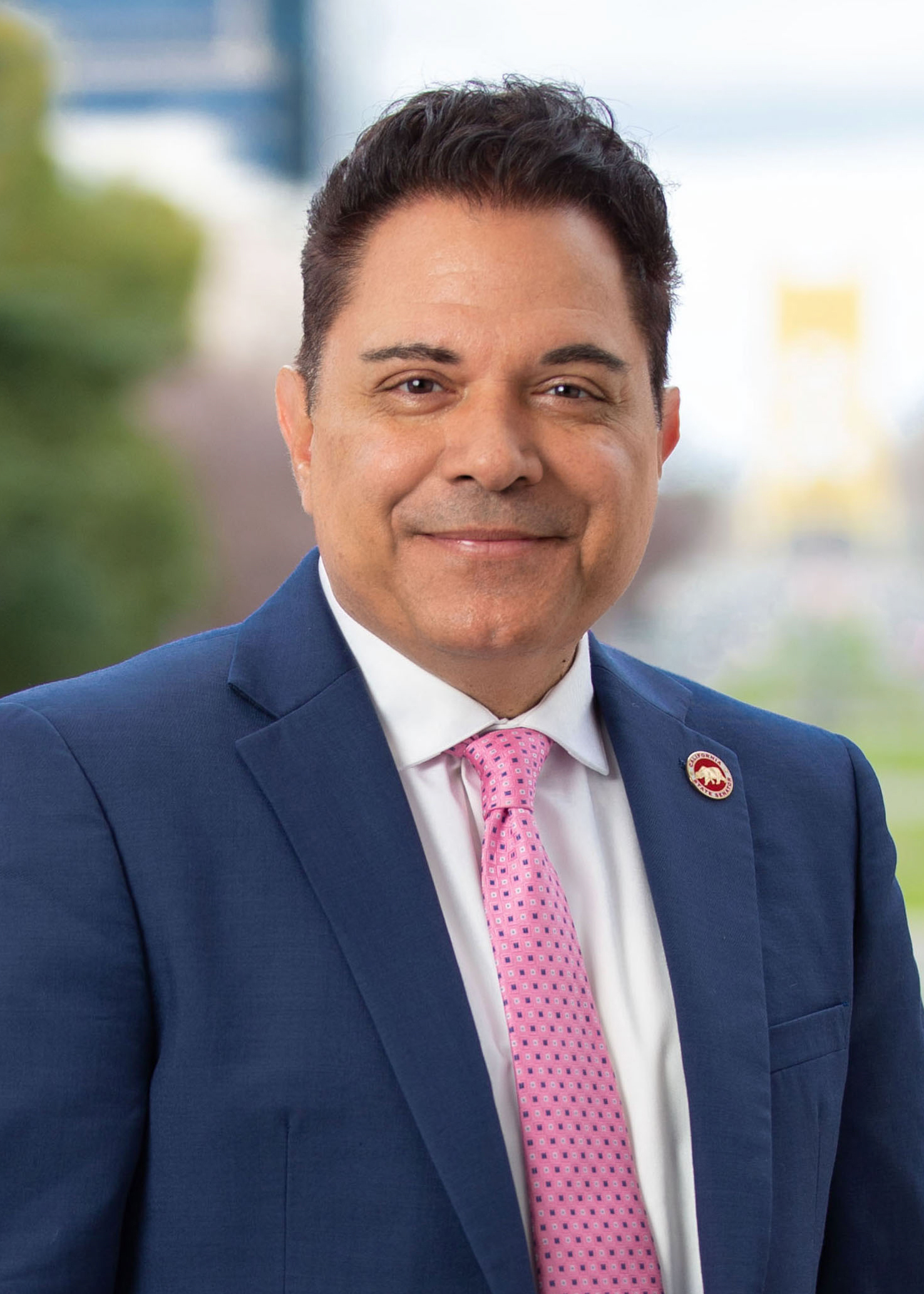
Sen. Steve Padilla
Sponsored bills
Existing law, the Lanterman-Petris-Short (LPS) Act, authorizes the involuntary commitment and treatment of a person, when the person, as a result of a mental health disorder, is a danger to themselves or others, or is gravely disabled. Existing law grants persons involuntarily detained in state hospitals as a result of developmental or mental health disabilities specified rights, including a right to dignity, privacy, and humane care, to be free from harm, to religious freedom and practice, and to physical exercise and recreational opportunities. This bill, the Civil Detainees' Bill of Rights Act of 2026, would clarify that all persons housed or detained for purposes of civil immigration proceedings in California at any state, county, local, or private locked detention facility, including any county, local, or private locked detention facility in which an individual is housed or detained on behalf of, or pursuant to a contract with, the federal Office of Refugee Resettlement or the United States Immigration and Customs Enforcement, have the legal rights and responsibilities guaranteed all other persons by the United States Constitution and federal law and the California Constitution and state law, unless specifically limited by federal or state law or regulations. The bill would grant persons housed or detained for the purposes of civil immigration proceedings in California certain rights, including a right to dignity, privacy, and humane care, a right to clean facilities and living quarters, and a right to safe and healthy food. The bill would reaffirm the intent of the Legislature that individuals housed or detained as a result of developmental or mental health disabilities have the rights described above. The bill would require the rights of individuals involuntarily housed as a result of developmental or mental health disabilities or civilly detained in California to be observed and protected by the operator of any facility in California in which the individuals are housed or civilly detained. The bill would authorize the Attorney General to bring a civil action for injunctive and other relief in order to protect any of the above-described rights, and would additionally authorize the Attorney General to seek a civil penalty not to exceed $2,500 for each violation. The bill would require all necessary access for the observations necessary to ensure compliance with the above-described requirements to be provided to the Attorney General. The bill would make related findings and declarations. The bill would declare that it is to take effect immediately as an urgency statute.
The California Constitution specifies various requirements with respect to the levying of assessments and property-related fees and charges by a local agency. As part of those requirements, the California Constitution mandates that such fees or charges that are extended, imposed, or increased satisfy certain requirements, including, but not limited to, that the amount of the fee or charge imposed upon any parcel or person as an incident of property ownership not exceed the proportional cost of the service attributable to the parcel. Existing law, known as the Proposition 218 Omnibus Implementation Act (act) , prescribes specific procedures and parameters for local jurisdictions to comply with these requirements and, among other things, authorizes an agency providing water, wastewater, sewer, or refuse collection services to adopt a schedule of fees or charges authorizing automatic adjustments that pass through increases in wholesale charges for water, sewage treatment, or wastewater treatment or adjustments for inflation under certain circumstances. This bill would authorize a local government to demonstrate the proportional cost of the service attributable to the parcel by any method that reasonably allocates the ascertainable cost of providing service to all parcels, if substantiated as provided. The bill would, however, provide that for water or sewer service fee or charge impositions, a local government is not required to provide an exact measure of the cost of the service at each parcel and may instead impose uniform or tiered rates to parcel or customer classes that are defined based on common characteristics indicative of likely water or sewer use. The bill would provide that the proportional cost of service within each tier of water service may be substantiated by using any reasonable basis for allocating costs attributed to the tier, as described, and would provide a local government discretion to determine the costs allocated to each tier as long as the rate for each tier does not exceed the proportional cost of service reasonably allocated to parcels subject to that tier. The bill would specify that its provisions do not apply to fees for water connections or sewer connections, or capacity charges, as specified.
This measure would designate a specified portion of State Highway Route 152 in the County of Santa Clara as the Rusty Areias Highway. The measure would request that the Department of Transportation determine the cost of appropriate signs showing this special designation and, upon receiving donations from nonstate sources sufficient to cover the cost, to erect those signs.
Existing law requires the governing board of a school district or the governing body of a charter school that requires a course in health education for graduation from high school to include instruction in performing compression-only cardiopulmonary resuscitation (CPR) , as provided. Existing law also encourages those entities to provide to pupils general information on the use and importance of an automated external defibrillators (AED) . Existing law further requires the State Department of Education to provide guidance on how to implement these provisions, including, but not limited to, who may provide instruction. Existing law establishes the Instructional Quality Commission and requires the commission to, among other things, recommend curriculum frameworks to the State Board of Education. This bill would require the commission, when the physical education framework is next revised after January 1, 2027, to consider including content on the importance, performance, and use of CPR and AEDs in that framework.
Existing law requires the Department of Corrections and Rehabilitation to maintain a canteen at its active facilities, and until January 1, 2028, prohibits the sale prices of the articles offered for sale in a canteen from exceeding a 35% markup above the price of the articles paid to the vendors. Existing law, commencing on January 1, 2028, requires the sale amounts of the articles to be offered for sale to be fixed by the secretary at amounts that will render each canteen self-supporting. This bill would prohibit the sale price of an article offered for sale in a commissary, as defined, at a private detention facility, defined as a detention facility that is operated by a private, nongovernmental, for-profit entity, and operating pursuant to a contract or agreement with a governmental entity, from exceeding a 35% markup above the amount paid to a vendor for that article.
Existing law establishes the California Community Colleges, under the administration of the Board of Governors of the California Community Colleges, as one of the segments of public postsecondary education in this state. Existing law establishes community college districts throughout the state and authorizes them to provide instruction at the campuses they operate. Existing law authorizes the Board of Governors of the California Community Colleges, in consultation with the California State University and the University of California, to authorize the establishment of community college district baccalaureate degree programs, as provided. This bill would authorize the Chancellor of the California Community Colleges to authorize the Southwestern Community College District to offer no more than 4 workforce-aligned baccalaureate degree programs, one each in forensic studies, allied health education and leadership, interaction design, and teaching English to speakers of other languages, as provided. The bill would require the Legislative Analyst's Office to, on or before July 1, 2031, conduct and present to the Legislature and the Governor an interim evaluation of any of the baccalaureate degree programs that are offered pursuant to that authorization and, on or before July 1, 2035, a final evaluation of those degree programs, as provided. The bill would repeal these provisions on January 1, 2037. This bill would make legislative findings and declarations as to the necessity of a special statute for the Southwestern Community College District. This bill would not become operative if either AB 2694 or SB 960 of the 2025–26 Regular Session, or both of those bills, are enacted and take effect on or before January 1, 2027.
(1) Existing law generally regulates classes of insurance, including fire and residential property insurance. Existing law prohibits a policy from limiting or denying a payment of building code upgrade cost on the basis that the insured has decided to rebuild at a new location or to purchase an already built home at a new location. If there is a total loss of the insured structure, this bill would require the building code upgrade cost payable to include all costs that would have been incurred if the insured structure been completely rebuilt at its original location. (2) Existing law requires a disclosure to be provided upon an offer of a residential property insurance policy that states policies offering extended replacement cost coverage of at least 50% may be available for that property and that includes the internet website address of the Homeowners Coverage Comparison Tool. Existing law exempts specified insurers, agents, and brokers from this requirement. This bill would instead prohibit a residential property insurance policy from being issued or renewed unless the applicant or insured is offered extended replacement cost coverage in an amount of no less than 50% of coverage above the policy limits for the primary dwelling if the property is eligible for replacement cost coverage. If an applicant or policyholder declines this offer, the bill would require the insurer to record acknowledgment of the declination, as specified. (3) Existing law requires an insurer that provides replacement cost coverage to provide a cost estimate for rebuilding or replacing the structure at specified intervals, but exempts an insurer that meets specified criteria from this requirement. This bill would delete those exemptions and would extend the cost estimate requirements to a policy provided by the California FAIR Plan Association if replacement cost coverage is available under the policy and the policy limit being offered or provided is less than the maximum combined policy limit available under this program. (4) Existing law requires an insurer to provide an insured with a list of items that the insurer believes may be covered under the policy as additional living expenses if there is a loss under a homeowners' insurance policy for which the insured has made a claim for additional living expenses. If there is a covered loss relating to a state of emergency, existing law requires additional living expense coverage to be for a period of no less than 24 months from the inception of the loss. This bill would require the above-described list to be written, and would authorize the list to be transmitted as an electronic document. The bill would require additional living expense coverage to include all reasonable additional expenses incurred by the insured for the insured to maintain a comparable standard of living for the time the insured dwelling is not habitable due to a covered loss, as specified. The bill would authorize an insurer to offer the ability to the insured to choose to collect the monthly fair rental value of the dwelling in lieu of reimbursement for itemized expenses under additional living expense coverage, as specified. If there is a covered total loss relating to a state of emergency, the bill would require loss of use, fair rental value, or similar coverage to be for a period of no less than 24 months from the inception of the loss and would extend additional living expenses 15 calendar days beyond the date upon which the premises is deemed habitable. The bill would prohibit issuing or renewing a homeowners' insurance policy that contains a dollar policy limit for additional living expense coverage without offering extended additional living expense, loss of use, or fair rental value, or similar coverage in an amount of no less than 50% of coverage above the underlying policy limits for additional living expenses. (5) Existing law requires a residential property insurer to provide a written status report to the insured if the insurer assigns a 3rd or subsequent first-party claims adjuster within a 6-month period for a claim arising as a result of a state of emergency. Existing law prescribes the standard form for fire insurance policies covering property and requires the form to include specified statements regarding this status report. Under existing law, it is a misdemeanor to issue or countersign a fire policy that varies from the standard form fire insurance policy. This bill would require an insurer to assign a primary point of contact within 30 calendar days from the date the notice of claim is provided to the insurer to be primarily responsible for a claim that involves one or more coverages under a policy of residential property insurance and is for a loss relating to a state of emergency, and would require an insurer to provide a written report within 15 calendar days of the assignment of a subsequent point of contact. The bill would make conforming changes to the standard form for fire insurance, thus expanding the scope of an existing crime and imposing a state-mandated local program. (6) Existing law prescribes the standard form of the California Residential Insurance Disclosure, which sets forth a description of certain types of insurance coverage. Existing law requires a residential property insurance policy to include specified information about coverage on its declarations page. Existing law requires the disclosure and declarations page to explain that building code upgrade coverage covers additional costs to comply with building codes and zoning laws in effect at the time of loss or rebuilding. This bill would instead require the above-described disclosure and declarations page to explain that building code upgrade coverage covers additional costs to comply with building codes and zoning laws in effect at the time of rebuilding and required for rebuilding. (7) Existing law creates the Department of Insurance, headed by the Insurance Commissioner, and prescribes the commissioner's powers and duties. Existing law requires an admitted insurer to submit various reports and documents to the commissioner or department upon request or at specified intervals and authorizes the commissioner to conduct an examination of an insurer at the commissioner's discretion. This bill would require a residential property insurer to submit a detailed disaster response plan to the department before April 1, 2028, and would require the plan to be updated every 2 years or upon the commissioner's request. The bill would also require a residential property insurer to report to the commissioner the losses, claims, and estimate of total incurred losses no later than 30 calendar days from the date a state of emergency was declared if there is a related covered loss. The bill would make information submitted pursuant to these provisions confidential. (8) Existing law defines certain actions as unfair methods of competition and unfair and deceptive acts or practices in the business of insurance. Under existing law, a person who engages in an unfair method of competition or an unfair or deceptive act or practice is liable to the state for a civil penalty to be fixed by the commissioner, not to exceed $5,000 for each act, or, if the act or practice was willful, a civil penalty not to exceed $10,000 for each act. Existing law authorizes the commissioner to order a respondent to provide restitution for a loss arising from the respondent's conduct, but exempts specified surplus line brokers, production agencies, and administrators from those restitution orders. This bill would additionally make a person who engages in an unfair method of competition or an unfair or deceptive act or practice relating to a state of emergency liable to the state for a civil penalty to be fixed by the commissioner, not to exceed $10,000 for each act, or, if the act or practice was willful, a civil penalty not to exceed $20,000 for each act. The bill would authorize the commissioner to order a person who engages in an unfair claims settlement practice to provide restitution, as specified. The bill would eliminate the restitution order exemption for surplus line brokers, production agencies, and administrators. (9) Existing law requires an admitted insurer with written California premiums totaling $10,000,000 or more to submit a report with specified fire risk information on its residential property policies to the commissioner on or before April 1, 2020, and every 2 years thereafter. This bill would instead require an admitted insurer with written California premiums totaling $20,000,000 or more to submit a report on or before April 1, 2028, and every 2 years thereafter, on its residential property experience data for the previous 3 years for policies written in California, reported by individual policy. (10) This bill would make its provisions operative on January 1, 2028. (11) Existing constitutional provisions require that a statute that limits the right of access to the meetings of public bodies or the writings of public officials and agencies be adopted with findings demonstrating the interest protected by the limitation and the need for protecting that interest. This bill would make legislative findings to that effect. (12) This bill would incorporate additional changes to Section 2051.5 of the Insurance Code proposed by SB 878 to be operative only if this bill and SB 878 are enacted and this bill is enacted last. The bill would incorporate additional changes to Section 2071 of the Insurance Code proposed by SB 877 to be operatively only if this bill and SB 877 are enacted and this bill is enacted last. The bill would incorporate additional changes to Section 12928.7 of the Insurance Code proposed by SB 1206 to be operative only if this bill and SB 1206 are enacted and this bill is enacted last. (13) The California Constitution requires the state to reimburse local agencies and school districts for certain costs mandated by the state. Statutory provisions establish procedures for making that reimbursement. This bill would provide that no reimbursement is required by this act for a specified reason.
This measure would proclaim April 10, 2026, as Dolores Huerta Day in California and would encourage all public schools and educational institutions to conduct exercises remembering her, recognizing her accomplishments, and familiarizing pupils with her contributions to California.
Maddy summarySenate Resolution 135 is a commemorative measure that formally honors the 40th Infantry Division of the California National Guard for its more than century-long history of service. The resolution highlights the unit's contributions in major conflicts, including World War I, World War II, the Korean War, and post-9/11 operations, as well as its role in responding to natural disasters within California. It specifically acknowledges the division's Medal of Honor recipients and notes that Major General Laura L. Yeager became the first woman to command an infantry division in 2019. The bill directs the Secretary of the Senate to send copies of the resolution to the Adjutant General of California, the division commander, and the author for distribution.