

Existing law vests the Public Utilities Commission with regulatory authority over public utilities, including electrical corporations. Existing law requires the commission, in consultation with the Independent System Operator, to establish resource adequacy requirements for all load-serving entities, as provided. Existing law defines load-serving entity, for that purpose, as an electrical corporation, electric service provider, or community choice aggregator. Existing law requires each load-serving entity to be subject to the same requirements for resource adequacy, the renewables portfolio standard program, and the integrated resource planning process that apply to electrical corporations, as provided. This bill would require the commission to authorize a load-serving entity to elect to demonstrate compliance with resource adequacy requirements by selling to, or otherwise making transactions with, another load-serving entity, and would require those transactions to not represent more than 25% of a load-serving entity's compliance obligations and be of a short-term duration. The bill would require the commission to authorize those transactions to be denominated in the same unit of time used to denominate resource adequacy compliance requirements. The bill would authorize the commission to suspend or adjust that authority of a load-serving entity to sell to, or otherwise make transactions with, another load-serving entity, as specified. Under existing law, a violation of the Public Utilities Act or any order, decision, rule, direction, demand, or requirement of the commission is a crime. Because the above provisions would be a part of the act, and because a violation of a commission action implementing the above prohibition would be a crime, the bill would impose a state-mandated local program. The California Constitution requires the state to reimburse local agencies and school districts for certain costs mandated by the state. Statutory provisions establish procedures for making that reimbursement. This bill would provide that no reimbursement is required by this act for a specified reason.
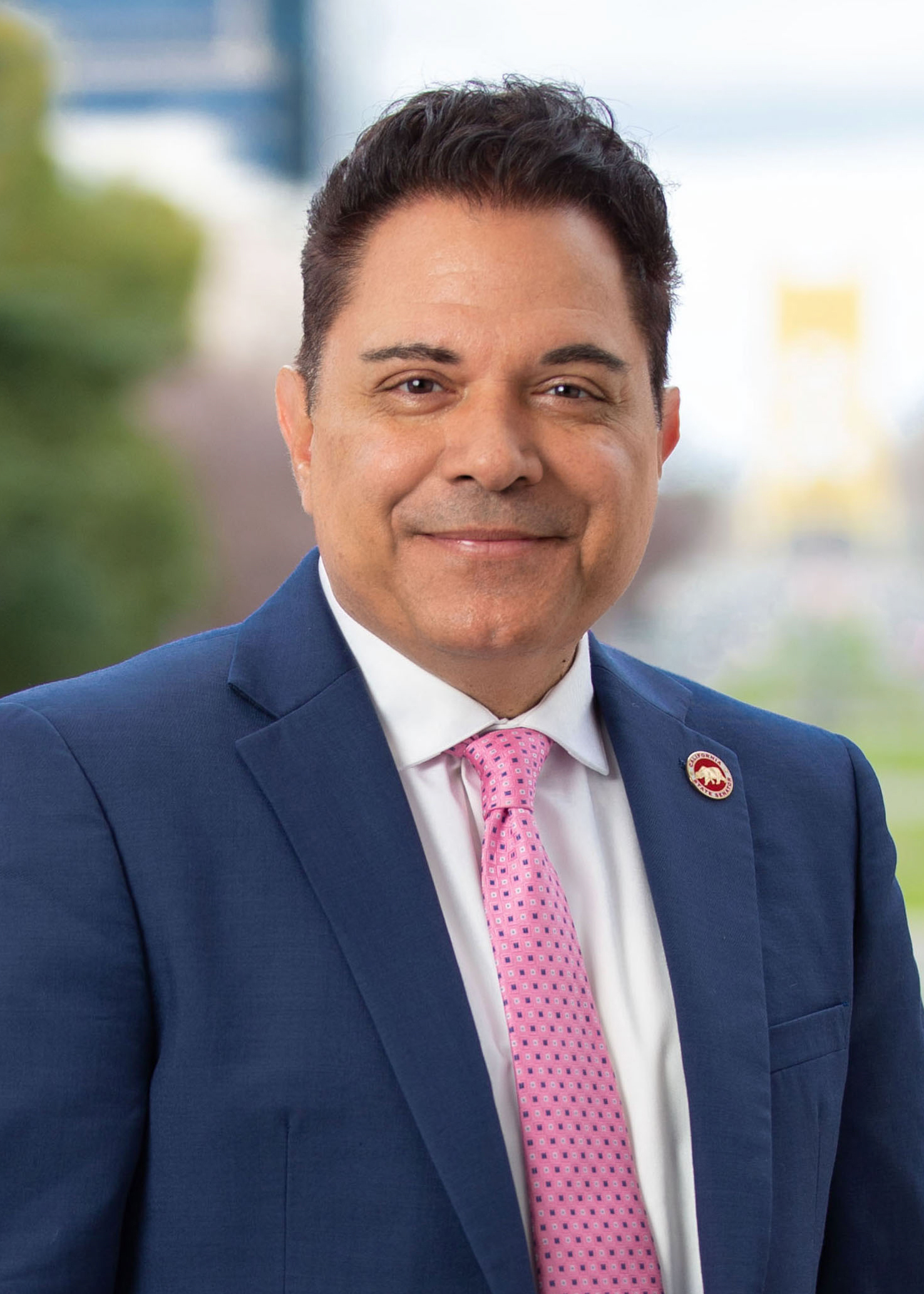
Sen. Steve Padilla
Sponsored bills
Existing law requires the Office of Land Use and Climate Innovation and the Natural Resources Agency, on or before July 1, 2026, and every 3 years thereafter, to update the Extreme Heat Action Plan to promote comprehensive, coordinated, and effective state and local government action on extreme heat. This bill would require the office and the agency, on or before July 1, 2028, to conduct an assessment of the disparate and differentiated gendered impacts and risks of extreme heat, as provided, for purposes of integration into updates to the Extreme Heat Action Plan. The bill would require the office and the agency to post the gender assessment on their respective internet websites and to provide the assessment to the relevant policy and fiscal committees of the Legislature. Existing law provides that it is the intent of the Legislature to prioritize the most vulnerable communities, ecosystems, and economic sectors in the state' climate adaptation and resilience strategy set forth in the Safeguarding California Plan and that the Natural Resources Agency consider developing policies to address the impacts of climate change and climate adaptation with a focus on equity and that actions taken to address climate adaptation should be consistent with the plan and specifies that in developing these policies and taking these actions, the agency include the adoption of strategies that seek to address and, at a minimum, avoid worsening social and racial inequities. This bill would additionally state the intent of the Legislature that those strategies shall seek to address and, at a minimum, avoid worsening gender inequities. Existing law requires the office, through the Integrated Climate Adaptation and Resiliency Program, to develop the California Climate Change Assessment to provide an integrated suite of products that report the impacts and risks of climate change, based on the best available science, and identify potential solutions to inform legislative policy. Existing law requires the office to complete the assessment no less frequently than every 5 years. Existing law requires the products in the assessment to include, among other things, reports on issues of statewide significance, including, but not limited to, environmental justice considerations. This bill would expressly require the reports on issues of statewide significance to include gender impact considerations.
This measure would acknowledge and celebrate 50 years of coastal protection and affirm the state's longstanding commitment to protecting its coastal waters, as specified.
Maddy summaryThis bill designates September 20, 2026, as Soju Day within the state to honor the traditional Korean alcoholic beverage. The measure does not alter existing laws regarding alcohol sales or consumption but serves as a commemorative observance. It requires no changes to regulations or funding, functioning solely as a symbolic recognition of cultural heritage.
This measure would urge the Congress and President of the United States to permit states to extend burial and memorial benefits in state cemeteries to Republic of Korea veterans who served in the Vietnam War and who subsequently became United States citizens.
This measure would acknowledge and celebrate 50 years of coastal protection and affirm the state's longstanding commitment to protecting its coastal waters, as specified.
This measure would request that the federal Bureau of Ocean Energy Management hold public hearings in California on the proposed 2026–2031 National Outer Continental Shelf Oil and Gas Leasing Program, prepare an environmental impact statement to accompany the program, and provide the public the opportunity to comment on a draft programmatic environmental impact statement for potential offshore oil and gas leasing in California. The measure would strongly and unequivocally oppose any new offshore drilling and declare unequivocal support for the current federal prohibition on new oil or gas drilling in federal waters offshore of the Pacific coast.
Maddy summaryCalifornia House Resolution 127 declares August of each year as Transgender History Month to recognize the historical contributions and struggles of transgender, two-spirit, gender-expansive, and intersex individuals in the state. The resolution highlights specific California milestones, such as the Compton's Cafeteria Riots and the establishment of the nation's first transgender cultural district in San Francisco, while noting ongoing challenges including discrimination, hate crimes, and legislative attacks on trans rights. It commits the state legislature to increasing awareness of these communities and removing barriers to their full participation in society.
Existing law, the Administrative Procedure Act, sets forth the requirements for the adoption, publication, review, and implementation of regulations by state agencies. The Safe Drinking Water, Wildfire Prevention, Drought Preparedness, and Clean Air Bond Act of 2024 (act) , approved by the voters as Proposition 4 at the November 5, 2024, statewide general election, authorized the issuance of bonds in the amount of $10,000,000,000 pursuant to the State General Obligation Bond Law to finance projects for safe drinking water, drought, flood, and water resilience, wildfire and forest resilience, coastal resilience, extreme heat mitigation, biodiversity and nature-based climate solutions, climate-smart, sustainable, and resilient farms, ranches, and working lands, park creation and outdoor access, and clean air programs. Existing law authorizes certain regulations needed to effectuate or implement programs of the act to be adopted as emergency regulations in accordance with the Administrative Procedure Act, as provided. Existing law requires the emergency regulations to be filed with the Office of Administrative Law and requires the emergency regulations to remain in effect until repealed or amended by the adopting state agency. This bill, notwithstanding the above, would exempt the adoption of regulations for purposes of developing and adopting program guidelines and selection criteria needed to effectuate or implement programs of the act from the requirements of the Administrative Procedure Act, as provided. The bill would require a state entity that receives funding to administer a competitive grant program established using the Administrative Procedure Act exemption to do certain things, including, among other things, to develop draft project solicitation and evaluation guidelines, to transmit copies of the draft guidelines to the fiscal committees and to the appropriate policy committees of the Legislature, to hold a noticed public meeting on the draft guidelines, and to submit the final guidelines to the Secretary of the Natural Resources Agency, except as provided. The bill would require the Secretary of the Natural Resources Agency to post an electronic form of the guidelines submitted by a state entity and the subsequent verifications on the Natural Resources Agency's internet website. The bill would authorize the use of certain previously developed program guidelines and selection criteria for these purposes, as provided. This bill would declare that it is to take effect immediately as an urgency statute.
This measure would request the United States, at the 2026 joint review of the United States-Mexico-Canada Agreement (USMCA) , to secure and publicly adopt measurable and sustained commitments from the parties to eliminate chronic transboundary sewage discharges into the Tijuana River watershed and the flow of untreated sewage, industrial effluent, and toxic pollutants through the New River from Mexicali into the County of Imperial. The measure would further request that the United States commit to automatic nonrenewal of the USMCA should there be a failure of establishing commitments, benchmarks, and timelines relating to specific numeric discharge-reduction benchmarks for both the Tijuana River watershed and the New River, investment into and enforceable timelines for completion of wastewater infrastructure projects, and annual public reporting on compliance.