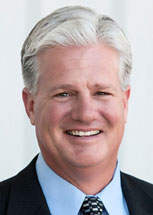
Photo of Andy Vidak
R California Senate · District 14

Sen. Andy Vidak

Compare
Total votes
11,155
all sessions
Attendance
97%
237 missed
Near the chamber average
With party
96%
of cast votes
Lower than 87% of chamber peers
Bipartisan score
3%
crosses aisle rarely
Higher than 86% of chamber peers
Sponsored
374
bills & resolutions
Near the chamber average
Committees
0
assignments
374 bills and resolutions

Sponsored bills

Total
374
Primary
69
Co-sponsor
305
This page
374
matching current filters
Co-sponsor ACR 164
Signed into law · California Assembly · Co-sponsor
Relative to Citrus Strong Month.

This measure would recognize the month of April 2016 as Citrus Strong Month for the purpose of celebrating California's vibrant citrus industry and the benefits it provides to the state's environment, economy, and people, and to affirm that California is citrus strong.

Signed into law May 17, 2016 1 co-sponsor
Primary SB 929
Passed · California Senate · Lead sponsor
Conservator appointments: compensation.

Existing law permits a conservator of the estate to petition the probate court for an order fixing and allowing compensation to the conservator for services rendered and to the attorney for services rendered. Existing law also permits a person who unsuccessfully petitioned for the appointment of a conservator to petition the probate court for an order fixing and allowing compensation to the person and the person's attorney for services rendered in connection with the appointment of a conservator. This bill would permit a person who successfully petitioned for the appointment of a conservator, as specified, to petition the probate court for an order fixing and allowing compensation to the person and the person's attorney for services rendered in connection with the appointment of a conservator.

Passed May 12, 2016 0 co-sponsors
Co-sponsor SB 269
Signed into law · California Senate · Co-sponsor
Disability access.

(1) Existing law prohibits discrimination on the basis of various specified personal characteristics, including disability. The Construction-Related Accessibility Standards Compliance Act establishes standards for making new construction and existing facilities accessible to persons with disabilities and provides for construction-related accessibility claims for violations of those standards. Existing law specifies that a violation of construction-related accessibility standards personally encountered by a plaintiff may be sufficient to cause a denial of full and equal access if the plaintiff experienced difficulty, discomfort, or embarrassment because of the violation. Under existing law, a defendant is liable for actual damages plus minimum statutory damages for each instance of discrimination relating to a construction-related accessibility standard. This bill would, for claims filed on and after its effective date, establish a rebuttable presumption, for the purpose of an award of minimum statutory damages, that certain technical violations do not cause a plaintiff to experience difficulty, discomfort, or embarrassment, if specified conditions are met. This bill would also exempt a defendant from liability for minimum statutory damages with respect to a structure or area inspected by a certified access specialist for a period of 120 days if specified conditions are met. The bill would require a defendant who claims the benefit of this exemption to disclose the date and findings of any certified access specialist (CASp) inspection to the plaintiff. (2) Existing law requires the State Architect to establish and publicize a program for the voluntary certification by the state of any person who meets specified criteria as a CASp. Existing law requires the State Architect to annually publish a list of CASps. Existing law requires each applicant for CASp certification or renewal to pay certain fees, and requires the State Architect to periodically review those fees, as specified. Existing law provides for the deposit of those fees into the Certified Access Specialist Fund, which is continuously appropriated for use by the State Architect to implement the CASp program. This bill would additionally require the State Architect to publish, and regularly update, easily accessible lists of businesses that file prescribed notices of inspection, and businesses which have been inspected by a CASp on or after January 1, 2017, including the date of the inspection. The bill would require the State Architect to develop a process by which a small business may notify the State Architect that a structure or area has had a CASp inspection and to develop a form for businesses to notify the public that the business has obtained a CASp inspection. The bill would also require applicants for CASp certification or renewal to additionally provide to the State Architect the name of the city, county, or city and county in which the applicant intends to provide or has provided services, and would require the Division of the State Architect to post that information on its Internet Web site. (3) Existing law establishes the California Commission on Disability Access for purposes of developing recommendations to enable persons with disabilities to exercise their right to full and equal access to public facilities and facilitating business compliance with applicable state and federal laws and regulations. Existing law sets forth the powers and duties of the commission, including developing educational materials and information for businesses, building owners, tenants, and building officials, posting that information on the commission's Internet Web site, and coordinating with other state agencies and local building departments to ensure that information provided to the public on disability access requirements is uniform and complete. This bill would additionally require the commission to provide a link on its Internet Web site to the Internet Web site of the Division of the State Architect's CASp certification program, and make the commission's educational materials and information available to other state agencies and local building departments. (4) The Permit Streamlining Act establishes procedures for the application, and review of an application, for a development project. Existing law requires a public agency to notify applicants for development permits of specified information, including the time limits established for the review and approval of development permits. This bill would additionally require local agencies to develop and provide to applicants materials relating to the requirements of the federal Americans with Disabilities Act of 1990, or to instead provide similar materials developed by the California Commission on Disability Access. The bill would require a local agency to notify an applicant that approval of a permit does not signify that the applicant has complied with that act. The bill would also require local agencies to expedite review of projects for which the applicant provides a copy of a disability access certificate, demonstrates that the project is necessary to address an alleged violation of a construction-related access standard or a violation noted in a CASp report, and, if project plans are necessary for approval, has had a CASp review the project plans for compliance with all applicable construction-related accessibility standards. The bill would declare that these provisions constitute a matter of statewide concern and would apply to charter cities and charter counties. (5) By imposing additional duties on local agencies with respect to the receipt and review of applications for development project permits, this bill would impose a state-mandated local program. The California Constitution requires the state to reimburse local agencies and school districts for certain costs mandated by the state. Statutory provisions establish procedures for making that reimbursement. This bill would provide that no reimbursement is required by this act for a specified reason. (6) This bill would declare that it is to take effect immediately as an urgency statute.


Signed into law May 10, 2016 1 co-sponsor
Co-sponsor SCR 108
Signed into law · California Senate · Co-sponsor
Relative to Rare Disease Day.

This measure would proclaim February 29, 2016, as Rare Disease Day in California and would provide for the recognition of Rare Disease Day in California in subsequent years, as specified.

Signed into law May 4, 2016 1 co-sponsor
Co-sponsor SCR 132
Passed · California Senate · Co-sponsor
California Peace Officers' Memorial Day.

This measure would designate Monday, May 2, 2016, as California Peace Officers' Memorial Day, and would urge all Californians to honor those individuals who have given their lives for our safety and express appreciation to those who continue to dedicate themselves to making California a safer place in which to live and raise our families.

Passed May 2, 2016 1 co-sponsor
Co-sponsor ACR 147
Signed into law · California Assembly · Co-sponsor
Relative to California Agriculture Day.

This measure would recognize and honor the men and women of California agriculture for their dedication and productivity by observing March 15, 2016, as National Agriculture Day, and designating March 16, 2016, as California Agriculture Day.

Signed into law Apr 29, 2016 1 co-sponsor
Co-sponsor SB 1142
died · California Senate · Co-sponsor
Disability access.

(1) Existing law prohibits discrimination on the basis of various specified personal characteristics, including disability. Existing law provides that individuals with disabilities are entitled to full and equal access to places to which the general public is invited, subject to specified conditions and limitations. This bill would provide that when there is a conflict or difference between the federal Americans with Disabilities Act of 1990 and any state law, standard, or regulation relating to the access of individuals with disabilities to any place to which the general public is invited, the federal Americans with Disabilities Act of 1990 shall control. (2) Existing law allows a plaintiff to collect statutory damages in a construction-related accessibility claim against a place of public accommodation only if a violation of a construction-related accessibility standard denied the plaintiff full and equal access to the place of public accommodation on a particular occasion, as specified. Existing law reduces a defendant's liability for statutory damages in a construction-related accessibility claim against a place of public accommodation to a minimum of $1,000 for each offense if the defendant demonstrates that it has corrected all construction-related violations that are the basis of a claim within 60 days of being served with the complaint and meets certain requirements, or a minimum of $2,000 for each offense if the defendant has corrected all construction-related violations that are the basis of a claim within 30 days of being served with the complaint and is a small business, as specified. This bill would prohibit a construction-related accessibility claim for statutory damages from being initiated in a legal proceeding against a defendant unless the defendant has been served with a demand letter specifying each alleged violation of a construction-related accessibility standard and the alleged violations have not been corrected within 120 days of service. The bill would provide that a defendant is not liable for statutory damages, costs, or plaintiff's attorney's fees for an alleged violation that is corrected within 120 days of service of a demand letter alleging the violation.

died Apr 27, 2016 1 co-sponsor
Co-sponsor SB 333
Vetoed · California Senate · Co-sponsor
Controlled substances.

(1) Existing law generally provides that the possession of Ketamine, gamma hydroxybutyric acid (GHB) , and flunitrazepam is a misdemeanor, punishable by imprisonment in the county jail for not more than one year. This bill would make it a felony, punishable by imprisonment in the county jail for 16 months, or 2 or 3 years, to possess Ketamine, flunitrazepam, or GHB, with the intent to commit sexual assault, as defined for these purposes to include, among other acts, rape, sodomy, and oral copulation. By creating a new crime, this bill would impose a state-mandated local program. (2) The California Constitution requires the state to reimburse local agencies and school districts for certain costs mandated by the state. Statutory provisions establish procedures for making that reimbursement. This bill would provide that no reimbursement is required by this act for a specified reason.

Vetoed Apr 25, 2016 1 co-sponsor
Showing 151 to 160 of 374 bills
Previous 1 … 15 16 17 … 38 Next