

Disability access.
Summary
(1) Existing law prohibits discrimination on the basis of various specified personal characteristics, including disability. The Construction-Related Accessibility Standards Compliance Act establishes standards for making new construction and existing facilities accessible to persons with disabilities and provides for construction-related accessibility claims for violations of those standards. Existing law specifies that a violation of construction-related accessibility standards personally encountered by a plaintiff may be sufficient to cause a denial of full and equal access if the plaintiff experienced difficulty, discomfort, or embarrassment because of the violation. Under existing law, a defendant is liable for actual damages plus minimum statutory damages for each instance of discrimination relating to a construction-related accessibility standard. This bill would, for claims filed on and after its effective date, establish a rebuttable presumption, for the purpose of an award of minimum statutory damages, that certain technical violations do not cause a plaintiff to experience difficulty, discomfort, or embarrassment, if specified conditions are met. This bill would also exempt a defendant from liability for minimum statutory damages with respect to a structure or area inspected by a certified access specialist for a period of 120 days if specified conditions are met. The bill would require a defendant who claims the benefit of this exemption to disclose the date and findings of any certified access specialist (CASp) inspection to the plaintiff. (2) Existing law requires the State Architect to establish and publicize a program for the voluntary certification by the state of any person who meets specified criteria as a CASp. Existing law requires the State Architect to annually publish a list of CASps. Existing law requires each applicant for CASp certification or renewal to pay certain fees, and requires the State Architect to periodically review those fees, as specified. Existing law provides for the deposit of those fees into the Certified Access Specialist Fund, which is continuously appropriated for use by the State Architect to implement the CASp program. This bill would additionally require the State Architect to publish, and regularly update, easily accessible lists of businesses that file prescribed notices of inspection, and businesses which have been inspected by a CASp on or after January 1, 2017, including the date of the inspection. The bill would require the State Architect to develop a process by which a small business may notify the State Architect that a structure or area has had a CASp inspection and to develop a form for businesses to notify the public that the business has obtained a CASp inspection. The bill would also require applicants for CASp certification or renewal to additionally provide to the State Architect the name of the city, county, or city and county in which the applicant intends to provide or has provided services, and would require the Division of the State Architect to post that information on its Internet Web site. (3) Existing law establishes the California Commission on Disability Access for purposes of developing recommendations to enable persons with disabilities to exercise their right to full and equal access to public facilities and facilitating business compliance with applicable state and federal laws and regulations. Existing law sets forth the powers and duties of the commission, including developing educational materials and information for businesses, building owners, tenants, and building officials, posting that information on the commission's Internet Web site, and coordinating with other state agencies and local building departments to ensure that information provided to the public on disability access requirements is uniform and complete. This bill would additionally require the commission to provide a link on its Internet Web site to the Internet Web site of the Division of the State Architect's CASp certification program, and make the commission's educational materials and information available to other state agencies and local building departments. (4) The Permit Streamlining Act establishes procedures for the application, and review of an application, for a development project. Existing law requires a public agency to notify applicants for development permits of specified information, including the time limits established for the review and approval of development permits. This bill would additionally require local agencies to develop and provide to applicants materials relating to the requirements of the federal Americans with Disabilities Act of 1990, or to instead provide similar materials developed by the California Commission on Disability Access. The bill would require a local agency to notify an applicant that approval of a permit does not signify that the applicant has complied with that act. The bill would also require local agencies to expedite review of projects for which the applicant provides a copy of a disability access certificate, demonstrates that the project is necessary to address an alleged violation of a construction-related access standard or a violation noted in a CASp report, and, if project plans are necessary for approval, has had a CASp review the project plans for compliance with all applicable construction-related accessibility standards. The bill would declare that these provisions constitute a matter of statewide concern and would apply to charter cities and charter counties. (5) By imposing additional duties on local agencies with respect to the receipt and review of applications for development project permits, this bill would impose a state-mandated local program. The California Constitution requires the state to reimburse local agencies and school districts for certain costs mandated by the state. Statutory provisions establish procedures for making that reimbursement. This bill would provide that no reimbursement is required by this act for a specified reason. (6) This bill would declare that it is to take effect immediately as an urgency statute.
Bill status
signed
all 5 stages cleared
Introduction
Feb 2015
Committee Review
Apr 2016
Senate Passage
Apr 2016
Assembly Passage
Apr 2016
Signed into Law
May 2016
Introduced Feb 19, 2015
Signed May 10, 2016
Floor votes · Senate Apr 25, 2016 · Assembly Apr 21, 2016
How they voted
32–0
Passed · 1 other
Total votes 33
Apr 25, 2016
D
Democratic23
95% Yea
R
Republican10
100% Yea
Vote distribution
All Yea
All Nay
Mixed
No data
Full legislative history
Actions timeline
Total actions
26
Key actions
7
Committee
10
Amendments
1
May 10, 2016
Signed into law
Approved by the Governor.
legislature
Apr 25, 2016
Upper · Passed
Assembly amendments concurred in. (Ayes 38. Noes 0. Page 3661.) Ordered to engrossing and enrolling.
upper
Apr 25, 2016
Upper · Passed
Urgency clause adopted.
upper
Apr 21, 2016
Assembly · Passed
Assembly Vote: pass (70-0-1)
assembly
Apr 21, 2016
Introduced
In Senate. Concurrence in Assembly amendments pending.
upper
Apr 13, 2016
Lower · Passed
From committee: Do pass. Ordered to consent calendar. (Ayes 20. Noes 0.) (April 13).
lower
Jan 25, 2016
Committee
Read second time and amended. Re-referred to Com. on APPR.
lower
Jan 21, 2016
Lower · Passed
From committee: Do pass as amended and re-refer to Com. on APPR. (Ayes 10. Noes 0.) (January 19).
lower
Jan 11, 2016
Committee
From committee with author's amendments. Read second time and amended. Re-referred to Com. on JUD.
lower
Jun 9, 2015
Lower · Passed
June 16 hearing postponed by committee.
lower
May 14, 2015
Committee
Referred to Com. on JUD.
lower
Apr 15, 2015
Committee
From committee: Do pass and re-refer to Com. on APPR. with recommendation: To consent calendar. (Ayes 6. Noes 0. Page 619.) (April 14). Re-referred to Com. on APPR.
upper
Apr 6, 2015
Committee
From committee with author's amendments. Read second time and amended. Re-referred to Com. on JUD.
upper
Mar 5, 2015
Committee
Referred to Coms. on JUD. and APPR.
upper
Feb 19, 2015
Introduced
Introduced. Read first time. To Com. on RLS. for assignment. To print.
upper
1 primary · 10 co-sponsors
Sponsors
Role
Legislator
Party
State
District
P

Richard Roth
DDemocratic
Co
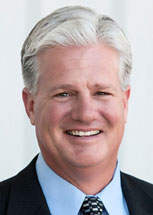
Andy Vidak
RRepublican
Co

Cathleen Galgiani
DDemocratic
Co
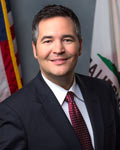
Eric Linder
RRepublican
Co
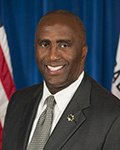
Jim Cooper
DDemocratic
Co
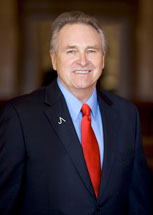
Jim Nielsen
RRepublican
Co
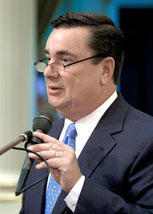
Joel Anderson
RRepublican
Co

John M. W. Moorlach
RRepublican
Co
KO
Kristin Olsen
RRepublican
Co

Mike Morrell
RRepublican
Co
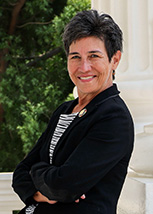
Susan Eggman
DDemocratic
Ask Maddy
·
AI policy assistant
Ask Maddy about SB 269
Scope: CA
Hi! I can help you understand SB 269. What would you like to know?
Try one of these
i
Maddy answers using official bill text and legislative records. Always verify before sharing.
Sources cited inline