

Existing law sets forth the requirements for the solicitation and evaluation of bids and the awarding of contracts by public entities and authorizes a public entity to use, enter into, or require contractors to enter into, a project labor agreement for a construction project if the agreement includes specified taxpayer protection provisions. Existing law also provides that if a charter provision, initiative, or ordinance of a charter city prohibits the governing board's consideration of a project labor agreement for a project to be awarded by the city, or prohibits the governing board from considering whether to allocate funds to a city-funded project covered by such an agreement, state funding or financial assistance may not be used to support that project, as specified. This bill would additionally provide that if a charter provision, initiative, or ordinance of a charter city prohibits, limits, or constrains in any way the governing board's authority or discretion to adopt, require, or utilize a project labor agreement that includes specified taxpayer protection provisions for some or all of the construction projects to be awarded by the city, state funding or financial assistance may not be used to support any construction projects awarded by the city, as specified.
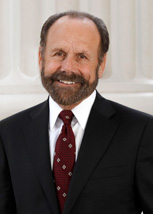
Sponsored bills
Existing law establishes the Public Employees' Retirement System and the State Teachers' Retirement System for the purpose of providing pension benefits to their members. Existing law also establishes the Judges' Retirement System II, which provides pension benefits to elected judges and the Legislators' Retirement System, which provides pension benefits to elective officers of the state other than judges and to legislative statutory officers. The County Employees Retirement Law of 1937 authorizes counties to establish retirement systems pursuant to its provisions in order to provide pension benefits to county, city, and district employees. This bill would specify that, in addition to any other benefit limitations prescribed by law, for the purposes of determining a retirement benefit paid to a person who first becomes a member of a public retirement system on or after January 1, 2013, to the extent that the benefits payable under the system are subject to the compensation limits prescribed by a specified provision of the Internal Revenue Code, the maximum salary, compensation, or payrate taken into account under the plan for any year shall not exceed the amount permitted to be taken into account under that provision of federal law. The bill would also prohibit a public employer from making contributions to any qualified public retirement plan based on any portion of compensation that exceeds the amount specified in that federal provision.
This measure would call upon all Californians to observe César Chávez's birthday, March 31, as a day of public service, to recognize the hard work and self-sacrifice that farmworkers go through to feed all the families in our state, and to learn from César Chávez's life and his mission of nonviolence, social justice, and selfless service to others.
Under existing law, the Public Utilities Commission has regulatory authority over public utilities. The California Constitution authorizes the commission to establish rules for all public utilities, subject to control by the Legislature. This bill would require a public utility to file a completed report with the commission within 30 days as to any final judgment, arbitration award, compromise, or settlement in excess of $50,000 in any civil action brought by an employee, former employee, contractor, or subcontractor of the utility against the utility regarding safety issues that could jeopardize the lives or health of Californians. The bill would authorize the commission to limit this reporting requirement to those particular types of claims that the commission determines are likely to involve claims or allegations that could jeopardize the lives or health of Californians. The bill would require the commission to develop and adopt the report form to be used by a public utility to comply with this reporting requirement. The bill would require specified civil penalties to be imposed for a violation of these requirements. Under existing law, a violation of any order, decision, rule, direction, demand, or requirement of the commission is a crime. Because a violation of these requirements of the commission would be a crime, the bill would impose a state-mandated local program. The California Constitution requires the state to reimburse local agencies and school districts for certain costs mandated by the state. Statutory provisions establish procedures for making that reimbursement. This bill would provide that no reimbursement is required by this act for a specified reason.
This measure would designate the month of November 2012 as California Runaway and Homeless Youth Month and would recognize the need for individuals, schools, communities, businesses, local governments, and the state to take action on behalf of runaway and homeless youth in California.
Under existing law, the Public Utilities Commission has regulatory authority over public utilities, including electrical corporations. Existing law, relative to private energy producers, requires every electric utility, as defined, to make available to an eligible customer-generator, as defined, a standard contract or tariff for net energy metering on a first-come-first-served basis until the time that the total rated generating capacity used by eligible customer-generators exceeds 5% of the electric utility's aggregate customer peak demand. This bill would specify that an electric utility is also not obligated to provide net energy metering to additional eligible customer-generators that are public agencies whose facilities have a total capacity of more than one megawatt if the collective state-wide capacity of these customers exceeds 100 megawatts. The existing definition of an eligible customer-generator requires that the generator be a residential, small commercial, commercial, industrial, or agricultural customer of the electric utility, that the generating facility use a renewable source listed in the definition of a renewable electricity generation facility that is used for purposes of the Renewable Energy Resources Program administered by the State Energy Resources Conservation and Development Commission, that the generating facility have a total capacity of not more than one megawatt, and that it meet certain locational and operational requirements. Existing law authorizes a local publicly owned electric utility to elect to provide co-energy metering, as defined, rather than net energy metering. This bill would include in the definition of an eligible customer-generator, a public agency customer, as defined, meeting the existing requirements applicable to residential, small commercial, commercial, industrial, or agricultural customers, except that that generation facility have a total capacity of not more than 2 megawatts. This bill would also require an eligible customer-generator that is a public agency whose facility or facilities has a total capacity of more than one megawatt to pay for an interconnection study associated with that customer, as well as any distribution grid upgrades found to be necessary by that study. Under existing law, a violation of the Public Utilities Act or any order, decision, rule, direction, demand, or requirement of the commission is a crime. Because an order of the commission would be required to implement certain of the bill's requirements and a violation of an order or decision of the commission implementing its requirements would be a crime, the bill would impose a state-mandated local program by creating a new crime. Because the bill would expand the net energy metering or co-energy meeting requirements for local publicly owned electric utilities, the bill would impose a state-mandated local program. The California Constitution requires the state to reimburse local agencies and school districts for certain costs mandated by the state. Statutory provisions establish procedures for making that reimbursement. This bill would provide that no reimbursement is required by this act for specified reasons.
This measure would proclaim California as a Purple Heart State, honoring the service and sacrifices of our nation's men and women in uniform wounded or killed by the enemy while serving to protect the freedoms enjoyed by all Americans.
This measure would proclaim April 15 through April 22, 2012, as California Holocaust Memorial Week and would urge Californians to observe these days of remembrance for the victims of the Holocaust in an appropriate manner.
This measure would respectfully request Congress and the Department of Defense to remain committed to maintaining the 144th Fighter Wing and the Aerospace Control Alert mission in California in order to prevent any negative impacts to Southwest air defense operations, the California economy, and the ability of first responders to protect the residents of this state.