

Electricity net energy metering.
Summary
Under existing law, the Public Utilities Commission has regulatory authority over public utilities, including electrical corporations. Existing law, relative to private energy producers, requires every electric utility, as defined, to make available to an eligible customer-generator, as defined, a standard contract or tariff for net energy metering on a first-come-first-served basis until the time that the total rated generating capacity used by eligible customer-generators exceeds 5% of the electric utility's aggregate customer peak demand. This bill would specify that an electric utility is also not obligated to provide net energy metering to additional eligible customer-generators that are public agencies whose facilities have a total capacity of more than one megawatt if the collective state-wide capacity of these customers exceeds 100 megawatts. The existing definition of an eligible customer-generator requires that the generator be a residential, small commercial, commercial, industrial, or agricultural customer of the electric utility, that the generating facility use a renewable source listed in the definition of a renewable electricity generation facility that is used for purposes of the Renewable Energy Resources Program administered by the State Energy Resources Conservation and Development Commission, that the generating facility have a total capacity of not more than one megawatt, and that it meet certain locational and operational requirements. Existing law authorizes a local publicly owned electric utility to elect to provide co-energy metering, as defined, rather than net energy metering. This bill would include in the definition of an eligible customer-generator, a public agency customer, as defined, meeting the existing requirements applicable to residential, small commercial, commercial, industrial, or agricultural customers, except that that generation facility have a total capacity of not more than 2 megawatts. This bill would also require an eligible customer-generator that is a public agency whose facility or facilities has a total capacity of more than one megawatt to pay for an interconnection study associated with that customer, as well as any distribution grid upgrades found to be necessary by that study. Under existing law, a violation of the Public Utilities Act or any order, decision, rule, direction, demand, or requirement of the commission is a crime. Because an order of the commission would be required to implement certain of the bill's requirements and a violation of an order or decision of the commission implementing its requirements would be a crime, the bill would impose a state-mandated local program by creating a new crime. Because the bill would expand the net energy metering or co-energy meeting requirements for local publicly owned electric utilities, the bill would impose a state-mandated local program. The California Constitution requires the state to reimburse local agencies and school districts for certain costs mandated by the state. Statutory provisions establish procedures for making that reimbursement. This bill would provide that no reimbursement is required by this act for specified reasons.
Bill status
failed
1 of 4 stages cleared
Introduction
Feb 2012
Committee Review
Floor Vote
Governor
Introduced Feb 24, 2012
Last action Apr 23, 2012
Floor votes
How they voted
No floor votes recorded yet.
Full legislative history
Actions timeline
Total actions
8
Key actions
2
Committee
4
Apr 23, 2012
Lower · Passed
In committee: Set, second hearing. Hearing canceled at the request of author.
lower
Apr 19, 2012
Committee
Re-referred to Com. on U. & C.
lower
Mar 22, 2012
Committee
Referred to Coms. on U. & C. and NAT. RES.
lower
Feb 26, 2012
Lower · Passed
From printer. May be heard in committee March 27.
lower
Feb 24, 2012
Introduced
Introduced. To print.
lower
1 primary · 4 co-sponsors
Sponsors
Role
Legislator
Party
State
District
P
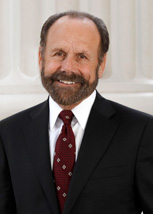
Jerry Hill
DDemocratic
Co

Bob Wieckowski
DDemocratic
Co
DW
Das Williams
DDemocratic
Co

Lois Wolk
DDemocratic
Co
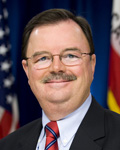
Richard Gordon
DDemocratic
Ask Maddy
·
AI policy assistant
Ask Maddy about AB 2234
Scope: CA
Hi! I can help you understand AB 2234. What would you like to know?
Try one of these
i
Maddy answers using official bill text and legislative records. Always verify before sharing.
Sources cited inline