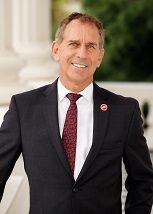
Photo of Bob Wieckowski
D California Senate · District 10

Sen. Bob Wieckowski

Compare
Total votes
29,825
all sessions
Attendance
98%
401 missed
Higher than 77% of chamber peers
With party
99%
of cast votes
Near the chamber average
Bipartisan score
0%
crosses aisle rarely
Near the chamber average
Sponsored
988
bills & resolutions
Lower than 88% of chamber peers
Committees
0
assignments
988 bills and resolutions

Sponsored bills

Total
988
Primary
224
Co-sponsor
764
This page
988
matching current filters
Co-sponsor ACR 267
Signed into law · California Assembly · Co-sponsor
Relative to California's Sikh American Awareness and Appreciation Month.

This measure would designate the month of November 2018 to be California's Sikh American Awareness and Appreciation Month. This measure would recognize and acknowledge the significant contributions made by Californians of Sikh heritage to our state and seeks to afford all Californians the opportunity to better understand, recognize, and appreciate the rich history and shared principles of Sikh Americans. This measure would condemn all hate crimes and bias incidents against Sikh Americans and encourage all Sikhs to practice their faith freely and fearlessly.

Signed into law Sep 6, 2018 1 co-sponsor
Co-sponsor AJR 52
Passed · California Assembly · Co-sponsor
Vietnam: political repression.

This measure would urge the President, the Vice President, and Congress to call on the Vietnamese government to immediately release all people imprisoned for exercising their right to speech or for joining political or religious groups disapproved by the government. The measure would also express the Legislature's solidarity with the people of Vietnam who have brought issues of human rights violations, environmental abuses, and censorship of the media to light.

Passed Aug 31, 2018 1 co-sponsor
Co-sponsor AJR 47
Passed · California Assembly · Co-sponsor
Relative to climate change and coastal resources.

This measure would affirm the Legislature's support for science-based action to conserve, protect, restore, and effectively manage California's coastal and ocean ecosystems, which the state holds in trust for the people of California, in the face of challenges presented by climate change, ocean acidification, hypoxia, and other changing ocean conditions, and would urge federal and state government entities to take specified actions to preserve the state's ocean and coastal resources as well as protect disadvantaged and low-income communities impacted by these challenges.

Passed Aug 31, 2018 1 co-sponsor
Primary SB 168
Failed · California Senate · Lead sponsor
Recycling: beverage containers.

Existing law, the California Beverage Container Recycling and Litter Reduction Act, requires every beverage container sold or offered for sale in this state to have a minimum refund value. Under existing law, a beverage distributor is required to pay a redemption payment to the Department of Resources Recycling and Recovery for every beverage container sold or offered for sale in the state to a dealer, and the department is required to deposit those amounts in the continuously appropriated California Beverage Container Recycling Fund. Existing law requires each glass container manufacturer to use a minimum percentage of 35% of postfilled glass in the manufacturing of its glass food, drink, or beverage containers. Existing law provides that a violation of the act or a regulation adopted pursuant to the act is a crime. This bill would require, commencing January 1, 2020, a beverage container that is a PET plastic container to be constructed with a minimum of 20% postconsumer recycled plastic. The bill would require the department, on or before January 1, 2021, to establish minimum postconsumer recycled content standards for beverage containers that are constructed of plastic, material other than metal, glass, or plastic, or any combination of plastic and material other than metal, glass, or plastic. The bill would authorize the department to adjust the minimum content standards, as specified, but not more frequently than annually. The bill would require a beverage manufacturer to certify with the department, under penalty of perjury, that it is in compliance with the minimum content standards and would provide that failure of a beverage manufacturer to meet the minimum content standards constitutes a separate violation per day. The bill would require a beverage manufacturer to report to the department for each month the amount of beverage containers subject to the minimum content standards sold in California by the beverage manufacturer and the amount of postconsumer recycled content used in the manufacturing of those containers. By expanding the crime of perjury and creating new crimes relating to the regulation of beverage containers, the bill would impose a state-mandated local program. The bill would require the department, on or before January 1, 2020, to evaluate other beverage container redemption programs and to provide to the Legislature a report on aspects of those programs that may be incorporated into California's beverage container redemption program, as specified. The California Constitution requires the state to reimburse local agencies and school districts for certain costs mandated by the state. Statutory provisions establish procedures for making that reimbursement. This bill would provide that no reimbursement is required by this act for a specified reason.

Failed Aug 31, 2018 0 co-sponsors
Primary SB 298
Failed · California Senate · Lead sponsor
Enforcement of money judgments: exemptions.

Existing law authorizes a judgment creditor to levy upon the property of a judgment debtor to satisfy a judgment, and authorizes the judgment debtor to claim that certain property is exempt from the levy by following a specified procedure. Existing law authorizes a claimant to assert an exemption by filing a claim of exemption with the levying officer within 10 days after the date the notice of levy on the property claimed to be exempt is served on the judgment debtor. This bill would authorize a claimant to file a claim of exemption with the levying officer either in person or by mail and would specify that the period for filing the claim is 15 days if the judgment debtor is personally served with a notice of levy on the property claimed to be exempt, and 20 days if the claimant is served with notice by mail. The bill would deem the filing by mail complete on the date the claim is postmarked if the mailing is assigned a tracking number. If the mailing is not assigned a tracking number, the bill would deem the filing by mail complete on the date the claim is received by the levying officer. With certain enumerated exceptions, this bill would exempt from a levy money in a judgment debtor's deposit account in an amount equal to or less than $1,200. The bill would require a levy against a judgment debtor's deposit account to include a description of these requirements. This bill would require the Judicial Council to amend or adopt necessary forms. This bill would also require the Judicial Council to, every 3 years, adjust the amount of the exemption described above based on the change in the annual California Consumer Price Index for All Urban Consumers, as specified, and it would make additional conforming changes. These provisions of the bill would become operative on September 1, 2019.

Failed Aug 30, 2018 0 co-sponsors
Primary SB 64
Failed · California Senate · Lead sponsor
Fossil-fuel generation units.

Existing law requires stationary sources, including fossil-fueled electrical generating facilities, to obtain a permit from a local air quality management district or air pollution control district (air districts) for operation. This bill would require the State Air Resources Board to work with the United States Environmental Protection Agency (USEPA) to obtain continuous emissions monitoring data for certain fossil-fueled electrical generating units in the state collected by the USEPA. If the state board is unable to obtain those data from the USEPA, the bill would require the state board to require each facility, on a quarterly basis, to provide those data to the state board. The bill would require the state board to post data for 2018 on its Internet Web site. The bill would require each air district with those fossil-fueled electrical generating units, within 18 months of the posting of the 2018 data, to complete a report containing specified information regarding the 2018 operations of those units within its jurisdiction. The bill would require the air districts to provide the reports to the Public Utilities Commission (PUC) , the State Energy Resources Conservation and Development Commission (Energy Commission) , and the state board. Because this bill would impose additional duties on the air districts, this bill would impose a state-mandated local program. Existing law requires the PUC to adopt a process for each load-serving entity to file an integrated resource plan to ensure that load-serving entities, among other things, minimize localized air pollutants and other greenhouse gas emissions, with early priority on disadvantaged communities. This bill would require the PUC and the Energy Commission, with input from specified entities and with consideration given to the reports from the air districts described above, to complete a study with recommendations on how to reduce or eliminate emissions of air pollutants, as specified, with early priority for disadvantaged communities. The bill would require the PUC to conduct the study as part of the integrated resource plan process. The California Constitution requires the state to reimburse local agencies and school districts for certain costs mandated by the state. Statutory provisions establish procedures for making that reimbursement. This bill would provide that, if the Commission on State Mandates determines that the bill contains costs mandated by the state, reimbursement for those costs shall be made pursuant to the statutory provisions noted above.


Failed Aug 29, 2018 0 co-sponsors
Co-sponsor SB 10
Signed into law · California Senate · Co-sponsor
Pretrial release or detention: pretrial services.

Existing law provides for the procedure of approving and accepting bail, and issuing an order for the appearance and release of an arrested person. Existing law requires that bail be set in a fixed amount and requires, in setting, reducing, or denying bail, a judge or magistrate to take into consideration the protection of the public, the seriousness of the offense charged, the previous criminal record of the defendant, and the probability of his or her appearing at trial or at a hearing of the case. Under existing law, the magistrate or commissioner to whom the application is made is authorized to set bail in an amount that he or she deems sufficient to ensure the defendant's appearance or to ensure the protection of a victim, or family member of a victim, of domestic violence, and to set bail on the terms and conditions that he or she, in his or her discretion, deems appropriate, or he or she may authorize the defendant's release on his or her own recognizance. Existing law provides that a defendant being held for a misdemeanor offense is entitled to be released on his or her own recognizance, unless the court makes a finding on the record that an own recognizance release would compromise public safety or would not reasonably ensure the appearance of the defendant as required. This bill would, as of October 1, 2019, repeal existing laws regarding bail and require that any remaining references to bail refer to the procedures specified in the bill. This bill would require, commencing October 1, 2019, persons arrested and detained to be subject to a pretrial risk assessment conducted by Pretrial Assessment Services, which the bill would define as an entity, division, or program that is assigned the responsibility to assess the risk level of persons charged with the commission of a crime, report the results of the risk determination to the court, and make recommendations for conditions of release of individuals pending adjudication of their criminal case. The bill would require the courts to establish pretrial assessment services, and would authorize the services to be performed by court employees or through a contract with a local public agency, as specified. The bill would require, if no local agency will agree to perform the pretrial assessments, and if the court elects not to perform the assessments, that the court may contract with a new local pretrial assessment services agency established specifically to perform the role. The bill would require a person arrested or detained for a misdemeanor, except as specified, to be booked and released without being required to submit to a risk assessment by Pretrial Assessment Services. The bill would authorize Pretrial Assessment Services to release a person assessed as being a low risk, as defined, on his or her own recognizance, as specified. The bill would additionally require a superior court to adopt a rule authorizing Pretrial Assessment Services to release persons assessed as being a medium risk, as defined, on his or her own recognizance. The bill would prohibit Pretrial Assessment Services from releasing persons who meet specified conditions. If a person is not released, the bill would authorize the court to conduct a prearraignment review and release the person. The bill would allow the court to detain the person pending arraignment if there is a substantial likelihood that no condition or combination of conditions of pretrial supervision will reasonably assure public safety or the appearance of the person in court. The bill would require the victim of the crime to be given notice of the arraignment by the prosecution and a chance to be heard on the matter of the defendant's custody status. By imposing additional duties on local prosecutors, this bill would impose a state-mandated local program. The bill would create a presumption that the court will release the defendant on his or her own recognizance at arraignment with the least restrictive nonmonetary conditions that will reasonably assure public safety and the defendant's return to court. The bill would allow the prosecutor to file a motion seeking detention of the defendant pending trial under specified circumstances. If the court determines that there is a substantial likelihood that no conditions of pretrial supervision will reasonably assure the appearance of the defendant in court or reasonably assure public safety, the bill would authorize the court to detain the defendant pending a preventive detention hearing and require the court to state the reasons for the detention on the record. The bill would prohibit the court from imposing a financial condition. In cases in which the defendant is detained in custody, the bill would require a preventive detention hearing to be held no later than 3 court days after the motion for preventive detention is filed. The bill would grant the defendant the right to be represented by counsel at the preventive detention hearing and would require the court to appoint counsel if the defendant is financially unable to obtain representation. By imposing additional duties on county public defenders, this bill would impose a state-mandated local program. The bill would require the prosecutor to give the victim notice of the preventive detention hearing. By imposing new duties on local prosecutors, this bill would impose a state-mandated local program. The bill would create a rebuttable presumption that no condition of pretrial supervision will reasonably assure public safety if, among other things, the crime was a violent felony or the defendant was convicted of a violent felony within the past 5 years. The bill would allow the court to order preventive detention of the defendant pending trial if the court determines by clear and convincing evidence that no condition or combination of conditions of pretrial supervision will reasonably assure public safety or the appearance of the defendant in court. If the court determines there is not a sufficient basis for detaining the defendant, the bill would require the court to release the defendant on his or her own recognizance or supervised own recognizance and impose the least restrictive nonmonetary conditions of pretrial release to reasonably assure public safety and the appearance of the defendant. The bill would require the Judicial Council to adopt Rules of Court and forms to implement these provisions as specified, and to identify specified data to be reported by each court. The bill would require the Judicial Council to, on or before January 1, 2021, and every other year thereafter, to submit a report to the Governor and the Legislature. The bill would provide that upon appropriation by the Legislature, the Judicial Council would allocate funds to local courts for pretrial assessment services and the Department of Finance would allocate funds to local probation departments for pretrial supervision services, as specified. The California Constitution requires the state to reimburse local agencies and school districts for certain costs mandated by the state. Statutory provisions establish procedures for making that reimbursement. This bill would provide that, if the Commission on State Mandates determines that the bill contains costs mandated by the state, reimbursement for those costs shall be made pursuant to the statutory provisions noted above.
Signed into law Aug 28, 2018 1 co-sponsor
Co-sponsor SB 951
Passed · California Senate · Co-sponsor
Taxes: credits: motion pictures: Legislative Analyst's Office report.

The Personal Income Tax Law and the Corporation Tax Law allow various credits against the taxes imposed by those laws, including motion picture credits for taxable years beginning on or after January 1, 2016, to be allocated by the California Film Commission on or after July 1, 2015, and before July 1, 2020, subject to a computation and ranking of applicants based on a jobs ratio. Existing law, in lieu of the above-described credits, allows application of the credit amount against qualified state sales and use taxes, as provided. Existing law requires the Legislative Analyst's Office to prepare reports related to the effectiveness and administration of the qualified motion picture credit under the Sales and Use Tax Law, the Personal Income Tax Law, and the Corporation Tax Law on or before January 1, 2019. This bill would instead provide that the Legislative Analyst's Office prepare the report on or before January 1, 2023.

Passed Aug 27, 2018 1 co-sponsor
Co-sponsor AB 813
Passed · California Assembly · Co-sponsor
Multistate regional transmission system organization: membership.

Existing law provides for the establishment of an Independent System Operator (ISO) as a nonprofit public benefit corporation and requires the ISO to ensure efficient use and reliable operation of the electrical transmission grid consistent with achieving planning and operating reserve criteria no less stringent than those established by the Western Electricity Coordinating Council and the North American Electric Reliability Council. The Clean Energy and Pollution Reduction Act of 2015 provides for the transformation of the ISO into a regional organization, with the approval of the Legislature, pursuant to a specified process. That process provides that modifications to the ISO's governance structure, through changes to its bylaws or other corporate governance documents, will not become effective until the ISO, the Public Utilities Commission (PUC) , the State Energy Resources Conservation and Development Commission (Energy Commission) , the State Air Resources Board (state board) , the Governor, and the Legislature take specified actions on or before January 1, 2019. This bill would prohibit a California electrical transmission facility owner, a retail seller of electricity, or a local publicly owned electric utility from joining a multistate regional transmission system organization, as defined, unless the bylaws or other organizational documents that govern the organization, and the organization's operations, meet Federal Energy Regulatory Commission requirements and other specified requirements. The bill would require a California transmission owner, retail seller, or local publicly owned electric utility, before joining a multistate regional transmission system organization, to submit the bylaws and other organizational documents that govern the multistate regional transmission system organization to the Energy Commission for review. The bill would require the Energy Commission, in consultation with the PUC and the state board, to review those materials for compliance with the bill's requirements. The bill would prohibit a California transmission owner, retail seller, or local publicly owned electric utility from joining the multistate regional transmission system organization unless the Energy Commission has determined that the organization's bylaws and organizational documents meet those requirements. If a California transmission owner, retail seller, or local publicly owned electric utility has joined an independent system operator that becomes a multistate regional transmission organization and the Energy Commission determines that the organization's bylaws and organizational documents do not meet those requirements, the bill would require that the California transmission owner, retail seller, or local publicly owned electric utility not remain in the organization. The bill would authorize the ISO to develop and submit to the Energy Commission a governance proposal that complies with those requirements and to provide notice and a copy of this submission to the Legislature and the Governor at the same time as it is submitted to the Energy Commission. The bill would require the Energy Commission, in consultation with the PUC and state board, to review the proposal for compliance with the bill's requirements, and, if the Energy Commission determines that the proposal meets those requirements, to submit the governance proposal to the Governor and to the Legislature with a declaration that the Energy Commission has so found. If notice is delivered by the Energy Commission during a regular session of the Legislature, and if a transmission owner from outside California that is not a participating transmission owner as of January 1, 2019, has entered into an agreement with the ISO indicating an intent to become a participating transmission owner, the bill would authorize the ISO, beginning 270 days after receipt of notice by the Legislature, to proceed to implement the proposal. The bill would prohibit the ISO from implementing the new governance structure prior to January 1, 2021.

Passed Aug 24, 2018 1 co-sponsor
Showing 211 to 220 of 988 bills
Previous 1 … 21 22 23 … 99 Next