

Passed Aug 22, 2018
1 co-sponsor
Total votes
29,825
all sessions
Attendance
98%
401 missed
Higher than 77% of chamber peers
With party
99%
of cast votes
Near the chamber average
Bipartisan score
0%
crosses aisle rarely
Near the chamber average
Sponsored
988
bills & resolutions
Lower than 88% of chamber peers
Committees
0
assignments
988 bills and resolutions
Sponsored bills
Total
988
Primary
224
Co-sponsor
764
This page
988
matching current filters
Financial institutions: cannabis.
(1) Existing law, the Financial Institutions Law, regulates the activities of various financial entities, including commercial banks, industrial banks, trust companies, credit unions, and savings and loan associations. The Banking Law defines and regulates state banks and commits the enforcement of banking laws to the Commissioner of Business Oversight. The California Credit Union Law provides for the licensure and regulation of credit unions by the Commissioner of Business Oversight and makes a willful violation of that law a crime. The Control, Regulate and Tax Adult Use of Marijuana Act of 2016, an initiative measure approved as Proposition 64 at the November 8, 2016, statewide general election, authorizes a person who obtains a state license under the act to engage in commercial adult-use cannabis activity pursuant to that license and applicable local ordinances. The Medicinal and Adult-Use Cannabis Regulation and Safety Act, among other things, consolidates the licensure and regulation of commercial medicinal and adult-use cannabis activities. This bill would create the Cannabis Limited Charter Banking and Credit Union Law, to be administered by the Commissioner of Business Oversight and the Department of Business Oversight. The bill would create the Cannabis Limited Charter Bank and Credit Union Advisory Board and specify its composition, to include the Treasurer, the Controller, and the Chief of the Bureau of Cannabis Control, and commit to it the general responsibility for ensuring that this law functions in a safe and efficient way. The bill would prescribe the powers and duties of the board, including reviewing department enforcement reports, holding meetings that would be open to public comment, and issuing its own recommendations, which would be submitted to the Legislature and the Governor. The board would also be required to provide guidance on specified investment activities. The bill would provide for the licensure and regulation of cannabis limited charter banks and credit unions for the purpose of providing limited banking services, as defined, to cannabis businesses. The bill would require a person who desires to be licensed as a cannabis limited charter bank or credit union to submit an application to the department, and would require that person to elect to form under either the Banking Law or the California Credit Union Law. The bill would authorize the department to charge an applicant for a cannabis limited charter bank or credit union license a reasonable fee. The bill would require a licensee to comply with all requirements in the Financial Institutions Law, and either the Banking Law or the California Credit Union Law, as applicable, except to the extent that any requirement of those laws are inconsistent with a provision of the Cannabis Limited Charter Banking and Union Law. By expanding the application of the California Credit Union Law, a willful violation of which is a crime, the bill would impose a state-mandated local program. This bill would authorize a cannabis limited charter bank or credit union to issue to an account holder special purpose checks that would be valid for only specified purposes. The bill would authorize a cannabis limited charter bank or credit union to cash the checks it has issued, including those presented by parties that are not account holders, as specified. The bill would permit these checks to be used for the payment of state and local fees and taxes, payment of rent on property leased by, or on behalf of, the account holder's cannabis business, payment of vendors physically located in California, as specified, and the purchase of state and local bonds, as specified. The bill would provide that a person or entity is not required to accept these checks. The bill would require a cannabis limited charter bank or credit union to obtain and maintain insurance at all times that it is engaged in business, subject to certain requirements including that the insurance be in an amount acceptable to the commissioner. The bill would authorize a cannabis limited charter bank or credit union to charge fees for its banking services, and would authorize the commissioner, if requested by any person or whenever the commissioner deems appropriate, to review any fee charged. The bill would require a cannabis limited charter bank and credit union to provide the commissioner with a specified fee schedule, which information the department would be required to compile and post information on its Internet Web site. The bill would authorize a cannabis limited charter bank or credit union to enter into an agreement with another licensee to form a banking network, subject to the approval of the commissioner, to facilitate the provision of cannabis banking services. The bill would require the department to adopt emergency regulations and would prohibit the department from issuing a license for these purposes prior to July 1, 2019, except as specified. The bill would require the department to provide a specified report to the Senate Committee on Banking and Financial Institutions and the Senate Committee on Governance and Finance. The bill would require a cannabis limited charter bank or credit union to adopt policies and practices to achieve the principles and goals outlined in the federal Bank Secrecy Act and cooperate with the federal Financial Crimes Enforcement Network. The bill would prohibit a cannabis limited charter bank or credit union from engaging in banking activity with any other financial institution that lacks a limited purpose charter issued under these provisions. The bill would prescribe a framework for the administration of its provisions. The bill would also make a statement of legislative findings. (2) The California Constitution requires the state to reimburse local agencies and school districts for certain costs mandated by the state. Statutory provisions establish procedures for making that reimbursement. This bill would provide that no reimbursement is required by this act for a specified reason.
Passed Aug 16, 2018
1 co-sponsor
Crimes: infractions.
Under existing law, a judgment that a person convicted of an infraction be punished by a fine may also provide for the payment to be made within a specified time or in specified installments. Existing law requires a court, in any case when a person appears before a traffic referee or judge of the superior court for adjudication of a violation of the Vehicle Code, upon request of the defendant, to consider the defendant's ability to pay, as specified. This bill would require the court, in any case involving an infraction filed with the court, to determine whether the defendant is indigent for purposes of determining what portion of the statutory amount of any associated fine, fee, assessment, or other financial penalties the person can afford to pay. The bill would provide that the defendant can demonstrate that he or she is indigent by providing specified information, including attesting to his or her indigent status under penalty of perjury. Because a violation thereof would be a crime, the bill would impose a state-mandated local program. The bill would require the court to reduce the base fine and associated fees by 80% if the court establishes that the defendant is indigent, and to provide alternatives to immediate payment of the sentence, including a payment plan option. The bill would require the court to determine the amount a defendant can afford to pay per month by using a payment calculator developed by the Judicial Council, as specified. For persons not found to be indigent, the bill would require that the monthly payment not exceed 5% of the defendant's family monthly income, as provided. For defendants found to be indigent, the bill would require that monthly payments be $0 until the defendant's financial circumstances change, and would require the remaining amount owed to be discharged after 48 months in the interest of justice. Existing law authorizes any county or court to implement a "comprehensive collection program" as a separate revenue collection activity, and requires the program to meet certain criteria, one of which is that the program engages in specified activities in collecting fines or penalties. One of those activities is initiating suspensions or holds for driver's licenses, as specified. This bill would delete initiating suspensions or holds for driver's licenses from the list of activities the program may engage in. The bill would require the program to provide a payment plan option based on the debtor's ability to pay and requires the program to notify the defendant of his or her right to an indigency determination for infractions. Existing law requires, whenever a person is arrested for any nonfelony violation of the Vehicle Code, or for a violation of an ordinance of a city or county relating to traffic offenses and he or she is not immediately taken before a magistrate, the arresting officer to prepare in triplicate a written notice to appear in court or before a person authorized to receive a deposit of bail, as specified. Existing law further requires the officer to deliver one copy of the notice to appear to the arrested person, and the arrested person in order to secure release must give his or her written promise to appear in court or before a person authorized to receive a deposit of bail. This bill would require the court to send the defendant a reminder notice of his or her promise to appear in court and would require the reminder notice to include specified information, including an appearance date and location and the right to an indigency determination. Existing law authorizes the court to notify the Department of Motor Vehicles when a person has failed to appear or failed to pay a fine or bail, with respect to various violations relating to vehicles. Existing law requires the department to suspend, and prohibits the department from issuing or renewing, a person's driver's license upon receipt of one of those notices, as specified. This bill would repeal the provisions authorizing the court to notify the department of a failure to pay a fine or bail. The bill would repeal certain provisions prohibiting the department from issuing or renewing a person's driver's license upon receipt of a notice of a defendant's failure to pay, with respect to designated violations. Existing law provides that a person willfully violating his or her written promise to appear or a lawfully granted continuance of his or her promise to appear in court or before a person authorized to receive a deposit of bail, or willfully failing to pay bail in installments or a certain lawfully imposed fine, as specified, is guilty of a misdemeanor. The bill would instead provide that a person willfully violating his or her written promise to appear or a lawfully granted continuance of his or her promise to appear in court or before a person authorized to receive a deposit of bail is guilty of an infraction. By changing the definition of a crime, this bill would impose a state-mandated local program. This bill would repeal the misdemeanor for willfully failing to pay bail in installments or a lawfully imposed fine. This bill would declare that its provisions do not alter existing law related to suspension of the privilege to operate a motor vehicle in connection with violations relating to reckless driving or driving under the influence of alcohol or drugs, as specified. The California Constitution requires the state to reimburse local agencies and school districts for certain costs mandated by the state. Statutory provisions establish procedures for making that reimbursement. This bill would provide that no reimbursement is required by this act for a specified reason.
Passed Aug 16, 2018
1 co-sponsor
Taxation: renters' credit.
The Personal Income Tax Law authorizes various credits against the taxes imposed by that law, including a credit for qualified renters in the amount of $120 for spouses filing joint returns, heads of household, and surviving spouses if adjusted gross income is $50,000, as adjusted, or less, and in the amount of $60 for other individuals if adjusted gross income is $25,000, as adjusted, or less. Existing law requires the Franchise Tax Board to annually adjust for inflation these adjusted gross income amounts. For 2017, the adjusted gross income limit is $80,156 and $40,078, respectively. This bill, for each taxable year beginning on and after January 1, 2018, would increase the credit amount for a qualified renter, as specified, and would require the Franchise Tax Board to annually adjust for inflation the credit amount for taxable years on and after January 1, 2023. The bill would authorize the Governor to suspend the increased credit amount by proclamation if the Governor finds and declares that an economic emergency exists in this state and it is necessary that the increased credit amount be suspended, in which case the credit amount would be the credit amount for the taxable year immediately preceding the taxable year in which the suspension of the credit applies. The bill would also provide that the increased credit amount is $0 for each taxable year beginning on or after January 1, 2019, unless otherwise specified in a bill providing for appropriations related to the Budget Bill. In the event the increased credit amount is $0, the existing credit amounts of $60 and $120, respectively, would be the credit amounts for that taxable year. This bill would take effect immediately as a tax levy.
Passed Aug 16, 2018
1 co-sponsor
Off-highway vehicular recreation: Carnegie State Vehicular Recreation Area: Alameda-Tesla Expansion Area.
The Off-Highway Motor Vehicle Recreation Act of 2003 creates the Division of Off-Highway Motor Vehicle Recreation within the Department of Parks and Recreation. The act gives the division certain duties and responsibilities, including the planning, acquisition, development, conservation, and restoration of lands in state vehicular recreation areas. Existing law establishes the Off-Highway Vehicle Trust Fund to be the repository of certain moneys, including fees received by the department for the use of state vehicular recreation areas. Existing law requires the revenues in the fund to be available, upon appropriation, for grants and cooperative agreements, as specified, the support of the division, and the planning, acquisition, development, mitigation, construction, maintenance, administration, operation, restoration, and conservation of lands in state vehicular recreation areas and certain other areas. This bill would authorize the department to dispose of the portion of the Carnegie State Vehicular Recreation Area known as the "Alameda-Tesla Expansion Area" to permanently preserve that land for conservation purposes, as specified, if the department determines that disposing of the land is in the public interest. The bill would require that the land only be sold to a local agency or nonprofit organization for use as a park or another open space purpose, as specified. The bill would require any revenue from the disposition of the land to be deposited in the Off-Highway Vehicle Trust Fund for the purchase, by the department, of land for off-highway vehicle recreation.
Passed Aug 16, 2018
1 co-sponsor
Climate change: climate adaptation: advisory council.
Existing law requires the Director of the Office of Planning and Research to establish the Integrated Climate Adaptation and Resiliency Program to coordinate regional and local efforts with state climate adaptation strategies to adapt to the impacts of climate change. Existing law requires the Office of Planning and Research to administer the program. Existing law requires the office, in coordination with appropriate entities, to establish a clearinghouse for climate adaptation information for use by state, regional, and local entities. Existing law requires the office to establish an advisory council, comprised of members for a range of disciplines, to support the office's goals to facilitate coordination among state, regional, and local agency efforts to adapt to the impacts of climate change. This bill would recast the advisory council as the California Council for Adaptation and Resiliency. The bill would transfer the office's functions, regarding the program and the clearinghouse, to the council. The bill would require the council to take certain actions related to climate adaptation, as specified. The bill would require the council to make publicly available certain information on its Internet Web site. The bill would specify that the members on the council serve staggered terms of 4 years. The bill would require the director of the office, or his or her designee, to serve as the chair of the council.
Passed Aug 16, 2018
0 co-sponsors
Property taxes: welfare exemption: community land trust.
Existing property tax law, in accordance with the California Constitution, provides for a "welfare exemption" for property used exclusively for religious, hospital, scientific, or charitable purposes and that is owned or operated by certain types of nonprofit entities, if certain qualifying criteria are met. This bill, for lien dates occurring on and after January 1, 2019, would provide that property is within the welfare exemption if that property is owned by a community land trust, as defined, otherwise qualifying for the welfare exemption, and specified conditions are met, including that the property is being or will be developed or rehabilitated as housing, as specified. The bill would prohibit this exemption from being denied on the basis that the subject property does not currently contain specified property that is in the course of construction. The bill would require the community land trust to be liable for property tax for the years for which the property was exempt under these provisions if the property was not developed or rehabilitated for housing, or if the development or rehabilitation is not in the course of construction, within 5 years of the lien date following the acquisition of the property. The bill, in the case where property that is owned by a community land trust becomes subject to taxation as so described, would require any assessment made, as provided, to be made within 5 years of the lien date following the date on which the property becomes subject to taxation. By imposing new duties upon local government officials with respect to the exemption provided by this bill, this bill would impose a state-mandated local program. The California Constitution requires the state to reimburse local agencies and school districts for certain costs mandated by the state. Statutory provisions establish procedures for making that reimbursement. This bill would provide that, if the Commission on State Mandates determines that the bill contains costs mandated by the state, reimbursement for those costs shall be made pursuant to the statutory provisions noted above. Existing law requires the state to reimburse local agencies annually for certain property tax revenues lost as a result of any exemption or classification of property for purposes of ad valorem property taxation. This bill would provide that, notwithstanding those provisions, no appropriation is made and the state shall not reimburse local agencies for property tax revenues lost by them pursuant to the bill. This bill would take effect immediately as a tax levy.
Passed Aug 16, 2018
1 co-sponsor
Presentation of claims: local public entities: childhood sexual abuse.
The Government Claims Act sets forth the general procedure for the presentation of claims as a prerequisite to commencement of actions for money or damages against local public entities, as defined. The act exempts certain claims against local public entities from the presentation procedures of the act, including, but not limited to, claims made pursuant to a specific provision of the Code of Civil Procedure for the recovery of damages suffered as a result of childhood sexual abuse and arising out of conduct occurring on or after January 1, 2009. Under the act, claims against a local public entity for money or damages that are exempted and that are not governed by any other statutes or regulations expressly relating thereto, are authorized to be governed by the procedure prescribed in an enactment adopted by the local public entity. This bill would specifically exempt from that authorization for procedures prescribed by local enactment claims against a local public entity made pursuant to the above-described existing law for the recovery of damages suffered as a result of childhood sexual abuse.
Signed into law Jul 20, 2018
1 co-sponsor
Foster care.
Existing law provides for the out-of-home placement of children who are unable to remain in the custody and care of their parents, and provides for a range of child welfare and foster care services for which these children may be eligible. Under existing law, child welfare services are defined as the continuum of services provided on behalf of children alleged to be the victims of child abuse, neglect, or exploitation, as specified. Existing law provides that child welfare services are best provided using a team-based approach, including the utilization of child and family teams, defined as a team of individuals convened by the placing agency and who are engaged through a variety of team-based processes to identify the strengths and needs of the child or youth and his or her family, and to help achieve positive outcomes for safety, permanency, and well-being. Existing law requires the child and family team process to engage the child or youth, the child's family, and other people important to the family or to the child or youth in meeting the objectives described above. Existing law also requires the team to include representatives who provide formal supports to the child or youth and family when appropriate, including, but not limited to, the caregiver and the placing agency caseworker. This bill would also require the inclusion of the child or youth's Court-Appointed Special Advocate, if one has been appointed, to the child and family team described above, unless the child or youth objects.
Signed into law Jul 20, 2018
1 co-sponsor
Relative to special education funding.
This measure would respectfully memorialize the Congress and the President of the United States to enact H.R. 2902 pending before Congress that would fully fund the federal Individuals with Disabilities Education Act.
Signed into law Jul 10, 2018
1 co-sponsor
Ask Maddy
·
AI policy assistant
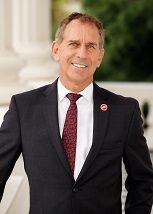
Ask Maddy about Bob Wieckowski
Scope: california
Hi! I can help you understand Bob Wieckowski's legislative record. What would you like to know?
Try one of these
i
Maddy answers using official bill text and legislative records. Always verify before sharing.
Sources cited inline