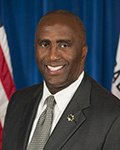
Photo of Jim Cooper
D California Assembly · District 9

Asm. Jim Cooper

Compare
Total votes
15,375
all sessions
Attendance
93%
1,066 missed
Near the chamber average
With party
98%
of cast votes
Lower than 78% of chamber peers
Bipartisan score
1%
crosses aisle rarely
Near the chamber average
Sponsored
1,450
bills & resolutions
Near the chamber average
Committees
0
assignments
1,450 bills and resolutions

Sponsored bills

Total
1,450
Primary
176
Co-sponsor
1,274
This page
1,450
matching current filters
Co-sponsor ACR 5
Signed into law · California Assembly · Co-sponsor
Relative to Martin Luther King, Jr. Day.

This measure would designate that January 16, 2017, be observed as the official memorial of the late Dr. Martin Luther King, Jr.'s birth and commemorate Martin Luther King, Jr. Day and the work of Dr. King and the Civil Rights Movement in changing public policy in California and in the United States of America.

Signed into law Jan 19, 2017 1 co-sponsor
Primary AB 1744
Signed into law · California Assembly · Lead sponsor
Sexual assault forensic medical evidence kit.

Existing law requires the Office of Emergency Services to establish a protocol for the examination and treatment of victims of sexual assault and attempted sexual assault, including child molestation, and the collection and preservation of related evidence. Existing law provides failure to comply with this protocol does not constitute grounds to exclude evidence and prohibits a judge from instructing the trier of fact in a case that less weight be given to the evidence based on failure to comply. Existing law also establishes one hospital-based training center to train medical personnel on how to perform medical evidentiary examinations for victims of child abuse or neglect, sexual assault, and other similar crimes. This bill would require the Department of Justice's Bureau of Forensic Services, the California Association of Crime Laboratory Directors, and the California Association of Criminalists to work collaboratively with public crime laboratories, in conjunction with the California Clinical Forensic Medical Training Center, to develop a standardized sexual assault forensic medical evidence kit, as specified, to be used by all California jurisdictions. The bill would encourage those entities to collaborate and establish the basic components for a kit by January 30, 2018, and would require guidelines pertaining to the use of the kit's components to be distributed throughout the state by May 30, 2019. The bill would require every local and state agency to be responsible for its own costs in purchasing a kit. The bill would also provide that failure to use a kit does not constitute grounds to exclude evidence and prohibits a judge from instructing the trier of fact in a case that less weight be given to the evidence based on failure to comply.

Signed into law Sep 30, 2016 0 co-sponsors
Co-sponsor AB 1244
Signed into law · California Assembly · Co-sponsor
Workers' compensation.

Under existing law, the Director of Health Care Services is authorized, for purposes of administering the Medi-Cal program, to suspend a provider of service from further participation under the program for specified reasons, including conviction of any felony or any misdemeanor involving fraud, abuse of the Medi-Cal program or any patient, or otherwise substantially related to the qualifications, functions, or duties of a provider of service. Existing law requires the director, upon receipt of written notification from the Secretary of the United States Department of Health and Human Services that a physician or other individual practitioner has been suspended from participation in the Medicare or Medicaid programs, to promptly suspend the practitioner from participation in the Medi-Cal program. Existing law establishes a workers' compensation system, administered by the Administrative Director of the Division of Workers' Compensation, that generally requires employers to secure the payment of workers' compensation for injuries incurred by their employees that arise out of, or in the course of, employment. Existing law requires an employer to provide all medical services reasonably required to cure or relieve the injured worker from the effects of the injury. Existing law authorizes an insurer, employer, or entity that provides physician network services to establish or modify a medical provider network for the provision of medical treatment to injured employees and requires the administrative director to contract with individual physicians or an independent medical review organization to perform medical provider network independent medical reviews. This bill would require the administrative director to promptly suspend any physician, practitioner, or provider from participating in the workers' compensation system if as a physician, practitioner, or provider the individual or entity meets specified criteria, including if that individual has been convicted of any felony or misdemeanor involving fraud or abuse of the Medi-Cal program, Medicare program, or workers' compensation system, if that individual's license, certificate, or approval to provide health care has been surrendered or revoked, or if that individual or entity has been suspended, due to fraud or abuse, from participation in the Medicare or Medicaid programs. The bill would require the administrative director to adopt regulations for suspending a physician, practitioner, or provider from participating in the workers' compensation system pursuant to these provisions, as specified, and would require the administrative director to furnish to the physician, practitioner, or provider written notice of the right to a hearing regarding the suspension and the procedure to follow to request that hearing. The bill would also require the administrative director to promptly notify the appropriate state licensing, certifying, or registering authority of a physician's, practitioner's, or provider's suspension and to update the division's databases of qualified medical evaluators and medical provider networks. The bill would require the administrative director to notify the chief judge of the division of a suspension under these provisions, as specified, and post a notice on the department's Internet Web site. The bill would enact special lien proceedings for the adjudication of any liens of a physician, practitioner, or provider who has been suspended pursuant to these provisions because he or she has been convicted of a felony or misdemeanor that meets specified criteria. The bill would also require the Director of Health Care Services to notify the administrative director of a suspension of a physician from participation in the Medi-Cal program imposed pursuant to the provisions described above authorizing the director to suspend a provider of service from participation. Existing law establishes the Workers' Compensation Appeals Board to exercise all judicial powers vested in it, as specified, including workers' compensation proceedings for the recovery of compensation, or concerning any right or liability arising out of or incidental to the recovery of compensation. Existing law vests the appeals board with full power, authority, and jurisdiction to try and determine finally those matters, subject only to the review by the courts, as specified. Existing law authorizes the appeals board to determine, and allow as liens against any sum to be paid as compensation, as specified, a reasonable attorney's fee for legal services and disbursements in connection with those legal services. Existing law provides that a charge, claim, or agreement for those legal services or disbursements is not enforceable, valid, or binding in excess of a reasonable amount. Existing law also requires an attorney to furnish to the employee a written disclosure form describing the procedures available to the injured employee or his or her dependents and specified information regarding attorney's fees. Existing law requires that a copy of the disclosure form be signed by the employee and the attorney and sent to the employer, or insurer or 3rd-party administrator, if either is known, by the attorney within 15 days of the employee's and attorney's execution of the form. Existing law also requires the employee, the insurer, the employer, and the attorneys for each party to sign and file with the board a statement, signed under penalty of perjury, attesting that the signatories have not violated specified laws prohibiting conflicts of interest. Existing law authorizes the appeals board, a workers' compensation judge, or any party to the action or proceeding, as specified, to cause the deposition of witnesses in any investigation or hearing before the appeals board, and provides that the deponent is entitled to receive specified benefits, such as reasonable expenses of transportation, meals, and lodging, as specified. This bill would prohibit payment for legal services or disbursements in connection with those legal services, or expenses relating to the deposition of witnesses, incurred under the provisions described above, as specified, prior to the filing of the disclosure form with the appeals board and the sending of that form to the employer, or to the insurer or 3rd-party administrator, if either is known, by the attorney. The bill would require the disclosure form described above to contain a paragraph setting forth the exact location of the district office of the appeals board at which the employee's case will be filed and to include a specified statement. The bill would impose other requirements regarding the signing and content of the form, including that the form be signed under penalty of perjury by the attorney representing the employee, and would require the form to be filed with the appeals board. The bill would also require an attorney who subsequently assumes the representation of the employee in the same action or proceeding to complete and sign under penalty of perjury a disclosure form that meets the above-described requirements and the statement attesting that the signatories have not violated specified laws prohibiting conflicts of interest. The bill would require the attorney to file the form and statement with the appeals board, and send them to the employer, or insurer or 3rd-party administrator, if either is known, within 15 days of the employee's and attorney's execution of the form and statement. By expanding the scope of the crime of perjury under these provisions, this bill would impose a state-mandated local program. The California Constitution requires the state to reimburse local agencies and school districts for certain costs mandated by the state. Statutory provisions establish procedures for making that reimbursement. This bill would provide that no reimbursement is required by this act for a specified reason.


Signed into law Sep 30, 2016 1 co-sponsor
Co-sponsor AB 2826
Vetoed · California Assembly · Co-sponsor
Teachers: evaluation and assessment.

Existing law requires the State Board of Education to develop guidelines that school districts may use in the development of certain teacher evaluation procedures and to distribute those guidelines to every school district. Existing law states the intent of the Legislature that governing boards of school districts establish a uniform system of evaluation and assessment of the performance of all certificated personnel within each school district of the state. Existing law requires the governing board of each school district to establish standards of expected pupil achievement at each grade level in each area of study and to evaluate and assess certificated employee performance on a continuing basis as it reasonably relates to specified matters, including the progress of pupils, as provided, instructional techniques and strategies, and adherence to curricular objectives. Existing law authorizes the governing board of a school district to develop and adopt additional evaluation and assessment guidelines or criteria. This bill would specifically authorize and encourage the evaluation and assessment of certificated employee performance as it reasonably relates to the progress of pupils, instructional techniques and strategies, and adherence to curricular objectives to include certain things, as provided. The bill would also provide that it shall not be construed to require the state board to revise its guidelines, to limit a school district governing board's authority to adopt additional guidelines or criteria, or to limit the right of certificated employees or their exclusive representative to bargain concerning evaluation procedures.

Vetoed Sep 30, 2016 1 co-sponsor
Co-sponsor AB 1751
Signed into law · California Assembly · Co-sponsor
Secondhand goods.

Existing law regulates secondhand dealers and coin dealers, and makes it unlawful for a person to engage in the business of a secondhand dealer without a license issued by the chief of police, the sheriff, or, where appropriate, the police commission. Existing law also regulates pawnbrokers. Existing law requires a local law enforcement agency to issue a license to engage in the business of a secondhand dealer or pawnbroker to an applicant who has not been convicted of an offense involving stolen property. Existing law requires a secondhand dealer to report, as specified, to the chief of police or sheriff all secondhand "tangible personal property," as defined, purchased, taken in trade, taken in pawn, accepted for sale on consignment, or accepted for auctioning. Existing law requires the report to include, among other things, the identification of the intended seller or pledger of the property, verified by the person taking the information by specified methods. Existing law requires the reporting of this information to the Department of Justice through a single, statewide, uniform electronic reporting system. Existing law requires the Department of Justice to develop descriptive categories and secondhand dealers and coin dealers to use these categories in their reports. This bill would define "CAPSS" as the California Pawn and SecondhandDealer System, which is the single, statewide, uniform electronic reporting system operated by the Department of Justice. The bill would eliminate the requirement that a secondhand dealer send reports on paper forms. The bill would eliminate the requirements that the Department of Justice develop, and secondhand dealers and coin dealers use, descriptive categories in their reports of acquired tangible personal property. Instead, the bill would require the Department of Justice to accept the properly spelled and non-abbreviated plain text property descriptions commonly recognized and utilized by the pawn and secondhand dealer industries. The bill would require a secondhand dealer to provide a property description in an article field descriptor, as specified. This bill would prohibit the Department of Justice, chiefs of police, and sheriffs from requiring secondhand dealers to report any additional information other than that which is required by these provisions. The bill would require that a future change to the reporting requirements of CAPSS that substantively alters the reporting standards be implemented and operated in compliance with the Administrative Procedure Act and prohibit the Department of Justice from taking any action with respect to the implementation, operation, or maintenance of CAPSS by adoption of an emergency regulation. The bill would also require the Department of Justice to convene a meeting with the Department of Technology to discuss issues pertaining to any proposed changes or upgrades, and authorize the Department of Technology to provide technological assistance for ongoing improvements, updates, or changes, to CAPSS. Existing law provides an exception to the reporting requirement for the acquisition of the same property from the same customer within 12 months of a reported transfer, except when submission of the report is specifically requested in writing by the local authorities. This bill would expand the reporting requirement exception to all acquisitions of the same property from the same customer within 12 months of a reported transfer. This bill would declare that it is to take effect immediately as an urgency statute.

Signed into law Sep 29, 2016 1 co-sponsor
Primary AB 2028
Signed into law · California Assembly · Lead sponsor
Public employees' retirement: involuntary termination: reinstatement.

Existing law, the Public Employees' Retirement Law (PERL) , creates the Public Employees' Retirement System (PERS) for the purpose of providing pension benefits to state employees and employees of contracting agencies and prescribes the rights and duties of members of the system and their beneficiaries. PERS provides defined benefits to members based on final compensation, credited service, and age at retirement, subject to certain variations. PERL requires a person who has retired under PERS following an involuntary termination of his or her employment to be reinstated to membership in that system, effective as of the date from which salary is awarded, if the person is reinstated to employment pursuant to an administrative or judicial proceeding and certain other conditions are met, as specified. PERL also requires the assets of the system, including, but not limited to, employee contributions, employer contributions, and investment income, to be deposited into the Public Employees' Retirement Fund, a continuously appropriated fund. This bill would additionally require the reinstatement in PERS of a member, without regard to retirement status, who is involuntarily terminated on or after January 1, 2017, and subsequently reinstated to that employment pursuant to an administrative, arbitral, or judicial proceeding. The bill would require contributions to be made to the system for any period for which salary is awarded in the proceeding and would provide the member with service credit for that period and reinstatement of benefits effective as of the date from which salary is awarded, as specified. The bill would require an employer of the involuntarily terminated employee to notify the board of the final decision ordering the member's reinstatement, as specified. By increasing contributions to be deposited into the Public Employees' Retirement Fund, a continuously appropriated fund, the bill would make an appropriation. By requiring local government employers to provide this notification and information, this bill would impose a state-mandated local program. The California Constitution requires the state to reimburse local agencies and school districts for certain costs mandated by the state. Statutory provisions establish procedures for making that reimbursement. This bill would provide that, if the Commission on State Mandates determines that the bill contains costs mandated by the state, reimbursement for those costs shall be made pursuant to these statutory provisions.

Signed into law Sep 29, 2016 0 co-sponsors
Primary AB 1926
Signed into law · California Assembly · Lead sponsor
Public works: prevailing wage: apprentices.

Existing law requires that, except as specified, not less than the general prevailing rate of per diem wages, determined by the Director of Industrial Relations, be paid to workers employed on public works projects. Under existing law, an apprentice employed upon public works is required to be paid the prevailing rate of per diem wages for apprentices in the trade to which he or she is registered and to be employed only at the work of the craft or trade to which he or she is registered, as specified. This bill would require, when a contractor requests the dispatch of an apprentice to perform work on a public works project and requires compliance with certain preemployment activities as a condition of employment, as specified, that the apprentice be paid the prevailing rate for the time spent on any required preemployment activity, including travel time to and from the activity, if any, except as specified. Because this bill would expand the application of the prevailing wage requirements, the violation of which is a crime, it would impose a state-mandated local program. The California Constitution requires the state to reimburse local agencies and school districts for certain costs mandated by the state. Statutory provisions establish procedures for making that reimbursement. This bill would provide that no reimbursement is required by this act for a specified reason.
Signed into law Sep 28, 2016 0 co-sponsors
Co-sponsor SB 819
Signed into law · California Senate · Co-sponsor
Powdered alcohol.

The Alcoholic Beverage Control Act contains various provisions regulating the application for, the issuance of, the suspension of, and the conditions imposed upon alcoholic beverage licenses by the Department of Alcoholic Beverage Control. That act imposes additional regulations on the sale of alcoholic beverages and creates penalties for violations of those regulations. This bill would require the department to revoke the license of any licensee who manufactures, distributes, or sells powdered alcohol, as provided. This bill would prohibit the possession, purchase, sale, offer for sale, distribution, manufacture, or use of powdered alcohol and would make the specified violation of these provisions punishable as an infraction. This bill would impose a state-mandated local program by creating a new crime. The California Constitution requires the state to reimburse local agencies and school districts for certain costs mandated by the state. Statutory provisions establish procedures for making that reimbursement. This bill would provide that no reimbursement is required by this act for a specified reason.

Signed into law Sep 28, 2016 1 co-sponsor
Showing 1,111 to 1,120 of 1,450 bills