

Existing law requires the Department of Veterans Affairs to acquire, study, design, develop, construct, and equip a state-owned and state-operated Southern California Veterans Cemetery in the County of Orange at one of 2 possible sites, as specified. Existing law requires the department to, after completing acquisition studies on both sites, consult with the Department of General Services to determine which site to pursue based on the economic feasibility, benefits to veterans and City of Irvine residents, and availability of each location. Existing law makes honorably discharged veterans, their spouses, and dependent children eligible for interment in the cemetery, as specified. This bill would delete those site selection requirements and would instead require the department to acquire, study, design, develop, construct, and equip a state-owned and state-operated Southern California Veterans Cemetery in the County of Orange. The bill would require the department to conduct an acquisition study, in consultation with the Department of General Services, to assess the feasibility and costs of construction of the cemetery. The bill would additionally create the Southern California Veterans Cemetery Study Donation Fund, and would authorize any local governmental entity or private organization in the County of Orange to donate to the fund. The bill would authorize the department, upon receipt of sufficient moneys, to conduct a study of the feasibility of a site formally proposed by a local government in the County of Orange for the purpose of establishing a Southern California Veterans Cemetery, as specified. The bill would continuously appropriate moneys in the fund to the department for these purposes. The bill would require any excess funds to be returned to the donor if requested, and to otherwise be used for the design, development, construction, and equipment of the cemetery. This bill would declare that it is to take effect immediately as an urgency statute.
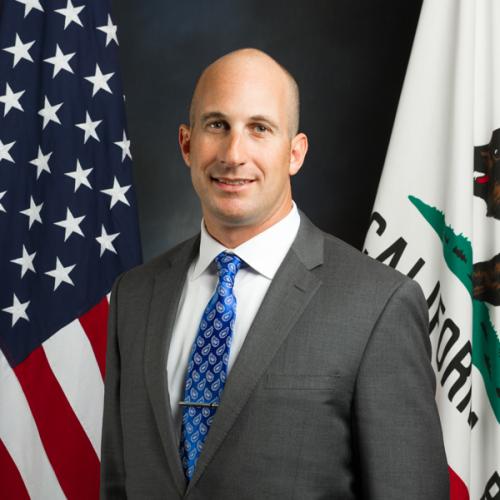
Asm. Heath Flora
Sponsored bills
Existing law establishes the Mental Health Student Services Act, administered by the Mental Health Services Oversight and Accountability Commission, to award grants to county mental health or behavioral health departments to fund partnerships between educational and county mental health entities. This bill, contingent upon an appropriation in the Budget Act, would establish the Early Childhood Mental Health Services Act, administered in a similar manner by the commission, to award grants to eligible entities or partnerships to improve access to, and quality of care, services, and supports for, children from birth to 5 years of age, inclusive, and their parents, families, and caregivers, with emphasis on prevention and early intervention and disparities, as specified.
Existing law, the Speech-Language Pathologists and Audiologists and Hearing Aid Dispensers Licensure Act, until January 1, 2023, establishes the Speech-Language Pathology Audiology and Hearing Aid Dispensers Board within the Department of Consumer Affairs for the licensure and regulation of speech-language pathologists, speech-language pathology aides, speech language pathology assistants, audiologists, dispensing audiologists, and hearing aid dispensers. Existing law provides for the appointment of members of the board by specified appointing authorities, and, until January 1, 2023, authorizes the board to appoint an executive officer. Existing law authorizes an appointing authority to remove from office at any time any member of a board appointed by the appointing authority for continued neglect of duties, incompetence, or unprofessional or dishonorable conduct. Existing law makes a violation of the act a misdemeanor. This bill would extend the operation of the board and the authorization to appoint an executive officer until January 1, 2027, and would authorize an appointing authority to remove from office at any time any member of the board appointed by that appointing authority. The bill would specify that, in addition to the enforcement and administration of the act, the board is vested with other regulatory duties of the act. The bill would require an applicant, registrant, or licensee under the act who has an email address to provide it to the board no later than July 1, 2023. By expanding the scope of a crime, the bill would impose a state-mandated local program. Existing law establishes the Hearing Aid Dispensing Committee, comprised of 5 members, within the jurisdiction of the board. This bill would abolish the committee. Existing law defines "audiology aide" to mean any person meeting the minimum requirements established by the board. Existing law prohibits an audiology aide from performing any function that constitutes the practice of audiology unless they are under the supervision of an audiologist. This bill would delete that prohibition and would instead define "audiology aide" to mean any person meeting the minimum requirements established by the board who works directly under the supervision of an audiologist. Existing law requires speech-language pathologists and audiologists supervising speech-language pathology or audiology aides to register with the board the name of each person working under their supervision. This bill would make speech-language pathology and audiology aide registrations expire every 2 years and would require the board to establish a renewal fee in an amount not to exceed $30. The bill would require the speech-language pathologist or audiologist supervising the speech-language pathology or audiology aide to, at the time of renewal, update the board on the duties the aide performs and the training program and assessment methods the supervisor is using. Existing law requires an applicant for licensure as an audiologist to submit evidence of satisfactory completion of supervised clinical practice under the direction of an educational institution approved by the board and satisfactory completion of supervised professional experience following completion of the didactic and clinical rotation requirements of an audiology doctoral program. This bill would require the clinical practice to be under the direction of an audiology doctoral program at an educational institution approved by the board, and would delete the requirement that supervised professional experience follow completion of the didactic and clinical rotation requirements of the audiology doctoral program. Existing law requires the board to deem a person who holds a Certificate of Clinical Competence in Speech-Language Pathology issued by the American Speech-Language-Hearing Association's Council for Clinical Certification to have met specified educational and experience requirements for licensure as a speech-language pathologist or audiologist. This bill would make that requirement applicable only to licensure as a speech-language-pathologist and effective only until January 1, 2027, and would instead require the board, until January 1, 2027, to deem a person who holds either a valid Certification of Clinical Competence in Audiology issued by the American Speech-Language-Hearing Association's Council for Clinical Certification or a valid American Board of Audiology certificate issued by the American Academy of Audiology to have met specified educational and experience requirements for licensure as an audiologist. Existing law lists various reasons for which the board is authorized to suspend, revoke, or impose terms and conditions upon the license of any licensee, including incompetence, gross negligence, or repeated negligent acts. This bill would add specified reasons for which the board is authorized to suspend, revoke, or impose terms and conditions upon a license, including for a disciplinary action taken by any public agency in any state or territory for any act substantially related to the practice of speech-language pathology, audiology, or hearing aid dispensing. The bill would authorize a person whose license has been revoked, suspended, or who has been placed on probation to petition the board for reinstatement or modification of penalty after a specified minimum period of time has elapsed from the effective date of the decision ordering that disciplinary action in accordance with specified procedural and other requirements. Existing law provides that a plea or verdict of guilty or a conviction following a plea of nolo contendere made to a charge substantially related to the qualifications, functions, and duties of a speech-language pathologist or audiologist is deemed to be a conviction for specified provisions of the act. This bill would also make that provision applicable to hearing aid dispensers. The bill would also make various other conforming and technical changes to the act, including updating cross-references and deleting an obsolete provision. This bill would incorporate additional changes to Section 2530.2 of the Business and Professions Code proposed by SB 1453 to be operative only if this bill and SB 1453 are enacted and this bill is enacted last. The California Constitution requires the state to reimburse local agencies and school districts for certain costs mandated by the state. Statutory provisions establish procedures for making that reimbursement. This bill would provide that no reimbursement is required by this act for a specified reason. Existing constitutional provisions require that a statute that limits the right of access to the meetings of public bodies or the writings of public officials and agencies be adopted with findings demonstrating the interest protected by the limitation and the need for protecting that interest. This bill would make legislative findings to that effect.
Existing law establishes the Department of Veterans Affairs, which is responsible for administering various programs and services for the benefit of veterans. Existing law, the California Community Care Facilities Act, provides for the licensure of residential care facilities for the elderly, community care facilities, and residential care facilities for persons with chronic, life-threatening illness by the State Department of Social Services. This bill would authorize the State Department of Social Services to establish a program, no sooner than July 1, 2024, to issue licenses to medical foster homes for veterans. The bill would require a medical foster home for veterans, as defined, established pursuant to this program to meet specified requirements and would prohibit a person from operating, establishing, managing, conducting, or maintaining a medical foster home for veterans without a license. To apply for a license, the bill would require a person to submit an application that includes, among other things, evidence of the applicant's ability to comply with statutory requirements and other information the department may require. The bill would require the department to charge an application fee of $88, review applications within a specified timeframe, and conduct a prelicensure inspection, as specified. The bill also requires applicants, adults residing or regularly present in an applicant's or licensee's home, and other individuals who have contact with a client to be subject to a background check. This bill would authorize the department to deny a license if an applicant has, among other things, violated statutory requirements or engaged in acts of financial malfeasance. The bill would allow a person who is denied a license to appeal the department's decision through the defined appeals process. The bill would also permit the department to prohibit a person from being licensed or employed by a licensee and would require the department to exclude individuals from licensed facilities under certain circumstances. The bill would specify circumstances in which a license is forfeited as a matter of law, including if the licensee surrenders the license or dies. The bill would permit the department to suspend or revoke a license under certain conditions and would require the department to issue civil penalties, as specified. The bill would require revenues received by the department from payment of civil penalties to be deposited into the Technical Assistance Fund. The bill would also require the department to periodically inspect and evaluate licensees, as specified, and make preliminary reviews of complaints. This bill would require the department to adopt regulations to implement this chapter and would authorize the department, until regulations are adopted, to implement and administer the program through written directives.
This measure would proclaim the month of September 2022 as Prostate Cancer Awareness Month.
This measure would designate a specified portion of State Highway Route 44, near Oak Run in the County of Shasta, as the Stan Statham Memorial Highway. This measure would request the Department of Transportation to determine the cost of appropriate signs showing this special designation and, upon receiving donations from nonstate sources covering that cost, to erect those signs.
This measure would designate the East End Complex-Block 171 in Sacramento as the Mario Obledo Building, and would request the Department of General Services to determine the cost of erecting appropriate plaques and markers showing the designation and, upon receiving donations from nonstate sources, to cover that cost to erect signage.
This measure would urge the United States Congress to amend the United States Social Security Administration's index of earnings to ensure that a decline in aggregate wages due to COVID-19 does not result in decreased benefits.
This measure would request that the Department of Transportation remove the "The Christopher Columbus Transcontinental Highway" designation from the portion of Interstate 10 in the state, as well as any signage and markers memorializing that designation, and advise the Federal Highway Administration of the state's action.
This measure would urge the United States Secretary of Education to establish and submit to the United States Congress for approval a monthly student loan payment plan for federal student loans, based on the personal savings rate as published by the federal Bureau of Economic Analysis.