

Passed Jan 30, 2023
1 co-sponsor
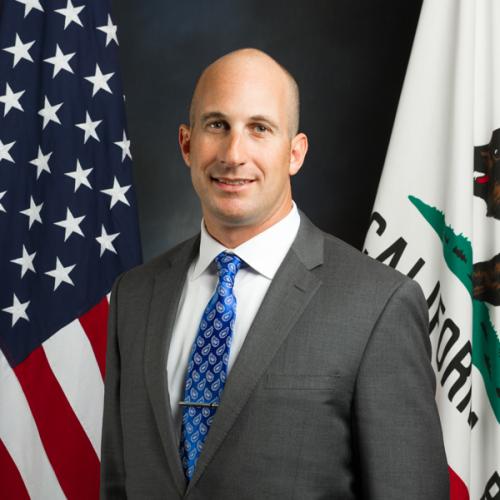
Asm. Heath Flora
Total votes
23,533
all sessions
Attendance
83%
3,189 missed
Lower than 98% of chamber peers
With party
98%
of cast votes
Lower than 77% of chamber peers
Bipartisan score
1%
crosses aisle rarely
Higher than 75% of chamber peers
Sponsored
1,713
bills & resolutions
Lower than 96% of chamber peers
Committees
1
assignment
1,713 bills and resolutions
Sponsored bills
Total
1,713
Primary
192
Co-sponsor
1,521
This page
1,713
matching current filters
Evidence: hearsay: exceptions.
Existing law establishes the hearsay rule, which provides that evidence of a statement that was made other than by a witness while testifying at a hearing and that is offered to prove the truth of the matter stated is inadmissible. Existing law provides exceptions to the hearsay rule, including an exception in criminal prosecutions for statements made by victims, when under 12 years of age, describing any act or attempted act of child abuse with or on the child by another, as specified. This bill, Kelsey's Law, would additionally make an exception to the hearsay rule for statements by a victim who is a minor over 12 years of age if the court determines that the victim has an intellectual disability, when describing any act or attempted act of child abuse, as specified.
Failed Oct 24, 2022
1 co-sponsor
Hate crimes: peace officers.
Existing law defines "hate crime" as a criminal act committed, in whole or in part, because of actual or perceived characteristics of the victim, including, among other things, race, religion, disability, and sexual orientation. Under existing law, that definition applies unless an explicit provision of law or the context clearly requires a different meaning. Existing law provides punishments for hate crimes that range from misdemeanors with specified penalties to felonies with additional terms of one to 3 years in state prison, depending on the underlying criminal act and other circumstances. Existing law requires, with conditions, the Attorney General to direct local law enforcement agencies to report specified information relative to hate crimes to the Department of Justice. Local law enforcement entities are required by existing law to provide a brochure on hate crimes to victims of these crimes and to the public, and the Department of Fair Employment and Housing is required by existing law to revise those brochures as needed and to provide those brochures to local law enforcement agencies upon request. This bill would add status as a peace officer to the list of actual or perceived characteristics necessary to determine whether a criminal act qualifies as a hate crime. By expanding the scope of an existing crime and by expanding the information that law enforcement agencies report to the Department of Justice and disseminate to crime victims and the public, this bill would impose a state-mandated local program. The California Constitution requires the state to reimburse local agencies and school districts for certain costs mandated by the state. Statutory provisions establish procedures for making that reimbursement. This bill would provide that with regard to certain mandates no reimbursement is required by this act for a specified reason. With regard to any other mandates, this bill would provide that, if the Commission on State Mandates determines that the bill contains costs so mandated by the state, reimbursement for those costs shall be made pursuant to the statutory provisions noted above.
Failed Oct 24, 2022
1 co-sponsor
Proposition 47: repeal.
The Safe Neighborhoods and Schools Act, enacted as an initiative statute by Proposition 47, as approved by the electors at the November 4, 2014, statewide general election, made various changes relating to theft and the possession of controlled substances, including by, among other things, generally reducing the penalty for those crimes, including reducing the penalty for possession of concentrated cannabis, establishing a procedure by which individuals convicted of those crimes prior to the passage of the act may petition for resentencing under the act, and creating the crime of shoplifting. The act also requires the Director of Finance to calculate the savings accruing to the state as a result of the implementation of the act and requires the Controller to transfer that sum from the General Fund to the Safe Neighborhoods and Schools Fund, which was created by the act. The act specifies the manner of distribution of those funds and the purposes for which they may be used. This bill would repeal the changes and additions made by Proposition 47, except those related to reducing the penalty for possession of concentrated cannabis. Existing law makes it a crime for a caretaker of an elder or a dependent adult, or a person who is not a caretaker and who knows or reasonably should know that the victim is an elder or a dependent adult, to violate specified laws proscribing theft, embezzlement, forgery, fraud, or identity theft with respect to the property or personal identifying information of that elder or dependent adult. Existing law makes a violation of those provisions punishable as a misdemeanor or a felony when the moneys, labor, goods, services, or real or personal property taken or obtained is of a value exceeding $950. This bill would reduce the value threshold for a violation of those provisions to be punishable as a felony from $950 to $400. Existing law defines grand theft as the wrongful taking of money, labor, or property of a value exceeding $950, except as specified. Existing law also makes it grand theft where the money, labor, or real or personal property is taken by a servant, agent, or employee from their principal or employer and aggregates $950 or more in any consecutive 12-month period. This bill would reduce the value threshold for committing grand theft under those provisions from $950 to $400. This bill would provide that it would become effective only upon approval of the voters, and would provide for the submission of this measure to the voters for approval at the next statewide general election.
Failed Oct 24, 2022
1 co-sponsor
Pupil health: seizure disorders.
Existing law requires the governing board of any school district to give diligent care to the health and physical development of pupils and authorizes the governing board of a school district to employ properly certified persons for the work. Existing law authorizes school districts, county offices of education, and charter schools to provide emergency naloxone hydrochloride or another opioid antagonist to school nurses or trained personnel who have volunteered, and authorizes school nurses or trained personnel to use naloxone hydrochloride or another opioid antagonist to provide emergency medical aid to persons suffering, or reasonably believed to be suffering, from an opioid overdose, as provided. Existing law authorizes any pupil who is required to take, during the regular schoolday, medication to be assisted by the school nurse or other designated school personnel, as provided. This bill would, if a pupil diagnosed with seizures, a seizure disorder, or epilepsy has been prescribed an emergency anti-seizure medication by the pupil's health care provider, authorize the pupil's local educational agency, upon receipt of a request from the pupil's parent or guardian, to designate one or more volunteers at the pupil's school to receive initial and annual refresher training regarding the emergency use of anti-seizure medication. The bill would require the Superintendent of Public Instruction to establish minimum standards of training for the administration of emergency anti-seizure medication, as provided. The bill would authorize a school nurse or, if the school does not have a school nurse or the school nurse is not onsite or available, a volunteer who has been designated and received training regarding the emergency use of anti-seizure medication, to administer emergency anti-seizure medication to a pupil diagnosed with seizures, a seizure disorder, or epilepsy if the pupil is suffering from a seizure. The bill would require any local educational agency or school upon receipt of a parent or guardian's request to distribute a related notice at least once per school year to all staff. Before administering emergency anti-seizure medication or therapy prescribed to treat seizures in a pupil diagnosed with seizures, a seizure disorder, or epilepsy, the bill would require a local educational agency to obtain from the pupil's parent or guardian a seizure action plan that includes specified information. By imposing new duties on school districts, county offices of education, and charter schools, the bill would impose a state-mandated local program. The California Constitution requires the state to reimburse local agencies and school districts for certain costs mandated by the state. Statutory provisions establish procedures for making that reimbursement. This bill would provide that, if the Commission on State Mandates determines that the bill contains costs mandated by the state, reimbursement for those costs shall be made pursuant to the statutory provisions noted above.
Signed into law Sep 30, 2022
1 co-sponsor
Residential real property: foreclosure sales.
Existing law prescribes various requirements to be satisfied before the exercise of a power of sale under a mortgage or deed of trust and prescribes a procedure for the exercise of that power. Existing law, until January 1, 2026, prescribes a process in connection with a trustee's sale of property under a power of sale contained in a deed of trust or mortgage on real property containing one to 4 residential units, inclusive, that provides specified bidding priorities to certain parties, including prospective owner-occupants. This bill would prescribe requirements that would apply to sales of real property containing one to 4 residential dwelling units, inclusive, that is acquired through foreclosure under a mortgage or deed of trust by an institution or that is acquired at a foreclosure sale by an institution, as defined. The bill would require the institution, during the first 30 days after a property is listed, as specified, to only accept offers from eligible bidders, as defined, and to respond, in writing, to all offers received from eligible bidders before considering any other offers. This bill would require an eligible bidder to submit an affidavit or declaration, as specified, with their offer to an institution. By expanding the crime of perjury, this bill would impose a state-mandated local program. This bill would also prohibit an institution from conducting a bundled sale, as defined. The California Constitution requires the state to reimburse local agencies and school districts for certain costs mandated by the state. Statutory provisions establish procedures for making that reimbursement. This bill would provide that no reimbursement is required by this act for a specified reason.
Signed into law Sep 30, 2022
1 co-sponsor
Dams and reservoirs: exclusions: publicly owned or operated regulating basins.
Existing law requires the Department of Water Resources to supervise the maintenance and operation of dams and reservoirs as necessary to safeguard life and property. Existing law requires the department to adopt, by regulation, a schedule of fees to cover the department's costs in carrying out the supervision of dam safety. Existing law excludes certain obstructions from being considered a dam, including a barrier that is not across a stream channel, watercourse, or natural drainage area and that has the principal purpose of impounding water for agricultural use. This bill would additionally exclude from being considered a dam a regulating basin, as defined, owned or operated by a public entity that is not across a stream channel, watercourse, or natural drainage if certain criteria are met, including, among other criteria, that the owner or operator of the regulating basin, before the construction of the regulating basin, submit to the department an inundation map, stamped by a licensed civil engineer, identifying the flow and depth of water from the regulating basin in the event of a failure of a barrier constructed to form the regulating basin, and that the owner or operator, immediately upon the identification of a failure or the risk of failure of a barrier or works critical to the safe operation of the regulating basin, notify the county sheriff and local emergency managers of all properties likely to be impacted by a failure. The bill would define "natural drainage" for purposes of these provisions. The bill would also make nonsubstantive changes.
Signed into law Sep 30, 2022
0 co-sponsors
Clinical laboratory testing.
Existing law provides for the licensure, registration, and regulation of clinical laboratories and various clinical laboratory personnel by the State Department of Public Health. Existing law also specifies what duties the clinical laboratory personnel can engage in, or supervise others engaged in, including for a person licensed as a clinical genetic molecular biologist scientist. Violation of these provisions is a crime. This bill would authorize a person licensed as a clinical genetic molecular biologist scientist to use molecular biology techniques to perform a clinical laboratory test or examination for the detection of any disease affecting humans. This bill would incorporate additional changes to Section 1210 of the Business and Professions Code proposed by SB 1267 to be operative only if this bill and SB 1267 are enacted and this bill is enacted last. This bill would declare that it is to take effect immediately as an urgency statute.
Signed into law Sep 30, 2022
0 co-sponsors
Intermodal marine terminals.
Existing law prohibits an intermodal marine equipment provider or intermodal marine terminal operator, as defined, from imposing per diem, detention, or demurrage charges on an intermodal motor carrier relative to transactions involving cargo shipped by intermodal transport under certain circumstances, including when an intermodal marine terminal decides to divert equipment without 48 hours' notice. This bill would also prohibit an intermodal marine container provider from imposing those charges, extended dwell charges, or commencing or continuing free time, as defined, on a motor carrier, as defined, beneficial cargo owner, or other intermediary relative to transactions involving cargo shipped by intermodal transport under certain circumstances. The bill would instead specify that those circumstances include when the intermodal marine container provider decides to divert equipment from the original interchange location without notice, as described above, and also include when the motor carrier documents an unsuccessful attempt to make an appointment for either a loaded or empty container transaction, as specified. The bill would also specify that those circumstances include when a return or delivery of an intermodal container is delayed because a booked vessel's receiving date changes, and when the obstacle to the cargo retrieval or return of equipment are within the scope of responsibility of the carrier or their agent and beyond the control of the invoices or contracting party. Existing law also prohibits an intermodal marine equipment provider from terminating, suspending, or restricting equipment interchange rights of a motor carrier for specified reasons and from charging back, deducting, or offsetting per diem charges or certain other charges from the motor carrier's freight bill. This bill would also prohibit an intermodal marine container provider from commencing or continuing free time if cargo is unavailable for retrieval and timely notice of cargo availability has not been provided. Existing law defines "intermodal marine terminal" to mean a marine terminal location or facility that engages in discharging or receiving equipment owned, operated, or controlled by an equipment provider. This bill would define "intermodal marine container provider" to mean the entity authorizing delivery or receipt of physical possession of the container with a motor carrier, beneficial cargo owner, or other intermediary. The bill would also define "satellite facility" to mean an intermodal yard, that is not a marine terminal, within the same local commercial territory that supports operations of an intermodal marine container provider or intermodal marine terminal, and would require any provisions related to acts at intermodal marine terminals to also be applied to acts at satellite facilities. This bill would specify that where these provisions are addressed by future federal law or regulation, and the federal law or regulation permits states to exceed the requirements set forth in the federal law or regulation, the more stringent provision shall govern.
Signed into law Sep 30, 2022
1 co-sponsor
Zoning: bedroom addition.
The Planning and Zoning Law authorizes the legislative body of any county or city to adopt ordinances that regulate the use of buildings, structures, and land as between industry, business, residences, open space, and other purposes. This bill would prohibit a city or county legislative body from adopting or enforcing an ordinance requiring a public hearing as a condition of reconfiguring existing space to increase the bedroom count within an existing dwelling unit. The bill would apply these provisions only to a permit application for no more than 2 additional bedrooms within an existing dwelling unit. The bill would specify that these provisions are not to be construed to prohibit a local agency from requiring a public hearing for a proposed project that would increase the number of dwelling units within an existing structure. The bill would include findings that ensuring adequate housing is a matter of statewide concern and is not a municipal affair, and that the provision applies to all cities, including charter cities. By imposing additional duties on local officials, the bill would impose a state-mandated local program. The California Constitution requires the state to reimburse local agencies and school districts for certain costs mandated by the state. Statutory provisions establish procedures for making that reimbursement. This bill would provide that no reimbursement is required by this act for a specified reason.
Signed into law Sep 28, 2022
1 co-sponsor
Ask Maddy
·
AI policy assistant
Ask Maddy about Heath Flora
Scope: CA
Hi! I can help you understand Heath Flora's legislative record. What would you like to know?
Try one of these
i
Maddy answers using official bill text and legislative records. Always verify before sharing.
Sources cited inline