

(1) Existing law requires the statewide general election to be held on the first Tuesday after the first Monday in November of each even-numbered year. Existing law designates specific days as holidays in this state. This bill would add the first Tuesday after the first Monday in November of any even-numbered year to the list of state holidays. By increasing the duties of local officials in connection with the creation of a new state holiday, this bill would create a state-mandated local program. (2) Existing law requires county elections officials to mail a ballot to every registered voter for all elections, as provided. Existing law authorizes any county to conduct an all-mailed ballot election if certain requirements are met. This bill would repeal the provisions requiring county elections officials to mail a ballot to every registered voter and authorizing a county to conduct an all-mailed ballot election. The bill would instead authorize a voter to request a vote by mail ballot for any election, as specified. The bill would also authorize a voter to apply to become a permanent vote by mail voter, in which case the voter would receive a vote by mail ballot for every election. (3) Existing law authorizes a voter who is unable to return their ballot to designate any other person to return the ballot, as specified. This bill would restrict the persons a voter may authorize to return the voter's ballot to only the voter's spouse, child, parent, grandparent, grandchild, sibling, or a person residing in the same household as the voter. (4) Under existing law, a ballot is timely cast if it is received by the elections official no later than 7 days after election day and postmarked on or before election day. This bill would reduce the deadline for receiving a ballot to 3 days after election day. (5) This bill would make various conforming and clarifying changes. (6) The California Constitution requires the state to reimburse local agencies and school districts for certain costs mandated by the state. Statutory provisions establish procedures for making that reimbursement. This bill would provide that, if the Commission on State Mandates determines that the bill contains costs mandated by the state, reimbursement for those costs shall be made pursuant to the statutory provisions noted above.
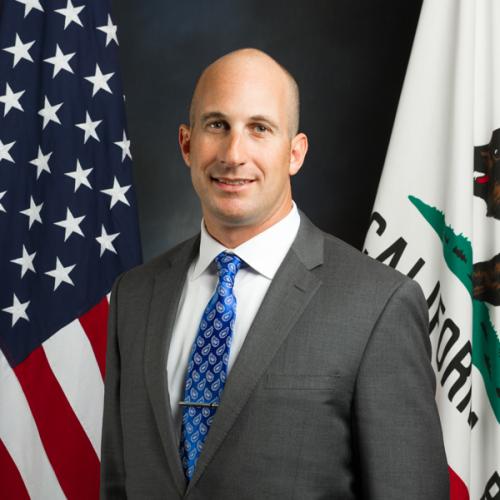
Asm. Heath Flora
Sponsored bills
This measure would honor the late civil rights pioneer and icon Reverend Dr. Martin Luther King, Jr. and commemorate Dr. Martin Luther King, Jr. Day.
This measure would recognize February 6, 2023, to February 10, 2023, as National School Counseling Week.
This measure would designate the week of January 29, 2023, to February 4, 2023, inclusive, as Physician Anesthesiologist Week.
This measure would declare February 3, 2023, as Wear Red Day in California and would declare February 2023 as American Heart Month in California.
This measure would proclaim, in perpetuity, January 28 as the Stand Against Hate Action Day.
Existing law generally authorizes a court to dismiss an action or to strike or dismiss an enhancement in the furtherance of justice. Existing law requires a court to dismiss an enhancement if it is in the furtherance of justice to do so, except if dismissal of that enhancement is prohibited by any initiative statute. This bill would also prohibit a court from dismissing specified firearms-related enhancements. Existing law requires a person who personally uses a firearm to commit certain specified felonies to be punished by an additional and consecutive term of imprisonment in the state prison for 10 years, or for 20 years if the person discharged the firearm, or for 25 years to life if the person discharged the firearm and proximately caused great bodily injury or death. Existing law authorizes a court, in the interest of justice and at the time of sentencing or resentencing, to strike or dismiss an enhancement otherwise required to be imposed by that law. This bill would prohibit a court from striking an allegation or a finding that would make a crime punishable pursuant to those enhancement provisions, except that a court could strike or dismiss an enhancement when the person did not personally use or discharge the firearm or when the firearm was unloaded.