This measure would recognize June 19, 2026, as Duanwu Jie, also known as the Dragon Boat Festival, and would celebrate the cultural contributions and rich heritage of the communities who observe this important festival.
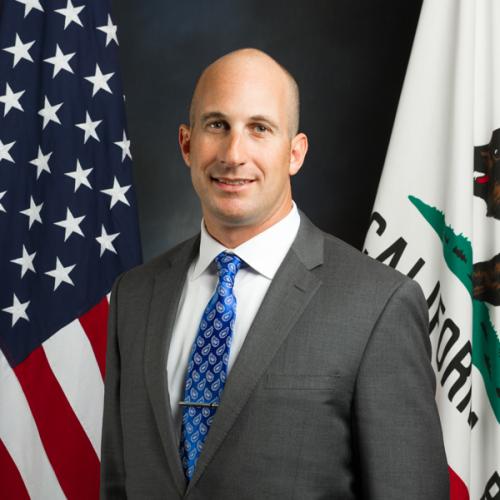
Rep. Heath Flora
Sponsored bills
This measure would, among other things, recognize antimicrobial resistance as a public health crisis requiring urgent and sustained action and urge specified state agencies to explore available funding mechanisms to support research and development initiatives addressing antimicrobial resistance, particularly in underserved and high-risk communities.
Maddy summaryCalifornia House Resolution 118 is a commemorative measure that formally welcomes the 2026 FIFA World Cup to the state and commends the tournament's organizers, players, and supporters. The resolution highlights the historical significance of soccer in California and its role in promoting international unity and economic benefits through tourism. It does not enact new laws or regulations but serves as a symbolic gesture of support for the event.
This resolution would state, among other things, that the Legislature supports the establishment of a Mexican Consulate in the County of Kern to strengthen the state's relationship with Mexico and empower immigrant communities.
This measure would express the intent of the Legislature to formalize a sister-state relationship between the State of Zacatecas in Mexico and the State of California, in recognition of their shared heritage, economic opportunities, and mutual commitment to prosperity, dignity, and understanding.
The Personal Income Tax Law and the Corporation Tax Law allow various credits against the taxes imposed by those laws, including numerous motion picture credits. Existing law, for taxable years beginning on or after January 1, 2025, allows a motion picture credit (motion picture credit 4.0) to be allocated by the California Film Commission on or after July 1, 2025, and before July 1, 2030, in an amount equal to 20% or 25% of qualified expenditures for the production of a qualified motion picture in this state, and limits the aggregate amount of the credit that may be allocated for a fiscal year to $330,000,000, as specified. Existing law requires the California Film Commission to certify a credit amount equal to 96 percent of the total credit allocated to a qualified taxpayer, unless the qualified taxpayer chooses to submit a diversity workplan and the California Film Commission determines that the qualified taxpayer has met or made a good-faith effort to meet the diversity goals in its diversity workplan, as specified. This bill, for motion picture credit 4.0, if a qualified taxpayer chooses to submit a diversity workplan, would remove the good faith effort standard, and instead would require the California Film Commission to determine whether the qualified taxpayer met the diversity goals in its diversity workplan, as provided. The bill would also correct erroneous cross-references in those provisions. Existing law also allows a credit for taxable years beginning on or after January 1, 2022, and before January 1, 2032, in an amount equal to 20% or 25%, or as modified, of qualified expenditures paid or incurred during the taxable year by a qualified motion picture produced in this state at a certified studio construction project. Existing law defines a qualified motion picture for these purposes in the same manner as the motion picture credit and additionally requires that the qualified motion picture provide a diversity workplan that is approved by the commission. Existing law requires the California Film Commission to increase a qualified motion picture applicant's credit percentage by 4 percentage points if the applicant has met or made a good faith effort to meet the diversity goals in its diversity workplan. This bill, for taxable years beginning on or after January 1, 2025, would remove the good faith effort standard, and instead would allow the California Film Commission to increase a qualified motion picture applicant's credit percentage by 4 percentage points if the applicant has met the diversity goals in its diversity workplan. This bill would include a change in state statute that would result in a taxpayer paying a higher tax within the meaning of Section 3 of Article XIIIA of the California Constitution, and thus would require for passage the approval of 23 of the membership of each house of the Legislature. This bill would take effect immediately as a tax levy.
Maddy summaryThis bill designates the month of May 2026 as National Stroke Awareness Month. The primary effect is to officially recognize this time period for public education and awareness campaigns regarding stroke prevention and treatment. It does not alter laws, allocate funding, or impose new requirements on individuals or organizations. The measure serves as a symbolic gesture to highlight the importance of stroke awareness during the specified month.
This measure would recognize the historical wrongdoing committed against California Native Americans and urge the federal government to work alongside tribal leaders to address historic injustices, uphold treaty obligations, and ensure equitable access to resources, healthcare, education, and environmental stewardship.
Existing law establishes, until January 1, 2034, a pilot project authorizing the governing board of the Los Angeles Unified School District to award multiple annual task-order procurement contracts, as prescribed, for purposes that include services, repairs, and construction funded by the school district's general fund, local school construction bonds, or federal or state funds. This bill would, in addition, until January 1, 2031, authorize a school district with an average daily attendance of 2,501 or less or a county superintendent of schools to award multiple task-order procurement contracts for repair and renovation of buildings and grounds through a single request for bids. The bill would require these contracts to be paid for with money from the county or school district's general fund, a local construction bond, or federal or state funds and to be awarded to the lowest responsible and responsive bidder. The bill would require, on or before January 1, 2030, a school district or county superintendent of schools that uses the task-order procurement contracting method to submit to the appropriate policy and fiscal committees of the Legislature a report on its use of the task-order procurement contracting method, as specified. This bill would limit the scope of these contracts to those purposes authorized by its funding source. The bill would, except as specified, prohibit a bidder from being deemed qualified for these contracts unless the bidder provides an enforceable commitment that it and its subcontractors at every tier will use a skilled and trained workforce to perform all work on the project or contract that falls within an apprenticeable occupation in the building and construction trades. The bill would also require the contracting educational agency to ensure that it is in compliance with existing provisions that authorize personal service contracting for services currently or customarily performed by classified school employees before entering into a contract pursuant to these provisions. The bill would prohibit a school district or county superintendent of schools from utilizing a task-order procurement contract that is greater than $3,000,000 for an individual project unless it has entered into a project labor agreement, as specified, for all its public works.
(1) Existing law prohibits a permanent school employee from being dismissed, except for one or more of certain enumerated causes, including egregious misconduct, and prescribes specific procedures for dismissals and suspensions based solely on acts of egregious misconduct. Existing law authorizes a first- or 2nd-year probationary employee of a school district to be dismissed during the school year for unsatisfactory performance or for cause, pursuant to specified procedures. Existing law specifies that those provisions do not apply to a probationary employee in a school district having an average daily attendance of less than 250 pupils and instead authorizes their suspension or dismissal for cause, including for egregious misconduct, pursuant to separate procedures that are applicable to permanent employees of a school district. Existing law also prescribes various reporting requirements relating to egregious misconduct for both certificated and noncertificated employees. Existing law, for these purposes, defines "egregious misconduct" as specified sex offenses, controlled substance offenses, and acts subject to the Child Abuse and Neglect Reporting Act. This bill would expand the definition of egregious misconduct for those purposes to include additional offenses, including, among other offenses, those relating to human trafficking, child abandonment and neglect, and impermissible contact or communication with a minor, as specified. (2) Existing law requires the Commission on Teacher Credentialing, on or before July 1, 2027, and contingent upon an appropriation for these purposes in the annual Budget Act or another statute, to develop a statewide data system that includes information relating to investigations of allegations of egregious misconduct of individuals serving in a noncertificated position for a local educational agency, as defined, or in any position for a private school. Existing law requires local educational agency employers and private school employers, following both the start of, and completion of, an investigation of egregious misconduct, to submit notice to the statewide data system, as provided. This bill would require the commission to include a section in the above-described statewide data system that identifies whether the commission received any reports of a certificated employee's possible misconduct submitted to the commission by a school district, county office of education, charter school, state special school or diagnostic center operated by the department, or private school. The bill would require the section of the data system to include the full name, date of birth, and last four digits of the social security number of the credentialholder or applicant, and the name of each school district, county office of education, charter school, state special school or diagnostic center operated by the department, or private school that has submitted a complaint, information, or indictment against the credentialholder or applicant, including specified reports. The bill would require the commission, within 5 business days of receiving a request for access to the statewide data system from a school district, county office of education, charter school, state special school or diagnostic center operated by the department, or private school, to provide the requesting entity access to the data system for the purposes of these provisions. (3) Existing law requires a person applying for a certificated position at a school district, county office of education, charter school, state special school or diagnostic center operated by the State Department of Education, or private school to provide that prospective employer with a complete list of every school district, county office of education, charter school, state special school or diagnostic center operated by the department, and private school that previously employed the applicant. Existing law requires those entities, when considering an applicant for a certificated position, to inquire with each disclosed entity as to whether the applicant, while previously employed by the disclosed entity, was the subject of any credible complaints of, substantiated investigations into, or discipline for, egregious misconduct. Existing law requires the responding entities that have made a report of an employee's egregious misconduct to the commission to disclose this fact to the inquiring entity, and to provide the inquiring entity with a copy of all relevant information within its possession that was reported to the commission. This bill, commencing July 1, 2027, would require a school district, county office of education, charter school, state special school or diagnostic center operated by the department, or private school considering an applicant for a certificated position to instead (A) check the section of the statewide data system maintained by the commission as to whether the commission received a copy of a complaint, information, or indictment, or specified report, relating to the applicant being the subject of a credible complaint of, substantiated investigation into, or discipline for, egregious misconduct, (B) identify any reporting entities, and (C) request from each reporting entity a copy of all relevant information within its possession that was reported to the commission. The bill would require a school district, county office of education, charter school, state special school or diagnostic center operated by the department, or private school identified in the data system as having submitted a report for a certificated employee to provide a copy of all relevant information within its possession to the inquiring entity. The bill would authorize, instead of require, a school district, county office of education, charter school, state special school or diagnostic center operated by the department, or private school that is considering an applicant for a certificated position to directly inquire with a disclosed entity, as described above. To the extent the bill would impose additional duties on local agencies or officials, the bill would impose a state-mandated local program. The California Constitution requires the state to reimburse local agencies and school districts for certain costs mandated by the state. Statutory provisions establish procedures for making that reimbursement. This bill would provide that, if the Commission on State Mandates determines that the bill contains costs mandated by the state, reimbursement for those costs shall be made pursuant to the statutory provisions noted above.