This measure would declare the month of June 2024 as Alzheimer's Disease and Brain Awareness Month, would recognize Thursday, June 20, 2024, as The Longest Day, and would urge all Californians to commemorate the month of June 2024 as Alzheimer's Disease and Brain Awareness Month.
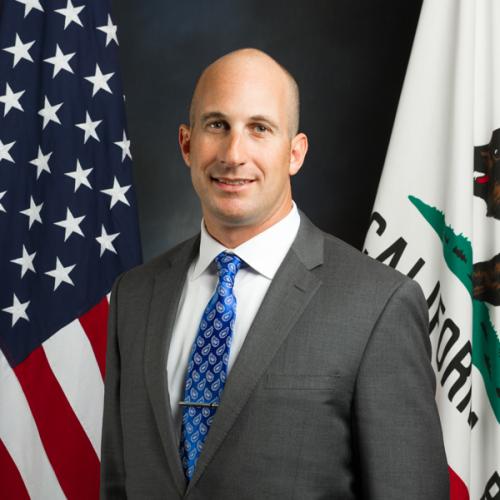
Asm. Heath Flora
Sponsored bills
Maddy summaryThis bill designates June 2024 as California Mountain Biking Month to recognize the sport's history, economic impact, and health benefits within the state. The measure directly affects mountain biking enthusiasts, trail users, and related organizations by officially acknowledging the activity's role in recreation and tourism. The resolution highlights how the industry contributes billions to the economy and supports over 17,000 jobs while promoting outdoor fitness and community building. By proclaiming this specific month, the legislation aims to encourage public participation in off-road cycling and celebrate California's status as a global hub for the sport.
The Personal Income Tax Law authorizes various deductions in computing income that is subject to tax under that law. This bill, for taxable years beginning on or after January 1, 2025, and before January 1, 2030, would allow a deduction in computing adjusted gross income in connection with health savings accounts in modified conformity with federal law. In general, the deduction would be an amount equal to the aggregate amount paid in cash during the taxable year by, or on behalf of, an eligible individual, as defined, to a health savings account of that individual, as provided. The bill, for taxable years beginning on or after January 1, 2025, and before January 1, 2030, would also provide related conformity to that federal law with respect to the allowance of rollovers from Archer Medical Savings Accounts, health flexible spending arrangements, or health reimbursement accounts to a health savings account, and penalties in connection therewith. Existing law requires a bill authorizing a new tax expenditure to contain, among other things, specific goals, purposes, and objectives the tax expenditure will achieve, detailed performance indicators, and data collection requirements. This bill would include additional information required for any bill authorizing a new tax expenditure. This bill would take effect immediately as a tax levy.
Existing law establishes specified boards, bureaus, and commissions in the Department of Consumer Affairs for the purpose of licensing and regulating various professions and vocations. Existing law prohibits a public member or a lay member appointed to a board, as defined, from, among other things, having a specified relationship with a licensee of that board within 5 years of the public member's or lay member's appointment. This bill would prohibit a public member or a lay member of any board from having a specified relationship with a licensee of that board, for services provided pursuant to that license, within 3 years of the public member's or lay member's appointment. The bill would provide that these requirements apply to a public member or a lay member of a board upon appointment or reappointment on or after January 1, 2025.
Maddy summaryThis House Resolution commemorates the 248th anniversary of the signing of the Declaration of Independence on July 4, 1776. The text recounts the historical events leading to American independence, including the adoption of the Lee resolution and the drafting of the Declaration by the Committee of Five. It highlights the document's declaration of the United States as a new nation founded on the principle that all people are created equal with unalienable rights. The resolution serves as a formal acknowledgment of these historical milestones and the enduring significance of the Declaration's ideals.
Maddy summaryThis House Resolution aims to raise awareness about the dangers of opioid abuse and promote the use of non-opioid treatments for pain. It directly addresses the California Health and Human Services Agency, the State Department of Health Care Services, and other state entities by requesting they prioritize education on these issues. The bill encourages healthcare providers to consider non-opioid alternatives that are as effective as prescription drugs but carry lower risks of addiction and overdose. By focusing on public and provider awareness, the resolution seeks to support safer pain management practices across the state.
Maddy summaryThis bill designates October 2024 as Rett Syndrome Awareness Month in California to highlight the condition and promote public understanding. Rett syndrome is a rare genetic disorder that primarily affects females, causing significant neurological challenges such as loss of motor skills, speech, and walking ability. The resolution aims to increase awareness among medical professionals, researchers, educators, and the general public to support ongoing efforts to find a cure. It does not create new laws or funding but serves as a symbolic gesture to draw attention to the disease and the need for continued research.
The Irrigation District Law provides for the formation of irrigation districts with prescribed powers. The law authorizes an irrigation district to control, distribute, store, spread, sink, treat, purify, recapture, and salvage any water, as specified. Existing law requires the board of directors of a district to hold a regular meeting on the first Tuesday of each month at the district office. Existing law authorizes the Board of Directors of the Tri-Dam Project to hold no more than 4 regular meetings annually at the Tri-Dam Project offices located in Strawberry, California. This bill would instead authorize the board of directors to hold those regular meetings at a Tri-Dam Project office that is located in Sonora, California, or Strawberry, California, or within 30 miles of either city. The bill would require the board of directors to adopt, at a regular Tri-Dam Project meeting, a resolution that designates Tri-Dam Project office locations.
Existing law makes it a crime to possess, cultivate, and administer specified controlled substances, including psilocybin and psilocyn. Existing law makes it a crime for a person to rent, lease, or make available for use any building or room for the purpose of storing or distributing any controlled substance. Existing law authorizes forfeiture of property used for specified crimes involving controlled substances. This bill, the Heal Our Heroes Act, would, until January 1, 2028, establish the Psychedelic-Assisted Facilitation Pilot Program. The bill, as part of the pilot program, would authorize the public health officers of the City and County of San Francisco, the County of San Diego, and the County of Santa Cruz to approve entities to establish and operate up to 5 psychedelic-assisted facilitation centers per jurisdiction to administer psilocybin or psilocyn to patients meeting specified criteria, including being a veteran or former first responder over 21 years of age who has passed a suitability screening, as defined. The bill would authorize the jurisdictions to issue up to 3 permits to cultivate, as specified. The bill would require the public health officers to consult with experts in psilocybin or psilocyn facilitation on program design, to issue facilitator permits only to licensed physicians and surgeons and to report certain data and an evaluation of the program to the Legislature no later than January 1, 2027. The bill would exempt a person from, among other things, civil liability, professional discipline, or existing criminal sanctions, solely for good faith actions, conduct, or omissions in compliance with the pilot program. The bill would make related findings and declarations.

This measure would celebrate the history and culture of lowriding and cruising, encourage local officials and law enforcement to work with local car clubs to conduct safe cruising events, and declare the first Sunday of summer to be observed as California Lowrider Day.