

Existing law prohibits employers from making, adopting, or enforcing a policy that prevents an employee from disclosing violations of a state or federal statute, or a violation or noncompliance with a local, state, or federal regulation to, among others, a government or law enforcement agency, or from retaliating against an employee who makes a disclosure. Existing law requires an employer to prominently display a list of employees' rights and responsibilities under the whistleblower laws, as prescribed. Existing law creates the Division of Labor Standards Enforcement within the Department of Industrial Relations and vests the division with the general duty of enforcing labor laws. Existing law provides that the Labor Commissioner is the Chief of the Division of Labor Standards Enforcement. This bill would require the Labor Commissioner to develop a model list of employees' rights and responsibilities under the whistleblower laws, as specified. The bill would specify that an employer that posts the model list shall be deemed in compliance with the above-described requirement to prominently display the list of employees' rights and responsibilities under the whistleblower laws.
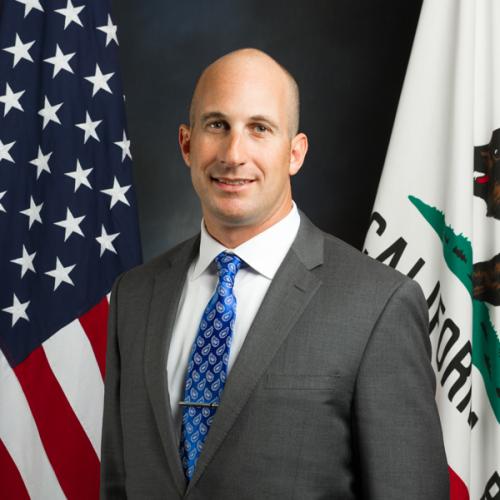
Asm. Heath Flora
Sponsored bills
Existing law includes the term "Eskimo" and "Eskimos." This bill would make nonsubstantive changes to those provisions to change the term "Eskimo" to "Inuk" and "Eskimos" to "Inuit." The bill would also make other nonsubstantive revisions.
(1) The Sacramento Regional Transit District Act provides for the formation of the Sacramento Regional Transit District, with specified powers and duties related to providing public transit services. The act authorizes the district to comprise the Cities of Citrus Heights, Davis, Elk Grove, Folsom, Rancho Cordova, Roseville, Sacramento, West Sacramento, and Woodland, the territory of the County of Sacramento that is the same area as the urban service area of the county, and other specified portions of the County of Yolo, provided those cities and counties have agreed to annexation by the district, as specified. This bill would authorize the district to also comprise the Cities of Galt and Isleton, and the unincorporated portions of the County of Sacramento where the county has declared a need for the district to operate, provided the cities and county agree to annexation, as specified. (2) The act establishes a board of directors and vests the board with government of the district. The act requires the composition of the first board of directors to consist of 4 members appointed by the City Council of the City of Sacramento and 3 members appointed by the Board of Supervisors of the County of Sacramento. The act requires the number of members of the board of directors to be increased, as provided. This bill would reduce the number of members that may be appointed to the board of directors by the City Council of the City of Sacramento from 4 to 3, would delete obsolete provisions referring to the first board of directors, and would make conforming changes.
Existing law establishes the Instructional Quality Commission and requires the commission to, among other things, recommend curriculum frameworks to the State Board of Education. This bill would require the Instructional Quality Commission, when the health curriculum framework is next revised on or after January 1, 2025, to consider providing for inclusion, in that curriculum framework, content on sextortion, as defined.
Existing law, the County Employees Retirement Law of 1937, authorizes a county to establish a retirement system, as specified, in order to provide pension benefits to county, city, and district employees. Under that law, all officers and employees of a district become members of the county's retirement association on the first day of the calendar month after adoption, by specified vote thresholds, of a resolution by the governing body of the district providing for inclusion of the district in the retirement association and, if the county board of supervisors is not the governing body of the district, the board of retirement consents by majority vote. This bill would enact the Sacramento Area Sewer District Pension Protection Act of 2024, which, on and after the effective date of a resolution of the Board of Retirement of the Sacramento County Employees' Retirement Association consenting to membership by employees of the Sacramento Area Sewer District as described above, would provide that all employees of the county allocated exclusively to the successor entity, would be deemed to be employees of the sewer district and that all duties and obligations in the employment relationship would be assumed by the sewer district. The bill would specify that the sewer district is a "district" for purposes of the County Employees Retirement Law of 1937. The bill would provide that the sewer district would assume the rights, obligations, and status previously occupied by the County of Sacramento with regard to the portion of the county safety plan, which is that portion of the county's defined benefit plan attributed to retirement system members and beneficiaries of the Sacramento Area Sewer District, as specified, to the replacement benefits program, and to all benefit provisions, including optional benefits, within the County Employees Retirement Law of 1937 or the Public Employees' Pension Reform Act of 2013, as those rights exist at the time of the transfer of rights, duties, and obligations to the sewer district. The bill would state that its provisions are severable. This bill would make legislative findings and declarations as to the necessity of a special statute for the County of Sacramento. This bill would declare that it is to take effect immediately as an urgency statute.
This measure would designate November 8, 2024, as "California's First-Generation College Celebration Day." The measure would urge all higher education institutions in the state to celebrate California's First-Generation College Celebration Day, recognize the significant role of first-generation college students in developing the state's future workforce, celebrate the federal Higher Education Act of 1965, and support first-generation college students with opportunities and equity in completing their desired degree programs.
Maddy summaryThis bill declares May 2024 as Foster Care Awareness Month in California to highlight the needs of the state's approximately 45,000 children in the foster care system. The measure does not change laws or allocate funding but serves as a symbolic recognition of the efforts made by families, caregivers, and organizations to support vulnerable youth. By designating this specific month, the resolution aims to increase public awareness about the challenges foster youth face, such as homelessness after exiting care, and to celebrate the contributions of those working within the child welfare system.
This measure would recognize the Vietnamese Heritage and Freedom Flag as the cultural and heritage flag of the Vietnamese American community and as a symbol of the community's continued struggle for freedom and liberty for the people of Vietnam, commemorate the anniversary of the Fall of Saigon on April 30, 1975, and acknowledge and recognize the Vietnamese American community's commitment to the principles of democracy, justice, and the protection and advancement of human rights.
Maddy summaryThis bill officially designates June 2024 as Immigrant Heritage Month in California to recognize the contributions of immigrants to the state's economy and society. The measure does not change laws or create new programs but serves as a symbolic proclamation to highlight the cultural and economic impact of immigrant communities. It is a non-binding resolution that affects the public by encouraging acknowledgment of immigrant heritage rather than imposing specific obligations on individuals or businesses.
Maddy summaryThis bill designates June 3, 2024, as Family Justice Center Day in California to recognize the work of organizations supporting survivors of domestic and sexual violence. It directly affects the California Family Justice Network and its 27 affiliated centers, which provide coordinated services such as legal aid, mental health support, and police assistance under one roof. The measure highlights the importance of these centers by noting they serve over 70,000 trauma victims annually, including more than 20 percent who are children. By officially acknowledging this date, the legislation aims to raise awareness about the critical role these centers play in helping survivors access necessary resources.