

Existing law authorizes a pupil with a moral objection to dissecting or otherwise harming or destroying an animal to refrain from participation in an educational project that involves the harmful or destructive use of animals. Existing law authorizes, if the pupil chooses to refrain and a teacher believes that an adequate alternative education project is possible, the teacher to work with the pupil to develop and agree upon an alternative education project in order to obtain the knowledge, information, or experience required by the course of study in question. Existing law requires each teacher teaching a course that utilizes live or dead animals or animal parts to inform the pupils of their rights pursuant to these provisions. Existing law applies these provisions to all levels of instruction in all public schools operating programs in kindergarten and grades 1 to 12, inclusive. Existing law requires the Superintendent of Public Instruction to establish and implement a system of complaint processing, known as the Uniform Complaint Procedures, for specified educational programs. This bill, if a pupil chooses to refrain from participation in an assessment, education project, or test involving the dissection of animals, would require a teacher to provide an alternative assessment, education project, or test. The bill would prohibit a pupil's grades from being impacted as a means of penalizing the pupil for exercising their rights concerning dissection of animals. The bill would require a teacher to provide, at a pupil's request, any sourcing information provided by the vendor or provider of the animals and information about the chemicals used to preserve the animals for dissection to which the pupil may be exposed. The bill would require a teacher, or a public school on behalf of the teacher, to provide written notice of the pupils' rights that includes specified information, including, among other things, the above-described rights and the complaint procedures described below. The bill would require, by November 1, 2025, the State Department of Education to develop a template that a teacher, or a public school on behalf of the teacher, would be authorized to use to provide this written notice and to make the template available on its internet website. The bill would encourage, by July 1, 2028, public schools to explore using effective alternative methods in lieu of utilizing live or dead animals or animal parts for dissection in a course of study, except as provided. The bill would require the Uniform Complaint Procedures to apply to pupils' rights to refrain from participation in an assessment, education project, or test involving the dissection of animals and to choose an alternative assessment, education project, or test. By imposing additional duties on public schools, the bill would impose a state-mandated local program. The California Constitution requires the state to reimburse local agencies and school districts for certain costs mandated by the state. Statutory provisions establish procedures for making that reimbursement. This bill would provide that, if the Commission on State Mandates determines that the bill contains costs mandated by the state, reimbursement for those costs shall be made pursuant to the statutory provisions noted above.
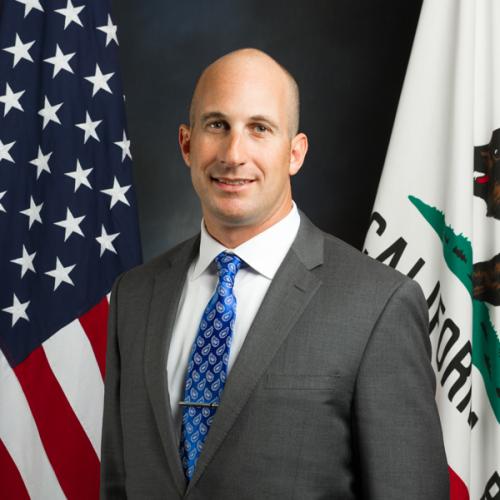
Asm. Heath Flora
Sponsored bills
The Personal Income Tax Law imposes a tax on individual taxpayers measured by the taxpayer's taxable income for the taxable year, but excludes certain items of income from the computation of tax, including an exclusion for combat-related special compensation. This bill, for taxable years beginning on or after January 1, 2024, and before January 1, 2034, would exclude from gross income retirement pay received by a taxpayer from the federal government for service performed in the uniformed services, as defined, during the taxable year. The bill, for taxable years beginning on or after January 1, 2024, and before January 1, 2034, would also exclude from gross income annuity payments received by a qualified taxpayer, as defined, pursuant to a United States Department of Defense Survivor Benefit Plan during the taxable year. The bill would make related findings and declarations. Existing law requires any bill authorizing a new tax expenditure to contain, among other things, specific goals, purposes, and objectives that the tax expenditure will achieve, detailed performance indicators, and data collection requirements. This bill also would include additional information required for any bill authorizing a new tax expenditure. The bill would require the Franchise Tax Board and the Department of Veterans Affairs to provide any data requested by the Legislative Analyst to write the report, as provided, and would make taxpayer information received by the Legislative Analyst subject to limitation on the collection and use of that information. By expanding the scope of a crime, this bill would impose a state-mandated local program. The California Constitution requires the state to reimburse local agencies and school districts for certain costs mandated by the state. Statutory provisions establish procedures for making that reimbursement. This bill would provide that no reimbursement is required by this act for a specified reason. This bill would take effect immediately as a tax levy.
Existing law classifies certain substances, including cocaine, heroin, and fentanyl, as controlled substances and generally prohibits the possession, sale, transportation, and use of these substances. Existing law additionally prohibits the possession of certain of these controlled substances including cocaine, heroin, and methamphetamine while armed with a loaded and operable firearm. A violation of this prohibition is punishable as a felony punishable by incarceration in the state prison. This bill would additionally prohibit the possession of fentanyl, as specified, while armed with a loaded and operable firearm if the person has knowledge that the specific controlled substance is fentanyl. By expanding the application of an existing crime, this bill would impose a state-mandated local program. The California Constitution requires the state to reimburse local agencies and school districts for certain costs mandated by the state. Statutory provisions establish procedures for making that reimbursement. This bill would provide that no reimbursement is required by this act for a specified reason.
Existing law, the Nursing Practice Act, establishes the Board of Registered Nursing to license and regulate the practice of nursing. The act prohibits a person from engaging in the practice of nursing without an active license but authorizes a student to render nursing services incidental to the student's course of study, as specified. This bill would additionally authorize a student to render nursing services if the student is a resident of the state and enrolled in a prelicensure distance education nursing program based at an out-of-state private postsecondary educational institution, as defined, for the purpose of gaining clinical experience in a clinical setting that meets certain criteria, including that the program is accredited by a programmatic accreditation entity recognized by the United States Department of Education and that the program maintains minimum faculty-to-student ratios required of board-approved programs for in-person clinical experiences. The bill would require the student to be supervised in person by a registered nurse licensed by the board while rendering nursing services, as specified, and would require payment to the board of a one-time fee of $100 per student placed in clinical experience in this state. This bill would prohibit a clinical agency or facility from offering nonacute clinical experience placements to an out-of-state private postsecondary educational institution if the placements are needed to fulfill the clinical experience requirements of in-state students enrolled in a board-approved nursing program. The bill would require the program to provide initial and subsequent reports to the board, as specified. The bill would require the initial reports to include, among other things, proof of programmatic accreditation and good standing, with an attestation under penalty of perjury that the program will notify the board within 10 days of any changes in status. By expanding the scope of the crime of perjury, this bill would impose a state-mandated local program. The California Constitution requires the state to reimburse local agencies and school districts for certain costs mandated by the state. Statutory provisions establish procedures for making that reimbursement. This bill would provide that no reimbursement is required by this act for a specified reason.
The California Environmental Quality Act (CEQA) requires a lead agency, as defined, to prepare, or cause to be prepared, and certify the completion of an environmental impact report on a project that it proposes to carry out or approve that may have a significant effect on the environment or to adopt a negative declaration if it finds that the project will not have that effect. The CEQA also requires a lead agency to prepare a mitigated negative declaration for a project that may have a significant effect on the environment if revisions in the project would avoid or mitigate that effect and there is no substantial evidence that the project, as revised, would have a significant effect on the environment. The CEQA exempts certain projects from its requirements, including actions necessary to prevent or mitigate an emergency. Existing law prohibits an electrical corporation from beginning the construction of a line, plant, or system, or extensions of those facilities without first having to obtain from the Public Utilities Commission a certificate that the present or future convenience and necessity require or will require the construction. Existing law specifies that the certificate is not required for the extension, expansion, upgrade, or other modification of existing electrical transmission facilities. This bill would, for electrical infrastructure projects, as defined, designate the commission as the lead agency for purposes of the CEQA, would require the commission to prescribe procedures for the preparation of the appropriate environmental review document for those projects, and would specify the manner in which the environmental review for those projects is to be conducted. The bill would repeal these provisions on January 1, 2035.
Maddy summaryThis California House Resolution condemns the July 13, 2024, assassination attempt on former President Donald J. Trump and calls for an end to political violence. The measure highlights the event where Trump was wounded while speaking at a rally in Butler, Pennsylvania, and notes that one attendee died and others were injured while trying to protect him. It urges the state to foster a political environment based on respectful discourse and nonviolence. The resolution is a formal statement of the Assembly's stance and does not create new laws or change existing policies.
This measure would recognize the importance of California Native American Day, celebrated this year on September 27, 2024, and the annual California Indian Cultural Awareness Conference, to the enhancement of awareness of California Indian culture.
Maddy summaryThis bill establishes Filipino American History Month to recognize the long-standing contributions of Filipinos to California and the United States. It directly affects state officials and the public by designating a specific month for commemoration and education. The resolution highlights historical milestones, including early Spanish-era interactions, the development of Filipino communities in cities like Stockton and San Francisco, and the significant roles Filipinos played in agriculture, shipbuilding, and military service during World War II. By formally acknowledging these events, the bill aims to promote awareness of Filipino American heritage within the state.
Maddy summaryThis bill designates November 22, 2024, as Kimchee Day in California to honor the traditional Korean dish and its cultural significance. It acknowledges the long history of kimchee, the contributions of Korean Americans, and the dish's recognized health benefits and growing popularity in the United States. The resolution directs the Assembly's Chief Clerk to send copies of the document to the author for distribution.
Maddy summaryThis bill is a House Resolution that formally recognizes Diwali as a significant cultural and religious holiday for Indian Americans and South Asian Americans in California. It acknowledges the festival's importance to Hindus, Sikhs, Buddhists, and Jains by highlighting its historical roots and the specific meanings it holds for each group. The resolution expresses the Assembly's respect for these communities and encourages Californians to participate in the celebration of lights on November 1, 2024. As a commemorative measure, the bill does not alter laws or funding but serves to officially honor the occasion within the state legislature.