Maddy summaryThis bill designates specific periods in 2024 as Boat People Awareness Week and Month to honor Vietnamese refugees who fled their country by sea after the Vietnam War. The resolution highlights the historical hardships these individuals faced, including dangerous voyages and high mortality rates, while acknowledging their significant contributions to communities across California. It does not create new laws or funding but serves as a commemorative measure to recognize the resilience and spirit of the Vietnamese refugee community. The text is intended to be shared with the bill's author for public distribution to raise awareness about this historical event.
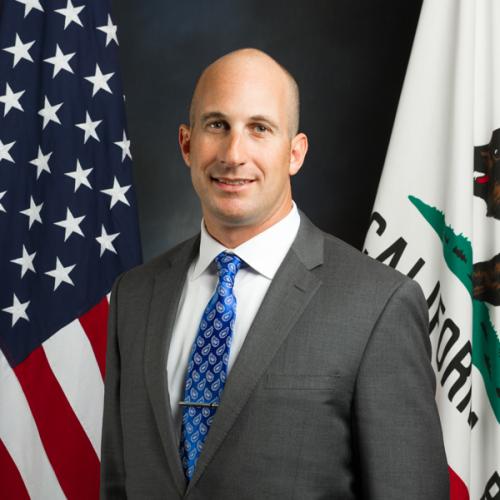
Asm. Heath Flora
Sponsored bills
Maddy summaryThis bill recognizes August 15, 2024, as India's Independence Day and encourages all Californians to participate in celebrations honoring the occasion. It directly affects the residents of California, particularly the state's large Indian American community, by formally acknowledging the historical significance of the date when India gained independence from British rule. The measure does not create new laws or change government operations; instead, it serves as a symbolic gesture to highlight the cultural contributions of Indian Americans and the shared values of democracy and nonviolence between the two nations.
This measure would declare the month of June 2024 to be Portuguese Heritage Month and would recognize June 10 as the Day of Portugal and May 20 as the Day of the Azores.
Maddy summaryThis bill officially recognizes June 21, 2024, as the 2024 International Day of Yoga within the state of California. It does not create new laws or change existing regulations but serves as a formal acknowledgment of the global event. The measure is intended to highlight the history and benefits of yoga as a wellness practice.
This measure would designate the week of June 23, 2024, to June 29, 2024, inclusive, and every third week of June thereafter, as Roadside Assistance Worker Appreciation Week.
Existing law defines types of theft, including petty theft, grand theft, and shoplifting. Existing law also defines the crimes of robbery and burglary. Existing law sets forth specific rules relating to the jurisdiction for the prosecution of theft by fraud, organized retail theft, and receiving stolen property, including that the jurisdiction for prosecution includes the county where an offense involving the theft or receipt of the stolen merchandise occurred, the county in which the merchandise was recovered, or the county where any act was done by the defendant in instigating, procuring, promoting, or aiding or abetting in the commission of a theft offense or other qualifying offense. Existing law jurisdictionally limits prosecution of each of the above to criminal actions brought by the Attorney General. This bill would no longer limit the jurisdictional rules for the above crimes to criminal actions brought by the Attorney General. If a case is brought by someone other than the Attorney General and multiple offenses are committed by the same defendant in multiple jurisdictions, the bill would allow a criminal action to be brought in any of those jurisdictions subject to a hearing on consolidation of the offenses, as specified. The bill would require the prosecution to present written evidence at the hearing that all district attorneys in counties with jurisdiction over the offenses agree to the venue. The bill would require charged offenses from jurisdictions where there is not a written agreement from the district attorney to be returned to that jurisdiction.
Existing law establishes the University of California, administered by the Regents of the University of California, the California State University administered by the Trustees of the California State University, and the California Community Colleges, administered by the Board of Governors of the California Community Colleges, as the 3 segments of public postsecondary education in the state. The Donahoe Higher Education Act prohibits the campuses of those segments from charging mandatory systemwide tuition or fees to specified students who apply for a waiver, including a child of any veteran of the United States military who has a service-connected disability, has been killed in service, or has died of a service-connected disability, an undergraduate student who is a recipient of a Medal of Honor, or an undergraduate student who is a child of a recipient of a Medal of Honor and who is no more than 27 years of age, if certain requirements are satisfied. This bill would additionally prohibit the campuses of the University of California and California State University from charging tuition or fees for specified students who enroll in an extended education course if certain requirements are satisfied and the extended education course is being used to meet the requirements of an undergraduate degree program. The bill would apply to the campuses of the University of California only to the extent that the Regents of the University of California, by appropriate resolution, make it apply.
(1) Existing law governs the operation of animal shelters by, among other things, setting a minimum holding period for stray dogs and cats and requiring animal shelters to ensure that dogs and cats, if adopted, are spayed or neutered. This bill would require, beginning January 1, 2026, public animal control agencies or shelters or private animal shelters with local contracts for animal care to update any data that they make available on their internet website at least once per month, and would require those agencies and shelters to publish specified information on their internet website, including the number of animals taken in during the prior month and the outcomes for animals over the prior month. By expanding the duties of public animal control agencies and shelters, this bill would impose a state-mandated local program. (2) The California Constitution requires the state to reimburse local agencies and school districts for certain costs mandated by the state. Statutory provisions establish procedures for making that reimbursement. This bill would provide that, if the Commission on State Mandates determines that the bill contains costs mandated by the state, reimbursement for those costs shall be made pursuant to the statutory provisions noted above.
Under existing law, the California Fair Employment and Housing Act (FEHA) , it is an unlawful employment practice for an employer, unless based upon a bona fide occupational qualification or applicable security regulations established by the United States or the State of California, to refuse to hire or employ a person or to refuse to select a person for a training program leading to employment, or to bar or discharge a person from employment or a training program leading to employment, or to discriminate against a person in compensation or in terms, conditions, or privileges of employment because of the race, religious creed, color, national origin, ancestry, physical disability, mental disability, medical condition, genetic information, marital status, sex, gender, gender identity, gender expression, age, sexual orientation, or military and veteran status of that person. FEHA provides that nothing in that act relating to discrimination on account of sex affects the right of an employer to use veteran status as a factor in employee selection or to give special consideration to Vietnam-era veterans. FEHA is enforced by the Civil Rights Department, which is in the Business, Consumer Services, and Housing Agency, and is under the direction of an executive officer known as the Director of Civil Rights. This bill would enact the Voluntary Veterans' Preference Employment Policy Act to authorize a private employer to establish and maintain a written veterans' preference employment policy, to be applied uniformly to hiring decisions, to give a voluntary preference for hiring a veteran over another qualified applicant. The bill would require a private employer with a veterans' preference employment policy to annually report to the Civil Rights Department the number of veterans hired under the preference policy and any demographic information about those veterans that the employer obtained in response to the department's reporting requirements. Under the bill, failure to submit that report would render any preference granted by the employer ineligible for the protections provided by this bill. The bill would require the department to report that information, in addition to the number of discrimination claims received based on an employer's veterans' preference employment policy, to specified legislative policy committees by July 1, 2026, and July 1, 2028. This bill would provide that the granting of a veterans' preference pursuant to the bill, in and of itself, shall be deemed not to violate any local or state equal employment opportunity law or regulation, including, but not limited to, the antidiscrimination provisions of FEHA. The bill would require the Department of Veterans Affairs to assist any private employer in determining if an applicant is a veteran, to the extent permitted by law. The bill would prohibit a veterans' preference employment policy from being established or applied for the purpose or with the effect of unlawfully discriminating against an employment applicant on the basis of a protected classification, as specified. The bill would repeal these provisions on January 1, 2029.

Existing law establishes the Department of Health Care Access and Information (HCAI) to oversee health planning and health policy research, including the health care workforce research and data center. Existing law, the Nursing Practice Act, establishes the Board of Registered Nursing within the Department of Consumer Affairs for the licensure and regulation of nurses. Existing law provides for the licensure and regulation of health facilities and clinics, as defined, by the State Department of Public Health. Existing law requires an organization that operates, conducts, owns, or maintains a health facility, and the officers thereof, to make and file with HCAI certain reports, including balance sheets and other financial statements. Existing law sets forth related reporting provisions for clinics. This bill would require a health facility or a clinic, whether or not it currently offers prelicensure clinical placement slots, to meet with representatives from an approved school of nursing or approved nursing program, upon request by the school or program, to discuss the clinical placement needs of the school or program. The bill would require a nursing school or program to annually prepare a report on clinical placements for nursing students and to submit it to the board, with updates. The bill would require the report to include the beginning and end dates of all academic terms within the subsequent calendar year for each clinical slot needed by a clinical group with content area and education level, and the number of clinical slots that the school or program has been unable to fill within the preceding calendar year. The bill would require the board to submit that information to HCAI. The bill would require a health facility or a clinic, whether or not it currently offers prelicensure clinical placement slots, to annually prepare and submit to HCAI a report, with updates, on clinical placements for nursing students. The bill would authorize HCAI to decide to phase in the types of health facilities or clinics required to report on clinical placements. Under the bill, the report would include, among other things, the estimated number of days and shifts that will be made available within the subsequent calendar year for student use for each patient population served in the health facility or clinic, as specified. The bill would require HCAI to post the report on its internet website in a manner that allows for the information in the report to be cross-referenced against the above-described information from the nursing school or program. The bill would authorize the board, upon request by a nursing school or program, to assist in identifying clinical placement slot opportunities to meet the clinical placement needs of that school or program, by conferring with health facilities or clinics within the appropriate geographic region of each school or program in an attempt to match available clinical placement slots with needed slots and to encourage the creation of new clinical placement slots at additional clinical training sites to meet school or program needs, as specified. The bill would require the board to report a summary of every request made by an approved school or program and of any assistance provided and the outcome of that assistance. The bill would prohibit any attempt to identify additional clinical placement slots by the board, a health facility, or a clinic from supplanting or disrupting the clinical placement of any nursing student for whom a clinical placement is already in progress, has already been scheduled, or is under agreement for future use by an approved school or program. The bill would condition implementation of its provisions on an appropriation. The bill would also make related legislative findings.