

Existing law provides for the licensure and regulation by the State Department of Public Health of health facilities, as defined. Existing law requires a health facility to allow a patient's domestic partner, the children of the patient's domestic partner, and the domestic partner of the patient's parent or child to visit unless no visitors are allowed, the facility reasonably determines that the presence of a particular visitor would endanger the health or safety of a patient, member of the health facility staff, or other visitor to the health facility, or would significantly disrupt the operations of a facility, or the patient has indicated to the health facility staff that the patient does not want this person to visit. A violation of this provision is a misdemeanor. This bill, Dianne's Law, would require a health facility to allow specified persons to visit, including the patient's children and grandparents. The bill would require the health facility to develop alternate visitation protocols, if circumstances require the health facility to restrict visitor access to the facility due to health or safety concerns, that allow visitation to the greatest extent possible while maintaining patient, visitor, and staff health and safety. Notwithstanding the requirement mentioned above, the bill would prohibit a health facility from prohibiting in-person visitation in end-of-life situations unless the patient has indicated to the health facility staff that the patient does not want this person to visit, as specified, and would authorize a health facility to require visitors to adhere to personal protective equipment and testing protocols not greater than those required of facility staff for the duration of their visit. The bill would also require the facility to provide personal protective equipment and testing resources to each visitor for a patient in an end-of-life situation, to the extent that those resources have been made readily available to the facility by state or local entities for that purpose. By expanding an existing crime, the bill would impose a state-mandated local program. The California Constitution requires the state to reimburse local agencies and school districts for certain costs mandated by the state. Statutory provisions establish procedures for making that reimbursement. This bill would provide that no reimbursement is required by this act for a specified reason.
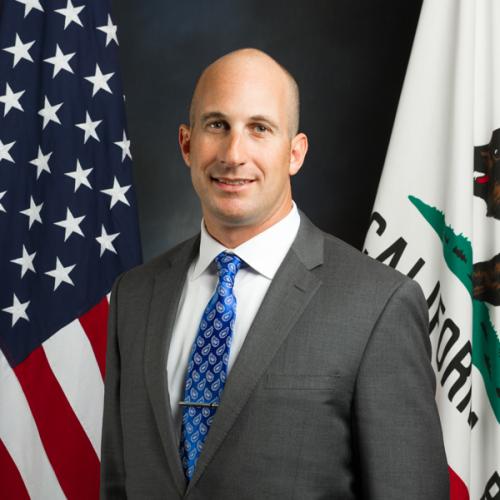
Asm. Heath Flora
Sponsored bills
Existing law requires the State Board of Education to adopt at least 5 basic instructional materials in specified subject areas, including, among others, social science, for use in kindergarten and grades 1 to 8, inclusive, as specified. Existing law establishes the Instructional Quality Commission, as specified, and requires the commission to, among other things, develop criteria for evaluating instructional materials. This bill would require the commission, when the state board adopts new instructional materials for history-social science on or after January 1, 2025, to consider providing for inclusion, in its evaluation criteria, content on the case of Mendez v. Westminster School District of Orange County. This bill would incorporate additional changes to Section 51226.3 of the Education Code proposed by AB 1821 to be operative only if this bill and AB 1821 are enacted and this bill is enacted last.
Existing law authorizes an owner of real property to install and operate on their property an electrified security fence that has specified technical characteristics and is used to protect and secure commercial, manufacturing, or industrial property, or property zoned under another designation, but legally authorized to be used for a commercial, manufacturing, or industrial purpose. This bill would, until January 1, 2028, instead authorize an owner of real property to install and operate on their property an electrified security fence that is powered by an electrical energizer, driven by solar-charged batteries of no more than 12 volt of direct current, and used to protect and secure manufacturing or industrial property, or property zoned under another designation, but legally authorized to be used for a commercial purpose that stores, parks, services, sells, or rents vehicles and other materials, as specified. Existing law prohibits an owner of real property from installing and operating an electrified security fence if a local ordinance prohibits that installation and operation. Existing law requires, if a local ordinance allows the installation and operation of an electrified security fence, that the installation and operation of the fence meets both the requirements of that ordinance and other specified requirements. This bill would, until January 1, 2028, for manufacturing or industrial property, or property that is legally authorized to be used for specified commercial purposes, that meets specified requirements, instead prohibit a city, county, or city and county from prohibiting the installation and operation of an electrified security fence or requiring a permit or approval that is in addition to an alarm system permit issued by the city, county, or city and county. The bill would, however, authorize a city or county to require an administrative permit confirming the fence meets the statute's requirements, as provided. The bill would, until January 1, 2028, prohibit an owner of real property that is not manufacturing or industrial property, or property that is legally authorized to be used for specified commercial purposes, from installing and operating an electrified security fence if a local ordinance prohibits that installation and operation, and would authorize a local ordinance to prohibit the installation of an electrified security fence if that fence fails to meet specified requirements. Existing law requires an owner of real property who installs and operates an electrified security fence on their property to ensure that, among other things, the fence meets the 2006 international standards and specifications of the International Electrotechnical Commission (IEC) , as specified, and the height of the fence does not exceed 10 feet or 2 feet higher than an existing perimeter fence that is not less than 5 feet in height. This bill would, until January 1, 2028, update the IEC standards and specifications, and provide that the perimeter fence may be a perimeter wall and is nonelectrified. This bill would also require, until January 1, 2028, that the fence include a device that enables first responders to deactivate the fence in response to an emergency, if required by a city, county, or city and county. The bill would include findings that changes proposed by this bill address a matter of statewide concern rather than a municipal affair and, therefore, apply to all cities, including charter cities. This bill would declare that it is to take effect immediately as an urgency statute.
Existing law, the Alfred E. Alquist Hospital Facilities Seismic Safety Act of 1983, establishes, under the jurisdiction of the Department of Health Care Access and Information, a program of seismic safety building standards for certain hospitals constructed on and after March 7, 1973. Existing law requires that, by January 1, 2030, owners of these hospitals must either demolish, replace, or change to nonacute care use all hospital buildings that are not in compliance with these standards or seismically retrofit all acute care inpatient hospital buildings so they are in substantial compliance with these standards, unless subject to an abeyance. This bill would authorize a hospital owner or operator to submit an application, by specified dates, to the department for additional extensions to the compliance deadline. The bill would require the department to grant or deny an extension of the deadline for substantial compliance with seismic safety regulations or standards up to January 1, 2035. The bill would require the application to contain a seismic compliance plan, a specified evaluation report, a financial plan, and an attestation to the department that the appropriate governing board of that hospital is aware that the hospital building is required to be in substantial compliance with the seismic safety regulations or standards. By imposing the above-described attestation, this bill would expand the crime of perjury and impose a state-mandated local program. This bill would require the hospital and the department to identify specified milestones that are used for determining whether the hospital is making progress towards meeting the hospital's seismic compliance deadline. The bill would require the hospital to demonstrate efforts to comply with the seismic compliance deadline by providing the department with a plan outlining how seismic construction costs and other financial responsibilities will be met and what funding sources will be used if the hospital fails to meet an agreed-upon milestone due to circumstances that were within the hospital owner's or operator's control. The bill would require the owner or operator of that hospital to submit to the department an attestation that the appropriate governing board of that hospital is aware of the hospital's responsibility to comply with the associated construction costs to meet the seismic compliance deadlines. By requiring the owner or operator of a hospital to submit to the department an attestation, this bill would expand the crime of perjury and impose a state-mandated local program. This bill would require the department, before granting an extension past January 1, 2030, to provide public notice of a hospital's request for an extension, provide copies, upon request, of any publicly available material submitted by the hospital in support of their extension to interested parties, and allow the public to submit written comments on the extension proposal, as specified. The bill would require the department, beginning January 1, 2027, to post on the department's internet website specified information, including, among other things, its decision to grant or deny any extension. The bill would require the department to notify the county board of supervisors, the city council, and the Assembly and Senate representative in writing and electronically if a hospital within their district has been granted or denied an extension. This bill would require the department, on or before January 1, 2026, to adopt regulations and standards or revise regulations and standards, or both, to extend the deadlines for meeting the structural performance and nonstructural performance requirements. The bill would specify that regulatory submissions made by the department to the California Building Standards Commission are deemed to be emergency regulations and that the adoption of these regulations are to be deemed an emergency and necessary for the immediate preservation of the public peace, health and safety, and general welfare. Existing law requires, before January 1, 2024, the owner of an acute care inpatient hospital that includes a building that does not substantially comply with seismic safety regulations or standards to post in a lobby or waiting area generally accessible to patients or the public a notice provided by the department that the hospital is not in compliance with the seismic safety requirements the hospital is required to meet by January 1, 2030. Existing law requires, on or before January 1, 2024, and annually thereafter, the owner of an acute care inpatient hospital that includes a building that does not substantially comply with seismic safety regulations or standards to provide an annual status update on the Structural Performance Category ratings of the buildings and the services provided in each hospital building on the hospital campus to specified entities until each of the hospital buildings owned by that hospital building owner is compliant. This bill would require, before January 1, 2025, the owner or operator of an acute care inpatient hospital that includes a building that does not substantially comply with the seismic safety regulations or standards to post in any lobby or waiting area generally accessible to patients or the public the notice mentioned above. The bill would also require, on or before January 1, 2025, and annually thereafter, the owner or operator to provide an annual status update, as specified. This bill would specify that the provisions of this act are severable. The California Constitution requires the state to reimburse local agencies and school districts for certain costs mandated by the state. Statutory provisions establish procedures for making that reimbursement. This bill would provide that no reimbursement is required by this act for a specified reason.
The San Joaquin Regional Transit District Act authorizes the creation of the San Joaquin Regional Transit District, and if created, specifies the district's powers and responsibilities. The act requires the district to be governed by a board of directors, requires the board to adopt rules for its proceedings, and authorizes the board to provide, by ordinance or resolution, that each board member receive $50 for each board meeting attended, not to exceed $100 in a calendar month. This bill instead would authorize the board to provide, by ordinance or resolution, that each board member receive $100 for each board meeting and committee meeting attended, not to exceed $500 in a calendar month. The act authorizes the district to invest surplus money in its treasury, including money in a sinking fund, in certain investments, including its own bonds and treasury notes or bonds of the state. This bill would authorize the district to also invest surplus money, including money in a sinking fund, in the San Joaquin County Treasury Investment Pool and in any investment or deposit that a local agency may place funds pursuant to state law. The bill would also make conforming changes.
This measure would designate a specified portion of Interstate 80 in the City and County of San Francisco as the Willie Mays Highway. The measure would request the Department of Transportation to determine the cost of appropriate signs showing this special designation and, upon receiving donations from nonstate sources covering that cost, to erect those signs.
Existing law, the Alcoholic Beverage Control Act, generally prohibits the sale or consumption of alcoholic beverages at a public schoolhouse or the grounds of the schoolhouse. Existing law makes various exceptions to this prohibition, including alcoholic beverages that are acquired, possessed, or used during events at a college-owned or college-operated stadium or veterans stadium with a capacity of over 12,000 people, located in a county with a population of over 6,000,000 people. Existing law defines "events" for purposes of that exception to mean football games sponsored by a college, other than a public community college, or other events sponsored by noncollege groups. This bill would add an exception to the above-described prohibition for alcoholic beverages that are acquired, possessed, or used during events at a public community college stadium with a capacity of 19,000 or more people in the City of Bakersfield. The bill would define "events" for this purpose to mean sporting events or concerts sponsored by a public community college or other events sponsored by noncollege groups. This bill would make legislative findings and declarations as to the necessity of a special statute for the City of Bakersfield.
This measure would declare the month of September 2024 as Childhood Cancer Awareness Month and state the commitment of the Legislature to support efforts to find cures, and less toxic treatments, for childhood cancer.
This measure would, among other things, urge the United States Congress and President Joseph R. Biden to fully fund the United States Environmental Protection Agency's Comprehensive Infrastructure Solution for the Tijuana River due to the ongoing impacts to public health, the environment, and the local economy caused by cross-border pollution and would urge President Joseph R. Biden to declare a national emergency due to those ongoing impacts.
This measure would urge the Congress of the United States to repeal the state and local tax deduction limitation so that residents of California and married taxpayers are no longer penalized by the federal tax code.