

Existing law requires the adopted course of study for grades 7 to 12, inclusive, to offer courses in specified areas of study, including, among others, social sciences, drawing upon the disciplines of anthropology, economics, geography, history, political science, psychology, and sociology, designed to fit the maturity of the pupils. Existing law requires social science instruction to include, among other things, instruction that provides a foundation for understanding the development of the American economic system, including the role of the entrepreneur and labor. This bill, with respect to the adopted course of study for grades 7 to 12, inclusive, would require the social sciences area of study to also include instruction on personal financial literacy, as provided. By imposing additional duties on school officials, the bill would impose a state-mandated local program. This bill would incorporate additional changes to Section 51220 of the Education Code proposed by AB 1821 to be operative only if this bill and AB 1821 are enacted and this bill is enacted last. The California Constitution requires the state to reimburse local agencies and school districts for certain costs mandated by the state. Statutory provisions establish procedures for making that reimbursement. This bill would provide that, if the Commission on State Mandates determines that the bill contains costs mandated by the state, reimbursement for those costs shall be made pursuant to the statutory provisions noted above.
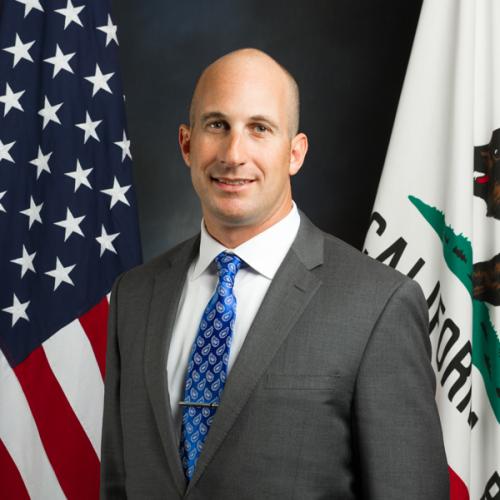
Asm. Heath Flora
Sponsored bills
Existing law requires the State Department of Education to incorporate age-appropriate materials relating to, among other things, genocide and the Holocaust into publications that provide examples of curriculum resources for teacher use, consistent with the subject frameworks on history and social science. Under existing law, the Legislature encourages the incorporation of survivor, rescuer, liberator, and witness oral testimony into the teaching of genocide and the Holocaust. This bill would establish the California Teachers Collaborative for Holocaust and Genocide Education, to be responsible for establishing a statewide teacher professional development program on genocide, including the Holocaust, for school district, county office of education, and charter school teachers. The bill would require the collaborative to consist of leading genocide and Holocaust education organizations and institutions, genocide survivors, educators, and community leaders. The bill would provide that the collaborative's mission is to ensure that genocide, including Holocaust, education is taught consistent with, among other things, the content standards, curriculum frameworks, and instructional materials adopted by the State Board of Education, in ways that are interdisciplinary and age-appropriate to pupils of different grade levels. The bill would prescribe the duties of the collaborative, including, among others, developing and providing curriculum resources on genocide and Holocaust education. The bill would authorize other duties of the collaborative, subject to available funding, including, among others, providing, as determined by the department, annual verbal or written reports to the department and the Legislature on the collaborative's achievement of its mission. The bill would make the implementation of these provisions contingent upon an appropriation.
Existing law classifies certain criminal offenses as a "violent felony" for the purposes of various provisions of the Penal Code, including sentencing enhancements for prior convictions, as well as numerous other provisions. Existing law includes among the list of violent felonies rape accomplished against a person's will by means of force, violence, duress, menace, or fear, or rape accomplished against the victim's will by threat of violent retaliation, but does not include rape of a person unable to give consent due to disability, intoxication, or unconsciousness, rape under false pretenses, or rape accomplished by threat of incarceration, arrest, or deportation. This bill would also include the rape of an intoxicated person wherein the defendant drugged the victim, as specified, in the list of violent felonies. By expanding the scope of an enhancement, this bill would impose a state-mandated local program. The California Constitution requires the state to reimburse local agencies and school districts for certain costs mandated by the state. Statutory provisions establish procedures for making that reimbursement. This bill would provide that no reimbursement is required by this act for a specified reason.
Existing law requires the governing board or body of a local educational agency, defined as a county office of education, school district, state special school, or charter school, that serves pupils in kindergarten and grades 1 to 12, inclusive, to adopt a policy on pupil suicide prevention that specifically addresses, among other things, procedures relating to suicide prevention, intervention, and postvention, and any training on suicide awareness and prevention to be provided to teachers of pupils in all of the grades served by the local educational agency. Existing law requires the governing board or body of a local educational agency that serves pupils in kindergarten and grades 1 to 12, inclusive, to review, at minimum every 5th year, its policy on pupil suicide prevention and, if necessary, update its policy. To assist local educational agencies in developing policies for pupil suicide prevention, existing law requires the State Department of Education to develop and maintain a model policy to serve as a guide for local educational agencies, as provided. This bill would require, on or before July 1, 2026, the department to update the model policy to address crisis intervention protocols in the event of a pupil suicide crisis, as defined, including the process by which staff and external agencies are deployed to address a pupil suicide crisis, limiting the involvement and notification of law enforcement to situations in which a pupil's life is in imminent danger and their needs cannot be addressed by a mental health professional, and the assessment process that law enforcement officers should follow to determine whether the pupil experiencing a suicide crisis is endangered by parental notification. The bill would require, on or after July 1, 2026, the governing board or body of a local educational agency to update their pupil suicide prevention policy to include these crisis intervention protocols, as provided. The bill would encourage, when the governing board or body of a local educational agency reviews its policy on pupil suicide prevention, if the local educational agency does not have a school mental health professional, as defined, or contract with a mental health professional, as defined, the governing board or body to consider whether funding should be identified for purposes of hiring a school mental health professional. By imposing additional duties on local educational agencies, the bill would impose a state-mandated local program. The California Constitution requires the state to reimburse local agencies and school districts for certain costs mandated by the state. Statutory provisions establish procedures for making that reimbursement. This bill would provide that, if the Commission on State Mandates determines that the bill contains costs mandated by the state, reimbursement for those costs shall be made pursuant to the statutory provisions noted above.
Existing law establishes the California Interagency Council on Homelessness to identify mainstream resources, benefits, and services that can be accessed to prevent and end homelessness in California by creating partnerships between federal, state, local, and nonprofit entities. Existing law requires a state agency or department that administers one or more state homelessness programs, upon request of the council, to participate in council activities, as specified, and to provide to the council any relevant information regarding those state homelessness programs. This bill would require, commencing September 1, 2025, a state agency or department that administers one or more state homelessness programs to report annually to the council cost and outcome data for each program the agency or department administers, and would require the council, in coordination with each agency or department required to report to the council, as specified, to develop data collection and reporting procedures for this purpose. The bill would require the council to compile the data reported by agencies and departments and, commencing April 1, 2026, annually make that data available to the public.
Existing law prohibits a permanent school employee from being dismissed, except for one or more of certain enumerated causes, including egregious misconduct, as defined. Existing law requires the superintendent of a school district or county office of education, or the administrator of a charter school, employing a person with a credential, to report any change in the employment status of the credentialholder to the Commission on Teacher Credentialing not later than 30 days after the change in employment status, if the credentialholder, while working in a position requiring a credential, and as a result of an allegation of misconduct or while an allegation of misconduct is pending, is dismissed, is nonreelected, resigns, is suspended or placed on unpaid administrative leave for more than 10 days as a final adverse action, retires, or is otherwise terminated by a decision not to employ or reemploy. Existing law prohibits school districts, county offices of education, and charter schools from entering into an agreement that would prevent a mandatory report of egregious misconduct, as defined, or expunging from an employee's personnel file, or entering in an agreement that would authorize expunging from an employee's personnel file, credible complaints of, substantiated investigations into, or discipline for, egregious misconduct. Existing law requires a school district, county office of education, or charter school that has made a report of an employee's egregious misconduct to the commission to disclose this fact to a school district, county office of education, or charter school considering an application for employment from the employee, upon inquiry. This bill would add state special schools to the above-described prohibitions regarding preventing mandatory reporting of, or expunging from an employee's personnel file information on, egregious misconduct, and to the above-described requirement regarding disclosure of a report of an employee's egregious misconduct. The bill would require a person applying for a certificated position at a school district, county office of education, charter school, or state special school to provide that prospective employer with a complete list of every school district, county office of education, charter school, and state special school that the applicant has previously been an employee of, and would require school districts, county offices of education, charter schools, and state special schools considering an applicant for a certificated position to inquire with each of those local educational agencies that previously employed the applicant as to whether the applicant, while previously employed by the local educational agency, was the subject of any credible complaints of, substantiated investigations into, or discipline for, egregious misconduct that were required to be reported to the commission. The bill would require those local educational agencies, when responding to an inquiry as to whether it has made a report of egregious misconduct to the commission, to also provide the inquiring local educational agency with a copy of all relevant information that was reported to the commission within its possession. To the extent the bill would impose additional duties on local educational agency officials, the bill would impose a state-mandated local program. The California Constitution requires the state to reimburse local agencies and school districts for certain costs mandated by the state. Statutory provisions establish procedures for making that reimbursement. This bill would provide that, if the Commission on State Mandates determines that the bill contains costs mandated by the state, reimbursement for those costs shall be made pursuant to the statutory provisions noted above.
Existing law requires that a weapon acquired by a specified governmental entity under specified circumstances, including as part of a "gun-buyback" program, be destroyed. This bill would require a law enforcement agency that contracts with a third party for the destruction of firearms or weapons to ensure that the contract for those services prohibits the sale of any parts of, or attachments to, the firearm or other weapon, as specified. The bill would also exempt from the destruction requirement, any firearm obtained through a "gun-buyback" program that is donated to a historical society, museum, or institutional collection, as specified. By requiring a higher level of service for local agencies, this bill would impose a state-mandated local program. This bill would incorporate additional changes to Section 18005 of the Penal Code proposed by SB 1019 and AB 2739 to be operative only if this bill and either one or both of those bills are enacted and this bill is enacted last. The California Constitution requires the state to reimburse local agencies and school districts for certain costs mandated by the state. Statutory provisions establish procedures for making that reimbursement. This bill would provide that, if the Commission on State Mandates determines that the bill contains costs mandated by the state, reimbursement for those costs shall be made pursuant to the statutory provisions noted above.
Existing law, the Optometry Practice Act, establishes the State Board of Optometry within the Department of Consumer Affairs and sets forth the powers and duties of the board relating to the licensure and regulation of the practice of optometry. Existing law regulates the ownership and operation of mobile optometric offices, as defined, including, among other things, requiring the owner and operator of a mobile optometric office to file a quarterly report containing specified information. Existing law requires the board, by January 1, 2023, to adopt regulations establishing a registry for the owners and operators of mobile optometric offices, as specified. Existing law prohibits the board, before January 1, 2023, from bringing an enforcement action against an owner and operator of a mobile optometric office based solely on its affiliation status with an approved optometry school in California for remotely providing optometric service. Existing law makes these and other provisions related to the permitting and regulation of mobile optometric offices effective only until July 1, 2025, and repeals them as of that date. This bill would authorize the owner and operator of a mobile optometric office to instead file the above-described quarterly reports as a single, annual report during the first renewal period of 2 years, as specified. The bill would also extend the deadline for the board to adopt the above-described regulations to January 1, 2026. The bill would prohibit the board from bringing the above-described enforcement action before January 1, 2026, or before the board adopts those regulations, whichever is earlier. The bill would extend the repeal date of the provisions related to the permitting and regulation of mobile optometric clinics to July 1, 2035.
Existing law, until January 1, 2030, requires an application for an order authorizing the interception of wire or electronic communications to be made in writing upon the personal oath or affirmation of the Attorney General, Chief Deputy Attorney General, or Chief Assistant Attorney General, Criminal Law Division, or of a district attorney or person designated to act as district attorney. Until January 1, 2030, existing law authorizes a court to issue an order authorizing interception of wire or electronic communications if the judge finds, among other things, that there is probable cause to believe an individual is committing, has committed, or is about to commit one of several specified offenses, including murder or possession or sale of controlled substances. This bill would additionally authorize a court to issue an order authorizing interception of wire or electronic communications if the judge finds that there is probable cause to believe an individual is committing, has committed, or is about to commit a felony violation of specified statutes relating to the distribution of obscene matter depicting a person under 18 years of age.
Existing law, the Knox-Keene Health Care Service Plan Act of 1975, provides for the licensure and regulation of health care service plans by the Department of Managed Health Care and makes a willful violation of the act's requirements a crime. Existing law provides for the regulation of health insurers by the Department of Insurance. Existing law requires health care service plans and health insurers, commencing January 1, 2024, to establish and maintain specified application programming interfaces (API) , including patient access API, for the benefit of enrollees, insureds, and contracted providers. Existing law authorizes the departments to require health care service plans or health insurers, as applicable, to establish and maintain provider access API and prior authorization support API if and when final federal rules are published . This bill would instead require the departments, commencing January 1, 2027, or when final federal rules are implemented, whichever occurs later, to require health care service plans and health insurers to establish and maintain patient access API, provider access API, payer-to-payer API, and prior authorization API. The bill, until January 1, 2027, would authorize the departments to issue guidance relating to these provisions not subject to the Administrative Procedure Act, as specified. Because a violation of these requirements by a health care service plan would be a crime, this bill would impose a state-mandated local program. The California Constitution requires the state to reimburse local agencies and school districts for certain costs mandated by the state. Statutory provisions establish procedures for making that reimbursement. This bill would provide that no reimbursement is required by this act for a specified reason.