Maddy summaryHR 67 designates November 9 as "All California Day" to celebrate California's shared history and cultural ties with Baja California and Baja California Sur. The resolution encourages community events and cultural celebrations across the state to honor this interconnected heritage, including contributions from Indigenous peoples and Mexican heritage communities. As a ceremonial resolution (not a binding law), it has no direct regulatory or financial impact on any specific group or policy. The measure was adopted by the California Assembly on September 4, 2025.
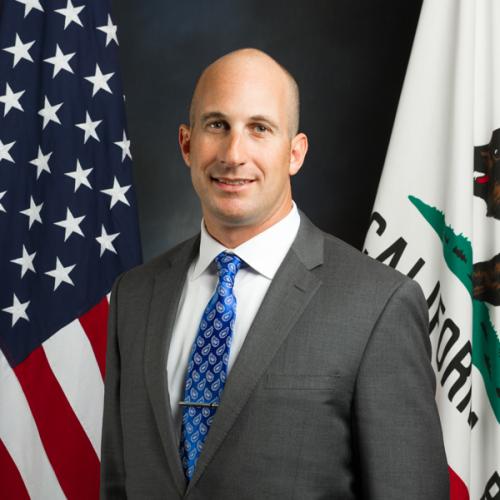
Asm. Heath Flora
Sponsored bills
Maddy summaryThis House Resolution (HR 58) declares October 2025 as "California Promotoras Month" to formally recognize the work of promotoras - community health workers who serve as cultural brokers and connect underserved communities (particularly Latino populations) to essential services like health, housing, and disaster response. It acknowledges their role in improving community resilience and access to resources, while highlighting the need for better support, training, and equitable compensation for this workforce. The resolution is symbolic and does not create new laws, funding, or programs; it solely aims to raise awareness and honor promotoras' contributions through a designated month of recognition.
Maddy summaryThis symbolic resolution recognizes September 20, 2025, as National Fried Rice Day in California, highlighting the dish's cultural significance to Asian American communities and its connection to California's rice-growing economy (noting the state's status as the second-largest rice producer). It has no legal effect or policy changes - it serves solely to celebrate culinary traditions and community diversity. The resolution was adopted by the California Assembly with no opposing votes.
Existing law, the California Emergency Services Act, authorizes the Governor to declare a state of emergency during conditions of disaster or extreme peril to persons or property. Existing law authorizes the Governor, during a state of emergency, to suspend any regulatory statute, or statute prescribing the procedure for conduct of state business, or the orders, rules, or regulations of any state agency, if the Governor determines and declares that strict compliance with any statute, order, rule, or regulation would in any way prevent, hinder, or delay the mitigation of the effects of the emergency. Under the authority of the California Emergency Services Act, on March 1, 2025, Governor Gavin Newsom issued a proclamation of a state of emergency that suspends applicable state statutes, rules, regulations, and requirements that fall within the jurisdiction of boards, departments, and offices within the California Environmental Protection Agency or the Natural Resources Agency to the extent necessary for expediting critical fuels reduction projects, as provided. The proclamation requires an individual or entity desiring to conduct a critical fuels reduction project to request the secretary of the appropriate agency to make a determination that the proposed project is eligible for the suspension and requires the California Environmental Protection Agency and the Natural Resources Agency to maintain on their respective internet website a list of all suspensions approved. This bill would, on or before January 31, 2026, require the California Environmental Protection Agency and the Natural Resources Agency to each report to the Legislature information on the implementation of the above-described proclamation of emergency, as provided. The California Environmental Quality Act (CEQA) requires a lead agency, as defined, to prepare, or cause to be prepared, and certify the completion of an environmental impact report on a project that it proposes to carry out or approve that may have a significant effect on the environment or to adopt a negative declaration if it finds that the project will not have that effect. CEQA also requires a lead agency to prepare a mitigated negative declaration for a project that may have a significant effect on the environment if revisions in the project would avoid or mitigate that effect and there is no substantial evidence that the project, as revised, would have a significant effect on the environment. CEQA exempts from its requirements certain projects. This bill would, until January 1, 2028, exempt from CEQA critical fuels reduction projects conducted in communities located in very high fire hazard severity zones, as provided. The bill would require the lead agency to hold a noticed public meeting to hear and respond to public comments before determining that a project is exempt and would require the lead agency to provide notice of the public meeting on its internet website at least 30 days before the public meeting. The bill would require the lead agency, if it determines that a project is not subject to CEQA and approves or carries out that project, to file a notice of exemption with the Office of Land Use and Climate Innovation and with the clerk of the county in which the project will be located. Because a lead agency would be required to determine whether a project qualifies for this exemption, the bill would impose a state-mandated local program. The California Constitution requires the state to reimburse local agencies and school districts for certain costs mandated by the state. Statutory provisions establish procedures for making that reimbursement. This bill would provide that no reimbursement is required by this act for a specified reason.

Existing law establishes the Governor as the primary state officer representing California's interest in international affairs, to the extent that representation is not in conflict with federal law or the California Constitution. Existing law establishes the Lieutenant Governor as the Chair of the Commission for Economic Development to improve trade opportunities for California, and develop international partnerships for foreign companies to do business in the state and for California. Existing law requires the Office of Planning and Research to maintain and update a list of all state agreements made with foreign governments. Existing law additionally requires the Director of the Governor's Office of Business and Economic Development to provide the Legislature with an updated strategy for international trade and investment, that includes, at a minimum, specified components, once every 5 years. This bill would require the Governor to establish the California-Ireland Trade Commission within the Governor's Office of Business and Economic Development as an advisory body to the Governor and the Legislature, consisting of specified appointed members, upon availability of sufficient funding resources for this purpose, as provided. The bill would establish the various purposes of the commission, which would include advancing bilateral trade and investment between California and Ireland. This bill would require the commission to report its findings, results, and recommendations to the Governor and the Legislature within one year of its initial organizational meeting and by February 1 of each succeeding year, as specified. The bill would require the Governor's Office of Business and Economic Development to consider the commission's recommendations when updating its strategy for international trade and investment. The bill would include related legislative findings.
Existing law, the Professional Fiduciaries Act, establishes, until January 1, 2028, the Professional Fiduciaries Bureau, and requires the bureau to license and regulate professional fiduciaries. The act defines various terms for these purposes. The act requires the bureau to maintain specified information in each licensee's file, and requires a licensee to annually file with the bureau a statement under penalty of perjury containing specified information, including among other things, any licenses or professional certificates held by the licensee. Existing law, the Moscone-Knox Professional Corporation Act, defines and regulates professional corporations. The act provides that a professional organization renders professional services that may be lawfully rendered only pursuant to a license, certification, or registration authorized by, among others, the Business and Professions Code pursuant to a certificate of registration issued by the governmental agency regulating the profession, as specified. This bill would authorize licensees to organize professional fiduciary professional corporations to provide professional fiduciary services, and would prescribe requirements and regulations for those professional corporations to provide fiduciary services. The bill would require a professional fiduciary professional corporation to register with the Secretary of State, as provided, and would require the corporation, its officers, directors, shareholders, and employees rendering professional fiduciary services to be in compliance with the Moscone-Knox Professional Corporation Act. The bill would require the information maintained by the bureau in each licensee's file, and the annual statement filed by a licensee, to include additional information, including information related to whether the licensee is serving with or under a professional fiduciary corporation. By expanding the scope of the crime of perjury, this bill would impose a state-mandated local program. Existing law authorizes the bureau to suspend, revoke, deny, or impose other disciplinary action on a professional fiduciary license for specified causes, including, among other things, violating specified laws, rules, or regulations pertaining to duties or functions of a professional fiduciary. This bill would add to that list of causes the failure of a licensee to, in a timely manner, respond to inquiries or produce documents requested by the bureau, including inquiries and documents related to a professional fiduciary professional corporation. Existing law generally regulates probate, guardianship, conservatorship, and other protective proceedings. Existing law defines "professional fiduciary" for these purposes. This bill would include a professional fiduciary professional corporation, described above, in that definition of "professional fiduciary." Existing law prohibits a superior court from appointing a person to carry out the duties of a professional fiduciary unless that person holds a valid, unexpired, and unsuspended license as a professional fiduciary or is exempt from those licensing requirements, as specified. This bill would repeal those provisions and would instead prohibit a superior court from appointing a professional fiduciary as, or permitting a professional fiduciary to continue as, a guardian, conservator, personal representative, or trustee, unless the professional fiduciary satisfies one of specified requirements. Existing constitutional provisions require that a statute that limits the right of access to the meetings of public bodies or the writings of public officials and agencies be adopted with findings demonstrating the interest protected by the limitation and the need for protecting that interest. This bill would make legislative findings to that effect. The California Constitution requires the state to reimburse local agencies and school districts for certain costs mandated by the state. Statutory provisions establish procedures for making that reimbursement. This bill would provide that no reimbursement is required by this act for a specified reason.

This measure would call on members of the United States Congress to oppose reductions to funding that negatively impact educational services for students with disabilities and would call on the President of the United States and Congress to ensure that services and funding for students with disabilities are uninterrupted.
This measure would recognize February 2025 as Black History Month, urge all citizens to join in celebrating the accomplishments of African Americans during Black History Month, and encourage the people of California to recognize the many talents of African Americans and the achievements and contributions they make to their communities to create equity and equality for education, economics, and social justice. The measure would also recognize the significance in protecting citizens' right to vote and remedying racial discrimination in voting.
Maddy summaryThis resolution designates August 2025 as "Chicano Heritage Month" in California. It symbolically recognizes the historical contributions of Chicanos/Chicanas to U.S. society, including their role in cultural, educational, and political movements. The resolution encourages all Californians to acknowledge and celebrate this heritage, without creating new programs, funding, or legal requirements. It directly affects the public by promoting awareness of this cultural identity, aligning with similar declarations like Santa Ana's 2021 adoption. The resolution was unanimously passed by the California Assembly on August 25, 2025.
This measure would urge the Congress of the United States to propose a constitutional amendment that would require all states to adopt nonpartisan, independent redistricting commissions to draw congressional and legislative district lines.