

Passed Aug 21, 2017
1 co-sponsor
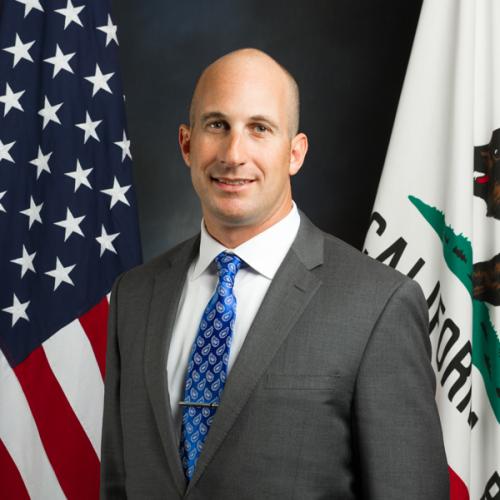
Asm. Heath Flora
Total votes
23,533
all sessions
Attendance
83%
3,189 missed
Lower than 85% of chamber peers
With party
98%
of cast votes
Near the chamber average
Bipartisan score
1%
crosses aisle rarely
Near the chamber average
Sponsored
1,713
bills & resolutions
Higher than 91% of chamber peers
Committees
1
assignment
1,713 bills and resolutions
Sponsored bills
Total
1,713
Primary
192
Co-sponsor
1,521
This page
1,713
matching current filters
Relative to Robotics Technology Day.
This measure would declare June 27, 2017, as the second annual Robotics Technology Day.
Signed into law Jul 21, 2017
1 co-sponsor
Property taxation: base year value: new construction.
(1) The California Constitution generally limits the maximum amount of any ad valorem tax on real property to 1% of its full cash value and defines "full cash value" for these purposes as the county assessor's valuation of real property as shown on the 1975–76 tax bill under "full cash value" or, thereafter, the appraised value of real property when purchased, newly constructed, or a change in ownership has occurred after the 1975 assessment. Existing property tax law requires the assessor to determine a new base year value for the portion of any taxable real property which has been newly constructed and that new construction in progress on the lien date be appraised at its full value on that date, and each lien date thereafter, until construction is completed, at which time the entire portion of property which is newly constructed is reappraised at its full value. This bill would instead prohibit new construction that is in progress from acquiring a new base year value until the date of completion. (2) Existing property tax law prescribes procedures by which a taxpayer may seek a reduction in assessment from the county board of equalization or assessment appeals board or, in the case of certain publicly owned property, the State Board of Equalization, including deadlines for filing an application. Existing property tax law provides that an application for reduction in the base year value of an assessment on the current local roll may be filed during the regular filing period for that year, as provided and subject to certain limitations, including that the base year value determined in accordance with specified law is conclusively presumed to be the base year value unless the application is filed during the regular equalization period for the year in which the assessment is placed on the assessment roll or in any of the 3 succeeding years. This bill would authorize an application for reduction in the value of new construction that is in progress on the lien date on the current roll to be filed during the regular filing period for that year, as provided. The bill would authorize an application for reduction in the base year value determined upon completion of new construction to be filed during the regular equalization period for the year in which the assessment is placed on the assessment roll or in any of the 3 succeeding years. (3) Existing law requires the state to reimburse local agencies annually for certain property tax revenues lost as a result of any exemption or classification of property for purposes of ad valorem property taxation. This bill would provide that, notwithstanding those provisions, no appropriation is made and the state shall not reimburse local agencies for property tax revenues lost by them pursuant to the bill. (4) By changing the manner in which assessors determine the base year value for new construction in progress, this bill would impose a state-mandated local program. The California Constitution requires the state to reimburse local agencies and school districts for certain costs mandated by the state. Statutory provisions establish procedures for making that reimbursement. This bill would provide that, if the Commission on State Mandates determines that the bill contains costs mandated by the state, reimbursement for those costs shall be made pursuant to the statutory provisions noted above. (5) This bill would take effect immediately as a tax levy.
Signed into law Jul 21, 2017
0 co-sponsors
Relative to Elder and Vulnerable Adult Abuse Awareness Month.
This measure would proclaim and acknowledge the month of June 2017 as Elder and Vulnerable Adult Abuse Awareness Month.
Signed into law Jul 21, 2017
1 co-sponsor
Relative to California Nonprofits Day.
This measure would declare June 28, 2017, as California Nonprofits Day and recognize the importance of nonprofit organizations to the economy and well-being of this state.
Signed into law Jul 21, 2017
1 co-sponsor
Relative to Philippine Independence Day.
This measure would recognize June 12, 2017, as the 119th Anniversary of Philippine Independence and would call upon the people of the state to observe the month of June with appropriate ceremonies, programs, and activities.
Signed into law Jul 21, 2017
1 co-sponsor
Korean Peninsula: regional peace and stability.
This measure would call on the United States Congress and the President of the United States to take appropriate measures to facilitate stability in the Korean region, build goodwill that is conducive to peace on the Korean Peninsula, and minimize potential negative impacts to the South Korean economy, ensuring that the trade relationship between California and South Korea can continue to flourish.
Signed into law Jul 21, 2017
1 co-sponsor
Relative to the 2017 International Day of Yoga.
This measure would recognize June 21, 2017, as the 2017 International Day of Yoga in California.
Signed into law Jul 21, 2017
1 co-sponsor
Relative to Juneteenth.
This measure would recognize June 19, 2017, as Juneteenth and would urge the people of California to join in celebrating Juneteenth as a day to honor and reflect on the significant role that African Americans have played in the history of the United States and how they have enriched society through their steadfast commitment to promoting unity and equality.
Signed into law Jul 21, 2017
1 co-sponsor
Public postsecondary education: free speech policy.
This measure would urge all private and public universities in California, to the extent that they have not adopted free speech statements consistent with the principles articulated by the Chancellor of the University of California at Irvine, and the Free Expression Statement formally adopted by the University of Chicago, to consider such statements as a model for developing and adopting free speech statements.
Signed into law Jul 17, 2017
1 co-sponsor
Ask Maddy
·
AI policy assistant
Ask Maddy about Heath Flora
Scope: california
Hi! I can help you understand Heath Flora's legislative record. What would you like to know?
Try one of these
i
Maddy answers using official bill text and legislative records. Always verify before sharing.
Sources cited inline