

(1) Existing law establishes the California Career Technical Education Incentive Grant Program as a state education, economic, and workforce development initiative with the goal of providing pupils in kindergarten and grades 1 to 12, inclusive, with the knowledge and skills necessary to transition to employment and postsecondary education. Existing law appropriates $200,000,000 from the General Fund to the State Department of Education for purposes of this grant program for the 2017–18 fiscal year. Existing law requires applicants for grants under the program to demonstrate that they have local matching funds, as specified. Existing law specifies that no applicant may receive a renewal grant under the program for the 2018–19 fiscal year. This bill would change the name of the program to the California Career Technical Education Grant Program. The bill would increase to $300,000,000 the General Fund appropriation to the State Department of Education for this program for the 2017–18 fiscal year, and would further provide for an appropriation to the department in this amount for the 2018–19, 2019–20, and 2020–21 fiscal years. The bill would lower the amount of local matching funds required of an applicant from $1.50 for every dollar received to $1 for every dollar received, for the 2017–18, 2018–19, 2019–20, and 2020–21 fiscal years. The bill would also provide that an applicant receiving a grant from this program in the 2017–18, 2018–19, or 2019–20 fiscal year would be eligible for a renewal grant in the next fiscal year if that applicant demonstrates continued compliance with program requirements. (2) The funds appropriated by this bill would be applied toward the minimum funding requirements for school districts and community college districts imposed by Section 8 of Article XVI of the California Constitution.
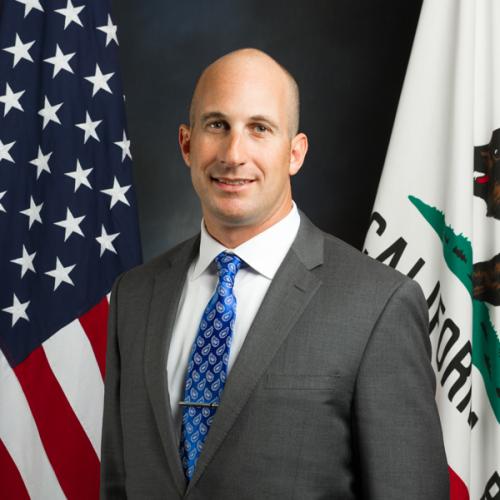
Asm. Heath Flora
Sponsored bills
Under existing law, everyone is generally responsible, not only for the result of his or her willful acts, but also for an injury occasioned to another by his or her want of ordinary care or skill in the management of his or her property or person. Existing law exempts from civil liability any person who, in good faith and not for compensation, renders emergency medical or nonmedical care or assistance at the scene of an emergency other than an act or omission constituting gross negligence or willful or wanton misconduct. Existing law exempts public or private organizations that sponsor, authorize, support, finance, or supervise the training of people, or certifies those people in emergency medical services, from liability for civil damages alleged to result from those training programs. This bill would define "trauma kit" to mean a first aid response kit that contains specified items, including, among other things, at least 2 tourniquets. The bill would require a person or entity that supplies a trauma kit to provide the person or entity that acquires the trauma kit with all information governing the use, installation, operation, training, and maintenance of the trauma kit. The bill would apply the provisions governing civil liability described above to a lay rescuer or person who renders emergency care or treatment by the use of a trauma kit and to a person or entity that provides training in the use of a trauma kit to provide emergency medical treatment, or certifies certain persons in the use of a trauma kit. Existing law requires certain occupied structures that are not owned or operated by any local government entity and are constructed on or after January 1, 2017, to have an automated external defibrillator on the premises. This bill would require the State Fire Marshal, the Department of Housing and Community Development, and the California Building Standards Commission to research and collect public input, as specified, between January 1, 2018, and January 1, 2020, for the purpose of determining if mandatory or voluntary building standards should be adopted regarding the placement of trauma kits in a public building constructed, or a public building that has any addition, significant repair, or alteration completed, on or after January 1, 2018. The bill would require an entity responsible for managing the building, facility, and tenants of an occupied structure in which a trauma kit is placed to comply with certain requirements, such as periodically inspecting and replacing the contents of a trauma kit, restocking the trauma kit after each use, and notifying tenants of the building or structure of the location of the trauma kit. The bill would exempt a person or entity that acquires and places a trauma kit for emergency care from liability for civil damages resulting from any acts or omissions in the rendering of emergency care if those requirements have been met.
The California Global Warming Solutions Act of 2006 designates the State Air Resources Board as the state agency charged with monitoring and regulating sources of emissions of greenhouse gases. The act requires the state board to approve a statewide greenhouse gas emissions limit equivalent to the statewide greenhouse gas emissions level in 1990 to be achieved by 2020 and to ensure that statewide greenhouse gas emissions are reduced to at least 40% below the 1990 level by 2030. The act authorizes the state board to include the use of market-based compliance mechanisms. Existing law requires all moneys, except for fines and penalties, collected by the state board as part of a market-based compliance mechanism to be deposited in the Greenhouse Gas Reduction Fund and to be available upon appropriation. Existing law continuously appropriates 35% of the annual proceeds of the fund for transit, affordable housing, and sustainable communities programs and 25% of the annual proceeds of the fund for certain components of a specified high-speed rail project. This bill would make moneys from the fund, upon appropriation, available to the Department of Forestry and Fire Protection for healthy forest programs that reduce greenhouse gas emissions caused by uncontrolled wildfires, as specified; to the Department of Resources Recycling and Recovery for instate organic waste recycling projects that reduce greenhouse gas emissions, as specified; and to the Department of Resources Recycling and Recovery for instate recycling projects that reduce greenhouse gas emissions and help achieve the state's policy goal that not less than 75% of solid waste generated be source reduced, recycled, or composted by the year 2020.
The Child Care and Development Services Act, administered by the State Department of Education, provides that children up to 13 years of age are eligible, with certain requirements, for child care and development services. Existing law requires the Superintendent of Public Instruction to administer all migrant child care and development programs. Existing law provides for child care alternative payment programs, the purpose of which is to provide for maximum parental choice in child care. Existing law requires reimbursement for alternative payment programs to include the cost of child care paid to child care providers, plus administrative and support services costs. Under existing law, the total cost for administrative and support services is not permitted to exceed 17.5% of the total contract amount. This bill would provide that an alternative payment program that operates an individual contract in an amount of less than $3,000,000, or a migrant alternative payment program that operates an individual contract in any dollar amount, shall receive a base support reimbursement that does not exceed 22% of the total contract amount, for each individual contract.
(1) Existing law provides various sources of funding for transportation purposes, including funding for the state highway system and the local street and road system. These funding sources include, among others, fuel excise taxes, commercial vehicle weight fees, local transactions and use taxes, and federal funds. Existing law imposes certain registration fees on vehicles, with revenues from these fees deposited in the Motor Vehicle Account and used to fund the Department of Motor Vehicles and the Department of the California Highway Patrol. Existing law provides for the monthly transfer of excess balances in the Motor Vehicle Account to the State Highway Account. This bill would create the Traffic Relief and Road Improvement Program to address traffic congestion and deferred maintenance on the state highway system and the local street and road system. The bill would provide for the deposit of various existing sources of revenue in the Traffic Relief and Road Improvement Account, which the bill would create in the State Transportation Fund, including revenues attributable to the sales and use tax on motor vehicles, revenues attributable to automobile and motor vehicle insurance policies from the insurer gross premiums tax, revenues from certain diesel fuel sales and use taxes, revenues from certain vehicle registration fees, and certain miscellaneous State Highway Account revenues. This bill would continuously appropriate the revenues in the account, after deductions for administration, with 40% of the revenues to be allocated to the Department of Transportation for maintenance of the state highway system or for purposes of the State Highway Operation and Protection Program, 40% of the revenues to be apportioned by the Controller to cities and counties for road purposes pursuant to a specified formula, and 20% to fund projects in the State Transportation Improvement Program that create measurable reductions in traffic congestion. The bill would require the California Transportation Commission to adopt performance criteria and metrics for expenditure of certain of these revenues, and would impose various requirements on cities and counties in order to receive apportionments. The bill would also require the department to implement efficiency measures with the goal of generating $100,000,000 annually in savings at the department and to propose, from the identified savings, an appropriation to be included in the annual Budget Act of up to $100,000,000 from the State Highway Account for expenditure on the Active Transportation Program. (2) Article XXII of the California Constitution provides that the State of California and all other governmental entities shall be allowed the choice to contract for architectural and engineering services for all public works of improvement as an alternative to the employment of civil service employees to perform those services. This bill would require the Department of Transportation to increase its annual use of contract staff resources so that 20% of its capital outlay staff consists of contract resources by the 2020–21 fiscal year. (3) Article XIX of the California Constitution requires gasoline excise tax revenues from motor vehicles traveling upon public streets and highways to be deposited in the Highway Users Tax Account, for allocation to city, county, and state transportation purposes. Existing law generally provides for statutory allocation of gasoline excise tax revenues attributable to other modes of transportation, including aviation, boats, agricultural vehicles, and off-highway vehicles, to particular accounts and funds for expenditure on purposes associated with those other modes, except that a specified portion of these gasoline excise tax revenues is deposited in the General Fund. Expenditure of the gasoline excise tax revenues attributable to those other modes is not restricted by Article XIX of the California Constitution. This bill, commencing January 1, 2018, would instead transfer to the Highway Users Tax Account for allocation to state and local transportation purposes under a specified formula most of the gasoline excise tax revenues currently being deposited in the General Fund that are attributable to boats, agricultural vehicles, and off-highway vehicles. Because that account is continuously appropriated, the bill would make an appropriation. The bill would also delete a monthly transfer to the General Fund of $833,000 in gasoline excise taxes attributable to off-highway vehicles, thereby retaining those revenues for off-highway vehicle programs. (4) Existing law imposes weight fees on the registration of commercial motor vehicles and provides for the deposit of net weight fee revenues into the State Highway Account. Existing law provides for the transfer of certain weight fee revenues from the State Highway Account to the Transportation Debt Service Fund to reimburse the General Fund for payment of debt service on general obligation bonds issued for certain transportation purposes. Existing law also provides for the transfer of specified weight fee revenues to the Transportation Bond Direct Payment Account for direct payment of debt service on designated bonds, which are defined to be certain transportation general obligation bonds issued pursuant to Proposition 1B of 2006. Existing law also provides for loans of weight fee revenues to the General Fund to the extent the revenues are not needed for bond debt service purposes, with the loans to be repaid when the revenues are later needed for those purposes, as specified. This bill would repeal these provisions, thereby eliminating the use of the weight fee revenues for transportation general obligation bond debt service and retaining those revenues in the State Highway Account. The bill would make other conforming changes in that regard. (5) Article XIX of the California Constitution restricts the expenditure of revenues from taxes imposed by the state on fuels used in motor vehicles upon public streets and highways to street and highway and certain mass transit purposes. Existing law requires certain miscellaneous revenues deposited in the State Highway Account that are not restricted as to expenditure by Article XIX of the California Constitution to be transferred to the Transportation Debt Service Fund in the State Transportation Fund, as specified, and requires the Controller to transfer from the fund to the General Fund an amount of those revenues necessary to offset the current year debt service made from the General Fund on general obligation transportation bonds issued pursuant to Proposition 116 of 1990. This bill would delete the transfer of these miscellaneous revenues to the Transportation Debt Service Fund, and would instead require the miscellaneous revenues to be transferred to the Traffic Relief and Road Improvement Account for expenditure pursuant to (1) above. (6) Existing law provides for the deposit of all moneys received by the Department of Motor Vehicles into the Motor Vehicle Account in the State Transportation Fund, which includes some miscellaneous revenues that are not restricted by Article XIX of the California Constitution. Item 2740-011-0044 of Section 2.00 of the Budget Act of 2016, in that regard, requires the Controller to transfer those miscellaneous revenues from the Motor Vehicle Account to the General Fund and estimates the amount of those revenues in the 2015–16 fiscal year at $78,592,000. This bill would repeal the above-referenced item of the Budget Act of 2016. The bill would require the Controller to transfer, from the General Fund to the Motor Vehicle Account, an amount equal to all revenues previously transferred from that account to the General Fund pursuant to this item. The bill, commencing in the 2016–17 fiscal year, would require all revenues in the Motor Vehicle Account that are not protected by Article XIX of the California Constitution to be allocated, upon appropriation, to the Department of Motor Vehicles and the Department of the California Highway Patrol, as specified. (7) Existing law provides for loans of revenues from various transportation funds and accounts to the General Fund, with various repayment dates specified. This bill would require specified loans with a repayment date of January 1, 2018, or later to instead be repaid by December 31, 2017. The bill would require the funds repaid to the State Highway Account to be allocated between state and local government transportation purposes pursuant to a specified formula. (8) Existing law requires all moneys, except for fines and penalties, collected by the State Air Resources Board from the auction or sale of allowances as part of a market-based compliance mechanism relative to reduction of greenhouse gas emissions to be deposited in the Greenhouse Gas Reduction Fund. Existing law continuously appropriates 60% of the annual proceeds of the fund to various transportation and housing programs. Existing law, beyond the sales and use tax rate generally applicable, imposes an additional sales and use tax on diesel fuel at the rate of 1.75%, subject to certain exemptions, and provides for the net revenues collected from the additional tax to be transferred to the Public Transportation Account. Existing law continuously appropriates these revenues to the Controller for allocation by formula to transportation agencies for public transit purposes under the State Transit Assistance Program. Existing law provides for an increase of $8 in the smog abatement fee on new motor vehicles initially exempt from the smog check program, and provides for an increase of $3 in the basic vehicle registration fee, with revenues from these fee increases deposited, as specified, in the Air Quality Improvement Fund, the Alternative and Renewable Fuel and Vehicle Technology Fund, and the Enhanced Fleet Modernization Subaccount for expenditure on certain air quality programs. This bill would require equivalent amounts of revenue to be made available for the above purposes from the Greenhouse Gas Reduction Fund to the extent revenues are available after funding existing programs, and would require the specified diesel sales and use tax revenues and increases in vehicle registration fees to instead be transferred to the Traffic Relief and Road Improvement Account for expenditure pursuant to (1) above. The bill, beyond the backfill required for the Public Transportation Account, would additionally provide for an additional transfer from the Greenhouse Gas Reduction Fund to the Public Transportation Account, as specified. The bill would exempt funds transferred from the Greenhouse Gas Reduction Fund to the Public Transportation Account from statutory restrictions and limitations otherwise applicable to expenditures from the Greenhouse Gas Reduction Fund, as specified. (9) Existing law establishes in state government the Transportation Agency, which includes various departments and state entities, including the California Transportation Commission. Existing law vests the California Transportation Commission with specified powers, duties, and functions relative to transportation matters. Existing law requires the commission to retain independent authority to perform the duties and functions prescribed to it under any provision of law. This bill would exclude the California Transportation Commission from the Transportation Agency, establish it as an independent entity in state government, and require it to act in an independent oversight role. The bill would also make conforming changes. (10) Existing law creates various state agencies, including the Department of Transportation, the High-Speed Rail Authority, the Department of the California Highway Patrol, the Department of Motor Vehicles, and the State Air Resources Board, with specified powers and duties. Existing law provides for the allocation of state transportation funds to various transportation purposes. This bill would create the Office of the Transportation Inspector General in state government, as an independent office that would not be a subdivision of any other government entity, to ensure that all of the above-referenced state agencies and all other state agencies expending state transportation funds are operating efficiently, effectively, and in compliance with federal and state laws. The bill would provide for the Governor to appoint the Transportation Inspector General for a 6-year term, subject to confirmation by the Senate, and would provide that the Transportation Inspector General may not be removed from office during the term except for good cause. The bill would specify the duties and responsibilities of the Transportation Inspector General, which would include an annual audit of state transportation megaprojects, as defined, in consultation with the California State Auditor, and would require an annual report to the Legislature and Governor. (11) Existing law requires the Department of Transportation to prepare the State Highway Operation and Protection Program every other year for the expenditure of transportation capital improvement funds for projects that are necessary to preserve and protect the state highway system, excluding projects that add new traffic lanes. The program is required to be based on an asset management plan, as specified. Existing law requires the department to specify, for each project in the program the capital and support budget and projected delivery date for various components of the project. Existing law provides for the California Transportation Commission to review and adopt the program, and authorizes the commission to decline and adopt the program if it determines that the program is not sufficiently consistent with the asset management plan. The bill would require the commission, as part of its review of the program, to hold at least one hearing in northern California and one hearing in southern California regarding the proposed program. The bill would require the department to submit any change to a programmed project as an amendment to the commission for its approval. This bill, on and after February 1, 2018, would also require the commission to make an allocation of all capital and support costs for each project in the program, and would require the department to submit a supplemental project allocation request to the commission for each project that experiences cost increases above the amounts in its allocation. The bill would require the commission to establish guidelines to provide exceptions to the requirement for a supplemental project allocation requirement that the commission determines are necessary to ensure that projects are not unnecessarily delayed. (12) Existing law authorizes the Department of Transportation and regional transportation agencies, as defined, to enter into comprehensive development lease agreements with public and private entities, or consortia of those entities, for certain transportation projects that may charge certain users of those projects tolls and user fees, subject to various terms and requirements. These arrangements are commonly known as public-private partnerships. Existing law provides that a lease agreement may not be entered into under these provisions on or after January 1, 2017. This bill would authorize lease agreements under these provisions to be entered into until January 1, 2030. The bill would include the Santa Clara Valley Transportation Authority within the definition of regional transportation agency for this these purposes. The bill would make other revisions to these provisions. (13) The Highway Safety, Traffic Reduction, Air Quality, and Port Security Bond Act of 2006 (Proposition 1B) created the Trade Corridors Improvement Fund and provided for allocation by the California Transportation Commission of $2 billion in bond funds for infrastructure improvements on highway and rail corridors that have a high volume of freight movement and for specified categories of projects eligible to receive these funds. Existing law continues the Trade Corridors Improvement Fund in existence in order to receive revenues from sources other than the bond act for these purposes. This bill would require revenues apportioned to the state from the national highway freight program established by the federal Fixing America's Surface Transportation Act to be allocated for trade corridor improvement projects approved pursuant to these provisions. Existing law requires the commission, in determining projects eligible for funding, to consult various state freight and regional infrastructure and goods movement plans and the statewide port master plan. This bill would revise the list of plans to be consulted by the commission when determining eligible projects for funding. The bill would also expand eligible projects to include, among others, rail landside access improvements, landside freight access improvements to airports, and certain capital and operational improvements. (14) The California Environmental Quality Act (CEQA) requires a lead agency, as defined, to prepare, or cause to be prepared, and certify the completion of, an environmental impact report on a project that it proposes to carry out or approve that may have a significant effect on the environment or to adopt a negative declaration if it finds that the project will not have that effect. CEQA also requires a lead agency to prepare a mitigated negative declaration for a project that may have a significant effect on the environment if revisions in the project would avoid or mitigate that effect and there is no substantial evidence that the project, as revised, would have a significant effect on the environment, with certain exceptions. This bill would provide that CEQA does not apply to a project, or the issuance of a permit for a project, that consists of the inspection, maintenance, repair, rehabilitation, replacement, or removal of existing transportation infrastructure, as specified, or to the addition of an auxiliary lane or bikeway to existing transportation infrastructure under certain conditions. (15) Existing law requires the Office of Planning and Research to prepare, develop, and transmit to the Secretary of the Natural Resources Agency for certification and adoption proposed revisions to guidelines implementing the California Environmental Quality Act establishing criteria for determining the significance of transportation impacts for projects within transit priority areas that promote the reduction of greenhouse gas emissions, the development of multimodal transportation networks, and a diversity of land uses. Existing law authorizes the office to adopt guidelines to establish alternative metrics to the metrics used for traffic levels of service for transportation impacts outside transit priority areas. This bill would eliminate the authority of the office to adopt guidelines establishing alternative metrics for transportation impacts outside transit priority areas. (16) This bill would declare that it is to take effect immediately as an urgency statute.
(1) Existing law establishes the Employment Training Panel within the Employment Development Department, and prescribes the functions and duties of the panel with respect to the development, implementation, and administration of various employment training programs in the state. Existing law requires the panel, among other things, to create and annually update a 3-year plan, fund training projects that best meet the panel's identified priorities, and solicit proposals and write contracts for the purpose of providing employment training. Existing law sets forth certain requirements for those contracts, including, but not limited to, that a job generated by a contract compensate an employee at a specified percentage of the state hourly wage, and that an eligible participant be employed at a minimum of 90 days by his or her employer. Existing law requires the panel to submit an annual report to the Legislature that contains summaries of information related to projects operated by the panel. This bill would require the panel to solicit proposals and write performance-based contracts to fund projects that expedite and increase the number of middle-skill workers employed in an eligible industry. This bill would require projects funded by this program to comply with certain requirements. This bill would authorize the panel to negotiate, on a case-by-case basis, to include specified provisions in a contract with an eligible applicant, including a provision authorizing the panel to waive, negotiate, or adjust the state hourly wage and 90-day requirement for contracts funded. The bill would also require the panel, when preparing the annual report described above to separately identify projects funded by these provisions. (2) Existing federal law, the federal Workforce Innovation and Opportunity Act, allocates funds to state and local workforce development boards for workforce investment activities. In order to be eligible to receive certain allotments under the act, the governor of each state is required to designate a state workforce development board, and to prepare and submit a state plan to the United States Secretary of Labor, in accordance with certain requirements. A state workforce development board is responsible for assisting the Governor in the development, implementation, and modification of a state plan, as well as other duties relating to workforce development within the state. Existing law, the California Workforce Innovation and Opportunity Act, establishes the California Workforce Development Board as the body responsible for assisting the Governor in the development, oversight, and continuous improvement of California's workforce investment system. Under existing administrative law, the board and the Employment Development Department have established the Accelerator Grant Program that funds projects and partnerships to create and prototype innovative strategies that bridge education and workforce gaps for targeted populations, and initial implementation of promising models and practices in workforce system service delivery infrastructure. This bill would require the California Workforce Development Board to create a grant program, known as the Employment Revitalization Initiative, that would award grants to applicants for a project that assists eligible targeted populations and meets other requirements. The bill would require the board to establish criteria for the selection of grant recipients, and require that applicants include certain provisions in applications. The bill would also require the board to evaluate how the grants address the needs of eligible targeted populations, and, by January 1, 2019, and annually thereafter, post a report on the board's Internet Web site. This bill would create the Employment Revitalization Fund within the State Treasury as a continuously appropriated fund. This bill would also create the Workforce Accelerator Account, a continuously appropriated fund, as an account within the Employment Revitalization Fund to be used by the board to supplement, but not supplant, the existing Accelerator Grant Program, as specified. (3) This bill would appropriate $310,000,000 from the General Fund for purposes of this bill in accordance with a specified schedule.
Existing law prohibits an employer from requiring an employee to work during a meal or rest or recovery period mandated by an applicable statute, or applicable regulation, standard, or order of the Industrial Welfare Commission (IWC) , the Occupational Safety and Health Standards Board, or the Division of Occupational Safety and Health, and establishes penalties for an employer's failure to provide a mandated meal or rest or recovery period. Existing wage orders of the IWC require that a rest period be counted as hours worked, for which there shall be no deduction from wages. Existing law also requires a rest or recovery period mandated pursuant to a state law to be counted as hours worked, for which there shall be no deduction from wages. This bill would permit an employer providing emergency medical services to the public to require employees to monitor and respond to pagers, radios, station alert boxes, intercoms, cell phones, or other communication methods during rest or recovery periods without penalty, to provide for the public health and welfare. The bill would require mandated rest or recovery periods interrupted for emergency response purposes to be rescheduled. The bill would state that it is declaratory of existing law.
The Personal Income Tax Law authorizes various credits against the taxes imposed by that law, including a credit for qualified renters in the amount of $120 for spouses filing joint returns, heads of household, and surviving spouses if adjusted gross income is $50,000, as adjusted, or less, and in the amount of $60 for other individuals if adjusted gross income is $25,000, as adjusted, or less. Existing law requires the Franchise Tax Board to annually adjust for inflation these adjusted gross income amounts. For 2016, the adjusted gross income limit is $76,518 and $38,259, respectively. This bill would, for each taxable year beginning on and after January 1, 2017, and before January 1, 2022, contingent upon a specified appropriation, increase this credit for a qualified renter to $240 for spouses filing joint returns, heads of household, and surviving spouses if adjusted gross income is $100,000 or less, and to an amount equal to $120 for other individuals if adjusted gross income is $50,000 or less. The bill would require the Franchise Tax Board to annually adjust the increased adjusted gross income amount for inflation. This bill would take effect immediately as a tax levy.
(1) Existing law provides for the Medi-Cal program, which is administered by the State Department of Health Care Services, under which qualified low-income individuals receive health care services. The Medi-Cal program is, in part, governed by, and funded pursuant to, federal Medicaid program provisions. Existing law provides for the federal Medicare Program, which is a public health insurance program for persons 65 years of age and older and specified persons with disabilities who are under 65 years of age. Existing law, the Coordinated Care Initiative (CCI) , requires the department to seek federal approval pursuant to a Medicare or Medicaid demonstration project or waiver, or a combination thereof, to establish a demonstration project that enables beneficiaries who are dually eligible for the Medi-Cal program and the Medicare Program to receive a continuum of services that maximizes access to, and coordination of, benefits between these programs. Existing law requires, with some exceptions, Medi-Cal beneficiaries who have dual eligibility in the Medi-Cal program and the Medicare Program to be assigned as mandatory enrollees into Medi-Cal managed care health plans for their Medi-Cal benefits in counties participating in the CCI. Existing law conditions implementation of the CCI on whether the Director of Finance estimates that the CCI will generate net General Fund savings, as specified. Existing law, with certain exceptions, specifies those provisions of law that are within the scope of the CCI, including those relating to the demonstration project described above, to become inoperative if this condition is not met. Existing law establishes the county-administered In-Home Supportive Services (IHSS) program, under which qualified aged, blind, and disabled persons are provided with services in order to permit them to remain in their own homes and avoid institutionalization. Existing law requires, as part of the CCI, Medi-Cal long-term services and supports, including IHSS, to be covered services under managed care health plan contracts and to be available only through managed care health plans to beneficiaries residing in the CCI counties, except as specified. This bill would provide that the provision conditioning implementation of the CCI on the above-described estimation by the Director of Finance shall not apply to the requirement that IHSS be a covered service available through managed care health plans in CCI counties, and would continue IHSS as a covered service available through Medi-Cal managed care health plans in those counties. The bill would make conforming changes to related provisions. (2) Existing law permits services to be provided under the IHSS program through the employment of individual providers, a contract between the county and an entity for the provision of services, the creation by the county of a public authority, or a contract between the county and a nonprofit consortium. Under existing law, any public authority created under the IHSS program is deemed to be the employer of in-home support services personnel within the meaning of the Meyers-Milias-Brown Act, which governs local employer-employee relations. Existing law also provides that any nonprofit consortium contracting with a county is deemed the employer of in-home supportive services personnel for the purposes of collective bargaining over wages, hours, and other terms and conditions of employment. Existing law, as part of the CCI, establishes the California In-Home Supportive Services Authority, referred to as the Statewide Authority, and requires the authority to be the entity authorized to meet and confer in good faith regarding wages, benefits, and other terms and conditions of employment with representatives of recognized employee organizations for any individual provider who is employed by a recipient of supportive services, as specified. Existing law establishes the In-Home Supportive Services Fund within the State Treasury. Existing law requires that moneys in the fund be made available, upon appropriation by the Legislature, to the Statewide Authority for the purposes of funding its functions. Existing law establishes, as part of the CCI, the In-Home Supportive Services Employer-Employee Relations Act, which serves to resolve disputes regarding wages, benefits, and other terms and conditions of employment between the Statewide Authority and recognized employee organizations providing in-home supportive services. Under the act, the Statewide Authority is deemed to be the employer of record, for purposes of collective bargaining, of individual providers of in-home supportive services in each county, as specified. This bill would provide that the provision conditioning implementation of the CCI on the above-described estimation by the Director of Finance shall not apply to the provisions establishing the Statewide Authority, the provisions establishing the In-Home Supportive Services Fund, and the IHSS Employer-Employee Relations Act. (3) Existing law requires the state and counties to share the annual cost of providing in-home supportive services, with the state paying to the county 65% of the nonfederal cost and each county paying 35% of the nonfederal cost. Notwithstanding that provision, existing law requires all counties to have a County IHSS Maintenance of Effort (MOE) and requires counties to pay the County IHSS MOE instead of paying the nonfederal share of IHSS costs, as specified. Existing law provides that the County IHSS MOE base year is the 2011–12 state fiscal year and requires the County IHSS MOE from the previous year to be annually adjusted by an inflation factor of 3.5%. Existing law conditions the IHSS MOE requirement on the above-described determination by the Director of Finance. This bill would provide that the provision conditioning implementation of the CCI on the above-described estimation by the Director of Finance shall not apply to the IHSS MOE requirement. The bill would make conforming changes in related provisions. This bill would appropriate $650,000,000 from the General Fund to the department for the purpose of continuing to make IHSS available to Medi-Cal beneficiaries pursuant to these provisions.
Existing law, the Private Attorneys General Act of 2004, authorizes an aggrieved employee on behalf of himself or herself and other current or former employees to bring a civil action, under specified circumstances, to enforce provisions of the Labor Code that provide for a penalty to be assessed and collected by the Labor and Workforce Development Agency. Existing law provides that civil penalties assessed against an employer as the result of the civil action are allocated 75% to the Labor and Workforce Development Agency and 25% to the aggrieved employee. This bill would make nonsubstantive changes to these provisions.