Maddy summaryThis bill designates the week of April 19 to April 25, 2026, as Mosquito Awareness Week. The measure is a commemorative resolution that officially recognizes this specific time period to highlight mosquito-related issues. It does not create new laws, impose regulations, or allocate funding, but rather serves to raise public awareness through official designation.
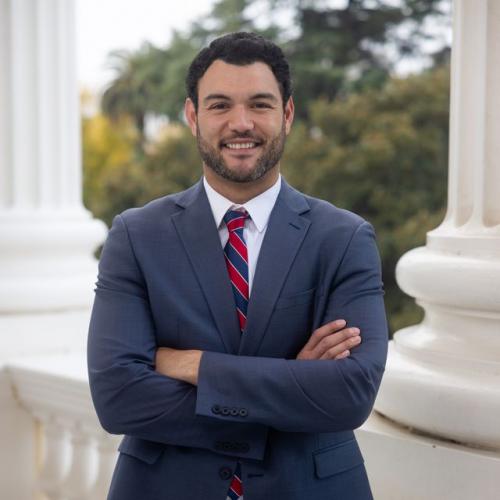
Rep. David Tangipa
Sponsored bills
Maddy summaryThis bill designates April 2026 as Parkinson's Disease Awareness Month in California. It requires state officials to issue a formal proclamation highlighting the importance of raising public awareness about the condition. The measure does not change laws or allocate funding but serves to recognize the month dedicated to this health issue.
This measure would proclaim March 2026 as American Red Cross Month, dedicate it to all those who continue to advance the noble legacy of the organization's founder, and encourage all Californians to reach out, support the organization's humanitarian mission, and join in their commitment to care for people in need.
Maddy summaryThis bill designates April 14 of every year as Sylvia Mendez Day to honor the civil rights activist who challenged school segregation in California. The measure is a commemorative resolution that does not change laws, allocate funding, or alter government operations. By establishing this annual observance, the state recognizes Mendez's historical contributions to education and civil rights.
Maddy summaryThis bill designates the week of April 5, 2026, through April 11, 2026, as Special Districts Week. It directly affects special districts, which are local government entities that provide specific services like water supply or fire protection to communities. The primary mechanism is an official proclamation that encourages public awareness and recognition of the work these districts perform. This measure does not alter any laws or budgets but serves as a commemorative resolution to highlight the importance of special districts.
(1) Existing law establishes the State Board of Education consisting of 10 members appointed by the Governor with the advice and consent of 2/3 of the Senate, as provided. This bill would require at least one member of the State Board of Education to be from the San Joaquin Valley. (2) Existing law requires the Superintendent of Public Instruction to coordinate the development, on a cyclical basis, of model curriculum standards for required courses of study, including a career technical education course of study for pupils in grades 7 to 12, inclusive, as specified. Existing law requires the Superintendent, upon adoption of those model curriculum standards, to develop a curriculum framework for career technical education, working in consultation and coordination with an advisory group consisting of classroom teachers, school administrators, parents, postsecondary educators, and representatives of business and industry. Existing law encourages the Superintendent, in convening the membership of the advisory group, to seek representation that is broadly reflective of the state population. This bill would require the Superintendent, in convening the membership of the advisory group, to ensure at least one member is from the San Joaquin Valley. (3) Existing law establishes the Department of Managed Health Care, which, among other duties, ensures the financial stability of managed care plans. Existing law establishes within the department the Financial Solvency Standards Board for the purpose of, among other things, developing and recommending to the director of the department financial solvency requirements and standards relating to health care service plan operations. Existing law requires the board to be composed of the director, or their designee, and 10 members appointed by the director, and authorizes the director to appoint individuals with training and experience in specified subject areas or fields. This bill would require at least one member of the Financial Solvency Standards Board to be from the San Joaquin Valley. (4) The California Stem Cell Research and Cures Act, an initiative measure approved by the voters at the November 2, 2004, statewide general election as Proposition 71, establishes the California Institute for Regenerative Medicine (CIRM) , the purposes of which include making grants and loans for stem cell research, for research facilities, and for other vital research opportunities to realize therapies, protocols, and medical procedures that will result in the cure for, or substantial mitigation of, diseases and injuries. Existing law establishes the Citizen's Financial Accountability Oversight Committee that is required to review, among other things, the annual financial audit of CIRM. Existing law requires the Controller, the Treasurer, the President pro Tempore of the Senate, the Speaker of the Assembly, and the Chairperson of the Independent Citizen's Oversight Committee to each appoint a public member of the committee. This bill would require at least one member of the Citizen's Financial Accountability Oversight Committee to be from the San Joaquin Valley. (5) Existing law establishes the California Veterans Board, comprising 7 members appointed by the Governor, subject to Senate confirmation, whose duties include determining the policies for all operations of the Department of Veterans Affairs. Existing law requires all members of the board to be veterans and requires one of the members to be a resident of a California veterans home. This bill would require at least one member of the California Veterans Board to be from the San Joaquin Valley.

Maddy summaryThis bill designates the week of April 12 to April 18, 2026, as California Public Safety Telecommunicators Week to honor the work of emergency call operators. The measure does not change laws or allocate funding; it simply establishes an official state observance. By creating this designated week, the legislation aims to bring public attention to the role of telecommunicators without altering their duties or compensation.
Maddy summaryThis bill designates April 19, 2026, as World Irritable Bowel Syndrome Day within the state of California. It serves as a commemorative resolution intended to raise awareness about the condition on a specific date. The measure does not create new laws, funding, or administrative requirements but simply establishes an official day of recognition.
Maddy summaryThis bill is a House Resolution that formally recognizes May 2026 as Asian and Pacific Islander American Heritage Month in California. It commends the community for its historical contributions to the state and nation while acknowledging the hardships they have faced, such as discrimination and internment. The resolution serves as a symbolic gesture to celebrate the achievements and diverse cultures of over 7.3 million Asian and Pacific Islander Americans living in California. As a commemorative measure, it does not create new laws or change government operations but rather directs the Assembly to acknowledge this specific month of observance.
Maddy summaryThis bill designates May 2026 as Amyotrophic Lateral Sclerosis Awareness Month in California to highlight the challenges faced by people living with this progressive neurodegenerative disease. The resolution calls on the public to support research, advocate for increased funding, and show solidarity with patients and their families. It does not create new laws or change government programs but serves as a symbolic gesture to raise awareness about ALS.