

Existing law requires state agencies, boards, or commissions that directly or by contract collect demographic data on the ethnic origin, ethnicity, or race of Californians to use specified collection categories for Middle Eastern, North African, Asian, Native Hawaiian, Pacific Islander, Black, and African American groups. Existing law establishes within the Government Operations Agency the Office of Data and Innovation, whose mission is to deliver better government services to the people of California through technology and service innovation, data, and design. Existing law requires the Governor to appoint a Chief Data Officer in the Office of Data and Innovation. This bill, subject to a specified exception, would require any state agency, board, or commission that directly or by contract collects demographic data on the ethnic origin, ethnicity, or race of Californians to collect and publish data on detailed race and ethnicity categories, as provided. The bill would require compliance with these provisions by January 1, 2029. The bill would prohibit these provisions from being construed to affect certain provisions regarding the collection of demographic data as to the ancestry or ethnic origin of California residents. The bill would also prohibit its provisions from being construed to prevent a state agency from tabulating and reporting demographic data in accordance with state or federal requirements and standards. This bill would require the Office of Data and Innovation to, among other things, standardize the collection of demographic data across state agencies, as provided. The bill would require the Chief Data Officer and the Office of Data and Innovation to oversee implementation of these provisions and provide technical assistance. This bill would require, on or before January 1, 2028, and annually thereafter, each state agency, board, or commission required to comply with the bill's provisions to submit a report to the Legislature and the Assembly Committee on Governmental Organization on compliance with these provisions, as provided. The bill would require data collected pursuant to this section to be made available to the public in accordance with state and federal law, except for personal identifying information, as specified. The bill would prohibit an agency from disclosing personal identifying information to any federal agency unless the disclosure is expressly required by federal law. The bill would require an agency to adhere to best practices in government data and to apply data equity practices, as provided. Existing constitutional provisions require that a statute that limits the right of access to the meetings of public bodies or the writings of public officials and agencies be adopted with findings demonstrating the interest protected by the limitation and the need for protecting that interest. This bill would make legislative findings to that effect.
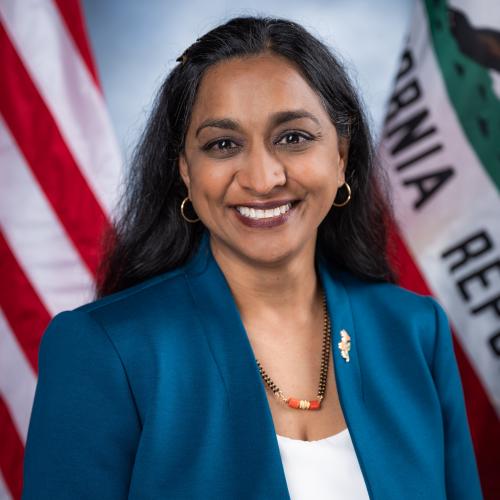
Asm. Darsh Patel
Sponsored bills
Maddy summaryThis bill designates the week of May 17 to May 24, 2026, as National Public Works Week throughout California to honor the contributions of public works professionals. It directly affects engineers, managers, and employees in government and the private sector who maintain essential infrastructure like transportation systems, water supplies, and public buildings. The resolution requests that the Governor issue a proclamation encouraging the public to observe the week with educational programs and activities that highlight the importance of these workers.
Under existing law, a person between 6 and 18 years of age who is not exempted by law is subject to compulsory full-time education. Existing law excludes a child under 6 years of age from the public schools, subject to specified exceptions. Existing law requires a school district maintaining a kindergarten to admit a child who will have their 5th birthday on or before September 1 of the school year. Existing law also requires a child who will have their 6th birthday on or before September 1 of the school year to be admitted to the first grade of an elementary school. Existing law authorizes a child who has been lawfully admitted to a public school kindergarten or a private school kindergarten in California and who is judged by the administration of the school district to be ready for first-grade work to be admitted to the first grade, as specified. This bill would require a public elementary school, including a charter school, to ensure that a child is not admitted to the first grade unless the child has completed one year of kindergarten if the child will have their 6th birthday (1) between July 1, 2028, and September 1, 2028, inclusive, for the 2028–29 school year, (2) between May 1, 2029, and September 1, 2029, inclusive, for the 2029–30 school year, (3) between March 1, 2030, and September 1, 2030, inclusive, for the 2030–31 school year, and (4) on or before September 1 for the 2031–32 school year and each school year thereafter, except for a child who has been lawfully admitted to a public school kindergarten or a private school kindergarten in California, but has not yet completed one school year, and is judged to be ready for first-grade work, as specified. By imposing additional duties on local educational agencies, the bill would impose a state-mandated local program. The California Constitution requires the state to reimburse local agencies and school districts for certain costs mandated by the state. Statutory provisions establish procedures for making that reimbursement. This bill would provide that, if the Commission on State Mandates determines that the bill contains costs mandated by the state, reimbursement for those costs shall be made pursuant to the statutory provisions noted above.
Maddy summaryThis bill designates April 2026 as Second Chance Month in California to raise awareness about opportunities for individuals reentering society after incarceration. The measure is a ceremonial proclamation that does not alter laws, allocate funding, or change government operations. Its primary purpose is to encourage public recognition of the challenges faced by formerly incarcerated people and to highlight available support resources during that specific month.
This measure would proclaim the week of April 20, 2026, to April 24, 2026, inclusive, as California Home Visiting Week, and would encourage all Californians to recognize and celebrate the contributions of home visiting programs and professionals and the families they serve.
Maddy summaryThis bill designates the week of April 19 to April 25, 2026, as Mosquito Awareness Week. The measure is a commemorative resolution that officially recognizes this specific time period to highlight mosquito-related issues. It does not create new laws, impose regulations, or allocate funding, but rather serves to raise public awareness through official designation.
Maddy summaryThis bill designates April 2026 as Parkinson's Disease Awareness Month in California. It requires state officials to issue a formal proclamation highlighting the importance of raising public awareness about the condition. The measure does not change laws or allocate funding but serves to recognize the month dedicated to this health issue.
This measure would proclaim March 2026 as American Red Cross Month, dedicate it to all those who continue to advance the noble legacy of the organization's founder, and encourage all Californians to reach out, support the organization's humanitarian mission, and join in their commitment to care for people in need.
Maddy summaryThis bill designates April 14 of every year as Sylvia Mendez Day to honor the civil rights activist who challenged school segregation in California. The measure is a commemorative resolution that does not change laws, allocate funding, or alter government operations. By establishing this annual observance, the state recognizes Mendez's historical contributions to education and civil rights.
Maddy summaryThis bill designates the week of April 5, 2026, through April 11, 2026, as Special Districts Week. It directly affects special districts, which are local government entities that provide specific services like water supply or fire protection to communities. The primary mechanism is an official proclamation that encourages public awareness and recognition of the work these districts perform. This measure does not alter any laws or budgets but serves as a commemorative resolution to highlight the importance of special districts.