

(1) The Electronic Waste Recycling Act of 2003 (act) requires a retailer selling a covered electronic device in this state to collect from a consumer at the time of retail sale a covered electronic waste recycling fee, as specified. The act defines "covered electronic device" to mean a video display device containing a screen greater than 4 inches, measured diagonally, that is identified in the regulations adopted by the Department of Toxic Substances Control (DTSC) , subject to certain exclusions. The act requires all fees collected pursuant to the act to be deposited in the Electronic Waste Recovery and Recycling Account, and outlines certain other requirements related to the establishment, adjustment, and administration of the fee. Moneys in the account are continuously appropriated for specified purposes, including, but not limited to, paying covered electronic waste recycling fee refunds and making electronic waste recovery and recycling payments. Moneys in the account may be expended, upon appropriation by the Legislature in the annual Budget Act, for other specified purposes, including the administration of the act by the Department of Resources Recycling and Recovery (CalRecycle) and DTSC and to provide funding to DTSC to implement and enforce the hazardous waste control laws as they relate to covered electronic devices. Existing law incorporates the requirements and other provisions of the act by reference as requirements and provisions of the hazardous waste control laws. The act also expressly authorizes DTSC to enforce the act, and all regulations adopted pursuant to the act, through the hazardous waste control laws. A violation of the hazardous waste control laws is a crime. This bill would, among other things, expand the definition of "covered electronic device" to include a "covered battery-embedded product," as defined, thereby expanding the scope of the act to include covered battery-embedded products, as provided. The bill would require a consumer, on and after January 1, 2026, to pay a covered battery-embedded waste recycling fee in an amount established by CalRecycle upon the purchase of a new or refurbished covered battery-embedded product. The bill would authorize, beginning on August 1, 2028, CalRecycle, in collaboration with DTSC, to establish more than one covered electronic waste recycling fee for covered battery-embedded products based on categories of those products. The bill would also require, on or before October 1, 2025, and on or before October 1 each year thereafter, CalRecycle to establish a covered electronic waste recycling fee based on the reasonable regulatory costs to administer covered electronic waste recycling. The bill would require the charge to be imposed upon the purchase of a new or refurbished covered battery-embedded product. The bill would also require the charge to be adjusted annually based on the California Consumer Price Index. The bill would require CalRecycle, on or before August 1, 2027, and thereafter as specified, in collaboration with DTSC, to review, at a public hearing, the covered battery-embedded waste recycling fee applicable to covered battery-embedded products and to make any fair and reasonable adjustments to the charge to ensure that there are sufficient revenues in the Covered Battery-Embedded Waste Recycling Fee Subaccount to fund the covered electronic waste recycling program established pursuant to the act. The bill would create the Covered Electronic Waste Recycling Fee Subaccount and the Covered Battery-Embedded Waste Recycling Fee Subaccount as continuously appropriated funds in the Electronic Waste Recovery and Recycling Account. Because the funds deposited to the Covered Battery-Embedded Waste Recycling Fee Subaccount would be a new source of funds in the continuously appropriated subaccount within the continuously appropriated Electronic Waste Recovery and Recycling Account, the bill would make an appropriation. By expanding the scope of the act to make it applicable to covered battery-embedded products, the bill would expand the scope of a crime, thereby imposing a state-mandated local program. The act imposes certain obligations on a manufacturer of a covered electronic device sold in the state, including, but not limited to, requiring a manufacturer to submit a report to CalRecycle, as provided, and to make information available to consumers that describes where and how to return, recycle, and dispose of the covered electronic device. The act defines "manufacturer" as either a person who manufacturers a covered electronic device sold in the state or a person who sells a covered electronic device in the state under that person's brand name. This bill would revise and expand the definition of "manufacturer" for purposes of the act and would therefore extend the aforementioned obligations to these persons. The act would require a manufacturer of a covered battery-embedded product to also submit a report to CalRecycle, as provided, and to make certain information available to consumers. The bill would provide that any information submitted to CalRecycle that is proprietary in nature or a trade secret shall be protected under state laws and regulations governing that information. The bill would require a manufacturer of a covered electronic device to maintain and keep accessible for a minimum of 3 years all records required to be kept or submitted pursuant to the act and, upon request, provide those records to CalRecycle. This bill would require all reports and records provided to CalRecycle pursuant to the act to be provided under penalty of perjury. By expanding the scope of persons subject to the act's requirements and by expanding the scope of the crime of perjury, the bill would expand the scope of a crime, thereby imposing a state-mandated local program. The act prohibits a person from selling a new or refurbished covered electronic device to a consumer if CalRecycle or DTSC determines that the manufacturer of that covered electronic device is not in compliance with the act, as provided. The act prohibits a person from selling or offering for sale in this state a new or refurbished covered electronic device unless the device is labeled with the name of the manufacturer or the manufacturer's brand label, so that it is readily visible. This bill, by expanding the definition of "covered electronic device," would expand the sales prohibition for noncompliance to covered battery-embedded products. The bill would also prohibit a person, on or after January 1, 2026, from selling or offering for sale in the state a new or refurbished covered battery-embedded product unless the product is labeled with the name of the manufacturer or the manufacturer's brand label so that it is readily visible. The bill would also require a new or refurbished covered battery-embedded product to be labeled with information identifying the chemistry of the embedded product. By expanding the scope of the sales prohibitions to include covered battery-embedded products, the bill would expand the scope of a crime, thereby imposing a state-mandated local program. The bill would also replace references to the State Board of Equalization with the California Department of Tax and Fee Administration, and make other nonsubstantive changes. (2) Existing law, as part of the hazardous waste control laws, requires the department to adopt regulations to identify electronic devices, as defined, that the department determines are presumed to be, when discarded, a hazardous waste. Existing law requires a manufacturer of an electronic device that is identified in those regulations to send to any retailer that sells that electronic device a notice that identifies the electronic device and informs the retailer that the electronic device is subject to the covered electronic waste recycling fee. The act requires a manufacturer of a covered electronic device to comply with these hazardous waste control law notification requirements. Existing law defines the term "manufacturer" for the purposes of these provisions in the same way as the act. This bill, for purposes of the aforementioned notification requirement, would specify that the requirement applies only to video display devices, as defined by the act, and would expressly exclude from the notification requirement a covered battery-embedded product, as defined by the act. The bill would expand the definition of "manufacturer" in the act and thereby would make those additional persons subject to the notice requirement. By expanding the scope of a crime under the hazardous waste control laws, the bill would impose a state-mandated local program. The bill would also replace references to the State Board of Equalization with the California Department of Tax and Fee Administration, and make other nonsubstantive changes. This bill would require instead that, as part of the act, a manufacturer of a covered battery-embedded product comply with similar notification requirements. (3) The California Integrated Waste Management Act of 1989 requires the county or regional agency integrated waste management plan that a county or regional agency is required to submit to the board to contain a household hazardous waste element. Existing law requires that when a county or regional agency revises the county or regional integrated waste management plan and its elements, the city household hazardous waste element and county household hazardous waste element is required to identify those actions the city, county, or regional agency is taking to promote the collection, consolidation, recovery, and recycling of covered electronic waste, as defined. This bill would, as a result of the aforementioned amendments to the Electronic Waste Recycling Act of 2003, expand the definition of covered electronic waste pursuant to the act to include a covered battery-embedded product, as defined by the Electronic Waste Recycling Act of 2003, thereby creating a state-mandated local program by imposing new duties upon local agencies. (4) Existing constitutional provisions require that a statute that limits the right of access to the meetings of public bodies or the writings of public officials and agencies be adopted with findings demonstrating the interest protected by the limitation and the need for protecting that interest. This bill would make legislative findings to that effect. (5) The bill would include findings that changes proposed by this bill address a matter of statewide concern rather than a municipal affair and, therefore, apply to all cities, including charter cities. (6) The California Constitution requires the state to reimburse local agencies and school districts for certain costs mandated by the state. Statutory provisions establish procedures for making that reimbursement. This bill would provide that no reimbursement is required by this act for specified reasons.
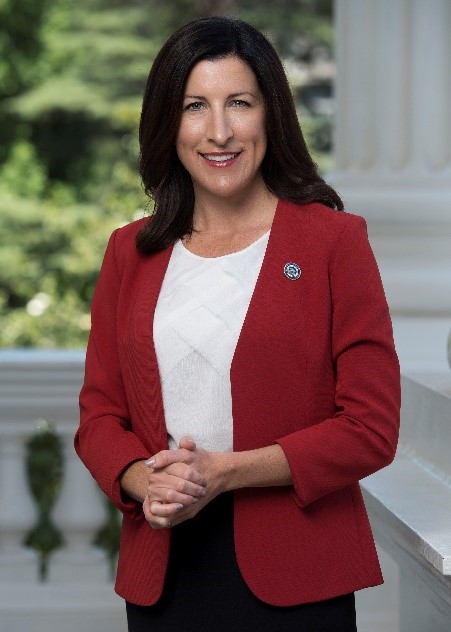
Asm. Cottie Petrie-Norris
Sponsored bills
The Rechargeable Battery Recycling Act of 2006 requires every retailer, as defined, to have in place a system for the acceptance and collection of used rechargeable batteries for reuse, recycling, or proper disposal. The Cell Phone Recycling Act of 2004 prohibits the sale of a cell phone in this state to a consumer unless the retailer of that cell phone has in place a take-back system for the acceptance and collection of used cell phones for reuse, recycling, or proper disposal. This bill would make the Rechargeable Battery Recycling Act of 2006 inoperative as of September 30, 2026, and would repeal that act as of January 1, 2027, and would make the Cell Phone Recycling Act of 2004 inoperative as of September 30, 2027, and would repeal that act as of January 1, 2028. This bill would enact the Responsible Battery Recycling Act of 2022, which would require producers, as defined, either individually or through the creation of one or more stewardship organizations, to establish a stewardship program for the collection and recycling of covered batteries, as defined. The bill would require a program operator, as defined, to develop, and to submit to the Department of Resources Recycling and Recovery (department) and the Department of Toxic Substances Control for review and for approval by the department, as specified, a stewardship plan and would prescribe the standards and elements required to be contained in a stewardship plan for covered batteries. The bill would require the department, in consultation with the Department of Toxic Substances Control, to adopt regulations to implement the act with an effective date of no earlier than April 1, 2025. The bill would require a program operator to have a complete stewardship plan approved by the department no later than 24 months after the effective date of the regulations adopted by the department in order for the program operator to be in compliance with the act. This bill would require a program operator to be audited annually, and submit a report and budget to the department, as prescribed, and would require a program operator, stewardship organization, producer, manufacturer, distributor, retailer, importer, recycler, or collection site to, among other things, provide the department and the Department of Toxic Substances Control with relevant records necessary to determine compliance with the act. The bill would require reports and records provided to the department to be provided under penalty of perjury, thereby creating a state-mandated local program by expanding the crime of perjury. The bill would restrict public access to certain information collected for the purpose of administering a stewardship program. The bill would preempt all rules, regulations, codes, ordinances, or other laws adopted by a city, county, city and county, municipality, or a local agency on or after January 1, 2023, regarding stewardship programs for covered batteries. This bill would require the department, within 24 months of the effective date of the regulations to implement these provisions, and each year thereafter, to post on its internet website a list of producers that are in compliance with the act, including the reported brands of covered batteries of each producer. The bill would require the department to remove from the list any producer, including its brands and covered batteries, that is not in compliance with the act. The bill would prohibit, on and after the date that a stewardship plan is approved by the department, a retailer or distributor from selling, distributing, offering for sale, or importing a covered battery in or into the state unless the producer of the covered battery is listed on that list as in compliance on the act, except as specified. The bill would require the department to relist on its internet website a producer, along with its brands and covered batteries, if the department subsequently determines that the producer is in compliance with the act. This bill would require a program operator to reimburse the department and the Department of Toxic Substances Control for their respective actual and reasonable regulatory costs that are directly related to implementing and enforcing the act in relation to the program operator's activities. The bill would require the department and the Department of Toxic Substances Control to deposit those moneys into the Covered Battery Recycling Fund, which the bill would establish, and would authorize the department and the Department of Toxic Substances Control to expend those moneys, upon appropriation by the Legislature, to implement and enforce the act. This bill would provide for enforcement of the act, including authorizing the department to impose an administrative civil penalty on a program operator, stewardship organization, producer, manufacturer, distributor, retailer, importer, recycler, or collection site in violation of the act not to exceed $10,000 per day, unless the violation is intentional, knowing, or reckless, then in that case not to exceed $50,000 per day. The bill would require the department to deposit those moneys into the Covered Battery Recycling Penalty Account, which the bill would establish in the fund, and would make those moneys available for expenditure upon appropriation by the Legislature. The bill would include findings that changes proposed by this bill address a matter of statewide concern rather than a municipal affair and, therefore, apply to all cities, including charter cities. Existing constitutional provisions require that a statute that limits the right of access to the meetings of public bodies or the writings of public officials and agencies be adopted with findings demonstrating the interest protected by the limitation and the need for protecting that interest. This bill would make legislative findings to that effect. The California Constitution requires the state to reimburse local agencies and school districts for certain costs mandated by the state. Statutory provisions establish procedures for making that reimbursement. This bill would provide that no reimbursement is required by this act for a specified reason.
(1) Existing law, the California Privacy Rights Act of 2020, approved by the voters as Proposition 24 at the November 3, 2020, statewide general election, establishes the California Privacy Protection Agency. Existing law vests the agency with full administrative power, authority, and jurisdiction to implement and enforce the California Consumer Privacy Act of 2018 and requires the agency to be governed by a board. Existing law requires businesses to protect consumer privacy and information, make certain disclosures to consumers regarding a consumer's rights under the act in a specified manner, and disclose to consumers that a consumer has the right to request specific pieces of information, including the categories of information those businesses have collected about that consumer. Existing law, the Parent's Accountability and Child Protection Act, requires a person or business that conducts business in California and that seeks to sell specified products or services to take reasonable steps to ensure that the purchaser is of legal age at the time of purchase or delivery, including verifying the age of the purchaser. Existing law prohibits a person or business that is required to comply with these provisions from retaining, using, or disclosing any information it receives in an effort to verify age from a purchaser or recipient for any other purpose, except as specified, and subjects a business or person that violates these provisions to a civil penalty. This bill would enact the California Age-Appropriate Design Code Act, which, commencing July 1, 2024, would, among other things, require a business that provides an online service, product, or feature likely to be accessed by children to comply with specified requirements, including a requirement to configure all default privacy settings offered by the online service, product, or feature to the settings that offer a high level of privacy, unless the business can demonstrate a compelling reason that a different setting is in the best interests of children, and to provide privacy information, terms of service, policies, and community standards concisely, prominently, and using clear language suited to the age of children likely to access that online service, product, or feature. The bill would require a business, before any new online services, products, or features are offered to the public, to complete a Data Protection Impact Assessment, as defined, for any online service, product, or feature likely to be accessed by children and maintain documentation of this assessment as long as the online service, product, or feature is likely to be accessed by children. The bill would require a business to make a Data Protection Impact Assessment available, within 5 business days, to the Attorney General pursuant to a written request and would exempt a Data Protection Impact Assessment from public disclosure, as prescribed. The bill would prohibit a business that provides an online service, product, or feature likely to be accessed by children from taking proscribed action, including, if the end user is a child, using personal information for any reason other than a reason for which the personal information was collected, unless the business can demonstrate a compelling reason that use of the personal information is in the best interests of children. This bill would create the California Children's Data Protection Working Group to deliver a report to the Legislature regarding best practices for the implementation of these provisions, as specified. The bill would require the members of the working group to have certain expertise, including in the areas of children's data privacy and children's rights. The bill would require the working group to take input from a broad range of stakeholders, including from academia, consumer advocacy groups, and small, medium, and large businesses affected by data privacy policies, and make prescribed recommendations on best practices, including identifying online services, products, or features likely to be accessed by children. This bill would authorize the Attorney General to seek an injunction or civil penalty against any business that violates its provisions. The bill would hold violators liable for a civil penalty of not more than $2,500 per affected child for each negligent violation or not more than $7,500 per affected child for each intentional violation. The bill would require any penalties, fees, and expenses recovered in an action brought under the act to be deposited in the Consumer Privacy Fund with the intent that they be used to fully offset costs incurred by the Attorney General in connection with the act. (2) The California Privacy Rights Act of 2020 authorizes the Legislature to amend the act to further the purposes and intent of the act by a majority vote of both houses of the Legislature, as specified. This bill would declare that its provisions further the purposes and intent of the California Privacy Rights Act of 2020. (3) Existing constitutional provisions require that a statute that limits the right of access to the meetings of public bodies or the writings of public officials and agencies be adopted with findings demonstrating the interest protected by the limitation and the need for protecting that interest. This bill would make legislative findings to that effect.
Existing law establishes the California State Summer School for Mathematics and Science to provide academic development to enable pupils, including pupils who are not California residents, with demonstrated academic excellence in mathematics and science who meet one of 3 specified enrollment criteria to receive intensive educational enrichment in these subjects and to provide an opportunity for pupils who wish to study mathematics or science or to pursue careers that require a high degree of skills in and knowledge of mathematics and science. Existing law requests the Regents of the University of California to operate the summer school. Existing law states the Legislature's intent that the Regents of the University of California adopt policies that will enable pupils who are not California residents, including residents of other countries, to be admitted to the summer school. This bill would limit the eligibility criteria to certain pupils from a California school and would delete provisions related to the admission of pupils who are not California residents to the summer school. Existing law, until January 1, 2023, requests the regents to develop and implement a statewide application procedure for the summer school, as specified, and requires that the cost of the application process be at least partially offset by charging each applicant a fee not to exceed $30. Existing law, until January 1, 2023, also requests the regents to set a tuition fee within a range that corresponds to actual program costs, up to but not exceeding $2,810 per session in 2012 and to increase this fee by an amount of up to 5% each year thereafter. This bill instead would set the application fee at $40 in 2023, and authorize this fee to be increased by an amount of up to 5% each year thereafter. The bill would request the regents to set a tuition fee for the summer school within a range that corresponds to actual program costs, up to but not exceeding $4,770 per session in 2023, and to increase this fee by an amount of up to 5% each year thereafter. The bill would extend these provisions until January 1, 2028.
Existing sales and use tax laws impose taxes on retailers measured by the gross receipts from the sale of tangible personal property sold at retail in this state, or on the storage, use, or other consumption in this state of tangible personal property purchased from a retailer for storage, use, or other consumption in this state. The Sales and Use Tax Law provides various exemptions from those taxes, including a partial exemption from those taxes, on and after July 1, 2014, and before July 1, 2030, for the gross receipts from the sale of, and the storage, use, or other consumption of, qualified tangible personal property purchased by a qualified person for purchases not exceeding $200,000,000, for use primarily in manufacturing, processing, refining, fabricating, or recycling of tangible personal property, as specified; qualified tangible personal property purchased for use by a qualified person to be used primarily in research and development, as provided; qualified tangible personal property purchased for use by a qualified person to be used primarily to maintain, repair, measure, or test any qualified tangible personal property, as provided; and qualified tangible personal property purchased by a contractor purchasing that property for use in the performance of a construction contract for the qualified person, that will use that property as an integral part of specified processes. Existing law, on and after January 1, 2018, and before July 1, 2030, additionally exempts from those taxes the sale of, and the storage, use, or other consumption of, qualified tangible personal property purchased for use by a qualified person to be used primarily in the generation or production, as defined, or storage and distribution, as defined, of electric power. This bill would, on and after January 1, 2023, and before January 1, 2028, make this a full exemption for purchases not exceeding $200,000,000. The bill would repeal these provisions on January 1, 2028, and would revert to the above-described partial exemption on that date. Existing law requires any bill authorizing a new tax expenditure to contain, among other things, specific goals, purposes, and objectives that the tax expenditure will achieve, detailed performance indicators, and data collection requirements. This bill would require the California Department of Tax and Fee Administration to submit a report to the Legislature on the exemption and would provide findings and declarations relating to the goals of the exemption. The Bradley-Burns Uniform Local Sales and Use Tax Law authorizes counties and cities to impose local sales and use taxes in conformity with the Sales and Use Tax Law, and existing laws authorize districts, as specified, to impose transactions and use taxes in accordance with the Transactions and Use Tax Law, which generally conforms to the Sales and Use Tax Law. Amendments to the Sales and Use Tax Law are automatically incorporated into the local tax laws. Existing law requires the state to reimburse counties and cities for revenue losses caused by the enactment of sales and use tax exemptions. This bill would provide that, notwithstanding Section 2230 of the Revenue and Taxation Code, no appropriation is made and the state shall not reimburse any local agencies for sales and use tax revenues lost by them pursuant to this bill. This bill would take effect immediately as a tax levy.
(1) Existing law, the Assisted Outpatient Treatment Demonstration Project Act of 2002, known as Laura's Law, requires each county to offer specified mental health programs, unless a county or group of counties opts out by a resolution passed by the governing body, as specified. Existing law, the Lanterman-Petris-Short Act, provides for short-term and longer-term involuntary treatment and conservatorships for people who are determined to be gravely disabled. This bill, contingent upon the State Department of Health Care Services developing an allocation to provide financial assistance to counties, would enact the Community Assistance, Recovery, and Empowerment (CARE) Act, which would authorize specified adult persons to petition a civil court to create a voluntary CARE agreement or a court-ordered CARE plan and implement services, to be provided by county behavioral health agencies, to provide behavioral health care, including stabilization medication, housing, and other enumerated services to adults who are currently experiencing a severe mental illness and have a diagnosis identified in the disorder class schizophrenia and other psychotic disorders, and who meet other specified criteria. The bill would require the Counties of Glenn, Orange, Riverside, San Diego, Stanislaus, and Tuolumne and the City and County of San Francisco to implement the program commencing October 1, 2023, and the remaining counties to commence no later than December 1, 2024. The bill would require the Judicial Council to develop a mandatory form for use in filing a CARE process petition and would specify the process by which the petition is filed and reviewed, including requiring the petition to be signed under penalty of perjury, and to contain specified information, including the facts that support the petitioner's assertion that the respondent meets the CARE criteria. The bill would also specify the schedule of review hearings required if the respondent is ordered to comply with an up to one-year CARE plan by the court. The bill would make the hearings in a CARE Act proceeding confidential and not open to the public, thereby limiting public access to a meeting of a public body. The bill would authorize the CARE plan to be extended once, for up to one year, and would prescribe the requirements for the graduation plan. By expanding the crime of perjury and imposing additional duties on the county behavioral health agencies, this bill would impose a state-mandated local program. This bill would require the court to appoint counsel for the respondent, unless the respondent has retained their own counsel. The bill would require the Legal Services Trust Fund Commission at the State Bar to provide funding to qualified legal services projects to provide legal counsel in CARE Act proceedings, as specified. The bill would authorize the respondent to have a supporter, as defined. The bill would require the State Department of Health Care Services, in consultation with specified stakeholders, to provide optional training and technical resources for volunteer supporters on the CARE process, community services and supports, supported decisionmaking, and other topics, as prescribed. This bill would require the California Health and Human Services Agency, or a designated department within that agency, to engage an independent, research-based entity to advise on the development of data-driven process and outcome measures for the CARE Act and to convene a workgroup to provide coordination and support among relevant state and local partners and other stakeholders throughout the phases of county implementation of the CARE Act. The bill also would require the State Department of Health Care Services to provide training and technical assistance to county behavioral health agencies to implement the act and to provide training to counsel, as specified. The bill would require the Judicial Council, in consultation with the department and others, to provide training to judges regarding the CARE process, as specified. This bill would authorize the court, at any time during the CARE process, if it finds the county or other local government entity not complying with court orders, to report that finding to the presiding judge of the superior court or their designee. If the presiding judge or their designee finds, by clear and convincing evidence, that the local government has substantially failed to comply with the CARE process, the presiding judge may impose a fine of up to $1,000 per day and, if the court finds persistent noncompliance, to appoint a special master to secure court-ordered care for the respondent at the county's cost. The bill would establish the CARE Act Accountability Fund in the State Treasury to receive the fines collected under the Act, which would, upon appropriation, be allocated and distributed by the department to the local government entity that paid the fines to serve individuals who have schizophrenia spectrum or other psychotic disorders who are experiencing or are at risk of homelessness, criminal justice involvement, hospitalization, or conservatorship. This bill would require the department, in consultation with the Judicial Council, to develop an annual reporting schedule for the submission of CARE Act data from the trial courts and would require the Judicial Council to aggregate the data and submit it to the department. The bill would require the department, in consultation with various other entities, to develop an annual CARE Act report and would require county behavioral health agencies and other local governmental entities to provide the department with specified information for that report. The bill would require an independent, research-based entity retained by the department to develop an independent evaluation of the effectiveness of the CARE Act and would require the department to produce a preliminary and final report based on that evaluation. By increasing the duties of a local agency, this bill would impose a state-mandated local program. This bill would exempt a county or an employee or agent of a county from civil or criminal liability for any action by a respondent in the CARE process, except when an act or omission constitutes gross negligence, recklessness, or willful misconduct. Existing law, the Mental Health Services Act (MHSA) , an initiative measure enacted by the voters as Proposition 63 at the November 2, 2004, statewide general election, establishes the Mental Health Services Fund (MHSF) , a continuously appropriated fund, to fund various county mental health programs, including children's mental health care, adult and older adult mental health care, prevention and early intervention programs, and innovative programs. This bill would clarify that MHSA funds may be used to provide services to individuals under a CARE agreement or a CARE plan. (2) Existing law, the Knox-Keene Health Care Service Plan Act of 1975, provides for the licensure and regulation of health care service plans by the Department of Managed Health Care. Existing law also provides for the regulation of health insurers by the Department of Insurance. Existing law requires health care service plans and insurers to provide coverage for medically necessary treatment of mental health and substance use disorders. Violation of the Knox-Keene Act by a health care service plan is a crime. This bill would require health care service plans and insurers to cover the cost of developing an evaluation for CARE process services and the provision of all health care services for an enrollee or insured when required or recommended for the person pursuant to a CARE plan, as specified, without cost sharing, except for prescription drugs, and regardless of whether the services are provided by an in-network or out-of-network provider. Because a violation of this requirement by a health care service plan would be a crime, this bill would impose a state-mandated local program. (3) Existing law prohibits a person from being tried or adjudged to punishment while that person is mentally incompetent. Existing law establishes a process by which a defendant's mental competency is evaluated and by which the defendant receives treatment, with the goal of returning the defendant to competency. Existing law suspends a criminal action pending restoration to competency. This bill, for a misdemeanor defendant who has been determined to be incompetent to stand trial, would authorize the court to refer the defendant to the CARE process. (4) Existing constitutional provisions require that a statute that limits the right of access to the meetings of public bodies or the writings of public officials and agencies be adopted with findings demonstrating the interest protected by the limitation and the need for protecting that interest. This bill would make legislative findings to that effect. (5) This bill would state that its provisions are severable. (6) This bill would incorporate additional changes to Section 1370.01 of the Penal Code proposed by SB 1223 to be operative only if this bill and SB 1223 are enacted and this bill is enacted last. (7) The California Constitution requires the state to reimburse local agencies and school districts for certain costs mandated by the state. Statutory provisions establish procedures for making that reimbursement. This bill would provide that with regard to certain mandates no reimbursement is required by this act for a specified reason. With regard to any other mandates, this bill would provide that, if the Commission on State Mandates determines that the bill contains costs so mandated by the state, reimbursement for those costs shall be made pursuant to the statutory provisions noted above.
Existing law governs the bidding and awarding of public contracts by public entities, as defined. Existing law makes it a crime for a public official, as specified, to ask, receive, or agree to receive, any bribe, upon an understanding that their official vote, opinion, judgment, or action will be influenced thereby. This bill would declare a contract voidable that was entered into because of an act that would constitute a violation of a state or federal crime relating to bribery of a public official, including a violation of the above-described crime. The bill would specify that these provisions apply to contracts executed on or after January 1, 2023, including contracts negotiated prior to that date.
(1) The California Cultural and Historical Endowment Act establishes the California Cultural and Historical Endowment in the Natural Resources Agency. Among other things, the act authorizes the endowment to make grants and loans on a competitive basis to public agencies and nonprofit organizations, as defined, to encourage development of California's historical and cultural resources. Existing law, to the extent funding is available, requires the endowment to establish a program to assist and enhance the services of California's museums and of other groups and institutions that undertake cultural projects that are deeply rooted in and reflective of previously underserved communities. Existing law requires the program to give priority to certain museum and cultural programs and projects, as provided. This bill would revise and recast those provisions to, among other things, instead require the endowment to establish a competitive grant program to assist and enhance the services of museums in the state that undertake programs and projects that are deeply rooted in and reflective of underserved communities. The bill would instead require the grant program to give priority to those programs and projects (A) serving pupils and teachers at schools eligible to be served under Title I, Part A of the federal Elementary and Secondary Education Act, (B) serving children in low-income communities, (C) supporting a museum in engaging or collaborating with underserved communities, as specified, (D) advancing preservation of at-risk cultural and natural collections and historic buildings, as provided, (E) improving access to historic buildings, cultural sites, or museums, as specified, (F) supporting the ethical stewardship of culturally sensitive art and artifacts, as provided, or (G) educating the public about critical issues affecting Californians. (2) Existing law authorizes the California Cultural and Historical Endowment to create a specified competitive grant program to support, among other things, small capital projects in museums. Existing law requires funding for the grant program to only be made, upon appropriation by the Legislature, from certain collected funds. This bill would expand that authority to support capital projects in museums, without regard to size, and publications in museums. The bill would delete the funding limitation for the grant program.
This measure would proclaim the month of September 2022 as Prostate Cancer Awareness Month.
This measure would designate a specified portion of State Highway Route 44, near Oak Run in the County of Shasta, as the Stan Statham Memorial Highway. This measure would request the Department of Transportation to determine the cost of appropriate signs showing this special designation and, upon receiving donations from nonstate sources covering that cost, to erect those signs.