

(1) Existing law authorizes a judge to enter an ex parte order authorizing interception of wire or electronic communications within the territorial jurisdiction of the court. Existing law also authorizes a peace officer to apply for, and a magistrate to issue, an order, or extension of an order, authorizing or approving the installation and use of a pen register or trap and trace device. This bill would prohibit the issuance of an ex parte order authorizing interception of wire or other electronic communication or an order, or extension of an order, authorizing or approving the installation and use of a pen register or trap and trace device for the purpose of investigating or recovering evidence of a prohibited violation. The bill would define "prohibited violation" for this purpose as a violation of a law that creates liability for, or arising out of, either providing, facilitating, or obtaining an abortion or intending or attempting to provide, facilitate, or obtain an abortion that is lawful under California law. Existing law provides for the issuance of a search warrant upon specified grounds. This bill would prohibit the issuance of a search warrant for any item or items that pertain to an investigation into a prohibited violation. Existing law requires a California corporation that provides electronic communication services or remote computing services to the general public to comply with a warrant issued by another state to produce records that would reveal the identity of the customers using those services, data stored by, or on behalf of, the customer, the customer's usage of those services, the recipient or destination of communications sent to or from those customers, or the content of those communications as if that warrant had been issued by a California court. This bill would require an out-of-state warrant for the records listed above to include an attestation that the evidence sought is not related to an investigation into, or enforcement of, a prohibited violation. The bill would prohibit the production of records by a California corporation when the corporation knows or should know that the warrant relates to an investigation into, or enforcement of, a prohibited violation. (2) Existing law includes a declaration of the Legislature that every individual possesses a fundamental right of privacy with respect to reproductive decisions, including the fundamental right to choose to bear a child or obtain an abortion. Existing law prohibits the state from denying or interfering with a woman's fundamental right to choose to bear a child or obtain an abortion prior to viability of the fetus, as defined, or when necessary to protect her life or health. Existing law, the Reproductive Rights Law Enforcement Act, requires the Attorney General to carry out certain functions relating to anti-reproductive-rights crimes in consultation with, among others, subject matter experts. Existing law requires all law enforcement agencies to develop, adopt, and implement written policies and standards for responding to anti-reproductive-rights calls by January 1, 2023. This bill would prohibit a state or local law enforcement agency or officer from knowingly arresting or knowingly participating in the arrest of any person for performing, supporting, or aiding in the performance of an abortion or for obtaining an abortion, if the abortion is lawful in this state. The bill would prohibit a state or local public agency from cooperating with or providing information to an individual or agency from another state or a federal law enforcement agency, as specified, regarding a lawful abortion. The bill would prohibit specified persons, including a judicial officer, court employee, an authorized attorney, among others, from issuing a subpoena in connection with a proceeding in another state regarding an individual performing, supporting, or aiding in the performance of an abortion in this state, or an individual obtaining an abortion in this state, if the abortion is lawful in this state. The bill would not prohibit the investigation of criminal activity that may involve an abortion, provided that no information relating to any medical procedure performed on a specific individual may be shared with an agency or individual from another state for the purpose of enforcing another state's abortion law. (3) Existing law requires superior court judges in each county to prepare, adopt, and annually revise a uniform countywide schedule of bail for all bailable offenses, as specified. Existing law requires a bail schedule to contain a list of the offenses and amounts of bail applicable for each, as well as a general clause for designated amounts of bail for all offenses not specifically listed in the schedule. This bill would require a uniform countywide schedule of bail to set $0 bail for an individual who has been arrested in connection with a proceeding in another state regarding and individual performing, supporting, or aiding in the performance of an abortion in this state, or an individual obtaining an abortion in this state, if the abortion is protected, as specified. Existing law requires the Governor to recognize a demand for extradition of a person if the demand meets specified requirements. Existing law requires a magistrate, upon the filing of a verified complaint, to issue a warrant directed to any peace officer commanding the officer to apprehend an individual in this state who is convicted, or has violated the terms of bail, probation, or parole, or who is charged with a crime, in another state and who is believed to be in this state. This bill would require, within 24 hours of the filing of a verified complaint, the filing agency to electronically transmit to the Attorney General a complete copy of the verified complaint, the out-of-state indictment, information, complaint, or judgment, out-of-state warrant, and the affidavit upon which the out-of-state warrant was issued. (4) Existing law, the Electronic Communications Privacy Act, determines how governmental entities may access information on electronic devices and from electronic communication service providers, as defined. This bill would prohibit a California corporation or a corporation whose principal executive offices are located in California that provides electronic communication services from providing records, information, facilities, or assistance in accordance with the terms of a warrant, court order, subpoena, wiretap order, pen register trap and trace order, or other legal process issued by, or pursuant to, the procedures of another state or a political subdivision thereof that relates to an investigation into, or enforcement of, a prohibited violation. The bill would authorize the Attorney General to commence a civil action to compel compliance with the above provisions, but would only impose civil liability if the corporation knew or should have known that the warrant, court order, subpoena, wiretap order, pen register trap and trace order, or other legal process relates to an investigation into or enforcement of a prohibited violation. (5) The bill would state that its provisions are severable. (6) This bill would declare that it is to take effect immediately as an urgency statute.
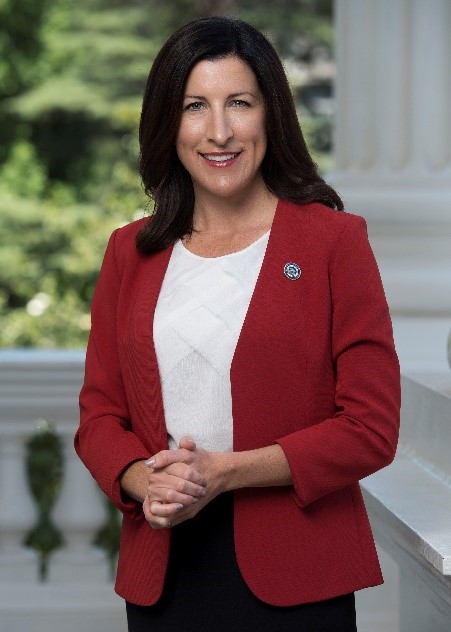
Asm. Cottie Petrie-Norris
Sponsored bills
Existing law, the Reproductive Privacy Act, prohibits the state from denying or interfering with a person's right to choose or obtain an abortion prior to viability of the fetus, or when the abortion is necessary to protect the life or health of the person. The act defines "abortion" as a medical treatment intended to induce the termination of a pregnancy except for the purpose of producing a live birth. Existing law establishes the Abortion Practical Support Fund, administered by the Department of Health Care Access and Information, for the purpose of providing grants to increase patient access to abortion. This bill would require the California Health and Human Services Agency, or an entity designated by the agency, to establish an internet website where the public can find information on abortion services in the state. The bill would require the Department of Health Care Access and Information to annually evaluate the grant program funded by the Abortion Practical Support Fund and report its findings to the Legislature. The bill would also make related findings and declarations, and would specify that it is to be construed to effectuate its legislative intent to support access to abortion in California and build upon California's commitment to be a reproductive freedom state.
Existing law requires the Department of Veterans Affairs to acquire, study, design, develop, construct, and equip a state-owned and state-operated Southern California Veterans Cemetery in the County of Orange at one of 2 possible sites, as specified. Existing law requires the department to, after completing acquisition studies on both sites, consult with the Department of General Services to determine which site to pursue based on the economic feasibility, benefits to veterans and City of Irvine residents, and availability of each location. Existing law makes honorably discharged veterans, their spouses, and dependent children eligible for interment in the cemetery, as specified. This bill would delete those site selection requirements and would instead require the department to acquire, study, design, develop, construct, and equip a state-owned and state-operated Southern California Veterans Cemetery in the County of Orange. The bill would require the department to conduct an acquisition study, in consultation with the Department of General Services, to assess the feasibility and costs of construction of the cemetery. The bill would additionally create the Southern California Veterans Cemetery Study Donation Fund, and would authorize any local governmental entity or private organization in the County of Orange to donate to the fund. The bill would authorize the department, upon receipt of sufficient moneys, to conduct a study of the feasibility of a site formally proposed by a local government in the County of Orange for the purpose of establishing a Southern California Veterans Cemetery, as specified. The bill would continuously appropriate moneys in the fund to the department for these purposes. The bill would require any excess funds to be returned to the donor if requested, and to otherwise be used for the design, development, construction, and equipment of the cemetery. This bill would declare that it is to take effect immediately as an urgency statute.
Existing law establishes a variety of health care workforce training programs and health professions education programs within the Department of Health Care Access and Information to, among other things, maximize the delivery of primary care and family physician services to specific areas of California where there is a recognized unmet priority need for those services and ensure an adequate supply of appropriately trained professional and vocational nurses. Existing law establishes the Health Professions Education Fund to support those programs by providing scholarships and loans to students from underrepresented groups who are accepted to or enrolled in schools of medicine, dentistry, nursing, or other health professions. This bill would establish the California Reproductive Health Service Corps within the department for the purposes of recruiting, training, and retaining a diverse workforce of reproductive health care professionals who will be part of reproductive health care teams to work in underserved areas. The bill would require the corps to administer and oversee scholarships and stipends for scholars who are new reproductive health students, and loan repayment for scholars who have acquired debt from attending a reproductive health professional school in the past, in exchange for a 3-year term of obligated service in California at a corps-approved site. The bill would require the corps to prioritize the selection of scholars from historically excluded populations and underserved areas, and would require scholars to agree to complete abortion training as part of their health care education and to provide, or participate on a team that provides, reproductive health services and to commit to working at a corps-approved site in a specified area with a specified population. This bill would require the department to conduct an evaluation 5 years after implementation to assess the impact and effectiveness of the corps, and would require the department to report its findings to the Legislature on or before January 1, 2029.
Existing law provides for the Medi-Cal program, which is administered by the State Department of Health Care Services, under which qualified low-income individuals receive health care services. The Medi-Cal program is, in part, governed and funded by federal Medicaid program provisions. Under existing law, Medi-Cal services may be provided pursuant to contracts with various types of managed care health plans, including through a county organized health system. Under existing law, in-person contact between a health care provider and a patient is not required under the Medi-Cal program for services appropriately provided through telehealth. Existing law provides that neither face-to-face contact nor a patient's physical presence on the premises of an enrolled community clinic is required for services provided by the clinic to a Medi-Cal beneficiary during or immediately following a proclamation declaring a state of emergency. Existing law defines "immediately following" for this purpose to mean up to 90 days following the termination of the proclaimed state of emergency, unless there are extraordinary circumstances. Under existing law, federally qualified health center (FQHC) services and rural health clinic (RHC) services are covered benefits under the Medi-Cal program, to be reimbursed, to the extent that federal financial participation is available, to providers on a per-visit basis. "Visit" is defined as a face-to-face encounter between an FQHC or RHC patient and any of specified health care professionals. Under existing law, "visit" also includes an encounter between an FQHC or RHC patient and specified medical professionals when services delivered through that interaction meet the applicable standard of care. Existing law prohibits an FQHC or RHC from establishing a new patient relationship using an audio-only synchronous interaction and authorizes the department to provide specific exceptions to that prohibition, developed in consultation with affected stakeholders and published in departmental guidance. This bill would authorize the department to authorize an FQHC or RHC to establish a new patient relationship using an audio-only synchronous interaction when the visit is related to sensitive services, as defined, and authorize an FQHC or RHC to establish a new patient relationship using an audio-only synchronous interaction when the patient requests an audio-only modality or attests they do not have access to video. Existing law provides that face-to-face contact is not required when covered health care services are provided by video synchronous interaction, audio-only synchronous interaction, remote patient monitoring, or other permissible virtual communication modalities when those services and settings meet certain criteria. Existing law, effective as specified, requires a provider furnishing services via audio-only synchronous interaction to also offer those same health care services via video synchronous interaction to preserve beneficiary choice. Existing law authorizes the department to provide specific exceptions to that requirement based on a Medi-Cal provider's access to requisite technologies, as specified. Existing law also prohibits a health care provider from establishing a new patient relationship with a Medi-Cal beneficiary via, among other interactions, telephonic (audio-only) synchronous interaction. Existing law authorizes the department to provide specific exceptions to that prohibition, as specified. This bill would authorize the department to take into consideration the availability of broadband access when providing those specific exceptions. The bill would authorize the department to authorize a health care provider to establish a new patient relationship using an audio-only synchronous interaction when the visit is related to sensitive services, as defined, and authorize a health care provider to establish a new patient relationship using an audio-only synchronous interaction when the patient requests an audio-only modality or attests they do not have access to video. This bill would incorporate additional changes to Section 14132.100 of the Welfare and Institutions Code proposed by SB 966 to be operative only if this bill and SB 966 are enacted and this bill is enacted last.
Existing law creates a private cause of action against a person who intentionally distributes material that exposes an intimate body part of another person or shows that other person engaging in sexual conduct if the person knew that the other person had a reasonable expectation that the material would remain private. This bill would create a private cause of action against a person 18 years of age or older who knowingly sends an unsolicited image, as specified, by electronic means depicting obscene material, as defined. The bill would entitle the plaintiff to recover economic and noneconomic damages or statutory damages of a sum not less than $1,500 but not more than $30,000, as well as punitive damages, reasonable attorney's fees and costs, and other available relief, including injunctive relief, as specified.
Existing law generally regulates the relationship between parties to a lease of real property. Existing law refers to the lessor of real property variously as, among other terms, "landlord" or "lessor" and refers to the lessee of real property variously as, among other terms, "tenant" or "lessee." Existing law creates the California Law Revision Commission and requires the commission to, among other things, examine the common law and statutes of the state and judicial decisions for the purpose of discovering defects and anachronisms in the law and recommending needed reforms. This bill would require the commission to, on or before December 31, 2024, deliver to the Legislature a study regarding, among other things, the establishment of consistent terminology across the California codes to describe the parties to an agreement, lease, or other contract for the rental of residential real property, including in mobilehome parks, that meets certain criteria, specifically, among other things, that the study addresses whether the continued use of the terms "landlord" and "tenant," including related terms including "cotenant" and "subtenant," is useful and appropriate in code provisions that involve the rental of residential real property.
Existing law establishes the Medi-Cal program, administered by the State Department of Health Care Services, under which health care services are provided to qualified, low-income persons. The Medi-Cal program is, in part, governed and funded by federal Medicaid program provisions. Existing law authorizes a county board of supervisors, by ordinance, to establish a commission to negotiate an exclusive contract with the department and to arrange for the provision of health care services under the Medi-Cal program. This system of services provided by or through a county under these provisions is known as a county organized health system. Pursuant to this authority, the County of Orange, by ordinance, established a commission, known as the Orange County Health Authority, or CalOptima, to provide health care services under the Medi-Cal program. Existing law codifies the establishment of the Orange County Health Authority and vests governance of the authority in a 10-member governing body. Existing law prescribes the membership of the governing body, which includes, among others, 2 members of the Board of Supervisors of the County of Orange, one member who is a current or former hospital administrator, and one member who is a representative of a community clinic. Existing law requires a member of the governing body to serve a 4-year term, except for a member who is a member of the Board of Supervisors of the County of Orange, who is required to serve a one-year term. Existing law prohibits a member of the governing body, except for a member of the Board of Supervisors of the County of Orange, from serving more than 2 consecutive terms. This bill would prohibit an individual who served a one-year term on the governing body as a member of the board of supervisors from being appointed to serve a 4-year term under any of the other categories within 12 months of the expiration of their one-year term. Under existing law, the voting members are nominated by the Orange County Health Care Agency and are appointed by a majority vote of the board of supervisors. This bill would require the board of supervisors to consult with stakeholders in the County of Orange, as specified, for purposes of identifying qualified individuals to be considered as members of the governing body. Existing law requires members of the governing body to, among other things, strive to improve health care quality, promote prevention and wellness, ensure the provision of cost-effective health and mental health care services, and reduce health disparities. This bill would require the members of the governing body to ensure the provision of cost-effective behavioral health care services, rather than mental health care services, and would additionally require the members to address the needs of Medi-Cal members who are affected by homelessness and housing instability, improve quality outcomes, and manage the risk and needs of Medi-Cal beneficiaries through whole-person care approaches and addressing social determinants of health. This bill would require a member of the governing body who has a financial interest in a decision of the governing body to, upon identifying a conflict of interest or a potential conflict of interest, take certain actions, including publicly identifying the financial interest that gives rise to the conflict of interest or potential conflict of interest, recusing the member's own self from discussing and voting on the matter, and leaving the room until after the discussion, vote, and any other disposition of the matter is concluded. This bill would prohibit members of the governing body, for a period of one year after leaving office, from acting as an agent or attorney for, or otherwise representing, for compensation, any other person, by making any appearance before, or by making any communication to, the commission, as specified, if the appearance or communication is made for the purpose of influencing the commission to take certain actions. The bill would also prohibit specified members of the governing body, for a period of one year after leaving office, from serving as an employee, agent, or attorney for, or otherwise representing, for compensation, the Orange County Health Authority or any other entity that received an expenditure of Medi-Cal funds from the Orange County Health Authority during the prior 5 years, with exceptions, including if the member is returning to or continuing a role they held when appointed to the governing body. This bill would eliminate the January 1, 2023, repeal date for the authority, thereby extending the authorization for the authority indefinitely. The bill would make other clarifying changes. This bill would make legislative findings and declarations as to the necessity of a special statute for the County of Orange.
Existing law requires every motor vehicle subject to registration to be equipped with an adequate muffler in constant operation and properly maintained to prevent any excessive or unusual noise and prohibits a muffler or exhaust system from being equipped with a cutout, bypass, or similar device. Existing law further prohibits the modification of an exhaust system of a motor vehicle in a manner that will amplify or increase the noise emitted by the motor of the vehicle so that the vehicle exceeds existing noise limits when tested in accordance with specified standards. This bill would require the Department of the California Highway Patrol to evaluate the efficacy of sound-activated enforcement devices by evaluating devices from at least 3 different companies, and would require the department, on or before January 1, 2025, to prepare and submit its findings and recommendations from the evaluation in a report to the Legislature, as specified. Existing constitutional provisions require that a statute that limits the right of access to the meetings of public bodies or the writings of public officials and agencies be adopted with findings demonstrating the interest protected by the limitation and the need for protecting that interest. This bill would make legislative findings to that effect.
Existing law, the Control, Regulate and Tax Adult Use of Marijuana Act (AUMA) , an initiative measure approved as Proposition 64 at the November 8, 2016, statewide general election, authorizes a person who obtains a state license under AUMA to engage in commercial adult-use cannabis activity pursuant to that license and applicable local ordinances. The Medicinal and Adult-Use Cannabis Regulation and Safety Act (MAUCRSA) , among other things, consolidates the licensure and regulation of commercial medicinal and adult-use cannabis activities, including retail commercial cannabis activity. Existing law places specified requirements on the packaging and labeling of cannabis and cannabis products, and places various advertising and marketing restrictions on licensees. This bill would, commencing July 1, 2024, require the advertisement and marketing of a cannabis cartridge and an integrated cannabis vaporizer to prominently display a specified message to properly dispose of a cannabis cartridge and an integrated cannabis vaporizer as hazardous waste, and would also prohibit the package, label, advertisement, and marketing from indicating that the cannabis cartridge or integrated cannabis vaporizer is disposable or implying that it may be thrown in the trash or recycling streams. This bill would incorporate additional changes to Section 26120 of the Business and Professions Code proposed by AB 1646 to be operative only if this bill and AB 1646 are enacted and this bill is enacted last.