

Under existing law, when a public offense is committed in part in one jurisdictional territory and in part in another jurisdictional territory, or the acts constituting or requisite to the consummation of the offense occur in 2 or more jurisdictional territories, the jurisdiction for the offense is in any competent court within either jurisdictional territory. This bill would establish the jurisdiction of a criminal action brought by the Attorney General for theft, organized retail theft, or receipt of stolen property as including the county where an offense involving the theft or receipt of the stolen merchandise occurred, the county in which the merchandise was recovered, or the county where any act was done by the defendant in instigating, procuring, promoting, or aiding in the commission of the offense. The bill would also, if multiple offenses of theft or other specified crimes all involving the same defendant or defendants and the same merchandise, or the same defendant or defendants and the same scheme or substantially similar activity, occur in multiple jurisdictions, establish that any of those jurisdictions is a proper jurisdiction for all of the offenses. The bill would extend jurisdiction to all associated offenses connected together in their commission to the underlying theft offenses.
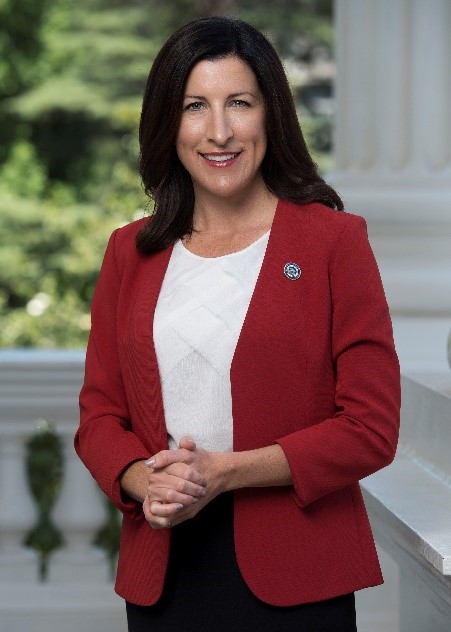
Asm. Cottie Petrie-Norris
Sponsored bills
Existing law prescribes various requirements to be satisfied before the exercise of a power of sale under a mortgage or deed of trust and prescribes a procedure for the exercise of that power. Existing law, until January 1, 2026, prescribes a process in connection with a trustee's sale of property under a power of sale contained in a deed of trust or mortgage on real property containing one to 4 residential units, inclusive, that provides specified bidding priorities to certain parties, including prospective owner-occupants. This bill would prescribe requirements that would apply to sales of real property containing one to 4 residential dwelling units, inclusive, that is acquired through foreclosure under a mortgage or deed of trust by an institution or that is acquired at a foreclosure sale by an institution, as defined. The bill would require the institution, during the first 30 days after a property is listed, as specified, to only accept offers from eligible bidders, as defined, and to respond, in writing, to all offers received from eligible bidders before considering any other offers. This bill would require an eligible bidder to submit an affidavit or declaration, as specified, with their offer to an institution. By expanding the crime of perjury, this bill would impose a state-mandated local program. This bill would also prohibit an institution from conducting a bundled sale, as defined. The California Constitution requires the state to reimburse local agencies and school districts for certain costs mandated by the state. Statutory provisions establish procedures for making that reimbursement. This bill would provide that no reimbursement is required by this act for a specified reason.
Existing law authorizes a court to issue a gun violence restraining order to prohibit a person from purchasing or possessing a firearm or ammunition for a period of one to 5 years, subject to renewal for additional one- to 5-year periods, if the subject of the petition poses a significant danger of self-harm or harm to another in the near future by having a firearm and the order is necessary to prevent personal injury to the subject of the petition or another. Existing law also allows a gun violence restraining order to be issued on an ex parte basis for up to 21 days. Existing law allows a petition for these gun violence restraining orders to be made by a law enforcement officer, or an immediate family member, employer, coworker, or teacher of the subject of the petition. This bill would additionally allow a petition for these gun violence restraining orders to be made by an individual who has a child in common with the subject, an individual who has a dating relationship with the subject, or a roommate of the subject of the petition, as specified. The bill would expand the family members who can file a petition to include any person related by consanguinity or affinity within the 4th degree who has had substantial and regular interactions with the subject for at least one year.
Existing law establishes in the Natural Resources Agency the California Conservation Corps and requires the corps to implement and administer the conservation corps program. Existing law requires the director of the corps to establish a forestry corps program to accomplish specified objectives related to forest health. This bill would require the director to establish and administer the California Ocean Corps Program to provide competitive grants to certified local conservation corps located in coastal counties in order to provide opportunities for young people to complete workforce preparation, training, and education programs, and, ultimately, to obtain employment, or continue education, in ocean and coastal conservation or related fields, as provided. The bill would require the director to develop and adopt program guidelines before awarding any grants, as provided. The bill would require the director to develop performance measures and accountability controls to track progress and outcomes of all grants. The bill would require the director, on or before January 1, 2026, to report these outcomes to the appropriate fiscal and policy committees of the Legislature. The bill would make these provisions contingent upon an appropriation by the Legislature in the annual Budget Act or another statute. The bill would repeal these provisions on January 1, 2027.
(1) Existing law requires each state agency that significantly regulates or impacts small business to designate at least one person to serve as a small business liaison for the agency. Existing law requires the small business liaison to be responsible for, among other things, receiving and responding to complaints received by the agency from small businesses and assisting in ensuring that the procurement and contracting processes of the entity are administered in order to meet or exceed the goal of 25% small business participation. This bill would also require the small business liaison to develop an "economic equity first" action plan and policy for the agency to provide, among other things, direction, recommendations, and strategies as to how to ensure that small businesses, as specified, are effectively involved and benefiting from the agency's procurement process. The bill would require the action plan and policy to be adopted by January 1, 2024. The bill would require the action plan to include, as part of a general outreach effort to all small businesses, education, outreach, and stakeholder engagement with representative business organizations and business enterprises owned by women, minorities, and members of the LGBTQ community. (2) Existing law establishes the Office of Small Business Advocate within the Governor's Office of Business and Economic Development, also known as GO-Biz, and prescribes the duties and functions of the Small Business Advocate, who is also the Director of the Office of Small Business Advocate. Existing law requires the advocate to prepare and submit a written annual report to the Governor and the Legislature that describes the activities and recommendations of the office, including an evaluation of the efforts of state agencies and, where appropriate, specific departments, that significantly regulate small businesses to assist minority and other small business enterprises, and make appropriate recommendations to assist the development of these enterprises. This bill would require the annual report to also include details regarding the office's activities to support procurement participation by small businesses, microbusinesses, disabled veteran business enterprises, and businesses owned by women, minorities, or members of the LGBTQ community that also qualify as a small business, microbusiness, or disabled veteran business enterprise, as well as compliance and implementation of specified action plans and policies by state agency liaisons and advocates. The bill would require each state agency to provide information regarding its activities to the advocate upon request. Existing law requires the advocate to post certain information on the GO-Biz or the advocate's internet website, including how to receive assistance in certifying as a small business and identifying and participating in state procurement opportunities. This bill would require the above-described information, and also information in receiving assistance in certifying as a disabled veteran business enterprise, to be easily accessible from the homepage of the Go-Biz internet website. (3) Existing law, the Small Business Procurement and Contract Act, declares that it is essential that opportunity is provided for full participation in our free enterprise system by small business enterprises. This bill would also declare that the state economy is strengthened by the diversity and resiliency of its small businesses and that it is essential to ensure all small businesses are able to fully participate in the domestic and global markets, including businesses owned by women and other specified groups. Existing law requires the Director of General Services and the heads of other state agencies that enter into contracts for the acquisition of goods, services, and information technology and for the construction of state facilities to establish goals for the participation of small businesses and microbusinesses in these contracts, to provide for a small business preference in the award of these contracts, to give special consideration and special assistance to small businesses, and, whenever possible, to make awards to small businesses, as specified. This bill would instead require those directors to establish a minimum goal of 25% procurement participation for small businesses, including microbusinesses. Existing law, requires the department to make rules and regulations for the purpose of administering these provisions. This bill would require the department to consider appropriate remedial actions to be taken in regards to mandatory reporting agencies that failed in 3 out of 5 years to meet their small business or disabled veteran business enterprise goals. The bill would require the department to set forth the department's actions in its consolidated annual report. This bill would require the department to contract for a statewide procurement and contracting disparity study, in order to guide outreach strategies, state government program development, and improvements to contracting policies. The bill would require the department to post the report, with prescribed content, to its internet website on or before January 1, 2025. (4) Existing law establishes the Office of Small Business and Disabled Veteran Business Enterprise Services within the department and charges it with specified duties, including making recommendations to the department and other state agencies for simplification of specifications and terms in order to increase the opportunities for small business, microbusiness, and disabled veteran business enterprise participation. This bill would include, with those recommendations, simplification of specifications and terms in order to increase opportunities for minority-owned business, women-owned business, and LGBTQ-owned business. The bill would add duties for the office of marketing the benefits and availability of state small business certification to businesses that currently hold a federal certification as a disadvantaged business enterprise and making available the option for an applicant or certified firm to voluntarily identify that the business is at least 51% owned by, and whose management and daily operations are controlled by, individuals who identify as one of specified categories. This bill would require the department to make available the option for an applicant or certified firm to voluntarily identify that the business is at least 51% owned by, and whose management and daily operations are controlled by, individuals who identify as one of specified categories. By expanding the crime of perjury, the bill would create a state-mandated local program. This bill would state that its provisions are severable. (5) The California Constitution requires the state to reimburse local agencies and school districts for certain costs mandated by the state. Statutory provisions establish procedures for making that reimbursement. This bill would provide that no reimbursement is required by this act for a specified reason.
Existing law designates specific days as holidays in this state. Existing law requires the Governor annually to proclaim the date corresponding with the second new moon following the winter solstice, or the third new moon following the winter solstice should an intercalary month intervene, as the "Lunar New Year." Existing law entitles state employees, with specified exceptions, to elect to receive 8 hours of holiday credit for "Native American Day," in lieu of receiving 8 hours of personal holiday credit, and to elect to use 8 hours of vacation, annual leave, or compensating time off, consistent with departmental operational needs and collective bargaining agreements, for "Native American Day," as specified. This bill would repeal provisions requiring the Governor to annually proclaim the "Lunar New Year," and would instead recognize the "Lunar New Year" as a state holiday. The bill would authorize state employees, with specified exceptions, to elect to receive 8 hours of holiday credit for the "Lunar New Year" in lieu of receiving 8 hours of personal holiday credit, and to elect to use 8 hours of vacation, annual leave, or compensating time off, consistent with departmental operational needs and collective bargaining agreements, for "Lunar New Year," as specified. Existing law designates specific days designated as holidays in this state, every Saturday and the day after Thanksgiving Day as judicial holidays, except "Admission Day," "Columbus Day," and any other day appointed by the President, but not by the Governor, for a public fast, thanksgiving, or holiday. This bill would additionally exclude "Lunar New Year" from designation as a judicial holiday. This bill would incorporate additional changes to Section 135 of the Code of Civil Procedure proposed by AB 1801 to be operative only if this bill and AB 1801 are enacted and this bill is enacted last. This bill would incorporate additional changes to Sections 6700, 19853, and 19853.1 of the Government Code proposed by AB 1655 and AB 1801 to be operative only if this bill and AB 1655, AB 1801, or both are enacted and this bill is enacted last.
The Planning and Zoning Law authorizes the legislative body of any county or city to adopt ordinances that regulate the use of buildings, structures, and land as between industry, business, residences, open space, and other purposes. This bill would prohibit a city or county legislative body from adopting or enforcing an ordinance requiring a public hearing as a condition of reconfiguring existing space to increase the bedroom count within an existing dwelling unit. The bill would apply these provisions only to a permit application for no more than 2 additional bedrooms within an existing dwelling unit. The bill would specify that these provisions are not to be construed to prohibit a local agency from requiring a public hearing for a proposed project that would increase the number of dwelling units within an existing structure. The bill would include findings that ensuring adequate housing is a matter of statewide concern and is not a municipal affair, and that the provision applies to all cities, including charter cities. By imposing additional duties on local officials, the bill would impose a state-mandated local program. The California Constitution requires the state to reimburse local agencies and school districts for certain costs mandated by the state. Statutory provisions establish procedures for making that reimbursement. This bill would provide that no reimbursement is required by this act for a specified reason.
Existing property tax law, in accordance with the California Constitution, provides for a "welfare exemption" for property used exclusively for religious, hospital, scientific, or charitable purposes and that is owned or operated by certain types of nonprofit entities, if certain qualifying criteria are met. Existing law provides that property is within the welfare exemption if that property is owned by a community land trust, as defined, otherwise qualifying for the welfare exemption, and specified conditions are met, including that the property is being or will be developed or rehabilitated as housing, as specified. Existing law requires the exemption to apply for 5 lien dates, as provided. Existing law requires the community land trust to be liable for property tax for the years for which the property was exempt if the property was not developed or rehabilitated, or if the development or rehabilitation is not in the course of construction, within a specified timeframe, depending on when the community land trust acquired the property. Existing law requires the community land trust to notify the assessor if property owned by the community land trust is not in the course of construction by these dates. Existing law repeals these provisions on January 1, 2025. This bill would extend the operation of these provisions until January 1, 2027. The bill would make various conforming changes, including with respect to the lien dates for which the exemption applies. The bill would extend the application of the exemption, in the case of property acquired by the community land trust before January 1, 2022, to lien dates occurring on and after January 1 2020, and before January 1, 2027. By extending the application of requirements on local government officials with respect to the exemption provided by this bill, this bill would impose a state-mandated local program. Existing law requires that any bill introduced on or after January 1, 2020, that would authorize certain tax expenditures, as defined, or tax exemptions contain, among other things, specific goals, purposes, and objectives that the tax expenditure or exemption will achieve, detailed performance indicators, and data collection requirements. This bill would include additional information required for any bill authorizing a new tax expenditure. The California Constitution requires the state to reimburse local agencies and school districts for certain costs mandated by the state. Statutory provisions establish procedures for making that reimbursement. This bill would provide that, if the Commission on State Mandates determines that the bill contains costs mandated by the state, reimbursement for those costs shall be made pursuant to the statutory provisions noted above. Existing law requires the state to reimburse local agencies annually for certain property tax revenues lost as a result of any exemption or classification of property for purposes of ad valorem property taxation. This bill would provide that, notwithstanding those provisions, no appropriation is made and the state shall not reimburse local agencies for property tax revenues lost by them pursuant to the bill. This bill would take effect immediately as a tax levy.
Existing law establishes the State Lands Commission in the Natural Resources Agency. Existing law authorizes the commission to lease tide and submerged lands and beds of navigable rivers and lakes for purposes of the extraction of oil and gas, as provided. Existing law prohibits a state agency or state officer from entering into any new lease for the extraction of oil or gas from the California Coastal Sanctuary, except as provided. This bill would, contingent upon an appropriation of funds by the Legislature for this purpose, require the commission to develop, on or before December 31, 2024, a cost study that evaluates the fiscal impact of a voluntary relinquishment of any lease interests in actively producing state offshore oil and gas leases in state waters, as provided. The bill would require the commission, on or before December 31, 2023, to hold at least one public hearing related to the cost study, as provided. The bill would require the commission, on or before December 31, 2023, to submit a status update on the cost study to the Governor and the Legislature, as provided. The bill would require the commission, on or before December 31, 2024, to submit the cost study to the Governor and the Legislature, as provided. The bill would require the commission to make the cost study available on its internet website.
Existing law requires every motor vehicle subject to registration to be equipped with an adequate muffler in constant operation and properly maintained to prevent any excessive or unusual noise and prohibits a muffler or exhaust system from being equipped with a cutout, bypass, or similar device. Existing law further prohibits the modification of an exhaust system of a motor vehicle in a manner that will amplify or increase the noise emitted by the motor of the vehicle so that the vehicle exceeds existing noise limits when tested in accordance with specified standards. Existing law establishes the motor vehicle inspection program, which provides for privately operated stations that are referred to as smog check stations and are authorized to issue certificates of compliance or noncompliance to vehicles that meet certain requirements. Existing law requires a certain number of stations providing referee functions available to consumers, which ensures uniform and consistent tests and repairs by all qualified smog check technicians and licensed smog check stations throughout the state. Existing law requires stations providing referee functions to provide for the testing of vehicular exhaust systems and the issuance of certificates of compliance for those vehicles that have received a citation for the noise limit violations described above. Under existing law, it is unlawful for an owner to request, cause, or permit the operation of any vehicle that is, among other things, not equipped as required by law. Under existing law, if there is a violation, an owner or any other person who was not driving the vehicle involved in the violation may be mailed a written notice to appear by the court. Existing law authorizes a court to dismiss any action in which a person is prosecuted for operating a vehicle in violation of the noise limit requirements mentioned above if a certificate of compliance has been issued or if the defendant had reasonable grounds to believe that the exhaust system was in good working order and had reasonable grounds to believe that the vehicle was not operated in violation of those requirements. Existing law also prohibits a person from modifying the exhaust system of a vehicle with a whistle-tip, operating a vehicle that has been so modified, or engaging in the business of installing a whistle-tip onto the vehicle's exhaust system. This bill would require a court to require a certificate of compliance for a violation of the noise limit requirements mentioned above for specified vehicles. The bill would require the court to utilize the notification procedures mentioned above and if a certificate of compliance is not provided to the court within 3 months of the violation date, the bill would require the court to treat this failure as noncompliance and inform the Department of Motor Vehicles by following specified procedures. The bill would require the department, before renewing the registration of any vehicle, to check whether the court has issued a hold on the vehicle registration for a violation of the requirements mentioned above and to refuse to renew the registration until it has received a notification from the court that a certificate of compliance has been issued. This bill would also require stations providing referee functions to provide for the testing of exhaust systems of motor vehicles and the issuance of certificates of compliance for vehicles that have received a citation for installing, operating, or engaging in the business of installing a whistle-tip onto a vehicle's exhaust system and for motorcycles that have received a citation for the violations mentioned above. Existing law requires an officer, if, after an arrest, accident investigation, or other law enforcement action, it appears that a violation, including, among other things, a mechanical requirement by law, has occurred, to prepare, and the violator to sign, a written notice containing the violator's promise to correct the alleged violation, and to deliver proof of correction of the violation to the issuing agency except if the officer finds that the violation cited was for a motorcycle that has a modification of the exhaust system in a manner that amplifies or increases the noise emitted by the motor so that the motorcycle is not in compliance with the law. This bill would eliminate that exemption. These requirements would become operative on January 1, 2027.