

(1) Existing law prohibits a state agency from sending any outgoing United States mail, as defined, to an individual that contains personal information about that individual, including, but not limited to, the individual's social security number, unless that personal information is contained within sealed correspondence and cannot be viewed from the outside of that sealed correspondence. Existing law also prohibits, commencing on or before January 1, 2023, a state agency from sending any outgoing United States mail to an individual that contains the individual's social security number, except as provided. Existing law requires state agencies that are unable to comply with this prohibition to submit an annual corrective action plan to the Legislature until it is in compliance. Existing law makes the corrective action plan and related correspondence confidential and prohibits their public disclosure. This bill would require an annual corrective action plan to contain specified information and to be submitted to the Legislature every December 15. If the Employment Development Department fails to comply by January 1, 2023, the bill would require, upon appropriation by the Legislature, the department to provide access to and pay for identity theft monitoring for any individual who receives outgoing United States mail from the department that contains full social security numbers in violation of the bill's provisions. (2) Existing law establishes the department within the Labor and Workforce Development Agency and sets forth its powers and duties, including administration of the unemployment and disability insurance programs for California. Existing law requires the department to pay unemployment compensation benefits to unemployed individuals meeting specified requirements, to periodically review policies and practices used to determine eligibility for and the amount of benefits in the unemployment insurance program, and to report to the Legislature, as specified. Under existing law, unemployment compensation benefits are paid from the Unemployment Fund, and the expenses for administering these provisions are paid from the Unemployment Administration Fund, which is continuously appropriated for these purposes. This bill would require the department, for purposes of unemployment compensation, upon appropriation by the Legislature, to comply with various reporting and review processes. The bill would set forth a timeline for the department to follow in implementing these tasks. In this regard, the bill would require the department, among other things, to report specified information regarding overpayments at least once every 6 months on its internet website, to immediately perform a risk assessment of its deferred workloads, and to develop a workload plan that prioritizes its deferred workloads based on that risk assessment. The bill would require the department to immediately begin modeling workload projections that account for possible scenarios that would cause a spike in unemployment insurance claims, as provided. This bill would require the department to revise its public dashboards with regard to the number of backlogged claims, as specified. The bill would require the department to determine the reasons that claimants cannot successfully complete their identity verification, as specified, and to identify the elements of the Benefit System Modernization that can assist the department in making timely payments. The bill would require the department to implement a formal policy that establishes a process for tracking and periodically analyzing the reasons why unemployment insurance claimants call for assistance and to regularly analyze this data, as specified, to improve its call center. This bill would require the department, by March 1, 2022, to designate a unit as responsible for coordinating all fraud prevention and detection, as specified. Existing law requires the Director of Employment Development to report to various committees of the Legislature by June 30 of each year on the department's fraud deterrence and detection activities. This bill would require that report to include an assessment of the effectiveness of the department's system of cross matching claims against information about incarcerated individuals, as specified. The bill would authorize the department to generalize, exclude, or redact details on fraud methods and tools to protect the fraud deterrence practices of the department. The bill would also remove an obsolete reference to a predecessor committee and would instead refer to the Senate Committee on Labor, Public Employment and Retirement. This bill would also require the department to request any personal identification information required from the claimant in accordance with the most recent federal National Institute of Standards and Technology Special Publication 800-63 standards, as specified. Existing constitutional provisions require that a statute that limits the right of access to the meetings of public bodies or the writings of public officials and agencies be adopted with findings demonstrating the interest protected by the limitation and the need for protecting that interest. This bill would make legislative findings to that effect.
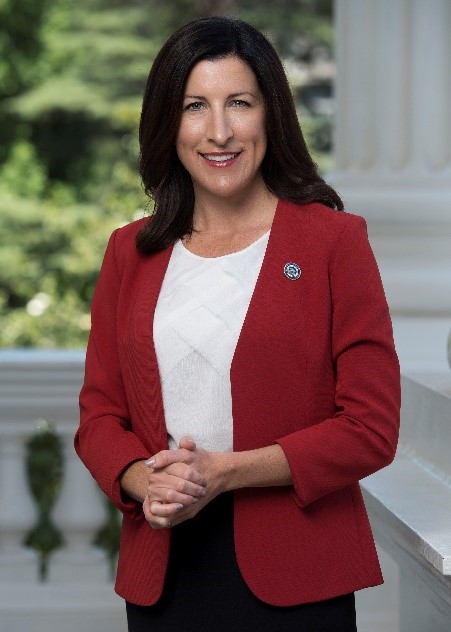
Asm. Cottie Petrie-Norris
Sponsored bills
(1) Existing law prohibits, during the prosecution of specified sex crimes, the admission of evidence of the manner in which the victim was dressed, when offered by either the prosecution or the defendant on the issue of consent, unless the court finds the evidence relevant and admissible in the interests of justice. This bill would prohibit the court from admitting evidence, in the above circumstances, of the manner in which the victim was dressed, upon a finding that the evidence is relevant and admissible in the interests of justice. (2) This bill would incorporate additional changes to Section 1103 of the Evidence Code proposed by AB 1171 to be operative only if this bill and AB 1171 are enacted and this bill is enacted last. (3) The California Constitution provides that relevant evidence shall not be excluded in any criminal proceeding except as provided by statute enacted by a 23 vote of the membership of each house of the Legislature. Because this bill would limit the admissibility of evidence in criminal proceedings, it would require a 23 vote.
Existing law establishes the Climate Ready Program in the State Coastal Conservancy to address the impacts and potential impacts of climate change on resources within the conservancy's jurisdiction. Existing law authorizes the conservancy to undertake projects within its jurisdiction, including projects related to beach and bluff erosion and other coastal hazards that threaten coastal communities, infrastructure, and natural resources. Existing law requires the Office of Emergency Services, in collaboration with the California Institute of Technology, the California Geological Survey, the University of California, the United States Geological Survey, the Alfred E. Alquist Seismic Safety Commission, and other stakeholders, to develop a comprehensive statewide earthquake early warning system in California through a public-private partnership, which is required to include, among other things, the installation of field sensors. Existing law establishes the University of California, under the administration of the Regents of the University of California, as one of the segments of public postsecondary education in this state. The University of California comprises 10 institutions of higher education, which are located at Berkeley, Davis, Irvine, Los Angeles, Merced, Riverside, San Diego, San Francisco, Santa Barbara, and Santa Cruz. This bill would, upon appropriation by the Legislature, require the Scripps Institution of Oceanography at the University of California, San Diego, to conduct research on coastal cliff landslides and erosion in the County of San Diego, as provided. The bill would require the research to be completed by January 1, 2025. The bill would require by no later than March 15, 2025, the institution to provide a report to the Legislature with recommendations for developing a coastal cliff landslide and erosion early warning system based on available research. The bill would exempt the Regents of the University of California and its employees, acting in good faith, from civil liability for any harm resulting from measurements, predictions, or warnings regarding bluff failure, cliff landslides, or erosion contained in the report or from the research or related to the recommendations, unless those damages are the result of acts or omissions constituting gross negligence or willful or wanton misconduct.
Existing law provides for the licensing and regulation of an adult alcoholism or drug abuse recovery or treatment facility, a psychiatric health facility, or a mental health rehabilitation facility by the State Department of Health Care Services. Existing law authorizes the department to impose specified penalties on a facility that is in violation of applicable laws and regulations governing the facility. Existing law, the California Community Care Facilities Act, provides for the licensing and regulation of a community care facility, including, among others, a social rehabilitation facility, by the State Department of Social Services. A violation of the act may be subject to specified civil penalties, license suspension or revocation, or misdemeanor charges. This bill would prohibit an operator of a licensed alcoholism or drug abuse recovery or treatment facility, a certified alcohol or other drug program, and a licensed mental health rehabilitation center, psychiatric health facility, or social rehabilitation facility, from engaging in various acts, including making a false or misleading statement about the entity's products, goods, services, or geographical locations. The bill would also prohibit a picture, description, staff information, or the location of an entity from being included on an internet website along with false contact information that surreptitiously directs the reader to a business that does not have a contract with the entity. The bill would authorize the department responsible for the facility's licensure or certification to investigate allegations of a violation of these provisions and, upon finding a violation, to impose the civil sanctions and other penalties available pursuant to existing law, but would not make a violation of these provisions a crime.
Existing law requires the State Department of Health Care Services to license and regulate facilities that provide residential nonmedical services to adults who are recovering from problems related to alcohol, drug, or alcohol and drug misuse or abuse, and who need alcohol, drug, or alcohol and drug recovery treatment or detoxification services. Existing law requires a licensee to develop a plan to address when a resident relapses, including when a resident is on the licensed premises after consuming alcohol or using illicit drugs. This bill would require a licensee, at all times, to maintain at least 2 unexpired doses of naloxone hydrochloride, or any other opioid antagonist that is approved by the United States Food and Drug Administration for treatment of an opioid overdose, on the premises and have at least one staff member on the premises who knows the specific location of the naloxone hydrochloride, or other opioid antagonist, and who has been trained to administer it, as specified. The bill would prohibit a trained staff member from being held civilly or criminally liable for the administration, in good faith, of naloxone hydrochloride, or other opioid antagonist that is approved by the United States Food and Drug Administration for the treatment of an opioid overdose, to a person appearing to experience an opioid-related overdose. The bill would specify that the administration of naloxone hydrochloride, or other opioid antagonist that is approved by the United States Food and Drug Administration for the treatment of an opioid overdose, is an emergent care required in the case of a life-threatening emergency for purposes of the medical or health care services a licensed facility may provide. The bill would require the department to adopt regulations to implement these provisions on or before July 1, 2024.
Existing law requires the State Department of Health Care Services to license and regulate alcoholism or drug abuse recovery or treatment facilities serving adults. Existing law prohibits a licensee from operating an alcoholism or drug abuse recovery or treatment facility beyond the conditions and limitations specified on the license. Existing law also defines a "recovery residence" as a residential dwelling that provides primary housing for individuals who seek a cooperative living arrangement that supports personal recovery from a substance use disorder and that does not require licensure pursuant to those provisions or does not provide licensable services. This bill would require a licensee operating an alcoholism or drug abuse recovery or treatment facility and serving more than 6 residents to maintain specified insurance coverages, including, among others, commercial general liability insurance and employer's liability insurance. The bill would require a licensee that serves 6 or fewer residents to maintain general liability insurance coverage. The bill would require any government entity that contracts with a privately owned recovery residence to provide recovery services, or with an alcoholism or drug abuse recovery or treatment facility to provide treatment services for more than 6 residents, to require the contractor to maintain those specified insurance coverages. If an alcoholism or drug abuse recovery or treatment facility provides services for 6 or fewer residents, the bill would require the government entity to require the contractor to maintain general liability insurance coverages, as specified. The bill would make these provisions applicable to contracts entered into, renewed, or amended on or after January 1, 2022. Existing law creates the Department of Insurance, headed by the Insurance Commissioner, and prescribes the department's powers and duties, including various duties to regulate the business of insurance in this state. Existing law prohibits a policy of residential property insurance from being issued or delivered unless the named insured is offered coverage for loss or damage caused by an earthquake, and specifies the minimum coverage that is required to be offered. Existing law defines a "policy of residential property insurance" for the purposes of these provisions to include a policy insuring, among other property, residential structures and their contents. This bill would specify that a "policy of residential property insurance" does not include a policy that provides, or is construed to provide, any coverage or indemnity for the payment of any fine, penalty, or restitution in any criminal, civil, or administrative action or proceeding, or any coverage or indemnity for the payment of any loss or liability, arising from the operation of either a recovery residence or an alcoholism or drug abuse recovery or treatment facility. The bill would make this provision applicable to policies issued, renewed, or amended on or after January 1, 2022.
(1) Existing federal law, the McKinney-Vento Homeless Assistance Act, provides grants to states to carry out activities relating to the education of homeless children and youths, as defined, including, among others, providing services and activities to improve the identification of homeless children and youths and to enable them to enroll in, attend, and succeed in school. The act requires a state plan submitted for the receipt of the grant to include assurances that local educational agencies will designate an appropriate staff person to act as a local educational agency liaison for homeless children and youths and a description of how the state will ensure that local educational agencies and their liaisons will comply with specified requirements of the act, including the identification of homeless children and youths. Under existing state law, public schools, including charter schools, and county offices of education are required to immediately enroll a homeless child or youth seeking enrollment, except as specified. Existing law requires a local educational agency liaison for homeless children and youths to ensure that public notice of the educational rights of homeless children and youths is disseminated in schools within the liaison's local educational agency that provide services pursuant to the act. This bill would require a local educational agency to ensure that each school within the local educational agency identifies all homeless children and youths and unaccompanied youths, as defined, enrolled at the school. The bill would also require local educational agencies receiving designated federal funds to administer a housing questionnaire, as specified, for purposes of identifying homeless children and youths and unaccompanied youths, and to annually provide the housing questionnaire to all parents or guardians of pupils and unaccompanied youths of the local educational agency. This bill would require a school district, charter school, or county office of education to create an internet web page or post on its internet website a list of the local educational agency liaisons for homeless children and youths and unaccompanied youths in that school district, charter school, or county office of education, respectively, the contact information for those liaisons, and specific information regarding the educational rights and resources available to persons experiencing homelessness. The bill would require a school to post on its internet website, if the school has an internet website, the contact information for the liaison, if available. The bill would also require, if a school has an employee or person under contract whose duties include assisting the liaison in completing the liaison's duties under the federal act, the school to post on its internet website, if the school has an internet website, the contact information for that employee or person under contract. The bill would require data collected by the department or by a local educational agency under these provisions to be used in accordance with all state and federal laws regarding pupil privacy and the collection and use of pupil data. By imposing additional duties on local educational agencies, the bill would impose a state-mandated local program. This bill, upon appropriation by the Legislature, would authorize $1,500,000 to be allocated to up to 3 county offices of education in different regions throughout the state for purposes of establishing technical assistance centers to foster relationships with community partners and other local educational agencies in each region, as provided. The bill would require the department to determine which county offices of education to allocate those funds to through a competitive process, as provided, and to take into account geographic diversity and concentrations of homeless children and youths and unaccompanied youths. The bill would require the technical assistance centers to be operative only for the duration of a specified federal grant period. (2) Existing law requires the department to provide, among other things, informational and training materials to local educational agency liaisons regarding the educational rights of homeless children and youths and the responsibilities of the liaisons. This bill would require the department to develop, as specified, best practices and a model housing questionnaire that a local educational agency may use to identify and obtain accurate data on all homeless children and youths and unaccompanied youths enrolled in schools of the local educational agency. The bill would require the department to post the best practices and model housing questionnaire on its internet website. (3) This bill would incorporate additional changes to Section 48852.5 of the Education Code proposed by SB 400 to be operative only if this bill and SB 400 are enacted and this bill is enacted last. (4) The California Constitution requires the state to reimburse local agencies and school districts for certain costs mandated by the state. Statutory provisions establish procedures for making that reimbursement. This bill would provide that, if the Commission on State Mandates determines that the bill contains costs mandated by the state, reimbursement for those costs shall be made pursuant to the statutory provisions noted above. (5) This bill would provide that, upon appropriation by the Legislature, the department would be authorized to use designated federal funds or the General Fund, or a combination of funds from these sources, to implement the provisions of the bill commencing with the 2021–22 school year. (6) This bill would declare that it is to take effect immediately as an urgency statute.
(1) Existing law establishes the Multifamily Housing Program administered by the Department of Housing and Community Development. Existing law requires assistance for projects under the program to be provided in the form of deferred payment loans to pay for eligible costs of the development, as provided. Existing law also requires that funds appropriated in the 2020 Budget Act or an act related to the 2020 Budget Act, including moneys received from the Coronavirus Relief Fund established by the federal Coronavirus Aid, Relief, and Economic Security (CARES) Act, to provide housing for individuals and families who are experiencing homelessness or who are at risk of homelessness and who are impacted by the COVID-19 pandemic, be disbursed in accordance with the Multifamily Housing Program for specified uses, and provides that the above-described deferred payment loan requirement under the program does not apply to assistance provided pursuant to these provisions, as specified. Existing law, the Veterans Housing and Homeless Prevention Act of 2014, requires the California Housing Finance Agency, the Department of Housing and Community Development, and the Department of Veterans Affairs to establish and implement programs that focus on veterans at risk for homelessness or experiencing temporary or chronic homelessness, as specified. In this regard, existing law requires those departments to establish and implement programs that, among other things, prioritize projects that combine housing and supportive services. Existing law, the No Place Like Home Program, as ratified and amended by Proposition 2, which was approved by the voters at the November 6, 2018, statewide general election, provides funding to provide permanent supportive housing for the target population, which is defined to include individuals who have a serious mental disorder and who are homeless, chronically homeless, or at risk of chronic homelessness. Existing law authorizes the Legislature to amend Proposition 2 by a 23 vote, so long as the amendment is consistent with and furthers the intent of that measure. This bill would require, beginning January 1, 2023, that a grantee or entity operating specified state homelessness programs, including the No Place Like Home Program, as a condition of receiving state funds, to enter Universal Data Elements and Common Data Elements, as defined by the United States Department of Housing and Urban Development Homeless Management Information System Data Standards, on the individuals and families it serves into its local Homeless Management Information System, unless otherwise exempted by state or federal law. The bill would require the Homeless Coordinating and Financing Council to specify the format and disclosure frequency of the required data elements. The bill would apply the data entry requirements to all new state homelessness programs that commence on or after July 1, 2021. The bill would require the Homeless Coordinating and Financing Council to provide technical assistance and guidance to any grantee or entity that operates a program subject to the bill, if the grantee or entity does not already collect and enter into the local Homeless Management Information System the data elements required. The bill would require the Homeless Coordinating and Financing Council to provide the aggregate data summaries collected under these provisions to specified state agencies or departments within 45 days of receipt, as specified. Existing law creates the Homeless Coordinating and Financing Council and requires it, among other things, to create a statewide data system or warehouse that collects local data through Homeless Management Information Systems, with the ultimate goal of matching data on homelessness to programs impacting homeless recipients of state programs. This bill would specify that the statewide data storage system described above be known as the Homeless Data Integration System and would grant staff of the Homeless Coordinating and Financing Council specified powers in regard to its operation. The bill would require that a continuum of care, as defined in federal law, provide collected data elements, including health information, as specified, to the Homeless Data Integration System, and would except health information and personal identifying information from disclosure to the public. By imposing new duties on local entities to provide information to the state, this bill would create a state-mandated local program. (2) Existing law authorizes the Legislature to amend Proposition 2 by a 23 vote, so long as the amendment is consistent with and furthers the intent of that measure. The bill would state the findings of the Legislature that these provisions are consistent with, and further the intent of, the No Place Like Home Act. (3) Existing constitutional provisions require that a statute that limits the right of access to the meetings of public bodies or the writings of public officials and agencies be adopted with findings demonstrating the interest protected by the limitation and the need for protecting that interest. This bill would make legislative findings to that effect. The California Constitution requires the state to reimburse local agencies and school districts for certain costs mandated by the state. Statutory provisions establish procedures for making that reimbursement. This bill would provide that, if the Commission on State Mandates determines that the bill contains costs mandated by the state, reimbursement for those costs shall be made pursuant to the statutory provisions noted above. (4) This bill would incorporate additional changes to Sections 8256 and 8257 of the Welfare and Institutions Code proposed by AB 1220 to be operative only if this bill and AB 1220 are enacted and this bill is enacted last.
Existing law establishes the Marine Managed Areas Improvement Act (MMAIA) , which, among other things, prescribes 6 classifications for designating managed areas in the marine and estuarine environments to ensure the long-term ecological viability and biological productivity of marine and estuarine ecosystems and to preserve cultural resources in the coastal sea. Under the MMAIA, in a state marine conservation area, it is unlawful to injure, damage, take, or possess any living, geological, or cultural marine resource for commercial or recreational purposes, or a combination of commercial and recreational purposes, that the designating entity or managing agency determines would compromise protection of the species of interest, natural community, habitat, or geological features. The MMAIA authorizes the designating entity or managing agency to permit, among other things, research, education, and recreational activities. This bill would authorize the designating entity or managing agency to also permit restoration and monitoring activities.
Existing law establishes the Natural Resources Agency. Existing law requires the agency, by July 1, 2017, and every 3 years thereafter, to update the state's climate adaptation strategy to identify vulnerabilities to climate change by sectors and priority actions needed to reduce the risks in those sectors. This bill would enact the Coastal Adaptation Permitting Act of 2021. The bill would require the agency to explore, and authorize it to implement, options within the agency's jurisdiction to establish a more coordinated and efficient regulatory review and permitting process for coastal adaptation projects that use natural infrastructure, as defined. The bill would require the agency to submit, by July 1, 2023, a report to the Legislature with suggestions and recommendations for improving and expediting the coordination between appropriate agencies in their regulatory review and permitting process for coastal adaptation projects that use natural infrastructure.