

Existing law defines an "automobile dismantler" as a person who is engaged in the business of buying, selling, or dealing in vehicles that are required to be registered under the Vehicle Code, for the purpose of dismantling the vehicles, who buys or sells the integral parts and component materials of those vehicles, or deals in used motor vehicle parts, as specified. The definition of "automobile dismantler" also includes a person who keeps or maintains on property owned by the person, or under their possession or control, 2 or more unregistered motor vehicles no longer intended for, or in condition for, legal use on the highways, as specified. Existing law makes it a crime for a person to act as an automobile dismantler without having an established place of business, meeting specified requirements, and having a current, valid license or temporary permit issued by the Department of Motor Vehicles. This bill would revise the definition of an automobile dismantler to include a person who keeps or maintains on property owned by the person, or under their possession or control, for any of the above-described purposes 9 or more used catalytic converters that have been cut from a motor vehicle using a sharp implement. The bill would make a first violation of acting as an automobile dismantler due to possessing 9 or more catalytic converters as described above punishable as an infraction, and subsequent violations punishable as a misdemeanor, as specified. By expanding the definition of an automobile dismantler, the bill would expand the scope of an existing crime, thereby imposing a state-mandated local program. The bill would exclude from the revised definition of an automobile dismantler a junk dealer, recycler, commercial enterprise, or core recycler, as specified, that has 9 or more of these used catalytic converters. Existing law excludes from the definition of an "automobile dismantler" the owner or operator of any premises on which 2 or more unregistered and inoperable vehicles are held or stored, if the vehicles are used for restoration or replacement parts or otherwise, in conjunction with specified businesses, including the operation and maintenance of any fleet of motor vehicles used for the transportation of persons or property. This bill would also exclude from the definition of an "automobile dismantler" a person who possesses 9 or more catalytic converters that are used in the same manner as the unregistered and inoperable vehicles. The California Constitution requires the state to reimburse local agencies and school districts for certain costs mandated by the state. Statutory provisions establish procedures for making that reimbursement. This bill would provide that no reimbursement is required by this act for a specified reason.
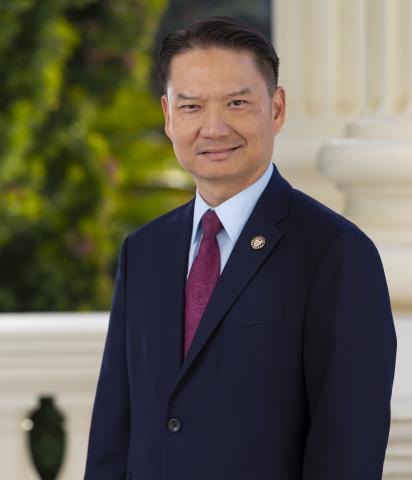
Asm. Tri Ta
Sponsored bills
The Alcoholic Beverage Control Act, administered by the Department of Alcoholic Beverage Control, regulates the application for, the issuance of, the suspension of, and the conditions imposed upon, various alcoholic beverage licenses. Existing law generally provides that a violation of the act is a misdemeanor. This bill would require an applicant for a new permanent on-sale general public premises (Type 48) license or the holder of an existing Type 48 license to offer for sale to their customers drug testing devices at a cost not to exceed a reasonable amount based on the wholesale cost of those devices. The bill would require a licensee to post a related notice containing specified language in a prominent and conspicuous location. The bill would prohibit a Type 48 licensee from being held liable for a defective test or inaccurate test result. The bill would require a Type 48 licensee to ensure that all testing devices offered to customers have not exceeded their expiration date or recommended period of use, as specified. The bill would specify that a violation of its provisions is not a crime. The bill would require the department to post on its internet website information about the bill's requirements, as specified. The bill would make its provisions operative on July 1, 2024, and would repeal its provisions on January 1, 2027.
Existing law establishes the New Motor Vehicle Board in the Department of Motor Vehicles, and requires the board to hear and decide certain protests presented by a motor vehicle franchisee in regard to a dispute with the vehicle manufacturer. Existing law prohibits a franchisor from engaging in specified proscribed business practices. A violation of the Vehicle Code is punishable as an infraction. This bill would prohibit additional acts, including allocating vehicles and parts inconsistent with specified standards. Existing law prohibits a licensed manufacturer, manufacturer branch, distributor, distributor branch, or affiliate from engaging in specified proscribed business practices, including establishing or maintaining a performance standard, sales objective, or program for measuring a dealer's sales, service, or customer service performance, unless specified requirements are satisfied. A violation of the Vehicle Code is punishable as an infraction. This bill would prohibit additional acts, including exercising a right of first refusal in bad faith and implementing or modifying a vehicle reservation system for the sale or lease of motor vehicles that does not comply with specified requirements. This bill would additionally provide that a licensed manufacturer, manufacturer branch, distributor, distributor branch, or affiliate is not unlawfully competing with a franchise by providing an update or repair of motor vehicle software over-the-air at no cost or by creating a new line of motor vehicles and using new or existing franchisees to sell and service those vehicles. The bill would also declare the severability of its provisions. Because a violation of these new provisions would be punishable as a crime, the bill would impose a state-mandated local program. The bill includes legislative findings and declarations and would make other conforming changes. The California Constitution requires the state to reimburse local agencies and school districts for certain costs mandated by the state. Statutory provisions establish procedures for making that reimbursement. This bill would provide that no reimbursement is required by this act for a specified reason.
Existing law, the Davis-Stirling Common Interest Development Act, defines and regulates common interest developments, including member elections. Existing law prescribes that a quorum is required only if stated in the governing documents or by law. In the absence of a quorum, this bill would authorize an association to adjourn the proceeding to a date at least 20 days after the adjourned proceeding, at which time the quorum required for purposes of a membership meeting shall be 20% of the voting members present in person, by proxy, or by secret written ballot received. The bill would require an association to provide general notice of the membership meeting, as specified, no less than 15 days prior to the election of directors. Under existing law, for elections of directors and for recall elections, an association is required to provide general notice of specified information about the election at least 30 days before the ballots are distributed, including the date, time, and location of the meeting at which ballots will be counted. This bill would additionally require the general notice to include the date, time, and location of the meeting at which quorum will be determined, if the association's governing documents require a quorum. The bill would require an association whose governing documents require a quorum for election of directors to provide general notice of a statement that the board of directors may call a subsequent meeting at least 20 days after a scheduled election if the quorum is not reached, as specified. Existing law authorizes and regulates the formation and operation of various corporations, including a nonprofit mutual benefit corporation. Existing law sets forth the parameters of a quorum at a meeting of members, as specified. For a corporation that is a common interest development, existing law imposes notice requirements for special meetings. In the absence of a quorum, this bill would authorize a corporation that is a common interest development to adjourn a membership meeting to a date at least 20 days after the adjourned proceeding, at which time the quorum required for purposes of a membership meeting shall be 20% of the voting members present in person, by proxy, or by secret written ballot received.
Existing law defines the term "serious felony" for various purposes, including, among others, enhancing the punishment for felonies pursuant to existing sentencing provisions commonly known as the Three Strikes Law. This bill would include human trafficking of a minor within the definition of a serious felony for all purposes, including for purposes of the Three Strikes Law, except as specified. By expanding the scope of an enhancement, this bill would impose a state-mandated local program. The California Constitution requires the state to reimburse local agencies and school districts for certain costs mandated by the state. Statutory provisions establish procedures for making that reimbursement. This bill would provide that no reimbursement is required by this act for a specified reason.
This measure would proclaim the month of September 2023 as Suicide Prevention Awareness Month.
This measure would proclaim September 2023 as California Emergency Preparedness Month.
This measure would commemorate June 2023 as the 80th Anniversary of the Zoot Suit Riots.
This measure would declare May as California Small Business Month and express the Legislature's support of the Governor's efforts in promoting small businesses.
This measure would commemorate the 70th anniversary of the alliance between the United States and the Republic of Korea.