

Existing law authorizes voters to propose state and local laws by initiative and to approve or reject state or local laws by referendum. Existing law authorizes the recall of state and local officers in accordance with specified procedures. Under existing law, proponents may qualify an initiative, referendum, or recall for the ballot by filing a petition signed by a specified number of voters registered in the jurisdiction that would be subject to the initiative, referendum, or recall. Existing law requires elections officials to verify the signatures submitted on a petition by comparing them to any file or list of registered voters maintained by their office, or the facsimiles of voters' signatures, as specified. This bill would establish a process for a voter whose signature on a state, county, city, or district initiative, referendum, or recall petition is rejected by an elections official to submit a statement to verify the voter's signature. If the elections official determines that the signature on the petition possesses multiple, significant, and obvious differing characteristics when compared to all signatures in the voter's registration record, the bill would require the elections official to mail a notice to the voter, on or before the next business day or as soon as practicable, of the opportunity to verify the voter's signature. The bill would require the notice and signature verification statement to contain specified text, and would require the voter to return the statement by the end of a specified 30-day period. The bill would require the elections official to include the petition signature verification statement, instructions, and additional specified information on the elections official's internet website. The bill would require elections officials to report to the Secretary of State by a specified date the number of notices mailed to voters, the number of signature verification statements returned by voters, the number of signatures successfully cured, and the number of signatures that were not cured. The bill would require the Secretary of State to compile this data on an annual basis and post a report with the information on its internet website. By increasing the duties of local elections officials, this bill would impose a state-mandated local program. The California Constitution requires the state to reimburse local agencies and school districts for certain costs mandated by the state. Statutory provisions establish procedures for making that reimbursement. This bill would provide that, if the Commission on State Mandates determines that the bill contains costs mandated by the state, reimbursement for those costs shall be made pursuant to the statutory provisions noted above.
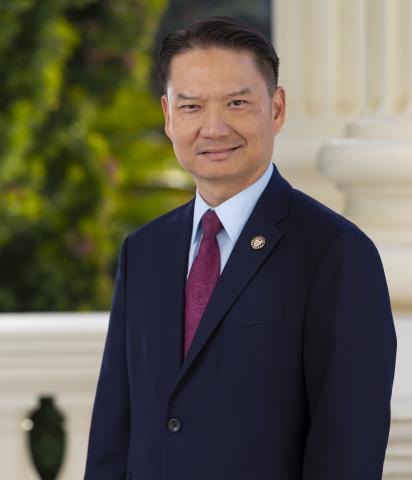
Asm. Tri Ta
Sponsored bills
(1) Existing law establishes a system of elementary and secondary education in this state. This system consists of the public and private schools that provide instruction in kindergarten and in grades 1 to 12, inclusive. Existing law establishes a system of higher education in this state, consisting of 4 segments: the University of California, under the administration of the Regents of the University of California; the California State University, under the administration of the Trustees of the California State University; the California Community Colleges, under the administration of the Board of Governors of the California Community Colleges; and independent institutions of higher education. This bill would enact the Education Savings Account Act of 2024 and establish the Education Savings Account (ESA) Trust, to be known as the ESA Trust, as a fund within the State Treasury to be administered by the ESA Trust Board. During the first 4 school years following the operative date of the act, the bill would authorize certain children eligible to be enrolled in kindergarten, or in an elementary or secondary school, in any of grades 1 to 12, inclusive, to establish an ESA, based on parent or guardian income. The bill would remove these income eligibility limits after 4 school years following the operative date of the act, thereby entitling every child eligible to be enrolled in kindergarten, or in an elementary or secondary school, in any of grades 1 to 12, inclusive, to establish an ESA. The bill would specify that every child enrolled in an eligible school shall be entitled, pursuant to this act, to a credit to the child's account for tuition, elementary and secondary eligible education expenses, and undergraduate or graduate eligible education expenses, as defined. Commencing with the first fiscal year following the operative date of the act, the bill would require the Department of Finance to determine, on July 1 of each year, the annual ESA deposit amount for the upcoming school year. The bill would specify the procedure for calculating the ESA deposit amount and would require the Controller to transfer an amount of money from the General Fund to the ESA Trust equal to the ESA deposit amount multiplied by the number of ESAs established, as provided. The bill would require the ESA Trust Board to be composed of specified members and would vest the ESA Trust Board with certain powers and duties. The bill would establish 2 accounts within the ESA Trust, the ESA Trust Program Account and the ESA Trust Administrative Account, and would continuously appropriate the moneys in the program account to the ESA Trust Board for purposes of the bill, thereby making an appropriation. The bill would require the Superintendent of Public Instruction to establish a procedure for the parents and legal guardians of eligible students to apply to establish an ESA and submit an executed participation agreement. The bill would authorize the ESA Trust Board to disburse funds from ESAs to eligible schools. The bill would define "eligible school" as a campus of the California Community Colleges, the California State University, and the University of California, a full-time private school, a private college or university, a public college or university, or a vocational educational or training institution, as specified. The bill would specify the procedures for participating eligible schools to receive funds disbursed by the ESA Trust Board. Once an eligible student graduates from high school or obtains a high school equivalency certification, the bill would impose a $60,000 cap on the balance in any ESA available for an eligible student's use for tuition, undergraduate or graduate eligible education expenses, or expenses associated with vocational education. The bill would require the Department of Finance to adjust this limit annually for inflation using the California Consumer Price Index. (2) The Classroom Instructional Improvement and Accountability Act, an initiative approved by the voters as Proposition 98 at the November 8, 1988, statewide general election, amended the California Constitution to, among other things, set forth a formula for computing the minimum amount of revenues that the state is required to appropriate for the support of school districts and community college districts based on one of 3 tests in any given fiscal year, one of which is based on the percentage of General Fund revenues appropriated for school districts and community college districts, respectively, in the 1986–87 fiscal year, and 2 of which are based on, among other things, changes in enrollment. This bill would require the Legislature to recalculate that minimum education funding guarantee by including eligible students not enrolled in a public elementary or secondary school before the operative date of the act in those minimum funding guarantee calculations based on average daily attendance, as provided. The bill would also require the costs of providing ESA deposit amounts for eligible students to be apportioned between the General Fund and the public school district in which those eligible students reside in the same ratio of General Fund and local property tax revenue that would have been used to educate those eligible students in their public school district. (3) The Personal Income Tax Law, in modified conformity with federal law, generally defines "gross income" as income from whatever source derived, except as specifically excluded, and provides various exclusions from gross income for purposes of computing tax liability. This bill would, for taxable years beginning on or after January 1, 2025, exclude from gross income any amounts received as distribution from an ESA, as defined, as part of a participation agreement. Existing law requires a bill authorizing a new tax expenditure to contain, among other things, specific goals, purposes, and objectives the tax expenditure will achieve, detailed performance indicators, and data collection requirements. This bill would include additional information required for any bill authorizing a new tax expenditure. (4) These provisions would become operative on January 1, 2025, only if Senate Constitutional Amendment 5 of the 2023–24 Regular Session is approved by the voters at the statewide general election on November 5, 2024.
Existing law, the Mello-Granlund Older Californians Act, establishes the Office of the State Long-Term Care Ombudsman, under the direction of the State Long-Term Care Ombudsman, in the California Department of Aging. Existing law requires the State Long-Term Care Ombudsman to ensure that residents have regular and timely access to the services provided through the office. Existing law requires the department to establish an 11-member advisory council for the office to provide advice and consultation to the State Long-Term Care Ombudsman Program and the Director of the California Department of Aging on issues affecting the provision of ombudsman services, including the review of proposed policy changes to the operation of the program, and to make recommendations, within 30 days, as appropriate. Existing law requires the department to notify the advisory council at least 30 days before designating a new organization or agency as an approved organization. This bill would instead require the department to establish a 13-member advisory council. The bill would extend the timeframe for the advisory council to consult with and make recommendations to the State Long-Term Care Ombudsman Program and the director from 30 days to 45 days. The bill would also extend the timeframe for the department to notify the advisory council about designating a new organization or agency as an approved organization from 30 days to 45 days.
Existing law directs the Commission on Peace Officer Standards and Training to establish training and guidelines for law enforcement officers, as defined, in the handling of domestic violence complaints, such as how to respond to domestic violence incidents, the legal duties imposed on law enforcement officers to make arrests and offer assistance, and techniques to promote the safety of the victim, as specified. Existing law requires law enforcement agencies to develop and implement written policies for officer responses to domestic violence incidents, including furnishing written notice to victims at the scene in the form of a Victims of Domestic Violence card that contains, among other information, telephone numbers for local hotlines, shelters, and counseling centers. This bill would add the issuance of Victims of Domestic Violence cards as a topic in the course of instruction for the training of law enforcement officers. This bill would additionally require the Victims of Domestic Violence card to be a different color than other cards issued by officers, to include a disclaimer, to be available in languages other than English, and to include various information such as the definition of domestic violence and the statute of limitations for domestic violence. This bill would make these changes operative on January 1, 2025. Because this bill would expand an existing local program, it would impose a state-mandated local program. Existing law establishes the Office of Emergency Services and makes it responsible for providing assistance such as financial, technical, and educational support, as specified, on the topic of domestic violence to local entities including domestic violence support centers and law enforcement. This bill, commencing January 1, 2025, would require the office to develop a model Victims of Domestic Violence card that can be modified by cities and counties. The bill would also require the office to publish on an internet website maintained by the office specified information and resources to assist victims of domestic violence, including, among other things, a summary of state mandatory arrest policies for domestic violence crimes. The California Constitution requires the state to reimburse local agencies and school districts for certain costs mandated by the state. Statutory provisions establish procedures for making that reimbursement. This bill would provide that, if the Commission on State Mandates determines that the bill contains costs mandated by the state, reimbursement for those costs shall be made pursuant to the statutory provisions noted above.
The Personal Income Tax Law allows various credits against the taxes imposed by that law. That law, in modified conformity to federal income tax law, authorizes a credit for household and dependent care expenses necessary for gainful employment, as provided. This bill would allow a credit against those taxes for each taxable year beginning on or after January 1, 2025, and before January 1, 2030, in an amount equal to childcare costs, as defined, paid or incurred by the qualified taxpayer in this state. The bill would limit the total credit for each taxable year, as specified. Existing law requires any bill authorizing a new tax expenditure, as defined, to include tax credits, to contain, among other things, specific goals, purposes, and objectives that the tax credit will achieve, detailed performance indicators, and data collection requirements. This bill would include findings and reporting requirements in compliance with this requirement. This bill would take effect immediately as a tax levy.
Existing law requires the State Department of Public Health to provide, or contract for the provision of, public and professional education on Alzheimer's disease for consumers, caregivers, and health care providers. This bill would require the department to implement a public awareness campaign, as specified, and include education for unpaid caregivers. The bill would also make related legislative findings and declarations.
Existing sales and use tax laws impose taxes on retailers measured by the gross receipts from the sale of tangible personal property sold at retail in this state, or on the storage, use, or other consumption in this state of tangible personal property purchased from a retailer for storage, use, or other consumption in this state, and provides various exemptions from the taxes imposed by those laws. This bill would, on and after January 1, 2024, and before January 1, 2029, exempt from those taxes the gross receipts from the sale of, and the storage, use, or other consumption of, qualified school supplies, as defined, for the two-day period beginning at 12:01 a.m. on the third Saturday of July of each year and ending at 11:59 p.m. on the following day. Existing law requires a bill that would authorize a new tax expenditure under the Sales and Use Tax Law to identify specific goals, purposes, and objectives that the tax expenditure will achieve, and detailed performance indicators and data collection requirements for determining whether the tax expenditure achieves these goals, purposes, and objectives. This bill would make findings specifying the goal, purpose, and objective of the sales and use tax exemption provided by this bill and the performance indicator to be used, and would require, on or before January 10, 2025, the California Department of Tax and Fee Administration to provide a report to the Assembly Revenue and Taxation Committee and the Senate Governance and Finance Committee on the use of the tax exemption. The Bradley-Burns Uniform Local Sales and Use Tax Law authorizes counties and cities to impose local sales and use taxes in conformity with the Sales and Use Tax Law, and existing laws authorize districts, as specified, to impose transactions and use taxes in accordance with the Transactions and Use Tax Law, which generally conforms to the Sales and Use Tax Law. Amendments to the Sales and Use Tax Law are automatically incorporated into the local tax laws. Existing law requires the state to reimburse counties and cities for revenue losses caused by the enactment of sales and use tax exemptions. This bill would provide that, notwithstanding Section 2230 of the Revenue and Taxation Code, no appropriation is made and the state shall not reimburse any local agencies for sales and use tax revenues lost by them pursuant to this bill. This bill would take effect immediately as a tax levy.
Existing law defines a nuisance, in part, as anything which is injurious to health, or is indecent or offensive to the senses, or an obstruction to the free use of property, so as to interfere with the comfortable enjoyment of life or property and defines a public nuisance as one that affects an entire community, neighborhood, or any considerable number of persons at the same time. Existing law authorizes various remedies for nuisances, including remedies to effect abatement and damages. Existing law authorizes a court to award costs, including attorney's fees, in specified cases brought by a government agency. This bill would require a court to award attorney's fees to a prevailing plaintiff in an action to require a governmental entity to abate a public nuisance arising from a homeless encampment.
Existing law imposes an annual minimum franchise tax of $800, except as provided, on every corporation incorporated in this state, qualified to transact intrastate business in this state, or doing business in this state. Existing law also imposes an annual tax in an amount equal to the minimum franchise tax on every limited partnership, limited liability partnership, and limited liability company doing business in this state, as specified. This bill, for taxable years beginning on or after January 1, 2023, would exempt corporations incorporated in this state from the minimum franchise tax until the first taxable year in which the corporation has gross receipts of $20,000. The bill would also exempt a limited partnership, limited liability partnership, and limited liability company from the annual tax until the first taxable year in which the business has gross receipts of $20,000. Existing law requires any bill authorizing a new tax expenditure to contain, among other things, specific goals, purposes, and objectives the tax expenditure will achieve, detailed performance indicators, and data collection requirements. The bill also would include additional information required for any bill authorizing a new income tax expenditure. This bill would take effect immediately as a tax levy.
Existing law vests the Public Utilities Commission with regulatory authority over public utilities, including electrical corporations. Existing law authorizes the commission to fix the rates and charges for every public utility and requires that those rates and charges be just and reasonable. This bill would prohibit an electrical corporation from proposing a rate increase above the rate of inflation, as specified, except with the approval of the commission. The bill would authorize the commission to approve a rate increase above the rate of inflation if the commission determines that those costs are directly related to safety enhancements and modernization, or higher commodity or fuel costs. Under existing law, a violation of the Public Utilities Act or any order, decision, rule, direction, demand, or requirement of the commission is a crime. Because the above-described requirements would be a part of the act, and because a violation of an action of the commission implementing the above-described prohibition would be a crime, the bill would impose a state-mandated local program. The California Constitution requires the state to reimburse local agencies and school districts for certain costs mandated by the state. Statutory provisions establish procedures for making that reimbursement. This bill would provide that no reimbursement is required by this act for a specified reason.