

Passed Feb 12, 2024
1 co-sponsor
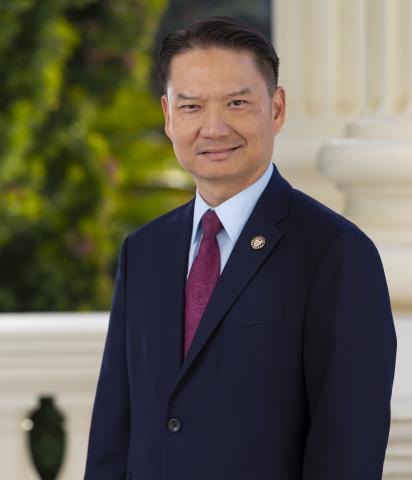
Asm. Tri Ta
Total votes
12,842
all sessions
Attendance
86%
1,179 missed
Lower than 85% of chamber peers
With party
99%
of cast votes
Near the chamber average
Bipartisan score
1%
crosses aisle rarely
Near the chamber average
Sponsored
806
bills & resolutions
Higher than 82% of chamber peers
Committees
6
assignments
806 bills and resolutions
Sponsored bills
Total
806
Primary
103
Co-sponsor
703
This page
806
matching current filters
Passed Feb 8, 2024
1 co-sponsor
Year-round standard time.
Existing state law, Proposition 7, an initiative measure approved by the voters at the November 6, 2018, statewide general election, sets the standard time for California and sets daylight saving time to begin each March and end each November. Proposition 7 authorizes the Legislature to amend these provisions by a 23 vote to change the dates and times of the daylight saving time period, consistent with federal law, and authorizes the Legislature to amend these provisions by a 23 vote to provide for the application of year-round daylight saving time when authorized by federal law. This bill would repeal daylight saving time in the state and the provisions regarding the Legislature's authority to amend the above-described provisions by a 23 vote. The bill would instead require the state and all political subdivisions of the state to observe year-round standard time. The bill would exempt the state and all political subdivisions of the state from the provisions of federal law that establish the advancement of time.
In committee Feb 5, 2024
0 co-sponsors
Cosmetic products: perfluoroalkyl and polyfluoroalkyl substances (PFAS).
Existing law requires the State Air Resources Board to adopt regulations to achieve the maximum feasible reduction in volatile organic compounds emitted by consumer products, as defined, if the state board determines adequate data exist to establish the regulations are necessary to attain state and federal ambient air quality standards and the regulations are commercially and technologically feasible and necessary. Existing law prohibits, beginning January 1, 2025, a person or entity from manufacturing, selling, delivering, holding, or offering for sale in commerce any cosmetic product that contains intentionally added perfluoroalkyl and polyfluoroalkyl substances (PFAS) . Existing law defines, for these purposes, "PFAS" to mean a class of fluorinated organic chemicals containing at least one fully fluorinated carbon atom, and "intentionally added PFAS" to mean PFAS chemicals that a manufacturer has intentionally added to a product and that have a functional or technical effect on the product, or PFAS chemicals that are intentional breakdown products of an added chemical. This bill would authorize a person or entity to petition the board to exempt an intentionally added PFAS from that prohibition, and would authorize the state board to, in consultation with the State Water Resources Control Board, the Office of Environmental Health Hazard Assessment, and the Department of Toxic Substances Control, exempt an intentionally added PFAS from that prohibition if the state board determines that the intentionally added PFAS meets specified qualifications. The bill would require the petitioner to provide specified information in their exemption petition to the board, including, among other things, the name of the intentionally added PFAS proposed for exemption, its intended end use, and its intended concentration in the proposed cosmetic product.
Failed Feb 1, 2024
0 co-sponsors
Sexual assault forensic evidence: testing.
Existing law requires law enforcement agencies to either submit sexual assault forensic evidence received on or after January 1, 2016, to a crime lab within 20 days after it is booked into evidence or to ensure that a rapid turnaround deoxyribonucleic acid (DNA) program is in place, as specified. Existing law also requires a crime lab that receives sexual assault forensic evidence on or after January 1, 2016, to either process the evidence, create DNA profiles when able, and upload qualifying DNA profiles into the Combined DNA Index System, as specified, or transmit the sexual assault forensic evidence to another crime lab as soon as practically possible, but no later than 30 days after receiving the evidence, for processing of the evidence for the presence of DNA. This bill would require a law enforcement agency, for any sexual assault forensic evidence connected to a reported crime received by the law enforcement agency prior to January 1, 2016, to submit that evidence to the crime lab on or before January 31, 2025. The bill would additionally require a crime lab, for any sexual assault evidence kit received by a law enforcement agency prior to January 1, 2016, and submitted to the crime lab on or after January 1, 2024, to process that evidence kit no later than January 31, 2026. Because the bill would impose a higher level of service on local law enforcement agencies in processing that evidence, it would impose a state-mandated local program. The California Constitution requires the state to reimburse local agencies and school districts for certain costs mandated by the state. Statutory provisions establish procedures for making that reimbursement. This bill would provide that, if the Commission on State Mandates determines that the bill contains costs mandated by the state, reimbursement for those costs shall be made pursuant to the statutory provisions noted above.
Failed Feb 1, 2024
1 co-sponsor
Lifetime hunting and sport fishing licenses: Gold Star Family members.
Existing law requires the Department of Fish and Wildlife to issue lifetime hunting licenses and lifetime sport fishing licenses, and grants certain lifetime privileges to holders of those licenses, upon the one-time payment of specified fees. This bill would require, upon application to the department, lifetime hunting licenses and lifetime sport fishing licenses to be issued at no cost to Gold Star Family members who meet certain eligibility requirements.
Failed Feb 1, 2024
1 co-sponsor
Crimes: false depictions.
The California Constitution declares that all people have inalienable rights, including the right to pursue privacy. Existing law makes it a crime to distribute intimate images of another person, as specified, that were intended to remain private, and that results in the serious emotional distress of the person depicted. This bill would make it a crime for a person to knowingly, and without the consent of the depicted individual, distribute to, exhibit to, or exchange with others, or offer to distribute to, exhibit to, or exchange with others audio or visual media that falsely depicts an individual engaging in sexual conduct that would appear to a reasonable observer to be an authentic record of the conduct. By creating a new crime, this bill would impose a state-mandated local program. The California Constitution requires the state to reimburse local agencies and school districts for certain costs mandated by the state. Statutory provisions establish procedures for making that reimbursement. This bill would provide that no reimbursement is required by this act for a specified reason.
Failed Feb 1, 2024
0 co-sponsors
Public postsecondary education: systemwide fee or tuition waivers: online posting or notice.
Existing law requires the College of the Law, San Francisco, and each campus of the California Community Colleges and the California State University that has an internet website, and, if the Regents of the University of California adopt an appropriate resolution, each campus of the University of California that has an internet website, to provide an online posting or notice of systemwide fee or tuition waivers available to students. This bill, without regard to whether the campus has an internet website, would require the College of the Law, San Francisco, and each campus of the California Community Colleges and the California State University, and if the regents adopt an appropriate resolution, each campus of the University of California to provide the online posting or notice of systemwide fees or tuition waivers. To the extent that the bill would impose new duties on community college districts, the bill would impose a state-mandated local program. The California Constitution requires the state to reimburse local agencies and school districts for certain costs mandated by the state. Statutory provisions establish procedures for making that reimbursement. This bill would provide that, if the Commission on State Mandates determines that the bill contains costs mandated by the state, reimbursement for those costs shall be made pursuant to the statutory provisions noted above.
Failed Feb 1, 2024
0 co-sponsors
Intradistrict and interdistrict transfers: low-performing pupils.
Existing law authorizes the governing boards of 2 or more school districts to enter into an agreement, for a term not to exceed 5 school years, for the interdistrict attendance of pupils who are residents of the school districts. Existing law requires a school district of residence to approve an intradistrict transfer request for a victim of an act of bullying, as provided. If there is no available school for an intradistrict transfer, existing law authorizes a victim of an act of bullying to apply for an interdistrict transfer and prohibits a school district of residence from prohibiting that transfer if the school district of proposed enrollment approves the application for transfer. This bill would require a school district of residence to also approve an intradistrict transfer request for a low-performing pupil, as defined, of that school district if the school of attendance has been identified for comprehensive support and improvement or identified as low performing pursuant to specified federal laws, as provided. If there is no available school for an intradistrict transfer, the bill would authorize a low-performing pupil of a school district, if the school of attendance has been identified for comprehensive support and improvement or identified as low performing pursuant to specified federal laws, to apply for an interdistrict transfer and would prohibit the school district of residence from prohibiting that transfer if the school district of proposed enrollment approves the application for transfer. The bill would prohibit a school district of proposed enrollment from approving those transfer requests if the requested school has been identified for comprehensive support and improvement or identified as low performing pursuant to specified federal laws. By requiring school districts to approve intradistrict transfers for certain pupils, the bill would impose a state-mandated local program. The California Constitution requires the state to reimburse local agencies and school districts for certain costs mandated by the state. Statutory provisions establish procedures for making that reimbursement. This bill would provide that, if the Commission on State Mandates determines that the bill contains costs mandated by the state, reimbursement for those costs shall be made pursuant to the statutory provisions noted above.
Failed Feb 1, 2024
1 co-sponsor
County veterans service officers: additional resources.
Existing law authorizes each county board of supervisors to appoint a county veterans service officer, and permits the county to provide the officer with any assistance and facilities that it determines to be necessary. Existing law requires the Department of Veterans Affairs to disburse funds, appropriated to the department for the purpose of supporting county veterans service officers pursuant to the annual Budget Act, on a pro rata basis, to counties that comply with certain conditions This bill would, upon appropriation by the Legislature, provide a stipend to counties that host an active United States military base for the purposes of maintaining a county veterans service officer, at least part time, at each active United States military base in the county, subject to base approval.
Failed Feb 1, 2024
0 co-sponsors
Ask Maddy
·
AI policy assistant
Ask Maddy about Tri Ta
Scope: california
Hi! I can help you understand Tri Ta's legislative record. What would you like to know?
Try one of these
i
Maddy answers using official bill text and legislative records. Always verify before sharing.
Sources cited inline