

(1) Existing law establishes a system of public elementary and secondary schools in this state. This system is composed of local educational agencies throughout the state that provide instruction to pupils in kindergarten and grades 1 to 12, inclusive, at schoolsites operated by these agencies. Existing law, commencing with the 2022–23 school year, requires each school district and county superintendent of schools maintaining kindergarten or any of grades 1 to 12, inclusive, and each charter school to provide 2 nutritiously adequate school meals free of charge during each schoolday, regardless of the length of the schoolday, to any pupil who requests a meal without consideration of the pupil's eligibility for a federally funded free or reduced-price meal, as specified, with a maximum of one free meal for each meal service period. Existing law requires the department to develop and maintain nutrition guidelines for school lunches and breakfasts, and for all food and beverages sold on public school campuses. Existing law requires a school district, county superintendent of schools, or charter school to provide each needy pupil with one nutritionally adequate free or reduced-price meal during each schoolday, except as provided. This bill would revise and recast provisions regarding school meals for needy pupils by, among other things, instead requiring each school district, county superintendent of schools, and charter school to make available a nutritionally adequate breakfast, as defined, and a nutritionally adequate lunch, as defined, free of charge during each schoolday, as defined, to any pupil who requests a meal, without consideration of the pupil's eligibility for a federally funded free or reduced-price meal, as provided. The bill would require each school district, county office of education, or charter school that offers independent study to meet the above meal requirements for any pupil on any schoolday that the pupil is scheduled for educational activities, as provided. The bill would require the State Department of Education to submit a waiver request to the United States Department of Agriculture to allow for one meal to be provided during a schoolday lasting 4 hours or less to be served in a noncongregate manner. The bill would authorize each school district, county superintendent of schools, and charter school to make available either a nutritionally adequate breakfast or a nutritionally adequate lunch, as defined, in a noncongregate manner, as provided, if the State Department of Education receives approval for the federal noncongregate waiver. The bill would require each school district, county superintendent of schools, and charter school to provide pupils with adequate time to eat, as determined by that school district, county superintendent of schools, or charter school in consideration of the recommendations provided by the department. The bill would require a chartering authority, among other things, to provide technical assistance to a charter school to meet these meal requirements, as provided. If the federal School Breakfast Program and federal National School Lunch Program allow more added sugar or sodium than is recommended by the most recent Dietary Guidelines for Americans, as described, the bill would require the department to convene representatives from specified entities to work in partnership to provide maximum daily added sugar and sodium intake recommendations for each grade level, as provided. The bill also would make conforming changes to related provisions of law. By imposing additional duties on local educational agencies and officials, the bill would impose a state-mandated local program. (2) Existing law authorizes the governing board of a school district to establish rules to determine which pupils are needy and authorizes a nominal cash payment for school meals to be collected from pupils that are not eligible for free meals and requires the State Department of Education to determine the amount of cash payment that may be required of those pupils. Existing law requires the Superintendent of Public Instruction to reimburse school districts for free and reduced-price meals served or sold based on the median statewide meal costs. This bill would delete those provisions. (3) Existing federal law provides for the permanent and nationwide Summer Electronic Benefit Transfer for Children (Summer EBT) program, under which pupils who are eligible for free and reduced-price school meals receive $40 per month during summer months for grocery benefits. This bill would require the State Department of Education to work in partnership with the State Department of Social Services to maximize participation in the federal Summer EBT program, as provided. (4) The California Constitution requires the state to reimburse local agencies and school districts for certain costs mandated by the state. Statutory provisions establish procedures for making that reimbursement. This bill would provide that, if the Commission on State Mandates determines that the bill contains costs mandated by the state, reimbursement for those costs shall be made pursuant to the statutory provisions noted above.
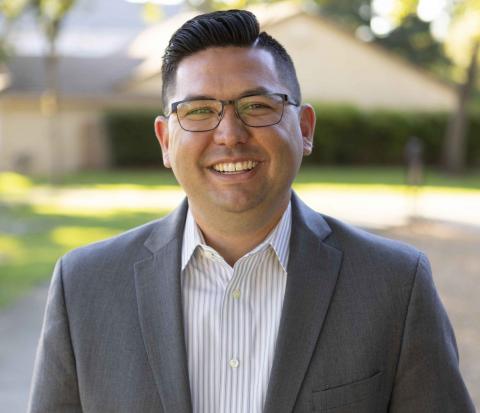
Asm. Joshua Hoover
Sponsored bills
The California Constitution generally limits ad valorem taxes on real property to 1% of the full cash value of that property, defined as the county assessor's valuation of real property as shown on the 1975–76 tax bill and, thereafter, the appraised value of the property when purchased, newly constructed, or a change in ownership occurs after the 1975 assessment, subject to an annual inflation adjustment not to exceed 2%. Existing property law, pursuant to the authorization of the California Constitution, provides a disabled veteran's tax exemption on specified property, as described. Existing law sets forth procedures to claim property tax exemptions. This bill would authorize a county assessor to provide written or electronic determination of preliminary eligibility for the disabled veteran's tax exemption. The bill would make related findings and declarations. This bill would incorporate additional changes to Section 205.5 of the Revenue and Taxation Code proposed by SB 82 to be operative only if this bill and SB 82 are enacted and this bill is enacted last.
Existing law requires a school district or county superintendent of schools maintaining kindergarten or any of grades 1 to 12, inclusive, to provide 2 school meals free of charge during each schoolday to any pupil who requests a meal without consideration of the pupil's eligibility for a federally funded free or reduced-price meal, with a maximum of one free meal for each meal service. The meals provided under this provision are required to be nutritiously adequate meals that qualify for federal reimbursement. Existing law authorizes a school, from the midnight before to 30 minutes after the end of the official schoolday, to sell food other than meals reimbursed by specified federal nutrition programs, only if the food meets dietary guidelines, as specified, depending on grade level. This bill would provide that nothing in those provisions are required to be construed to prohibit a school from selling to a pupil, after the pupil has been provided a school meal pursuant the provisions described above, the entrée from an additional nutritiously adequate meal that qualifies for federal reimbursement, from the same meal service.
Existing law defines the term "serious felony" for various purposes, including, among others, enhancing the punishment for felonies pursuant to existing sentencing provisions commonly known as the Three Strikes Law. This bill would include human trafficking of a minor within the definition of a serious felony for all purposes, including for purposes of the Three Strikes Law, except as specified. By expanding the scope of an enhancement, this bill would impose a state-mandated local program. The California Constitution requires the state to reimburse local agencies and school districts for certain costs mandated by the state. Statutory provisions establish procedures for making that reimbursement. This bill would provide that no reimbursement is required by this act for a specified reason.
This measure would proclaim the month of September 2023 as Suicide Prevention Awareness Month.
This measure would proclaim September 2023 as California Emergency Preparedness Month.
This measure would commemorate June 2023 as the 80th Anniversary of the Zoot Suit Riots.
This measure would declare May as California Small Business Month and express the Legislature's support of the Governor's efforts in promoting small businesses.
This measure would commemorate the 70th anniversary of the alliance between the United States and the Republic of Korea.
This measure would declare October 2023 as Women's Small Business Month and encourage all citizens to recognize the economic importance of women's small businesses in California.