

Passed Jan 18, 2024
0 co-sponsors
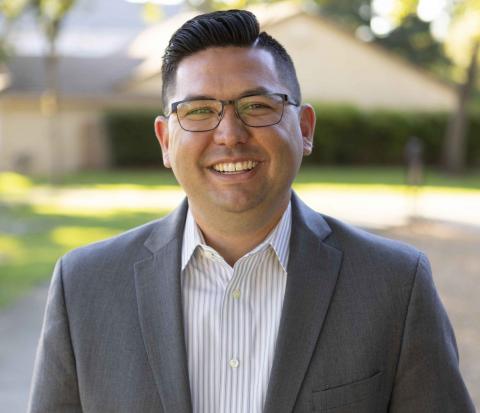
Asm. Joshua Hoover
Total votes
11,020
all sessions
Attendance
88%
954 missed
Lower than 85% of chamber peers
With party
98%
of cast votes
Near the chamber average
Bipartisan score
2%
crosses aisle rarely
Near the chamber average
Sponsored
849
bills & resolutions
Higher than 82% of chamber peers
Committees
11
assignments
849 bills and resolutions
Sponsored bills
Total
849
Primary
93
Co-sponsor
756
This page
849
matching current filters
Passed Jan 16, 2024
1 co-sponsor
Relative to the October 7, 2023, attack on Israel.
This measure would condemn and decry the Hamas terrorist organization in the harshest terms for its premeditated, coordinated, and barbaric attacks on Israel, acts of sexual violence, hostage taking, and theft of relief supplies intended for the civilian population of Gaza, and demand the release of all hostages held by Palestinian terrorists. The measure would condemn and denounce in the strongest possible terms all instances of anti-Semitism occurring in California, the United States, and globally.
Introduced Jan 4, 2024
1 co-sponsor
Shoplifting: increased penalties for prior crimes.
Existing law, the Safe Neighborhoods and Schools Act, enacted as an initiative statute by Proposition 47, as approved by the electors in the November 4, 2014, statewide general election, makes the theft of property that does not exceed $950 in value petty theft and makes that crime punishable as a misdemeanor, with certain exceptions. The initiative statute defines shoplifting as entering a commercial establishment with the intent to commit larceny while that establishment is open during regular hours, where the value of the property that is taken or intended to be taken does not exceed $950. The initiative statute requires that shoplifting be punished as a misdemeanor. Existing law, as amended by Proposition 47, provides that a registered sex offender or a person with a prior conviction for certain serious or violent felonies, such as a sexually violent offense, who commits petty theft is subject to imprisonment in the county jail for up to one year or in the state prison for 16 months or 2 or 3 years. This bill would reinstate a provision of law that was repealed by Proposition 47 that provides that a person who has been convicted 3 or more times of petty theft, grand theft, or other specified crimes and who is subsequently convicted of petty theft is subject to imprisonment in a county jail not exceeding one year or in a county jail for 18 months or 2 or 3 years. The bill would also make this provision and the provision relating to a person with serious, violent, or sexual prior offenses applicable to a person whose prior or current conviction is for shoplifting. This bill would require the Secretary of State to place the provisions of the bill that amend the initiative statute on the ballot for the November 5, 2024, statewide general election.
Failed Jan 3, 2024
0 co-sponsors
Child custody: child abuse and safety.
Existing law governs the determination of child custody and visitation in contested proceedings. Existing law requires the court, for purposes of deciding custody, to determine the best interests of the child based on certain factors, including the nature and amount of contact with both parents and, consistent with specified findings, requires the court's primary concern to be the health, safety, and welfare of the child. Existing law prohibits the ordering of family reunification services as part of a child custody or visitation rights proceeding. Existing law authorizes the court, upon making certain findings, to require the parent or parents, or any other party involved in a custody or visitation dispute, and the minor child to participate in outpatient counseling, as specified. This bill, Piqui's Law: Keeping Children Safe from Family Violence Act, would prohibit the court from ordering family reunification treatments, programs, or services, including, but not limited to, camps, workshops, therapeutic vacations, or educational programs that, as a condition of enrollment or participation, require or result in, among other things, the use of private youth transporters or private transportation agents, as specified, a no-contact order, or a transfer of physical or legal custody of the child. Existing law requires the Judicial Council to establish judicial training programs for individuals who perform duties in domestic violence matters. Existing law requires the training programs to include a domestic violence session in any orientation session for newly appointed or elected judges and an annual training session in domestic violence. Existing law requires the training programs to include instruction in all aspects of domestic violence, including, but not limited to, the detriment to children of residing with a person who perpetrates domestic violence. This bill would instead require the Judicial Council to establish judicial training programs for individuals, including judicial officers and referees, who perform duties in domestic violence or child custody matters, including, among other topics, child sexual abuse and coercive control, as specified. The bill would require the Judicial Council to submit an annual report on these training programs, commencing on or before January 1, 2025, to the Legislature and relevant policy committees, that includes the titles of the training courses being offered and the number of judicial officers that attended each training.
Signed into law Oct 13, 2023
1 co-sponsor
Controlled substances: overdose reporting.
Existing law requires the coroner to inquire into and determine the manner, circumstances, and cause of all violent, sudden, or unusual deaths. Existing law authorizes a county board of supervisors, by ordinance, to abolish the office of coroner and provide instead for the office of medical examiner, to be appointed by the board and to exercise the powers and perform the duties of the coroner. This bill would require a coroner or medical examiner who evaluates an individual who died, in the coroner or medical examiner's expert opinion, as the result of an overdose to report the data gathered pursuant to the bill to the Overdose Detection Mapping Application Program managed by the Washington/Baltimore High Intensity Drug Trafficking Area program. By imposing new duties on coroners and medical examiners, this bill would impose a state-mandated local program. The bill would exempt a coroner or medical examiner from civil or criminal liability for making a report in good faith. The California Constitution provides for the Right to Truth-in-Evidence, which requires a 23 vote of the Legislature to exclude any relevant evidence from any criminal proceeding, as specified. This bill would prohibit overdose information reported by a coroner or medical examiner from being used in a criminal investigation or prosecution, thereby requiring a 23 vote. The California Constitution requires the state to reimburse local agencies and school districts for certain costs mandated by the state. Statutory provisions establish procedures for making that reimbursement. This bill would provide that, if the Commission on State Mandates determines that the bill contains costs mandated by the state, reimbursement for those costs shall be made pursuant to the statutory provisions noted above.
Signed into law Oct 13, 2023
1 co-sponsor
Controlled substances: probation.
Existing law prohibits the possession, sale, and transport, as specified, of certain controlled substances. Existing law requires a person granted probation for controlled substance offenses to, as a condition of probation, secure education or treatment from a local community agency designated by the court, if the service is available and the person is likely to benefit from the service. This bill would require the court to order a person granted probation pursuant to those provisions for a violation of specified laws involving any amount of fentanyl, carfentanil, benzimidazole opiate, or any analog thereof, to successfully complete a fentanyl and synthetic opiate education program, if one is available. The bill would prohibit a defendant from being charged a fee for enrollment in that education program. The bill would require a court ordering a defendant to complete those courses to only order the defendant to participate in programs that include, among other things, information regarding the nature and addictive elements of fentanyl and other synthetic opiates and their danger to a person's life and health. The bill would require program providers to report an unexcused absence by a defendant from a fentanyl and synthetic opiate education program to the court and the probation department within 2 business days. The bill would require the court to only refer defendants to programs that are available at no cost to the participants. This bill would incorporate additional changes to Section 11373 of the Health and Safety Code proposed by SB 46 to be operative only if this bill and SB 46 are enacted and this bill is enacted last.
Signed into law Oct 13, 2023
1 co-sponsor
Veteran and California National Guard Supplemental Orientation Act of 2023.
Existing law establishes the University of California, under the administration of the Regents of the University of California, the California State University, under the administration of the Trustees of the California State University, and the California Community Colleges, under the administration of the Board of Governors of the California Community Colleges, as the 3 segments of public postsecondary education in the state. This bill, commencing no later than the 2025–26 academic year, would require each campus of the California State University and the California Community Colleges, and would request each campus of the University of California, to include within first-year student and transfer student orientations the location and contact information of the campus point of contact for students who are veterans of the Armed Forces of the United States and members of the California State Guard and the California National Guard, and their dependents, make available in hard copy form at the location of the campus point of contact a document that includes information on polices, resources, and services for these students and their dependents, as specified, and post the document, along with other information available to these students and their dependents, on the campus's internet website. By imposing new duties on community college districts, this bill would impose a state-mandated local program. The California Constitution requires the state to reimburse local agencies and school districts for certain costs mandated by the state. Statutory provisions establish procedures for making that reimbursement. This bill would provide that, if the Commission on State Mandates determines that the bill contains costs mandated by the state, reimbursement for those costs shall be made pursuant to the statutory provisions noted above.
Signed into law Oct 13, 2023
1 co-sponsor
Housing Accountability Act: disapprovals: California Environmental Quality Act.
Existing law, the Housing Accountability Act, prohibits a local agency from disapproving a housing development project, as described, unless it makes certain written findings based on a preponderance of the evidence in the record. The act defines "disapprove the housing development project" as including any instance in which a local agency either votes and disapproves a proposed housing development project application, including any required land use approvals or entitlements necessary for the issuance of a building permit, or fails to comply with specified time periods. Existing law, the California Environmental Quality Act (CEQA) , requires a lead agency, as defined, to prepare, or cause to be prepared, and certify the completion of, an environmental impact report on a project that the lead agency proposes to carry out or approve that may have a significant effect on the environment or to adopt a negative declaration if the lead agency finds that the project will not have that effect. This bill, until January 1, 2031, would define "disapprove the housing development project" as also including any instance in which a local agency fails to make a determination of whether the project is exempt from CEQA or commits an abuse of discretion, as specified, or fails to adopt a negative declaration or addendum for the project, to certify an environmental impact report for the project, or to approve another comparable environmental document, if certain conditions are satisfied. Among other conditions, the bill would require a housing development project subject to these provisions to be located on a legal parcel or parcels within an urbanized area and to meet one or more of specified criteria, and to meet or exceed 15 dwelling units per acre. By imposing additional duties on local officials, the bill would create a state-mandated local program. Existing law requires a petition to enforce the Housing Accountability Act to be brought pursuant to a specified procedure and be filed no later than 90 days from the effective date of a decision of the local agency imposing conditions on, disapproving of, or any other final action taken on a housing development project. This bill, until January 1, 2031, would provide that a local agency's failure to make a determination that the project is exempt from CEQA, abuse of discretion, as defined, or failure to adopt, approve, or certify a negative declaration, addendum, environmental impact report, or comparable environmental review document, is deemed final for purposes of filing a petition to enforce the provisions of the act if the local agency did not make a final decision on whether to approve or disapprove a statutory or categorical exemption or a negative declaration, addendum, environmental impact report, or comparable environmental review document under CEQA, as specified, within a specified time period of the applicant's notice. The California Constitution requires the state to reimburse local agencies and school districts for certain costs mandated by the state. Statutory provisions establish procedures for making that reimbursement. This bill would provide that no reimbursement is required by this act for a specified reason.
Signed into law Oct 11, 2023
1 co-sponsor
Hope California: Secured Residential Treatment Pilot Program.
Existing law authorizes a court to grant pretrial diversion to a defendant in specified cases, including when the defendant is suffering from a mental disorder, specified controlled substances crimes, and when the defendant was, or currently is, a member of the United States military. This bill would, until July 1, 2029, authorize the Counties of Sacramento and Yolo to offer secured residential treatment pilot programs, known as Hope California, for individuals suffering from substance use disorders (SUDs) who have been convicted of qualifying drug-motivated felony crimes, as specified. The bill would require the program to meet certain conditions relating to, among other things, a risk, needs, and biopsychosocial assessment, a comprehensive curriculum, a determination by a judge of the length of treatment, data collection, licensing and monitoring of the facility by the State Department of Health Care Services, and reporting to the department and the Legislature. The bill would require the judge to offer the defendant voluntary participation in the pilot programs, as an alternative to a jail or prison sentence otherwise imposed, if the defendant's crime was caused, in whole or in part, by the defendant's SUD, the crime was not a sex crime, serious or violent felony, nonviolent drug possession, domestic violence, or driving under the influence, and the judge makes their determination based on the recommendations of the treatment providers, on a finding by the county health and human services agency that the defendant's participation would be appropriate, and on a specified report prepared with input from interested parties. Under the bill, the defendant would be eligible to receive credits for participation in the program, as specified. The bill would set forth a procedure for the transfer of a participant out of the secured residential treatment program based on the recommendations of the treatment providers or program administrators or based on the participant's request, as specified. If the participant successfully completes the court-ordered drug treatment, as determined by treatment providers pursuant to the pilot program, the bill would require the court to set aside the conviction and to dismiss the accusation or information against the defendant and would authorize the court to set aside the conviction and to dismiss the accusation or information of any previous drug possession or drug use crimes on the participant's record. Existing law requires the Department of Justice to maintain state summary criminal history information, as defined, and to furnish this information to various state and local government officers, officials, and other prescribed entities, if needed in the course of their duties. Existing law requires the Department of Justice, as part of the state summary criminal history information, to disseminate every conviction rendered against an applicant unless the conviction falls within an exception. This bill would exempt from dissemination a conviction that has been set aside pursuant to the above provisions. Existing law establishes the Medi-Cal program, which is administered by the State Department of Health Care Services, under which qualified low-income individuals receive health care services, including mental health and substance use disorder services, pursuant to a schedule of benefits. The Medi-Cal program is, in part, governed and funded by federal Medicaid program provisions. Existing law, with certain exceptions based in part on the type and location of the service, provides for the suspension of Medi-Cal benefits to an inmate of a public institution. This bill would, to the extent permitted under federal and state law, make treatment provided to a participant during the program reimbursable under the Medi-Cal program, if the participant is a Medi-Cal beneficiary and the treatment is a covered benefit under the Medi-Cal program. If treatment services are not reimbursable under the Medi-Cal program or through the participant's personal health care coverage, the bill would authorize funds allocated to the state from the 2021 Multistate Opioid Settlement Agreement, subject to an appropriation by the Legislature, to be used to reimburse those treatment services to the extent consistent with the terms of the settlement agreement and the court's final judgment, as specified. This bill would make legislative findings and declarations as to the necessity of a special statute for the Counties of Sacramento and Yolo.
Signed into law Oct 10, 2023
1 co-sponsor
Ask Maddy
·
AI policy assistant
Ask Maddy about Joshua Hoover
Scope: california
Hi! I can help you understand Joshua Hoover's legislative record. What would you like to know?
Try one of these
i
Maddy answers using official bill text and legislative records. Always verify before sharing.
Sources cited inline