

The California Oil Recycling Enhancement Act, administered by the Department of Resources Recycling and Recovery, defines terms and establishes the used oil recycling program, including an enforcement program to ensure that laws relating to used oil are properly carried out. The act defines "rerefined oil" as a lubricant base stock or oil base that meets specified criteria and that has been derived from "used oil," which the act defines to exclude certain contaminated oils and streams. The act prohibits any rerefined based stock that is not certified as meeting that definition of "rerefined oil" from being sold as rerefined oil. A violation of the act is a crime. This bill would expand the definition of "rerefined oil" to include a lubricant base stock or oil blend stock product derived from waste oil that is compatible for refining as a blend component for lubricant oil and other recycled oil content containing products, as specified. The bill would define "waste oil" to include those contaminated oils or waste streams that are not included in the definition of used oil. The bill would prohibit from being sold as rerefined oil any rerefined lubricant base stock or other recycled oil content containing product that is not certified as meeting the expanded definition of "rerefined oil." Because this bill would expand the scope of an existing crime, it would impose a state-mandated local program. The California Constitution requires the state to reimburse local agencies and school districts for certain costs mandated by the state. Statutory provisions establish procedures for making that reimbursement. This bill would provide that no reimbursement is required by this act for a specified reason.
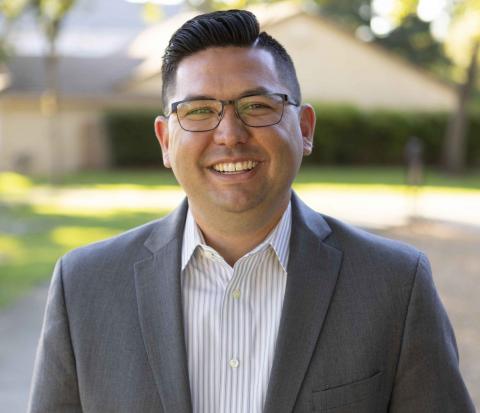
Asm. Joshua Hoover
Sponsored bills
Existing law prohibits the State Energy Resources Conservation and Development Commission (Energy Commission) from certifying a nuclear fission thermal powerplant, except for specified powerplants, and provides that a nuclear fission thermal powerplant, except those specified powerplants, is not a permitted land use in California, unless certain conditions are met regarding the existence of technology for the construction and operation of nuclear fuel rod processing plants and of demonstrated technology or means for the disposal of high-level nuclear waste, as specified. This bill would exempt small modular reactors, as defined, from those provisions. Existing law vests the Public Utilities Commission (PUC) with regulatory authority over electrical corporations and gas corporations. Under existing law, it is the policy of the state that eligible renewable energy resources and zero-carbon resources supply 100% of all retail sales of electricity to California end-use customers and 100% of electricity procured to serve all state agencies by December 31, 2045. Existing law requires the PUC, the Energy Commission, and all other state agencies to incorporate that policy into all relevant planning. This bill would require the PUC, on or before January 1, 2026, to adopt a plan to increase the procurement of electricity generated from nuclear facilities and to phase out the procurement of electricity generated from natural gas facilities.
Existing law, the Motor Vehicle Fuel Tax Law, imposes a tax upon each gallon of motor vehicle fuel removed from a refinery or terminal rack in this state, entered into this state, or sold in this state, at a specified rate per gallon. Existing unfair competition laws establish a statutory cause of action for unfair competition, including any unlawful, unfair, or fraudulent business act or practice and unfair, deceptive, untrue, or misleading advertising and acts prohibited by false advertisement laws. This bill would suspend the imposition of the tax on motor vehicle fuels for one year. The bill would require that all savings realized based on the suspension of the motor vehicle fuels tax by a person other than an end consumer, as defined, be passed on to the end consumer, and would make the violation of this requirement an unfair business practice, in violation of unfair competition laws, as provided. The bill would require a seller of motor vehicle fuels to provide a receipt to a purchaser that indicates the amount of tax that would have otherwise applied to the transaction. This bill would also direct the Controller to transfer a specified amount from the General Fund to the Motor Vehicle Fuel Account in the Transportation Tax Fund. By transferring General Fund moneys to a continuously appropriated account, this bill would make an appropriation. This bill would declare that it is to take effect immediately as an urgency statute.
Under existing law, a prisoner can reduce their term of imprisonment by earning credit for, among other things, continuous incarceration, good behavior, and participation in approved rehabilitative programming. Existing law prohibits a prisoner convicted of specified felony offenses from earning credit if the prisoner previously has been convicted of one of those felony offenses 2 or more times and has served 2 or more separate prior prison terms. Existing law makes an inmate of a state prison, or of a county jail, who has completed training for assignment to a correctional institution as an inmate firefighter, or who is assigned to a correctional institution as an inmate firefighter, and who is eligible to earn one day of credit for every one day of incarceration, instead eligible to earn 2 days of credit for every one day served in that assignment or after completing that training. This bill, Ryla's Law, would make a person convicted of specific child abuse crimes ineligible to earn 2 days of credit for every one day served as an inmate firefighter or after completing inmate firefighting training. By reducing the amount of credits an inmate sentenced to county jail can earn, this bill would create a state-mandated local program. The California Constitution requires the state to reimburse local agencies and school districts for certain costs mandated by the state. Statutory provisions establish procedures for making that reimbursement. This bill would provide that no reimbursement is required by this act for a specified reason.
Existing law declares that it is the policy of the state that no adoptable animal should be euthanized if it can be adopted into a suitable home. Existing law also declares that it is the policy of the state that no treatable animal should be euthanized.. This bill, Bowie's Law, would require all animal shelters, as defined, to provide public notice on their internet website at least 72 hours before euthanizing any dog, cat, or rabbit, except as provided. The bill would require that notice to indicate that the animal is subject to euthanasia and to include information about the animal and its availability for adoption. The bill would authorize an animal shelter to provide this public notice for less than 72 hours if the animal shelter makes certain determinations. The bill would, for each instance where the animal shelter provides public notice for less than 72 hours, require the animal shelter to document the reason and to keep it on file and available for public inspection, as provided. By imposing new requirements on a public animal control agency or shelter, the bill would constitute a state-mandated local program. The bill would also require the Department of Food and Agriculture to conduct a study on the overcrowding of California's animal shelters, the ways in which the state might address animal shelter overcrowding, and the feasibility of a statewide database of dogs and cats that provides public notice and information at the statewide level, as specified. The bill would require the department to, on or before January 1, 2026, submit a report on its study findings to the Legislature, as provided. The bill would repeal these study and reporting requirements on January 1, 2027. The California Constitution requires the state to reimburse local agencies and school districts for certain costs mandated by the state. Statutory provisions establish procedures for making that reimbursement. This bill would provide that, if the Commission on State Mandates determines that the bill contains costs mandated by the state, reimbursement for those costs shall be made pursuant to the statutory provisions noted above.
Existing law prohibits an act of sexual intercourse accomplished against a person's will by means of force, violence, duress, menace, or fear of immediate and unlawful bodily injury on the person or another. Existing law provides a greater punishment for this offense if the victim is a minor, as specified. Existing law also prohibits an act of sexual intercourse with a person who is incapable, because of a mental disorder or developmental or physical disability, of giving legal consent, and this is known or reasonably should be known to the person committing the act. This bill would impose a greater punishment for prohibited acts of sexual intercourse, as defined, if the victim is a developmentally disabled minor, as specified and defined, and the person committing the prohibited acts knows or should have known that the person is developmentally disabled. The bill would specifically require a person who commits these offenses upon a person who is 10 years of age or younger to be prosecuted pursuant to another statute providing even greater punishment. By increasing the punishment for crime, this bill would create a state-mandated local program. The California Constitution requires the state to reimburse local agencies and school districts for certain costs mandated by the state. Statutory provisions establish procedures for making that reimbursement. This bill would provide that no reimbursement is required by this act for a specified reason.
Existing law requires the Department of Parks and Recreation to issue a park pass for free use of all park facilities in the state park system to a veteran of war in which the United States has been, or may be, engaged, who is a resident of this state, who presents to the department proof of a disability, proof of being held captive as a prisoner of war, or proof of being a recipient of a Congressional Medal of Honor, and proof of an honorable discharge from service. This bill would require a pass for free day use of any unit of the state park system that is operated by the state to be issued to Gold Star Family members, as provided.
Existing law prescribes the duties of the State Registrar of Vital Statistics (State Registrar) and local registrars of births and deaths with respect to the registration of certificates of live birth, fetal death, or death, and marriage licenses. Existing law requires the State Registrar to prescribe and furnish all record forms for use in carrying out the provisions governing vital records and prohibits the use of any record form or format other than those prescribed by the State Registrar. Existing law requires every live birth, fetal death, death, and marriage that occurs in the state to be registered with the local registrar. Existing law requires certificates of live birth, fetal death, or death, and a marriage license to include specified information, such as the full name of the child on a certificate of live birth and the full names of the parties to be married on a marriage license. Existing law also requires the county clerk to issue a confidential marriage license, as specified, on a form prescribed by the State Registrar. This bill would require the State Registrar to require the use of a diacritical mark on an English letter to be properly recorded, when applicable, on a certificate of live birth, fetal death, death, marriage license and certificate, or confidential marriage license and certificate, and would require the use of a diacritical mark to be deemed an acceptable entry by the State Registrar. The bill would provide that the absence of a diacritical mark on a certificate of live birth, fetal death, or death, or a marriage license does not render the document invalid nor affect any constructive notice imparted by proper recordation of the document. The bill would authorize, if a name is not accurately recorded because of the absence of a diacritical mark on an English letter in any certificate of live birth, fetal death, death, or marriage already registered, the person asserting the omission, or the person's conservator, or if a minor, the person's parent or guardian, to submit a written request to the State Registrar for the issuance of a new certificate of birth, fetal death, death, or marriage stating the changes necessary to make the name correct. The bill would require the State Registrar to review the request and, if the request is accompanied with the payment of a specified fee, to issue a new certificate of live birth, fetal death, death, or marriage with the accurate name identified in the request. The bill would also authorize, if a name is not accurately recorded because of the absence of a diacritical mark on an English letter on any confidential license and certificate of marriage already registered, the party asserting the omission to make an affidavit, under oath, stating the changes necessary to make the record correct and file it with the county clerk. The bill would require the county clerk to review the amendment for acceptance for filing, and if accepted, file the amendment and note the fact of the amendment, with its date, on the otherwise unaltered original confidential license and certificate of marriage. By requiring the affidavit to be under oath, the bill would expand the crime of perjury, thereby imposing a state-mandated local program. By increasing duties on county clerks, the bill would impose a state-mandated local program. The California Constitution requires the state to reimburse local agencies and school districts for certain costs mandated by the state. Statutory provisions establish procedures for making that reimbursement. This bill would provide that with regard to certain mandates no reimbursement is required by this act for a specified reason. With regard to any other mandates, this bill would provide that, if the Commission on State Mandates determines that the bill contains costs so mandated by the state, reimbursement for those costs shall be made pursuant to the statutory provisions noted above.
(1) Existing law requires the governing board of each school district to adopt a local control and accountability plan, as provided. Existing law requires that certain things occur before a governing board of a school district considers the adoption of a local control and accountability plan or an annual update to the plan, including that the superintendent of the school district present the local control and accountability plan or annual update to the local control and accountability plan to the parent advisory committee, the English learner parent advisory committee, and the student advisory committee, as applicable, for review and comment, as provided. This bill would also require, before a governing board of a school district considers the plan described above, the superintendent of each school district to consult with its special education local plan area administrator or administrators to determine which specific actions are needed to support outcomes on the California School Dashboard when the school district is determined to be in need of differentiated assistance for performance of pupils with disabilities. Because this bill would impose new duties on a superintendent of a school district, the bill would impose a state-mandated program. (2) Existing law requires the county superintendent of schools to provide technical assistance for a minimum of 2 years for any school district for which one or more identified pupil subgroups meets specified criteria, including assisting the school district to identify its strengths and weaknesses, as provided. When pupils with disabilities are the identified pupil subgroup meeting the criteria, this bill would require the county superintendent of schools to consult with and include its special education local plan area administrator or administrators as part of the expert technical assistance team. Because the bill would impose new duties on a county superintendent of schools, the bill would impose a state-mandated program. (3) Existing law requires the governing board of a school district to develop a local plan relating to the education of individuals with exceptional needs residing in the school district, as provided. Existing law requires the Superintendent of Public Instruction to establish guidelines for the development of local plans, as provided. Existing law requires, commencing July 1, 2027, each local plan to include an annual assurances support plan. Existing law requires the State Department of Education to develop a template for the annual assurances support plan by July 1, 2026. Existing law requires the annual assurances support plan to include specified elements, including a description of how the governing board of the special education local plan area has determined that the special education local plan area will connect its participating agencies in need of technical assistance to the statewide system of support. This bill would require the annual assurances support plan to include additional detail and new elements, as specified. To the extent these changes would impose new duties on local educational agencies, the bill would impose a state-mandated local program. (4) Existing law requires each special education local plan area submitting a local plan to the Superintendent to ensure that it has in effect policies, procedures, and programs that are consistent with state laws, regulations, and policies governing specified things. This bill would require each special education local plan area submitting a local plan to the Superintendent to also ensure that the plan provides technical assistance to its member local educational agencies to support monitoring activities as directed by the department, as provided. By requiring new duties of a special education local plan area, the bill would impose a state-mandated local program. (5) The California Constitution requires the state to reimburse local agencies and school districts for certain costs mandated by the state. Statutory provisions establish procedures for making that reimbursement. This bill would provide that, if the Commission on State Mandates determines that the bill contains costs mandated by the state, reimbursement for those costs shall be made pursuant to the statutory provisions noted above.