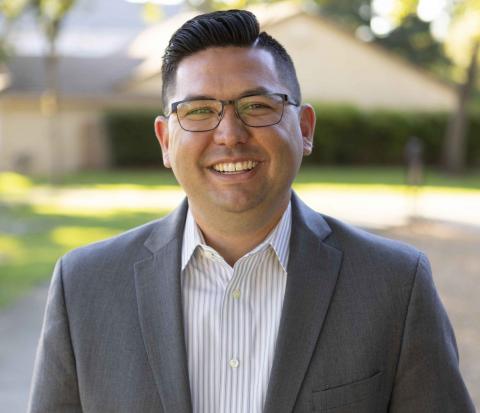
Photo of Joshua Hoover
R California Assembly · District 7 On the 2026 ballot

Asm. Joshua Hoover

Compare
Total votes
11,020
all sessions
Attendance
88%
954 missed
Lower than 89% of chamber peers
With party
98%
of cast votes
Lower than 83% of chamber peers
Bipartisan score
2%
crosses aisle rarely
Higher than 88% of chamber peers
Sponsored
849
bills & resolutions
Near the chamber average
Committees
11
assignments
849 bills and resolutions

Sponsored bills

Total
849
Primary
93
Co-sponsor
756
This page
849
matching current filters
Co-sponsor ACR 7
Signed into law · California Assembly · Co-sponsor
Relative to Reverend Dr. Martin Luther King, Jr.

Maddy summaryThis Assembly Concurrent Resolution (ACR 7) is a ceremonial resolution honoring Reverend Dr. Martin Luther King, Jr., and commemorating Dr. Martin Luther King, Jr. Day in California. It recognizes Dr. King’s legacy as a civil rights pioneer, his role in ending segregation through nonviolent action, and California’s historical leadership in establishing his birthday as a state holiday. The resolution encourages legislators and constituents to participate in community service projects that align with Dr. King’s values of equality and unity. As a non-binding resolution, it does not create new laws or policies but formally expresses the legislature’s support for commemorating Dr. King’s life and work.

Signed into law Feb 13, 2025 1 co-sponsor
Co-sponsor HR 10
Passed · California Assembly · Co-sponsor
Relative to World Wetlands Day.

Maddy summaryThis House Resolution (HR 10) symbolically recognizes February 2, 2025, as World Wetlands Day in California. It acknowledges the global importance of wetlands - highlighting their role in climate mitigation, biodiversity, and achieving UN Sustainable Development Goals - without creating new laws or affecting any individuals or entities. The resolution cites the UN's designation of February 2 as World Wetlands Day and references the Ramsar Convention, but it only serves to raise public awareness through official recognition. As a commemorative resolution, it has no regulatory or financial impact.

Passed Feb 6, 2025 1 co-sponsor
Co-sponsor ACR 8
Signed into law · California Assembly · Co-sponsor
Relative to World Desert Day.

This measure would recognize the 2nd Saturday of January each year as World Desert Day in California, and would encourage local jurisdictions to partner with organizations, agencies, or community groups to host educational programs and community celebrations highlighting desert conservation.

Signed into law Feb 4, 2025 1 co-sponsor
Co-sponsor ACR 10
Signed into law · California Assembly · Co-sponsor
Relative to Korean American Day.

Maddy summaryACR 10 designates January 13, 2025, as Korean American Day in California. The resolution commemorates the arrival of the first Korean immigrants to the U.S. on January 13, 1903, and recognizes Korean Americans' historical contributions to California and the nation. It does not create new laws or policies, but serves as a ceremonial acknowledgment of this community's heritage and impact.

Signed into law Feb 4, 2025 1 co-sponsor
Primary AB 12
died · California Assembly · Lead sponsor
Crimes: looting.

Existing law defines the crime of burglary, which consists of entering specified buildings, places, or vehicles with the intent to commit grand or petty theft or a felony. Existing law defines burglary of the first degree as any burglary of an inhabited building and makes burglary of the first degree punishable by imprisonment in the state prison for 2, 4, or 6 years. Existing law defines all other burglary as burglary of the 2nd degree and makes it punishable by imprisonment in the county jail for one year or as a felony. Existing law makes the theft of money, labor, or property petty theft punishable as a misdemeanor, whenever the value of the property taken does not exceed $950. Under existing law, if the value of the property taken exceeds $950, the theft is grand theft, punishable as a misdemeanor or a felony. Existing law defines any 2nd-degree burglary or grand theft, during and within an affected county in a state of emergency or local emergency, as specified, as looting, punishable by either imprisonment in a county jail for one year or as a felony. Existing law makes petty theft committed during and within an affected county in a state of emergency or local emergency a misdemeanor and requires a minimum jail term of 90 days. Existing law prohibits credibly impersonating a peace officer, firefighter, or employee of a state or local government agency, or a search and rescue team, as specified. A violation of these prohibitions is punishable as a misdemeanor. This bill would make looting by the means of a 2nd-degree burglary or grand theft punishable instead as a felony. The bill would define a petty theft committed during and within an affected county in a state of emergency or local emergency as looting and make it punishable by imprisonment in the county jail for one year or as a felony. The bill would require any person who in the course of committing or attempting to commit the crime of looting impersonated a peace officer, firefighter, or employee of a state or local government agency, or a search and rescue team, subject to a penalty enhancement. By increasing the punishment of a crime, this bill would impose a state-mandated local program. The California Constitution requires the state to reimburse local agencies and school districts for certain costs mandated by the state. Statutory provisions establish procedures for making that reimbursement. This bill would provide that no reimbursement is required by this act for a specified reason.


died Feb 3, 2025 0 co-sponsors
Co-sponsor HR 6
Passed · California Assembly · Co-sponsor
Relative to school governance.

Maddy summaryThis bill is a House Resolution that formally recognizes the work of school board members across California by designating January 2025 as School Board Recognition Month. It directly affects local school districts and county offices of education by honoring the nearly 5,000 elected school board members who serve in these roles. The resolution expresses appreciation for their dedication to public education and encourages community members to support these local officials in their efforts to serve students. This is a commemorative measure rather than a policy change, as it does not alter laws or regulations but instead highlights the importance of school governance.

Passed Jan 30, 2025 1 co-sponsor
Co-sponsor SB 997
Signed into law · California Senate · Co-sponsor
Pupil health: opioid antagonists and fentanyl test strips.

Existing law requires the governing board of any school district to give diligent care to the health and physical development of pupils. Existing law authorizes a school district, county office of education, and charter school to provide emergency naloxone hydrochloride or another opioid antagonist to school nurses or trained personnel who have volunteered, and authorizes school nurses or trained personnel to use naloxone hydrochloride or another opioid antagonist to provide emergency medical aid to persons suffering, or reasonably believed to be suffering, from an opioid overdose, as provided. This bill would prohibit school districts, county offices of education, and charter schools from prohibiting pupils in middle schools, junior high schools, high schools, or adult schools, while on a schoolsite or participating in school activities, from carrying fentanyl test strips or a federally approved opioid antagonist, as provided, for the emergency treatment of persons suffering, or reasonably believed to be suffering, from an opioid overdose.

Signed into law Sep 28, 2024 1 co-sponsor
Co-sponsor SB 268
Signed into law · California Senate · Co-sponsor
Crimes: serious and violent felonies.

Existing law classifies certain criminal offenses as a "violent felony" for the purposes of various provisions of the Penal Code, including sentencing enhancements for prior convictions, as well as numerous other provisions. Existing law includes among the list of violent felonies rape accomplished against a person's will by means of force, violence, duress, menace, or fear, or rape accomplished against the victim's will by threat of violent retaliation, but does not include rape of a person unable to give consent due to disability, intoxication, or unconsciousness, rape under false pretenses, or rape accomplished by threat of incarceration, arrest, or deportation. This bill would also include the rape of an intoxicated person wherein the defendant drugged the victim, as specified, in the list of violent felonies. By expanding the scope of an enhancement, this bill would impose a state-mandated local program. The California Constitution requires the state to reimburse local agencies and school districts for certain costs mandated by the state. Statutory provisions establish procedures for making that reimbursement. This bill would provide that no reimbursement is required by this act for a specified reason.
Signed into law Sep 28, 2024 1 co-sponsor
Co-sponsor AB 438
Signed into law · California Assembly · Co-sponsor
Pupils with exceptional needs: individualized education programs: postsecondary goals and transition services.

Existing law requires local educational agencies to identify, locate, and assess individuals with exceptional needs and to provide those pupils with a free appropriate public education in the least restrictive environment, with special education and related services as reflected in an individualized education program. Existing law requires, beginning not later than the first individualized education program to be in effect when a pupil is 16 years of age, or younger if determined appropriate by the individualized education program team, and updated annually thereafter, the individualized education program to include appropriate measurable postsecondary goals and transition services, as defined, needed to assist the pupil in reaching those goals. This bill would instead require an individualized education program, commencing July 1, 2025, to include measurable postsecondary goals and transition services, if determined appropriate by a pupil's individualized education program team, beginning when an individual with exceptional needs is starting their high school experience and not later than the first individualized education program to be in effect when the pupil is 16 years of age, as provided. By imposing additional requirements on local educational agencies in relation to individualized education programs, the bill would impose a state-mandated local program. The California Constitution requires the state to reimburse local agencies and school districts for certain costs mandated by the state. Statutory provisions establish procedures for making that reimbursement. This bill would provide that, if the Commission on State Mandates determines that the bill contains costs mandated by the state, reimbursement for those costs shall be made pursuant to the statutory provisions noted above.

Signed into law Sep 28, 2024 1 co-sponsor
Co-sponsor AB 2729
Signed into law · California Assembly · Co-sponsor
Development projects: permits and other entitlements.

The Planning and Zoning Law requires each county and each city to adopt a comprehensive, long-term general plan for its physical development, and the development of specified land outside its boundaries, that includes, among other mandatory elements, a housing element. Existing law, the Permit Streamlining Act, among other things, requires a public agency that is the lead agency for a development project to approve or disapprove that project within specified time periods. Existing law extended by 18 months the period for the expiration, effectuation, or utilization of a housing entitlement, as defined, that was issued before, and was in effect on, March 4, 2020, and that would expire before December 31, 2021, except as specified. Existing law provides that if the state or a local agency extended the otherwise applicable time for the expiration, effectuation, or utilization of a housing entitlement for not less than 18 months, as specified, that housing entitlement would not be extended an additional 18 months pursuant to these provisions. This bill would extend by 18 months the period for the expiration, effectuation, or utilization of a housing entitlement, as defined, that was issued before January 1, 2024, and that will expire before December 31, 2025, except as specified. The bill would toll this 18-month extension during any time that the housing entitlement is the subject of a legal challenge. By adding to the duties of local officials with respect to housing entitlements, this bill would impose a state-mandated local program. The bill would include findings that changes proposed by this bill address a matter of statewide concern rather than a municipal affair and, therefore, apply to all cities, including charter cities. The California Constitution requires the state to reimburse local agencies and school districts for certain costs mandated by the state. Statutory provisions establish procedures for making that reimbursement. This bill would provide that no reimbursement is required by this act for a specified reason.

Signed into law Sep 27, 2024 1 co-sponsor
Showing 371 to 380 of 849 bills
Previous 1 … 37 38 39 … 85 Next