

Existing law establishes the California Community Colleges, under the administration of the Board of Governors of the California Community Colleges. Existing law establishes community college districts throughout the state, under the administration of community college district governing boards, and authorizes these districts to provide instruction at the community college campuses they operate. Existing law establishes a statewide baccalaureate degree program that authorizes up to a total of 30 baccalaureate degree programs at community college districts to be approved per academic year, as provided. This bill would require the office of the Chancellor of the California Community Colleges to develop a Baccalaureate Degree in Nursing Pilot Program that authorizes select community college districts to offer a Bachelor of Science in Nursing degree. The bill would limit the pilot program to 10 community college districts statewide and would require the chancellor's office to identify and select eligible community college districts based on specified criteria. The bill would require the chancellor's office to develop a process designed to assist community college districts with nursing programs that are applying for national accreditation for the purpose of qualifying for the pilot program, as provided. The bill would require each participating community college district to give priority registration for enrollment in the pilot program to students with an associate degree in nursing from that community college district. The bill would require the Legislative Analyst's Office to conduct an evaluation of the pilot program to determine the effectiveness of the program and the need to continue or expand the program, as specified, to be submitted to the Legislature on or before July 1, 2032. The bill would repeal these provisions as of January 1, 2034.
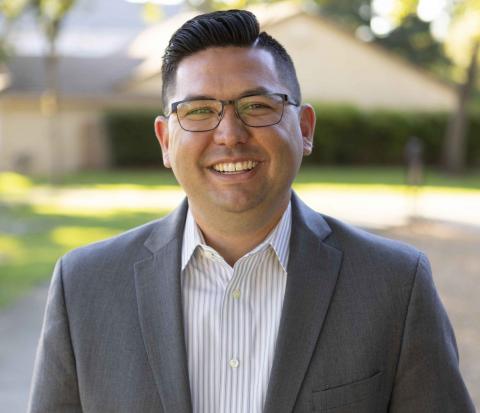
Asm. Joshua Hoover
Sponsored bills
Existing law, the California Healthy Youth Act, requires school districts, charter schools, county boards of education, county superintendents of schools, the California School for the Deaf, and the California School for the blind to ensure that all pupils in grades 7 to 12, inclusive, receive comprehensive sexual health education and human immunodeficiency virus (HIV) prevention education, as specified. Under the act, this instruction includes, among other things, information about adolescent relationship abuse and intimate partner violence, including the early warning signs thereof. This bill would require the comprehensive sexual health education and HIV prevention education to also include information about resources available to pupils related to adolescent relationship abuse and intimate partner violence, including the National Domestic Violence Hotline and local domestic violence hotlines, as provided. By imposing additional duties on local educational agencies, the bill would impose a state-mandated local program. The California Constitution requires the state to reimburse local agencies and school districts for certain costs mandated by the state. Statutory provisions establish procedures for making that reimbursement. This bill would provide that, if the Commission on State Mandates determines that the bill contains costs mandated by the state, reimbursement for those costs shall be made pursuant to the statutory provisions noted above.
Existing law establishes the California Interagency Council on Homelessness to identify mainstream resources, benefits, and services that can be accessed to prevent and end homelessness in California by creating partnerships between federal, state, local, and nonprofit entities. Existing law requires a state agency or department that administers one or more state homelessness programs, upon request of the council, to participate in council activities, as specified, and to provide to the council any relevant information regarding those state homelessness programs. This bill would require, commencing September 1, 2025, a state agency or department that administers one or more state homelessness programs to report annually to the council cost and outcome data for each program the agency or department administers, and would require the council, in coordination with each agency or department required to report to the council, as specified, to develop data collection and reporting procedures for this purpose. The bill would require the council to compile the data reported by agencies and departments and, commencing April 1, 2026, annually make that data available to the public.
Existing law, the Ralph M. Brown Act, generally requires that meetings of a legislative body of a local agency be conducted openly and that the body provide notice, as specified, prior to its meetings. In an emergency situation involving matters upon which prompt action is necessary due to the disruption or threatened disruption of public facilities, existing law authorizes a legislative body to hold an emergency meeting without complying with specified 24-hour notice and posting requirements. Existing law instead requires the presiding officer of the legislative body, or a designee, to notify specified media entities by telephone one hour before the emergency meeting or at or near the time the members of the legislative body are notified, as specified. If the telephone services are not functioning, existing law waives this notification requirement and requires the legislative body, or a designee, to notify those media entities of certain details of the emergency meeting as soon after the meeting as possible. This bill would authorize a school board holding an emergency meeting, as described above, to fulfill the premeeting notification requirement by email instead of by telephone, as specified. If the internet and telephone services are not functioning, the bill would similarly waive the premeeting notification requirement and require the postmeeting notification described above. By imposing a new requirement on school boards to send a premeeting notification by email when internet services are functioning but telephone services are not functioning, this bill would impose a state-mandated local program. The California Constitution requires the state to reimburse local agencies and school districts for certain costs mandated by the state. Statutory provisions establish procedures for making that reimbursement. This bill would provide that no reimbursement is required by this act for a specified reason. The California Constitution requires local agencies, for the purpose of ensuring public access to the meetings of public bodies and the writings of public officials and agencies, to comply with a statutory enactment that amends or enacts laws relating to public records or open meetings and contains findings demonstrating that the enactment furthers the constitutional requirements relating to this purpose. This bill would make legislative findings to that effect.
Existing law requires project applicants and public agencies subject to the California Environmental Quality Act to pay a filing fee to the Department of Fish and Wildlife for each proposed project for the purpose of defraying the costs of managing and protecting fish and wildlife trust resources, as specified. Existing law specifies the required filing fees and provides that a filing fee is not required to be paid if specified conditions exist. Existing law also authorizes a county clerk to charge a documentary handling fee of $50 per filing in addition to the filing fee, and requires the county clerk of each county and the Office of Planning and Research to maintain a record, both electronic and in paper, of all environmental documents received, as specified. This bill would instead require the county clerk of each county and the Office of Planning and Research to maintain the record electronically and authorize the county clerk of each county and the office to maintain the record on paper.
Existing law authorizes the governing body of a school district, a county office of education, or a charter school to adopt a policy to limit or prohibit the use by its pupils of smartphones while the pupils are at a schoolsite or while the pupils are under the supervision and control of an employee or employees of that school district, county office of education, or charter school. Existing law, however, specifies circumstances in which a pupil may not be prohibited from possessing or using a smartphone. This bill would instead require the governing body of a school district, a county office of education, or a charter school to, by July 1, 2026, develop and adopt, and to update every 5 years, a policy to limit or prohibit the use by its pupils of smartphones while the pupils are at a schoolsite or while the pupils are under the supervision and control of an employee or employees of that school district, county office of education, or charter school, as provided. By imposing additional duties on local educational agencies, the bill would constitute a state-mandated local program. The California Constitution requires the state to reimburse local agencies and school districts for certain costs mandated by the state. Statutory provisions establish procedures for making that reimbursement. This bill would provide that, if the Commission on State Mandates determines that the bill contains costs mandated by the state, reimbursement for those costs shall be made pursuant to the statutory provisions noted above.
(1) Existing law, the Medical Practice Act, provides for the licensure and regulation of physicians and surgeons by the Medical Board of California and requires the board to adopt and administer standards for the continuing education of those licensees. Existing law requires general internists and family physicians who have a patient population of which over 25% are 65 years of age or older to complete at least 20% of all mandatory continuing education hours in a course related to geriatric medicine or the care of older patients. This bill would revise the above-described course requirements to include the special care needs of patients with dementia. (2) Existing law, the Nursing Practice Act, establishes the Board of Registered Nursing to license and regulate the practice of nursing. Existing law requires the board to establish standards for continuing education consisting of specified approved coursework. Existing law requires a licensee under the act to submit a statement to the board, under penalty of perjury, indicating compliance with those continuing education requirements. This bill would require a nurse practitioner who provides primary care to a patient population of which over 25% are 65 years of age or older to certify that they have completed at least 20% of all existing mandatory continuing education hours in a course in the field of gerontology, the special care needs of patients with dementia, or the care of older patients at the time of renewal. By expanding the scope of a crime, the bill would impose a state-mandated local program. (3) Existing law, the Physician Assistant Practice Act, establishes the Physician Assistant Board for the licensure and regulation of physician assistants. Existing law authorizes the board to require a licensee to complete specified continuing education coursework as a condition of license renewal. This bill would require a physician assistant who provides primary care to a patient population of which over 25% are 65 years of age or older to complete at least 20% of all mandatory continuing education hours in a course in the field of geriatric medicine, the special care needs of patients with dementia, or the care of older patients. (4) This bill would incorporate additional changes to Section 2811.5 of the Business and Professions Code proposed by AB 2270 and AB 2581 to be operative only if this bill and either or both of those bills are enacted and this bill is enacted last. The California Constitution requires the state to reimburse local agencies and school districts for certain costs mandated by the state. Statutory provisions establish procedures for making that reimbursement. This bill would provide that no reimbursement is required by this act for a specified reason.
Existing law provides for the licensure and regulation by the State Department of Public Health of health facilities, as defined. Existing law requires a health facility to allow a patient's domestic partner, the children of the patient's domestic partner, and the domestic partner of the patient's parent or child to visit unless no visitors are allowed, the facility reasonably determines that the presence of a particular visitor would endanger the health or safety of a patient, member of the health facility staff, or other visitor to the health facility, or would significantly disrupt the operations of a facility, or the patient has indicated to the health facility staff that the patient does not want this person to visit. A violation of this provision is a misdemeanor. This bill, Dianne's Law, would require a health facility to allow specified persons to visit, including the patient's children and grandparents. The bill would require the health facility to develop alternate visitation protocols, if circumstances require the health facility to restrict visitor access to the facility due to health or safety concerns, that allow visitation to the greatest extent possible while maintaining patient, visitor, and staff health and safety. Notwithstanding the requirement mentioned above, the bill would prohibit a health facility from prohibiting in-person visitation in end-of-life situations unless the patient has indicated to the health facility staff that the patient does not want this person to visit, as specified, and would authorize a health facility to require visitors to adhere to personal protective equipment and testing protocols not greater than those required of facility staff for the duration of their visit. The bill would also require the facility to provide personal protective equipment and testing resources to each visitor for a patient in an end-of-life situation, to the extent that those resources have been made readily available to the facility by state or local entities for that purpose. By expanding an existing crime, the bill would impose a state-mandated local program. The California Constitution requires the state to reimburse local agencies and school districts for certain costs mandated by the state. Statutory provisions establish procedures for making that reimbursement. This bill would provide that no reimbursement is required by this act for a specified reason.
This measure would designate a specified portion of Interstate 80 in the City and County of San Francisco as the Willie Mays Highway. The measure would request the Department of Transportation to determine the cost of appropriate signs showing this special designation and, upon receiving donations from nonstate sources covering that cost, to erect those signs.
This measure would, among other things, urge the United States Congress and President Joseph R. Biden to fully fund the United States Environmental Protection Agency's Comprehensive Infrastructure Solution for the Tijuana River due to the ongoing impacts to public health, the environment, and the local economy caused by cross-border pollution and would urge President Joseph R. Biden to declare a national emergency due to those ongoing impacts.