

(1) Existing law, the State Housing Law, establishes statewide construction and occupancy standards for buildings used for human habitation. Existing law requires a county's or city's building department to enforce the State Housing Law and the California Building Standards Code, and other rules and regulations promulgated pursuant to the State Housing Law pertaining to standards for buildings used for human habitation. Existing law requires a county or city, upon the applicant's request, to contract with or employ temporarily a private entity or person to check the plans and specifications submitted with an application for a residential building permit to comply with the State Housing Law or local ordinances adopted pursuant to the State Housing Law, when the building department takes more than 30 days, as specified, to complete the plan check. Existing law authorizes an enforcement agency to inspect any building to secure compliance with the State Housing Law and the California Building Standards Code, and other rules and regulations promulgated pursuant to the State Housing Law. This bill would require the building department to conduct an inspection of the permitted work for specified new residential constructions of a building and residential additions to an existing building within 10 business days of receiving a notice of the completion of the permitted work authorized by a building permit issued for those projects. By imposing new duties on local agencies, the bill would impose a state-mandated local program. (2) Existing law, the Housing Accountability Act, among other things, prohibits a local agency from disapproving, or conditioning approval in a manner that renders infeasible, a housing development project for very low, low-, or moderate-income households unless the local agency makes written findings as to one of certain sets of conditions, as specified. The act also requires, when a proposed housing development project complies with applicable, objective general plan, zoning, and subdivision standards and criteria in effect at the time that the application was deemed complete, but the local agency proposes to disapprove the project or to impose a condition that the project be developed at a lower density, that the local agency base its decision regarding the proposed housing development project upon written findings supported by a preponderance of the evidence on the record that 2 specified conditions exist. Existing law defines the term "disapprove the housing development project" for these purposes to include any instance in which a local agency takes certain actions or fails to comply with certain requirements, including the failure to meet specified time limits relating to postentitlement phase permits. Existing law makes, among other things, a local agency's failure to meet those specified time limits relating to postentitlement phase permits a violation of the Housing Accountability Act. This bill would revise the definition of "disapprove the housing development project" under the Housing Accountability Act to include any instance in which a building department fails to inspect permitted work for specified new residential constructions of a building and residential additions to an existing building within 10 business days of receiving a notice of the completion of the permitted work authorized by a building permit issued for those projects, as described above. The bill would also make the failure of a building department to inspect permitted work for those projects within that time limit a violation of the Housing Accountability Act. By requiring local agencies to take certain actions, the bill would impose a state-mandated local program. This bill would correct cross-references in the Housing Accountability Act. (3) This bill would incorporate additional changes to Section 65589.5 of the Government Code proposed by SB 838 to be operative only if this bill and SB 838 are enacted and this bill is enacted last. (4) The California Constitution requires the state to reimburse local agencies and school districts for certain costs mandated by the state. Statutory provisions establish procedures for making that reimbursement. This bill would provide that no reimbursement is required by this act for a specified reason.
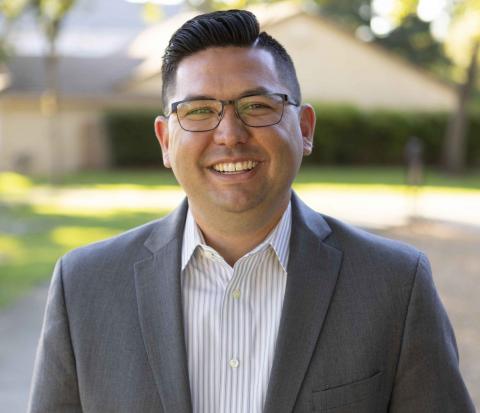
Asm. Joshua Hoover
Sponsored bills
Existing law requires the Commission on Teacher Credentialing to establish standards for the issuance and renewal of credentials, certificates, and permits. Existing law sets forth the minimum requirements for a preliminary services credential with a specialization in administrative services, which include, among other requirements, completion of an entry-level program of specialized and professional preparation in administrative services or a one-year internship in a program of supervised training in administrative services, subject to approval by the commission, as provided. Existing law also sets forth the minimum requirements for a reading and literacy leadership specialist credential and a reading and literacy added authorization, which include, among other requirements, completion of a program of specialized and professional preparation, as provided. This bill would require the commission to, no later than September 1, 2028, ensure that the program standards for the professional preparation of candidates for a preliminary services credential with a specialization in administrative services meets specified criteria, including, among other things, that the program standards include preparation on how to support teachers in delivering instruction through effective means for teaching literacy, as provided. The bill would require the commission to, no later than January 1, 2028, ensure that the program standards and teaching performance expectations for the professional preparation of candidates for the reading and literacy leadership specialist credential and the reading and literacy added authorization include preparation on how to deliver instruction and support teachers to deliver instruction through effective means for teaching literacy, as provided. Existing law requires the state board to adopt basic instructional materials for use in kindergarten and grades 1 to 8, inclusive, for governing boards of school districts and county boards of education, subject to specified provisions, including, among others, that the State Board of Education adopt at least 5 basic instructional materials for all applicable grade levels in each of the specified subject areas, including, among others, language arts, including, but not limited to, spelling, reading, and English language development. This bill would require the state board, on or before January 31, 2027, and in adherence with specified provisions related to followup adoptions, to adopt instructional materials for kindergarten and grades 1 to 8, inclusive, in English language arts and English language development, as provided. The bill would require the state board to ensure that instructional materials adopted pursuant to these provisions adhere to specified criteria. The bill would require, upon the adoption of instructional materials described above, the state board to update the state Guidance for Local Instructional Materials Adoptions to reflect the criteria described above. The bill would require a local educational agency to follow this guidance for purposes of adopting instructional materials and require a local educational agency that adopts materials that have not been adopted by the state board to certify that the materials align to the criteria described above. By imposing additional duties on local educational agencies, the bill would impose a state-mandated local program. The California Constitution requires the state to reimburse local agencies and school districts for certain costs mandated by the state. Statutory provisions establish procedures for making that reimbursement. This bill would provide that, if the Commission on State Mandates determines that the bill contains costs mandated by the state, reimbursement for those costs shall be made pursuant to the statutory provisions noted above.
(1) Existing law, the California Nutrition Monitoring Development Act of 1986, requires the State Department of Public Health to assess the availability and adequacy of existing state and local food and nutrition data systems. The act requires different state departments, including the State Department of Education, to provide to the State Department of Public Health, upon request, nutrition-related data collection forms, documentation, and reports of various programs. This bill would define "ultraprocessed food" for certain school-related purposes and would require the State Department of Public Health to adopt regulations, on or before June 1, 2028, to define "ultraprocessed foods of concern" and "restricted school foods," as specified. The bill would require the department, when defining ultraprocessed foods of concern and restricted school foods, to consider specified factors, including, among others, whether, based on reputable peer-reviewed scientific evidence, a substance or group of substances are linked to health harms or adverse health consequences, as specified. The bill would require schools, as defined, to begin to phase out restricted school foods and ultraprocessed foods of concern by no later than July 1, 2029. Beginning July 1, 2032, the bill would prohibit a vendor from offering restricted school foods and ultraprocessed foods of concern to a school. This bill, on or before February 1, 2028, and on or before February 1 of each year thereafter through February 1, 2032, would require a vendor to report specified information to the State Department of Public Health for each food product sold to a school in the past calendar year, including, among others, the total quantity of food product sold to schools and whether that food product is an ultraprocessed food, a restricted school food, or an ultraprocessed food of concern. The bill, on or before July 1, 2028, and on or before July 1 of each year thereafter through July 1, 2032, would require the State Department of Public Health, in consultation with the State Department of Education, to submit to the Legislature and the Governor a report that contains, among other things, a summary and analysis of the information reported to the State Department of Public Health by vendors and recommendations for state and local legislative actions that could reduce the consumption of ultraprocessed foods, restricted school foods, and ultraprocessed foods of concern in schools. The bill would require the State Department of Public Health to consult with the State Department of Education regarding compliance training and technical assistance for school food service and procurement staff for these purposes and would require the State Department of Public Health to establish a structure to deliver training and technical assistance to local educational agencies. (2) Existing law requires the State Department of Education to develop and maintain nutrition guidelines for school lunches and breakfasts, and for all food and beverages sold on public school campuses, consistent with the requirements for a nutritionally adequate breakfast and a nutritionally adequate lunch. Existing law defines a nutritionally adequate breakfast and a nutritionally adequate lunch for these purposes to mean those that qualify for reimbursement under the most current meal pattern for the federal School Breakfast Program and the federal National School Lunch Program, respectively. Existing law requires a school district, county superintendent of schools, or charter school maintaining kindergarten or any of grades 1 to 12, inclusive, to make available a nutritionally adequate breakfast and a nutritionally adequate lunch, free of charge, during each schoolday to any pupil who requests a meal without consideration of the pupil's eligibility for a federally funded free or reduced-price meal. Existing law authorizes a school operated and maintained by a school district or county office of education, from the midnight before to 30 minutes after the end of the official schoolday, to sell food and beverages other than meals reimbursed by specified federal nutrition programs, only if the food or beverages meet dietary guidelines, as specified, depending on grade level. This bill, beginning July 1, 2035, would prohibit a school district, county superintendent of schools, or charter school maintaining kindergarten or any of grades 1 to 12, inclusive, from offering a nutritionally adequate breakfast or lunch that includes restricted school foods or ultraprocessed foods of concern, as provided, and would prohibit a school operated and maintained by a school district or county office of education from selling food or beverages, except for food items sold as part of a school fundraising event, containing those restricted school foods or ultraprocessed foods of concern, as provided. (3) To the extent this bill would impose additional requirements on public schools, the bill would impose a state-mandated local program. (4) The California Constitution requires the state to reimburse local agencies and school districts for certain costs mandated by the state. Statutory provisions establish procedures for making that reimbursement. This bill would provide that, if the Commission on State Mandates determines that the bill contains costs mandated by the state, reimbursement for those costs shall be made pursuant to the statutory provisions noted above.
(1) Under existing law, each school district and county office of education is responsible for the overall development, as specified, of a comprehensive school safety plan for each of its schools operating kindergarten or any of grades 1 to 12, inclusive. Existing law requires that the plan include, among other things, child abuse reporting procedures, as specified. This bill would require a comprehensive school plan to instead include child abuse or neglect reporting procedures and would additionally require a comprehensive school safety plan, when it is next reviewed and updated, or by no later than July 1, 2026, to include procedures specifically designed to address the supervision and protection of children from child abuse or neglect and sex offenses. By imposing additional duties on local educational agencies, the bill would impose a state-mandated local program. Existing law requires school district and county office of education comprehensive school safety plans to include assessing school crime committed on school campuses and at school-related functions. This bill would require school district and county office of education comprehensive school safety plans to instead include assessing all crime, not just school crime, committed on school campuses and at school-related functions. By imposing additional duties on local educational agencies, the bill would impose a state-mandated local program. Existing law authorizes a principal or their designee, when they verify through local law enforcement officials that a report has been filed of the occurrence of a violent crime on the schoolsite of an elementary or secondary school at which they are the principal, to send to each pupil's parent or legal guardian and each school employee a written notice of the occurrence and general nature of the crime, as specified. Existing law provides that these provisions do not create any liability in a school district or its employees. This bill would revise and expand the definition of "violent crime" for these purposes and would authorize a principal or their designee to also provide that same notification for sex offenses, as defined. (2) Existing law requires the Commission on Teacher Credentialing to, among other things, establish standards for the issuance and renewal of credentials, certificates, and permits, as specified. Existing law requires the commission to deny an application for the issuance of a credential or for the renewal of a credential, or to revoke a credential, for any person convicted of a sex offense, as defined. Existing law prohibits the governing board of a school district from employing or retaining in employment persons in public school service who have been convicted, or who have been convicted following a plea of nolo contendere to charges, of any sex offense, and prescribes numerous provisions, including required actions, relating to suspensions, dismissals, and leaves of absences of public school employees charged or convicted of a sex offense. This bill would expand the definition of "sex offense" for those purposes to include additional crimes, as provided. To the extent the expanded definition of sex offenses would impose additional duties on local educational agencies or other local entities or officials, the bill would impose a state-mandated local program. In addition to any other prohibition or provision, existing law prohibits a person who has been convicted of a violent or serious felony from being hired by a school district, as defined, or charter school in a position requiring certification qualifications or supervising positions requiring certification qualifications, and prohibits a school district, as defined, or charter school from retaining in employment a current certificated employee who has been convicted of a violent or serious felony, and who is a temporary employee, a substitute employee, or a probationary employee serving before March 15 of the employee's second probationary year, as provided. This bill would apply those same prohibitions to persons who have been convicted of sex offenses, as defined, as provided. To the extent the bill would impose additional duties on local educational agencies, the bill would impose a state-mandated local program. (3) Existing law prohibits school districts, county offices of education, charter schools, and state special schools from entering into an agreement that would prevent a mandatory report of egregious misconduct, as defined, or expunging from an employee's personnel file, or entering in an agreement that would authorize expunging from an employee's personnel file, credible complaints of, substantiated investigations into, or discipline for, egregious misconduct. Existing law requires a school district, county office of education, charter school, or state special school that has made a report of an employee's egregious misconduct to the Commission on Teacher Credentialing to disclose this fact to a school district, county office of education, charter school, or state special school considering an application for employment from the employee, upon inquiry. This bill would additionally apply those provisions to private schools and diagnostic centers operated by the State Department of Education. Existing law requires a person applying for a certificated position at a school district, county office of education, charter school, or state special school to provide that prospective employer with a complete list of every school district, county office of education, charter school, or state special school that the applicant has previously been an employee of, and requires school districts, county offices of education, charter schools, and state special schools considering an applicant for a certificated position to inquire with each of those local educational agencies that previously employed the applicant as to whether the applicant, while previously employed by the local educational agency, was the subject of any credible complaints of, substantiated investigations into, or discipline for, egregious misconduct that were required to be reported to the commission. Existing law requires those local educational agencies, when responding to an inquiry as to whether it has made a report of egregious misconduct to the commission, to also provide the inquiring local educational agency with a copy of all relevant information that was reported to the commission within its possession. This bill would additionally apply those provisions to private schools and diagnostic centers operated by the department, and would also prescribe similar provisions for noncertificated employees applicable to school districts, county offices of education, charter schools, and state special schools and diagnostic centers operated by the department, and for employees of any position at private schools. By imposing additional duties on local educational agencies, the bill would impose a state-mandated local program. This bill would require the commission, on or before July 1, 2027, and contingent upon an appropriation for these purposes in the annual Budget Act or another statute, to develop a statewide data system that includes information relating to investigations of allegations of egregious misconduct of individuals serving in a noncertificated position for a local educational agency, as defined, or in any position for a private school. The bill would require the commission to serve only as the data administrator for records submitted to the statewide data system and to ensure the secure operation and technical functionality of the statewide data system. The bill would require local educational agency employers and private school employers, following both the start of, and completion of, an investigation of egregious misconduct, to submit notice to the statewide data system, as provided. The bill would require substantiated reports of egregious misconduct and employee departures from employment during investigations to be recorded in the statewide data system, and would prohibit the recording in the statewide data system of investigations of egregious misconduct that result in an unfounded or inconclusive report, as provided. The bill would require those local educational agencies and private school organizations that are responsible for employment, employee investigations, or hiring decisions to review the statewide data system to determine whether an investigation resulted in a substantiated report of egregious misconduct before hiring an individual for an applicable position. By imposing additional duties on local educational agencies, the bill would impose a state-mandated local program. The bill would prohibit the commission from being responsible for verifying the truthfulness or legal sufficiency of the information submitted by local educational agency employers or private school employers. This bill would, on or before July 1, 2026, require each governing board of a school district, county board of education, and governing body of a charter school or private school, and the department for purposes of state special schools and diagnostic centers operated by the department, to (A) adopt written policies that promote safe environments for pupil learning and engagement, as specified, and (B) adopt written policies, plans, or specifications regarding school facilities, and the furnishing of school facilities, that address classroom and nonclassroom environments to promote safe environments for learning and engagement that are easily supervised. By imposing additional duties on local educational agencies, the bill would impose a state-mandated local program. The bill would encourage school districts, county offices of education, and charter schools to work with their public entity risk pool joint powers authority or insurance provider to identify and adopt best practices known to prevent violent crimes, injury, sex offenses, and egregious misconduct. (4) Existing law requires the commission to appoint a Committee of Credentials and requires allegations of acts or omissions for which adverse action may be taken against applicants or holders of teaching or services credentials to be presented to the committee. Existing law authorizes the committee to commence an initial review upon the receipt of any of a list of specified documents or information. This bill would additionally authorize the committee to commence an initial review upon the receipt of a record of a substantiated report or the receipt of a record of a start of an investigation followed by a change in employment status during an investigation entered into the statewide data system. (5) Existing law requires the State Department of Education, in consultation with the Office of Child Abuse Prevention in the State Department of Social Services to, among other things, (A) develop and disseminate to all school districts, county offices of education, state special schools and diagnostic centers operated by the department, and charter schools, and their school personnel in California, information regarding the detection and reporting of child abuse, and (B) provide statewide guidance on the responsibilities of mandated reporters who are school personnel, as specified. This bill, commencing July 1, 2026, would, among other things, (A) require that information to additionally be developed and disseminated to private schools and school volunteers, and (B) require that guidance to include school volunteers who are mandated reporters. Existing law requires the State Department of Education to develop and disseminate to all school districts, county offices of education, state special schools and diagnostic centers operated by the department, and charter schools, and their school personnel in California, information regarding the prevention of abuse, including sexual abuse, of children on school grounds, by school personnel, or in school-sponsored programs, and to develop appropriate means of instructing school personnel regarding the prevention of abuse, including sexual abuse, of children on school grounds, by school personnel, or in school-sponsored programs. This bill, commencing July 1, 2026, would, among other things, (A) require that information to additionally be developed and disseminated to private schools and school volunteers, and (B) require that means of instruction to include school volunteers. Existing law requires school districts, county offices of education, state special schools and diagnostic centers operated by the State Department of Education, and charter schools to provide annual training, using the online training module provided by the State Department of Social Services or an alternative training, to their employees and persons working on their behalf who are mandated reporters, as defined, on the mandated reporting requirements related to child abuse, as provided. Existing law also requires those entities to develop a process for all persons required to receive that training to provide proof of completing the training within the first 6 weeks of each school year or within the first 6 weeks of that person's employment. Commencing July 1, 2025, existing law additionally requires school districts, county offices of education, state special schools and diagnostic centers operated by the State Department of Education, and charter schools to, among other things, provide annual training to their employees on the prevention of abuse, including sexual abuse, of children on school grounds, by school personnel, or in school-sponsored programs, as provided, and applies the proof of training requirements to this training. This bill, commencing July 1, 2026, would, among other things, additionally apply those provisions to private schools and school volunteers, as provided, and would require school districts, county offices of education, state special schools and diagnostic centers operated by the State Department of Education, private schools, and charter schools that do not use the online training module provided by the State Department of Social Services to use an equivalent training module developed specifically to meet those requirements, as provided. (6) Existing law authorizes a school district to provide abuse, including sexual abuse, and human trafficking prevention education, as provided, and authorizes a parent or guardian of a pupil to excuse their child from all or part of abuse, including sexual abuse, and human trafficking prevention education, and assessments related to that education, pursuant to a specified opt-out process, as provided. This bill would, among other things, require the Superintendent of Public Instruction, in consultation with the Office of Child Abuse Prevention in the State Department of Social Services, local educational agencies, and public entity risk pool joint powers authorities that provide risk management services to California schools, on or before July 1, 2026, to (A) develop, (B) disseminate to all school districts, county offices of education, charter schools, state special schools and diagnostic centers operated by the State Department of Education, and private schools, and (C) post on the department's internet website, resources and information relating to appropriate boundaries, as provided. The bill would require the Superintendent, on or before July 1, 2026, to develop guidance on the appropriate means of instructing pupils regarding the prevention of abuse, including sexual abuse and assault, of pupils, as specified, and would authorize school districts, county offices of education, charter schools, state special schools and diagnostic centers operated by the department, and private schools to provide annual instruction using the resources, information, and guidance developed and disseminated by the Superintendent, to all pupils, as provided. The bill would authorize a parent or guardian of a pupil to excuse their child from all or part of the instruction pursuant to the same opt-out process described above. (7) Existing law, the Child Abuse and Neglect Reporting Act, establishes procedures for the reporting and investigation of suspected child abuse or neglect. The act requires certain professionals, including teachers, instructional aides, and classified employees, known as "mandated reporters," to report known or reasonably suspected child abuse or neglect to a local law enforcement agency or a county welfare or probation department, as specified. Failure by a mandated reporter to report an incident of known or reasonably suspected child abuse or neglect is a misdemeanor. The act provides that volunteers, except for volunteers of public or private organizations whose duties require direct contact with and supervision of children, except a volunteer of a Court Appointed Special Advocate program, are not mandated reporters. This bill would revise and recast those provisions as they relate to the educational environment to instead make (A) employees, certain volunteers, and governing board or body members of a school district, county office of education, charter school, or private school, (B) employees, certain volunteers, and board members of public and private contractors to a school district, county office of education, charter school, state special school or diagnostic center operated by the department, or private school whose duties require contact or supervision of pupils at that school district, county office of education, charter school, state special school or diagnostic center operated by the department, or private school, and (C) employees and certain volunteers assigned to a state special school or diagnostic center operated by the State Department of Education, all mandated reporters under the act. By imposing the reporting requirements on a new class of persons, for whom failure to report specified conduct is a crime, this bill would impose a state-mandated local program. (8) This bill would incorporate additional changes to Section 32282 of the Education Code proposed by SB 98, to be operative only if this bill and SB 98 are enacted and this bill is enacted last. (9) This bill would incorporate additional changes to Section 11165.7 of the Penal Code proposed by AB 653 and SB 402 to be operative only if this bill and either or both of those bills are enacted and this bill is enacted last. (10) The California Constitution requires the state to reimburse local agencies and school districts for certain costs mandated by the state. Statutory provisions establish procedures for making that reimbursement. This bill would provide that with regard to certain mandates no reimbursement is required by this act for a specified reason. With regard to any other mandates, this bill would provide that, if the Commission on State Mandates determines that the bill contains costs so mandated by the state, reimbursement for those costs shall be made pursuant to the statutory provisions noted above.
Existing law governs the determination of child custody and visitation in contested proceedings. Under existing law, upon a finding by the court that a party seeking custody of a child has perpetrated domestic violence against the child, the other party seeking custody of the child, or others, as specified, there is a rebuttable presumption that granting custody to the party who perpetrated domestic violence is detrimental to the best interest of the child. Under existing law, this presumption may only be rebutted by a preponderance of the evidence. This bill would require, when making a determination of the best interests of a child, a court to consider any relevant, admissible evidence that a parent has caused human trafficking of the child or other parent.
Existing law provides for the regulation of public equine events and public horse sales, as defined, by the Secretary of Food and Agriculture. Existing law makes the provisions regulating public equine events applicable to events that meet specified criteria, including that the entry fee for a single, one-day event exceeds $4.99, and either no other fees are charged or other fees charged exceed $19.99. This bill would increase the $4.99 amount to $15 and the $19.99 amount to $60. The bill would authorize the secretary to increase those amounts by regulation, as provided.
The California Integrated Waste Management Act of 1989 requires the Director of Transportation, upon consultation with the Department of Resources Recycling and Recovery, to review and modify all bid specifications relating to the purchase of paving materials, and base, subbase, and pervious backfill materials, using recycled materials. Existing law requires the specifications to be based on standards developed by the Department of Transportation for recycled paving materials and for recycled base, subbase, and pervious backfill materials. Existing law requires a local agency that has jurisdiction over a street or highway, to the extent feasible and cost effective, to apply standard specifications that allow for the use of recycled materials in streets and highways, except as provided. Existing law requires, until January 1, 2027, those standard specifications to allow recycled materials at or above the level allowed in the Department of Transportation's standard specifications that went into effect on October 22, 2018, for specified materials. This bill would indefinitely require a local agency's standard specifications to allow recycled materials at a level no less than the level allowed in the department's specifications for those specified materials. If a local agency's standard specifications do not allow for the use of recycled materials at a level that is equal to or greater than the level allowed in the department's standard specifications on the basis that the use of those recycled materials at those levels is not feasible, the bill would authorize a person bidding on a contract to supply materials subject to those specifications to request the local agency to provide the reason for that determination upon request and would require the local agency to respond to that request, as specified. By increasing the duties of local agencies, the bill would impose a state-mandated local program. Existing law requires the Department of Transportation and a local agency that has jurisdiction over a street or highway, to the extent feasible and cost effective, to use advanced technologies and material recycling techniques that reduce the cost of maintaining and rehabilitating streets and highways and that exhibit reduced levels of greenhouse gas emissions through material choice and construction method. This bill would eliminate this requirement. The California Constitution requires the state to reimburse local agencies and school districts for certain costs mandated by the state. Statutory provisions establish procedures for making that reimbursement. This bill would provide that, if the Commission on State Mandates determines that the bill contains costs mandated by the state, reimbursement for those costs shall be made pursuant to the statutory provisions noted above.
Existing law provides that it is the intent of the Legislature that all public schools, teaching kindergarten or any of grades 1 to 12, inclusive, operated by a school district, in cooperation with specified entities and individuals, develop a comprehensive school safety plan, as provided. Existing law provides that school districts and county offices of education are responsible for the overall development of a comprehensive school safety plan for each of its schools, as provided. Existing law requires a comprehensive school safety plan to, among other things, identify appropriate strategies and programs that will provide or maintain a high level of school safety and address the school's procedures for complying with existing laws related to school safety. Existing law requires the governing board of a school district, a county board of education, and the governing body of a charter school to, by July 1, 2026, develop and adopt a policy to limit or prohibit the use by its pupils of smartphones while the pupils are at a schoolsite or while the pupils are under the supervision and control of an employee or employees of that school district, county office of education, or charter school. Existing law, however, specifies circumstances in which a pupil may not be prohibited from possessing or using a smartphone, including, among others, in the case of an emergency or in response to a perceived threat of danger. This bill would instead authorize the prohibition on the use of a smartphone by a pupil in the case of an emergency or in response to a perceived threat of danger if that circumstance is explicitly addressed in a comprehensive school safety plan.
Existing law provides for the regulation of charter-party carriers of passengers by the Public Utilities Commission and includes specific requirements applicable to transportation network companies and their participating drivers. Existing law defines transportation network companies as certain organizations that, using an online-enabled application or platform, connect passengers with drivers using a personal vehicle. Existing law imposes specified requirements for liability insurance coverage on transportation network companies and their drivers, including a requirement that the insurance coverage provide for uninsured motorist coverage and underinsured motorist coverage in the amount of $1,000,000 from the moment a passenger enters the vehicle of a participating driver until the passenger exits the vehicle. Under existing law, that coverage may be satisfied by insurance maintained by the participating driver, the transportation network company, or a combination of insurance maintained by the participating driver and transportation network company. This bill would lower that amount to $60,000 per person and $300,000 per incident. The bill would also make the transportation network company responsible for maintaining the uninsured motorist coverage and underinsured motorist coverage. The bill would require the commission and the Department of Insurance to collaborate on a study of the impacts of the requirements established for uninsured motorist coverage and underinsured motorist coverage to assess whether those requirements are appropriate to the risk of transportation network company services, and to report the findings of this study to specified committees of the Legislature on or before December 31, 2030. Existing law requires the commission to develop, publish, and annually update a report containing specified information, including, among other things, the commission's annual work plan and an accounting of the commission's transactions and proceedings from the prior year. Existing law requires the commission to submit that report to the Governor and Legislature no later than February 1 of each year. This bill would require the report submitted on or before February 1, 2026, to also contain certain information regarding automobile accidents reported to the commission by transportation network companies and uninsured motorist and underinsured motorist claims resulting from those accidents, as specified. The bill would require the report submitted on or before February 1, 2027, to specify the average transportation network company rider fare paid during certain time periods, as provided. This bill would make the operation of its provisions contingent upon the enactment of AB 1340 of the 2025–26 Regular Session.
Existing law establishes the Governor's Office of Business and Economic Development, also known as "GO-Biz," to, among other duties, serve the Governor as the lead entity for economic strategy and the marketing of California on issues relating to business development, private sector investment, and economic growth. This bill would require GO-Biz to develop industry strategies for the strategic sectors identified in the California Jobs First State Economic Blueprint to ensure an industry-specific approach that builds on the strategies outlined in the blueprint and outlines the activities and investments necessary to ensure that these sectors continue to grow in California. The bill would require each industry strategy to include specified elements, including an industry overview outlining the current state of the industry, why it is critical to California, and the specific strategies that would lead to increased jobs and capital investments. This bill would also require GO-Biz to develop an industry strategy for the quantum technology subsector identified in the blueprint and would authorize the department to develop industry strategies for the other subsectors identified in the blueprint. The bill would require GO-Biz to prioritize the industry strategy for quantum technology and submit a copy of the completed industry strategy to the Legislature on or before July 1, 2026, as provided.